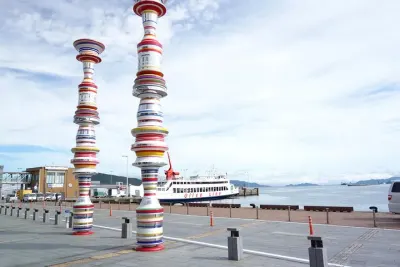
Why Takamatsu is worth getting off the ship for
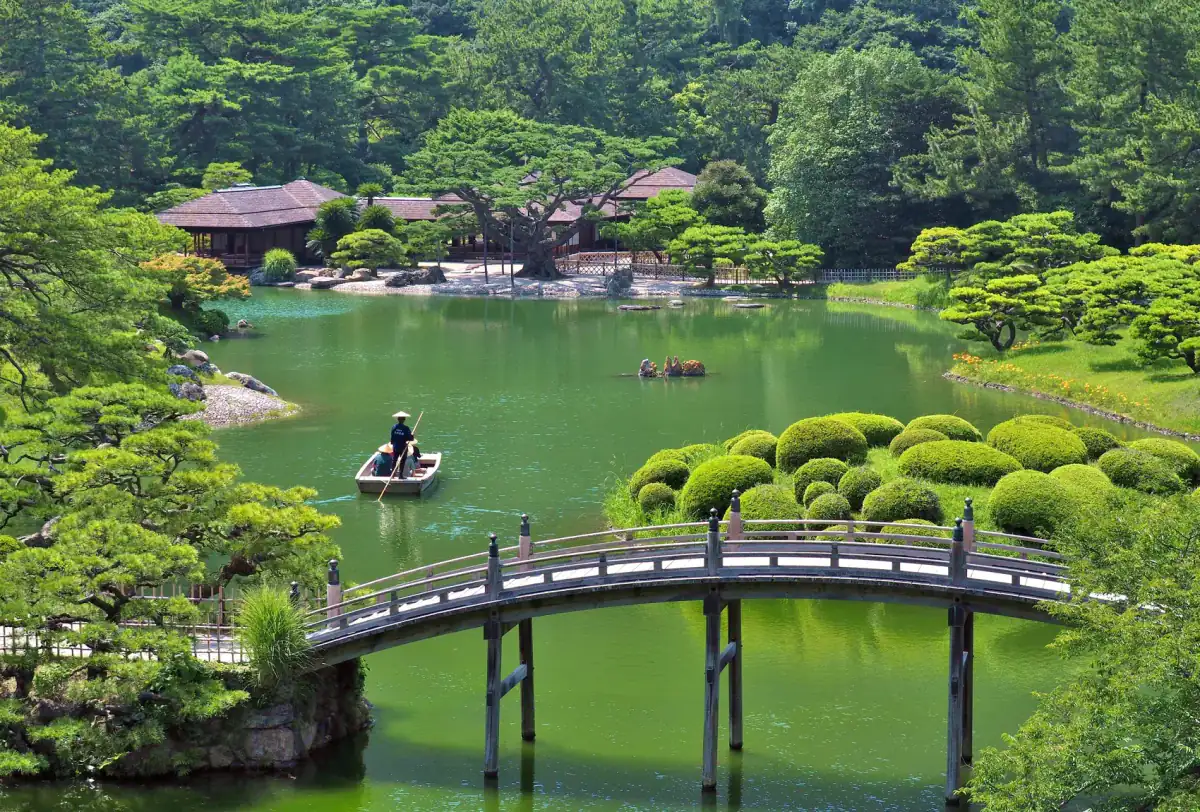
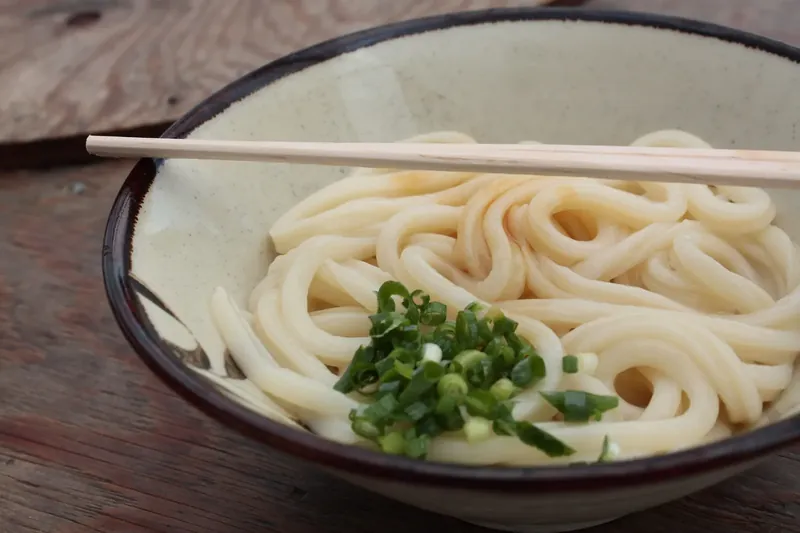
Takamatsu is the port where you can walk off the ship and into the day. The quay sits in the middle of the city's waterfront: the castle in its seawater moat is along the shore to the south, the station and the island ferries are next to it, and Ritsurin Garden — one of the finest strolling gardens in Japan — is one seven-minute train ride inland. Kagawa is also Japan's udon prefecture, and lunch is a bowl of Sanuki udon a short walk from the ship.
The harder choices lie further out. Naoshima, the art island, is 50 minutes away by ferry; Kotohira-gu, the sailors' shrine at the top of 785 steps, is an hour away by train. Each is a whole day, and the ferry to Naoshima runs only five times a day in each direction — which is why this guide starts from the call length rather than a list of sights. Everything below comes from the prefecture's call schedule, the Kotoden and ferry operators' timetables and fares, and the gardens', castle's and museums' published hours, checked on 30 September 2026.
What Takamatsu is not: an old town. The castle keep is long gone and the centre is covered arcades; the old things — the garden, the moat, the shrine up the line — stand apart, and each needs its own slice of the day.
Takamatsu to Naoshima: what is actually possible
Naoshima is the reason many people choose this itinerary, and the ferry timetable is the reason many of them see less of it than they hoped. The facts:
- Five ferries a day each way, from the Shikoku Kisen piers about 8 minutes' walk from the quay. Out from Takamatsu: 08:12, 10:14, 12:40, 15:35, 18:05, arriving at Miyanoura 50 minutes later. Back from Miyanoura: 07:00, 09:07, 11:30, 14:20, 17:00, reaching Takamatsu an hour later.
- ¥680 each way. Return tickets exist but no return price is published; budget ¥1,360.
- No reservations of any kind. Tickets go on sale 40 minutes before departure; cards are accepted only at the ticket machines.
- The high-speed boat (¥1,590, cash only, about 30 minutes) leaves Takamatsu at 07:20, 09:20 and 20:30, and Miyanoura at 06:45, 08:40 and 19:45 — of use on a port day only as the 09:20 out on an early call.
- Wind cancels sailings. The operator can stop an island route for a whole day.
Put those against the two call patterns:
| Call | Ferries that work | Time on the island | If something goes wrong |
|---|
| 09:00–17:00 (the 8-hour call) | 10:14 out, 14:20 back | about 3 h 15 | Nothing: the next boat back arrives 18:00, after the ship sails |
| 07:00–19:00 (the 12-hour call) | 08:12 out, 14:20 back | about 5 h | The 17:00 back arrives 18:00, 30 min before all-aboard |
On the 8-hour calls the 10:14/14:20 pair gets you back to the gangway about two minutes inside a one-hour margin — workable only if the ferry, the island buses and the museum queue all behave. Our advice is to take Naoshima only on the 12-hour call, or with a guide who has a plan for a missed boat; on 8 hours, go to Megijima or Ogijima instead.
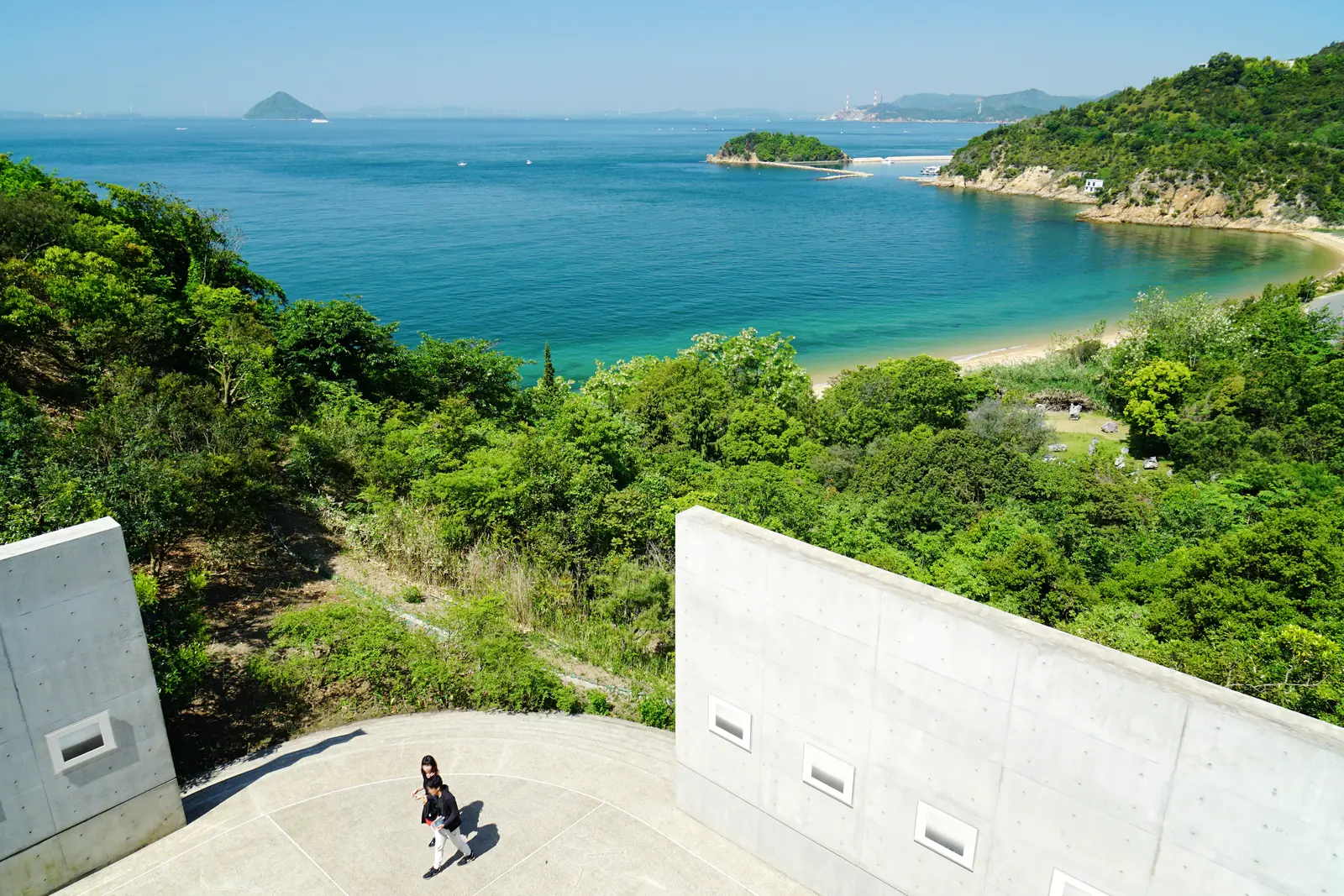
On the island, the Naoshima town bus (¥100) runs from Miyanoura port to Tsutsuji-so, where the free Benesse Art Site shuttle takes over for Benesse House, the Lee Ufan Museum and Chichu; cars and bicycles cannot enter the museum area. Bicycles and scooters are for hire at Miyanoura and Honmura.
Naoshima's museums: tickets, hours and closures
The Chichu Art Museum is the one to plan around: open 10:00–17:00, last entry 16:00, closed on Mondays, and timed tickets only. On weekdays it costs ¥2,500 online and ¥2,800 at the door; at weekends and on holidays ¥2,700 and ¥3,000. A Saturday or Sunday call falls in the weekend band. Allow about an hour and a half.
| Museum | Hours | Online / at the door | Note |
|---|
| Chichu Art Museum | 10:00–17:00 | ¥2,500–2,700 / ¥2,800–3,000 | Timed tickets; closed Mondays |
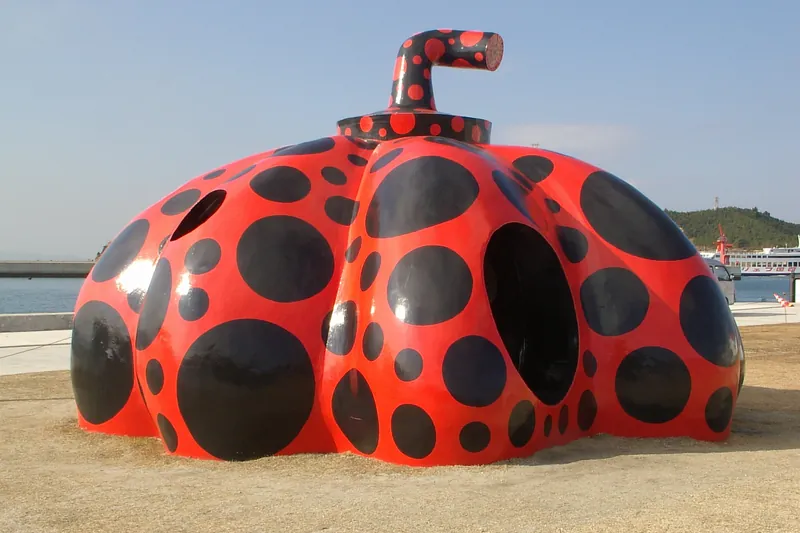
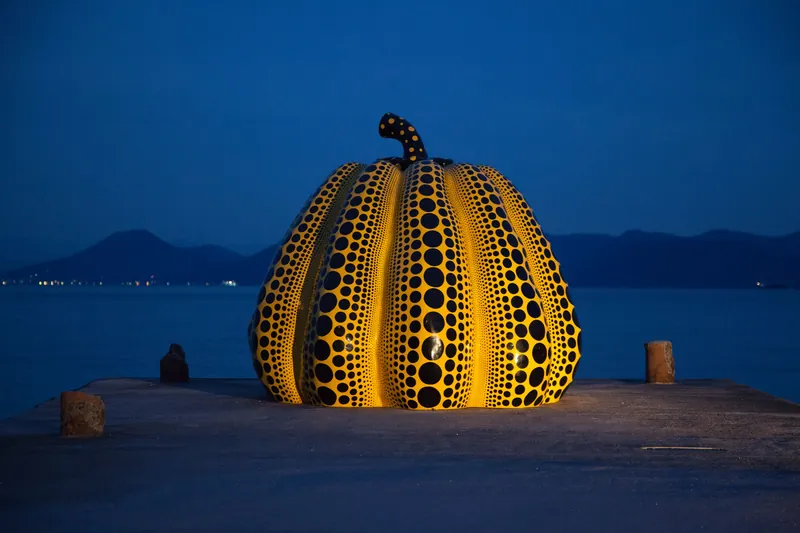
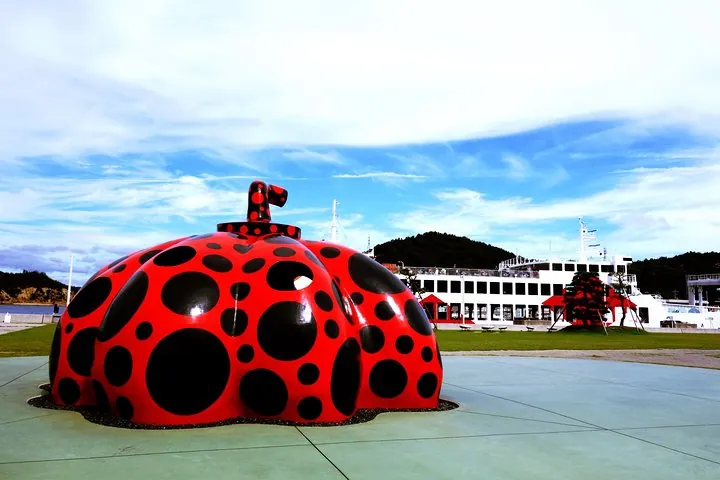
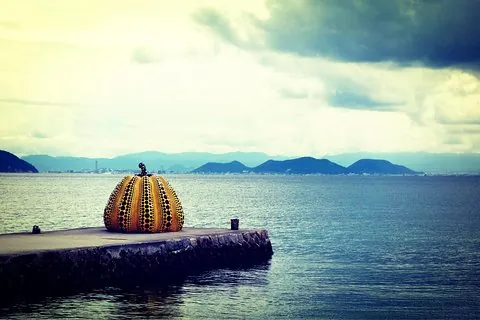
| Benesse House Museum | 8:00–21:00 | ¥1,300 / ¥1,500 | Nearest the yellow pumpkin |
| Lee Ufan Museum | 10:00–17:00 | ¥1,200 / ¥1,400 | Closed Mondays |
| Art House Project, Honmura | roughly 10:00–16:30, midday breaks vary | ¥1,200 / ¥1,400 for five houses | Kinza closed 13 Oct 2026 – 1 Jan 2027 |
Check the day of the week of your call against these closing days. The museums can close in a typhoon.
Ritsurin Garden: how to do it well
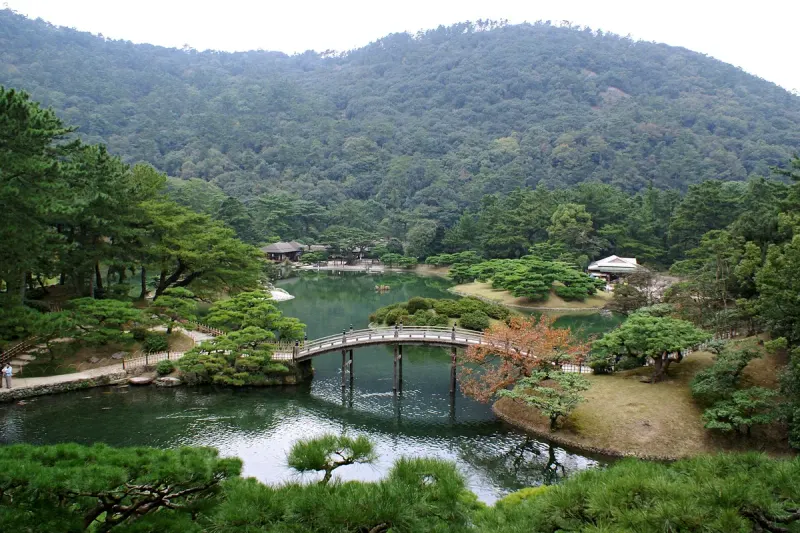
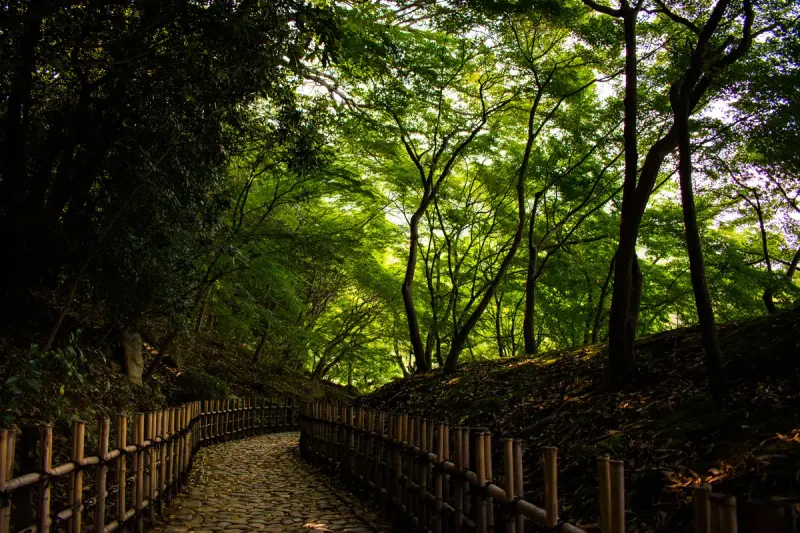
Ritsurin is the thing to do if you do only one. It covers about 75 hectares including Mount Shiun behind it, with a flat garden of about 16 hectares laid out around six ponds and thirteen hills; about 1,000 of its 1,400 pines are trained by hand. It was begun in the 1630s–40s and completed in 1745, and served the Matsudaira lords for 228 years. It holds three stars in the Michelin Green Guide.
- Hours: open every day, roughly sunrise to sunset — 6:00–17:30 in October, 6:30–17:00 in November. It closes when a storm warning is issued for Takamatsu.
- Tickets: ¥500 adults, ¥170 children. There is no visitor senior discount. Lockers at the east gate (¥200–400); wheelchairs, walkers and pushchairs lent free.
- How long: the volunteer guides' standard route takes about an hour; allow 90 minutes to include the north garden.
- Tea: Kikugetsu-tei teahouse, 9:00–16:30 (last entry 16:00), ¥800 for matcha and a sweet or ¥600 with sencha. Higurashi-tei serves matcha for ¥700, 10:00–16:00, but on Saturdays, Sundays and holidays only — so not on a weekday call.
- Boat on the south pond: a 30-minute wooden boat, ¥850, six per boat. Bookings close the day before; same-day tickets go on sale at 8:30 at the boat office.
- Free guided walks leave the east-gate ticket office at 10:30 on Sundays, in English on the first and second Sunday of the month — no use on a weekday call.
Show your Ritsurin ticket at the castle (or the reverse) on the same or next day for a discount.
Takamatsu Castle: the moat is the point
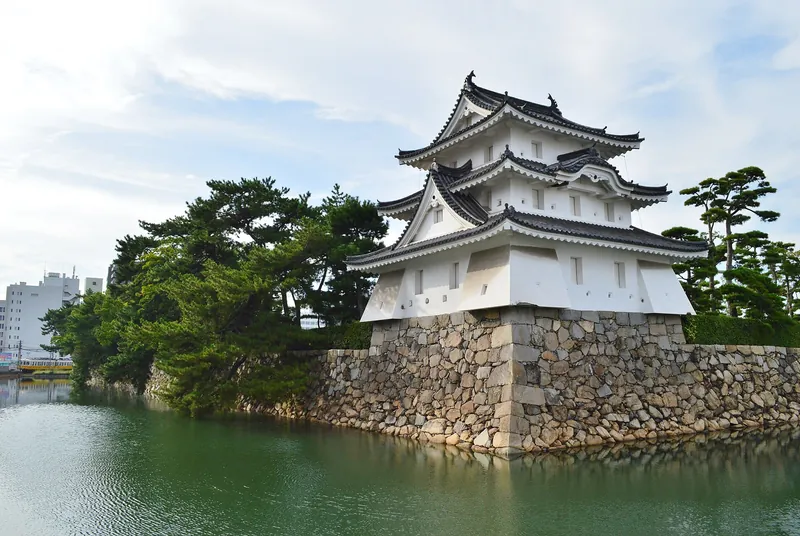
Takamatsu Castle, now Tamamo Park, is one of Japan's castles with a moat filled from the sea, and sea bream swim in it. The keep is gone (the city is studying a reconstruction); what remains are the stone walls, the turrets and the moat.
The west gate beside Takamatsu-Chikko station opens 6:00–17:30 in October and 6:30–17:00 in November; the east gate 8:30–17:00. Entry is ¥300, free for under-18s. The Tsukimi-yagura turret opens inside on Sundays only, so not on a weekday call, and Hiunkaku, the 1917 villa in the grounds, is a venue for hire rather than a sight. Free volunteer guides work on Saturdays and Sundays, 10:00–15:00 with a break from 12:00 to 13:00 — so not on a weekday call. Allow 45–75 minutes. The city's tourism site describes a 30-minute boat ride on the moat with bream-feeding, boarding near the west gate; its price and times are not published.
Kotohira-gu: the 785 steps
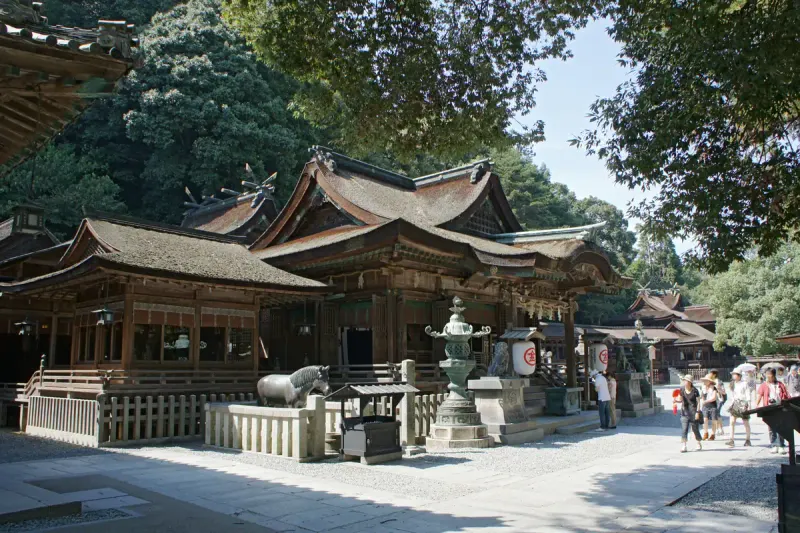
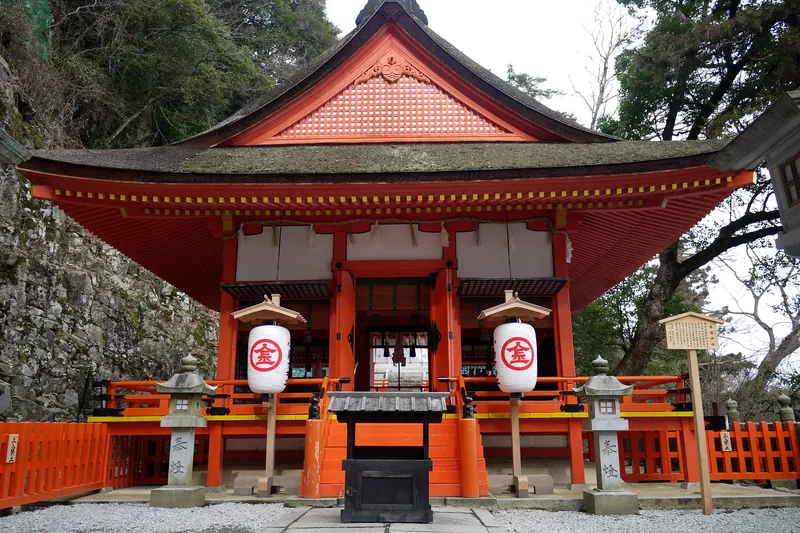
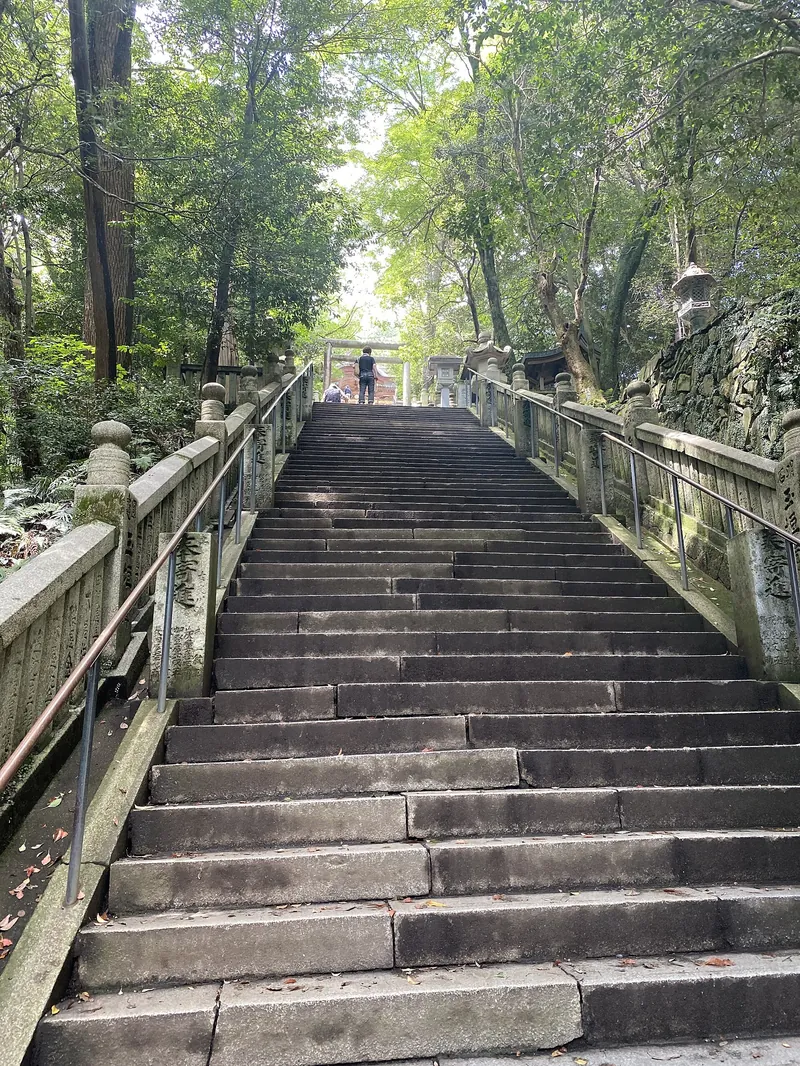
Kotohira-gu — Konpira-san — is the shrine of the sea god, and a climb. The 785 steps from the approach street to the main hall take about 30 minutes one way; the stretch of 113 steps below the Great Gate is the steepest. The inner shrine is another 583 steps, about 1.2 km, for 1,368 in all — not something to start on an 8-hour call.
The Treasure House opens 9:00–17:00 (last entry 16:30), ¥800, or ¥1,500 for three buildings, but only on weekends and holidays, plus daily except Tuesday (or the next weekday when Tuesday is a holiday) from 1 October to 30 November and 30 December–3 January; on weekdays from December to March it is shut. Kotoden trains leave Takamatsu-Chikko at :00 and :30 and take about 65 minutes; they leave Kotoden-Kotohira at :12 and :42. The station to the foot of the steps is about 10 minutes' walk by our estimate. On a 09:00–17:00 call, the 10:00 out and the 14:12 back give three hours at the shrine and bring you to the gangway about an hour and seven minutes before all-aboard.
Megijima and Ogijima: the islands that fit an 8-hour call
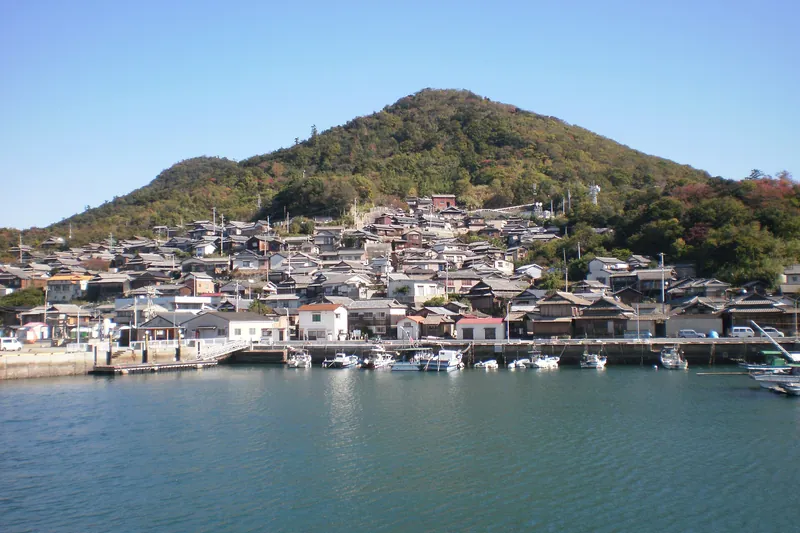
The Meon ferry leaves Sunport's prefectural pier No.3, beside JR Hotel Clement, every two hours: 08:00, 10:00, 12:00, 14:00, 16:00 and 18:10. Megijima is 20 minutes out (¥370), Ogijima 40 (¥510). Boats back leave Ogijima at 07:00, 09:00, 11:00, 13:00, 15:00 and 17:00, call at Megijima 20 minutes later, and reach Takamatsu at 40 minutes past.
- Megijima is walkable, with an island bus from the port to the Onigashima cave near the 188 m summit (¥800 return) and a 360° lookout at the top.
- Ogijima has no bus: steep lanes, stone steps and an 1895 granite lighthouse.
Setouchi Triennale artworks stand near both ports and some stay on show between festivals; 2026 is not a festival year. On a 09:00–17:00 call, the 10:00 out and the 13:40 arrival back give about three hours on Megijima, with time for the castle or 40 minutes in Ritsurin afterwards. Foot passengers cannot book; the operator does not publish its payment methods, so carry cash.
Shodoshima, the large olive island, is also a direct boat away: Shikoku Ferry runs 15 ferries a day each way from the Sunport piers to Tonosho (about 60 minutes, ¥700) and eight high-speed boats (about 35 minutes, ¥1,400), with no bookings for foot passengers. We have not checked the island's buses, so on an 8-hour call keep to the Tonosho area or go with a guide.
The best things to do in Takamatsu on a port day
Our full list, with the time each takes from the berth, is on the Takamatsu top 10; ready-made itineraries are on the plans page. In brief:
- Ritsurin Garden — the garden itself; about three hours with the train both ways.
- Udon at a self-service mill — Sanuki udon, the prefecture's dish; you carry your own tray.
- Naoshima — the art island; a whole day, and only on the long call.
- Takamatsu Castle — the seawater moat and its bream, about 15 minutes from the ship.
- Honetsuki-dori — roast chicken leg on the bone, a dish from Marugame; the Ikkaku chain has a Takamatsu shop.
- Kotohira-gu and its 785 steps — the sailors' shrine, an hour by Kotoden.
- Megijima or Ogijima — the island that fits an 8-hour call.
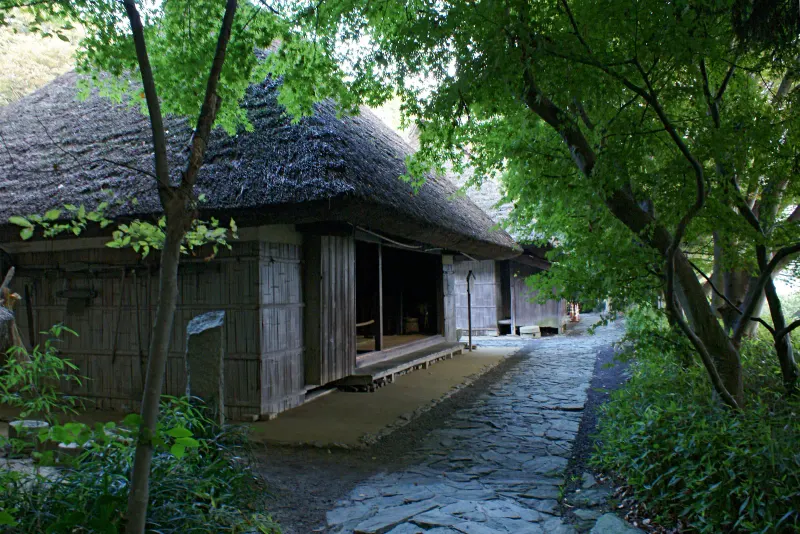
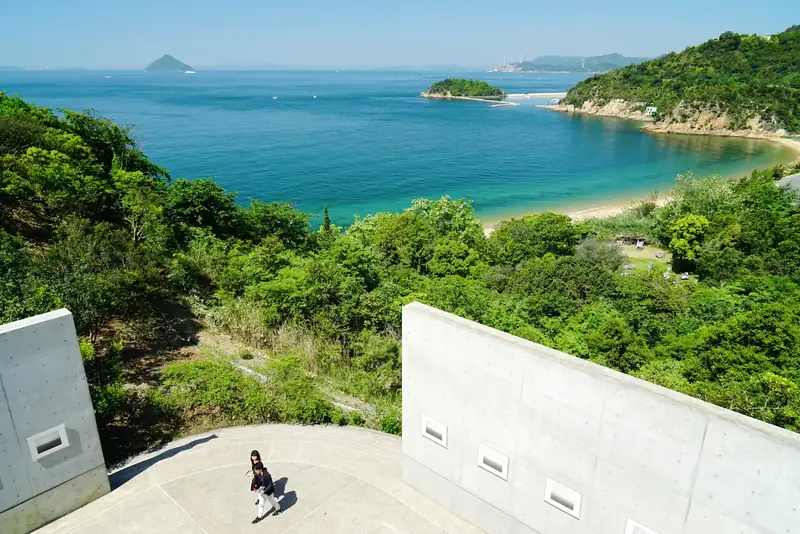
- Yashima and Shikoku Mura — 33 old buildings from across Shikoku in an open-air museum (¥2,200, closed Tuesdays), with a Tadao Ando gallery.
- Olive beef and olive hamachi — Kagawa's olive-fed specialities.
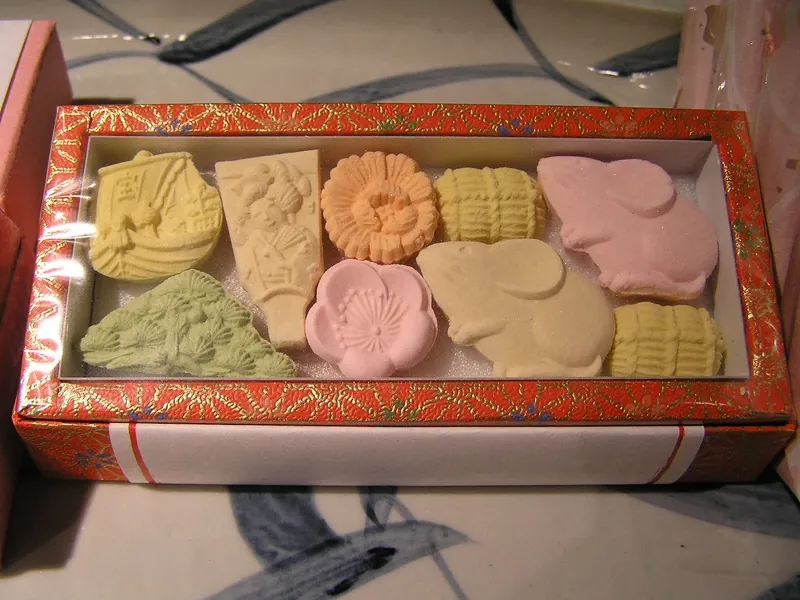
- Wasanbon sugar — Kagawa's fine sugar sweets; the gift that weighs nothing.
How to think about your hours
Work backwards from the ship. Your all-aboard time is usually 30 minutes before departure (check the daily programme), you want to be back at the gangway an hour before that, and the first half hour after arrival goes on getting off. So the time you can actually use is the call length minus about two hours. Takamatsu has one berth, so only the hours matter.
| Call | Usable | What fits |
|---|
| 4 hours | about 2 | The castle and the arcades on foot, or Ritsurin by Kotoden with about an hour in the garden. Not both, and no island. |
| 6 hours | about 4 | Castle, Ritsurin and udon comfortably; or Megijima on the 10:00 boat plus the castle. Kotohira only in a rush. |
| 8 hours | about 6 | One of: the city day unhurried; Kotohira-gu with three hours at the shrine; Megijima or Ogijima and a short Ritsurin. Naoshima only on the 10:14/14:20 ferries, with no fallback. |
| 10 hours | about 8 | Kotohira-gu and Ritsurin together; Naoshima with one spare ferry. |
| 12 hours | about 10 | Naoshima unhurried with the castle or an hour of Ritsurin afterwards, and the 17:00 ferry as a fallback. |
Kagawa's 2026 list ended with Star Seeker's 8-hour call on Wednesday 4 November 2026. Kagawa updated its 2026 list on 8 October 2026, so check it for changes. It publishes its list by calendar year and has not yet published 2027's; the full list we keep is on cruises to Takamatsu. Star Seeker is one of the small ships covered in our guide to small-ship cruises in Japan.
About the return to the ship. Of the eight Takamatsu tours we list, one — the private car day across western Kagawa (5593642P5) — writes "Back to ship Guarantee" in its description, and no other listing does. It needs the 12-hour call, and its inclusions list only the car, fuel, tolls, parking and water, so confirm the guide and lunch it mentions. The other seven mention neither the ship nor a return time. The two city walking tours meet at hotels, not at the port: ask for Takamatsu-Chikko or JR Takamatsu, tell the guide your all-aboard time, and agree to be back at the gangway an hour before it. More on guided options is on the Takamatsu guided page.
Money, cards and the practical stuff
Takamatsu is card-friendlier than the islands, but several places you will use do not say what they accept. Where you will need what:
| Place | Pay with |
|---|
| Kotoden trains | Japanese IC cards or a paper ticket |
| Naoshima ferry | Card only at the ticket machines; cash at the window |
| Naoshima high-speed boat | Cash only |
| Megijima–Ogijima ferry | Not published; carry cash |
| Kotoden taxis | Cards and QR codes, yen only; no UnionPay |
| Ritsurin Garden, Takamatsu Castle | Not published; carry cash |
| Chichu and the Benesse museums | Card online (cheaper); on-site prices are higher |
| Shikoku Mura | Cash, cards, e-money or QR codes |
| City rental bicycles | App only, cashless |
The nearest cash machines to the quay are a 7-Eleven about 470 m away by JR Takamatsu station and the Sunport post office about 500 m away; 7-Eleven and Japan Post machines generally take foreign cards. The 114 Bank has ATMs in the arcades, about 1.1 km from the quay.
Closing days against the call dates. Naoshima's museums close on Mondays and Shikoku Mura on Tuesdays, or the next weekday when a Tuesday is a holiday. Merikenya's Sunport branch opens weekdays only, 11:00–14:00; the Takamatsu Ekimae branch by JR Takamatsu is open 7:00–20:00 every day. Many of the famous independent udon shops sell out or close by early afternoon and shut one weekday — check your shop before you set off.
When to go: seasons and crowds
Takamatsu is one of the driest cities in Japan, with about 1,150 mm of rain a year.
- Autumn (October–November), when the last 2026 calls fell, is the best weather: average highs of 23.2 °C in October and 17.5 °C in November, and November is dry (55 mm). Ritsurin runs an autumn illumination in the evenings.
- Spring. Cherry blossom first opens around 27 March in a normal year and reaches full bloom around 4 April (25 March and 1 April in 2026).
- Summer is hot — August averages a high of 33.0 °C — and September is the wettest month.
- Typhoons approach Shikoku about three times a year, most often in September (about once) and less in October (0.4). A storm warning closes Ritsurin, a weather warning closes Shikoku Mura, and strong wind cancels island ferries — the islands are the first thing to drop on a windy day.
- Crowds: weekends are busier on the islands and at Chichu, which charges more on Saturdays and Sundays — relevant to a Saturday call.
- Rain plan: the 2.7 km of covered arcades; Ritsurin's teahouses in light rain; Chichu is mostly indoors, but getting around Naoshima is not.