
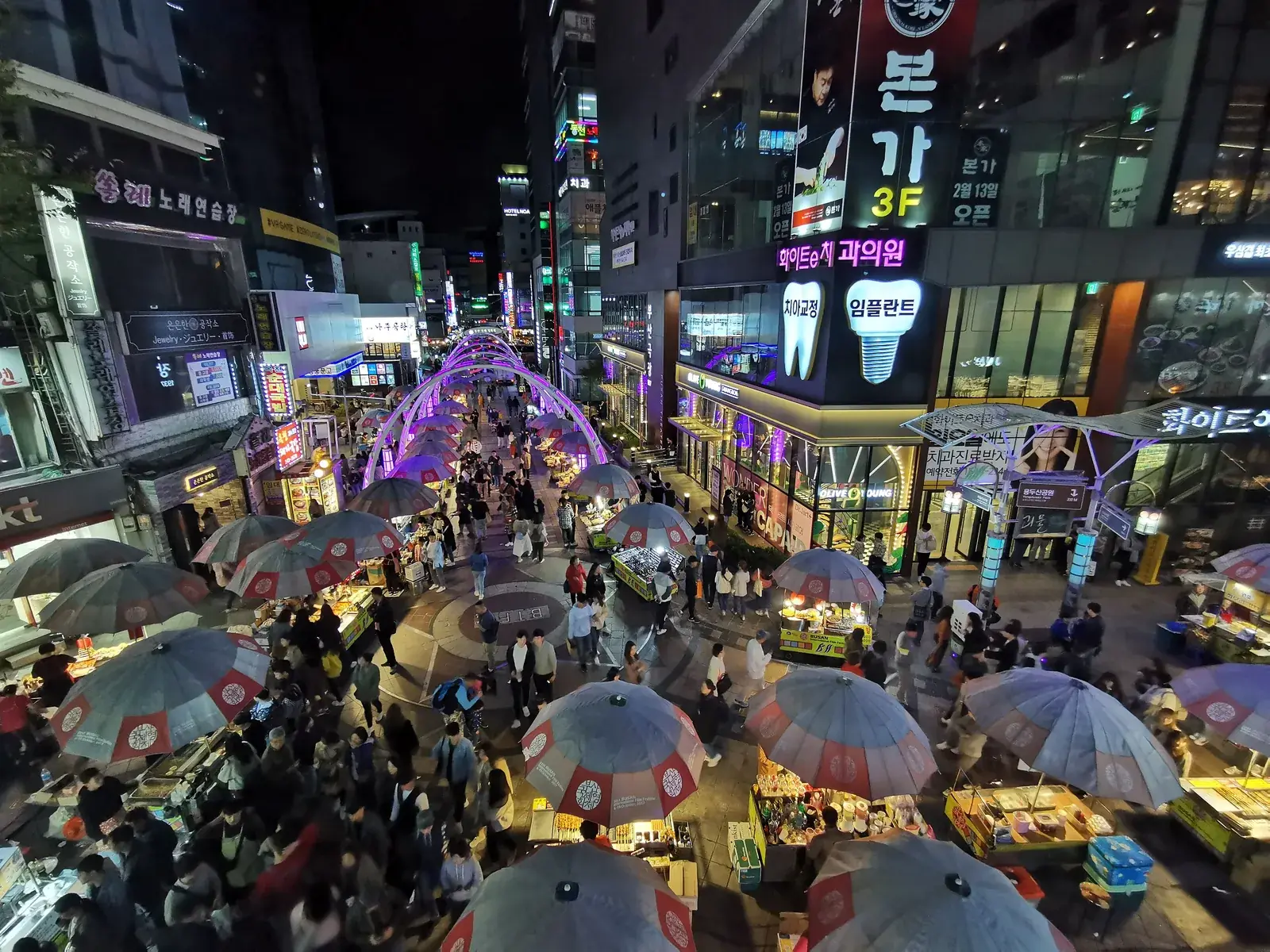
 Photo: Ahmed / CC BY-SA 4.0
Nampo-dong was Busan's cinema district, and in 1996 it hosted the first Busan International Film Festival — which became the largest in Asia. The square is named after it and directors' handprints are set into the pavement, now underneath the food stalls.
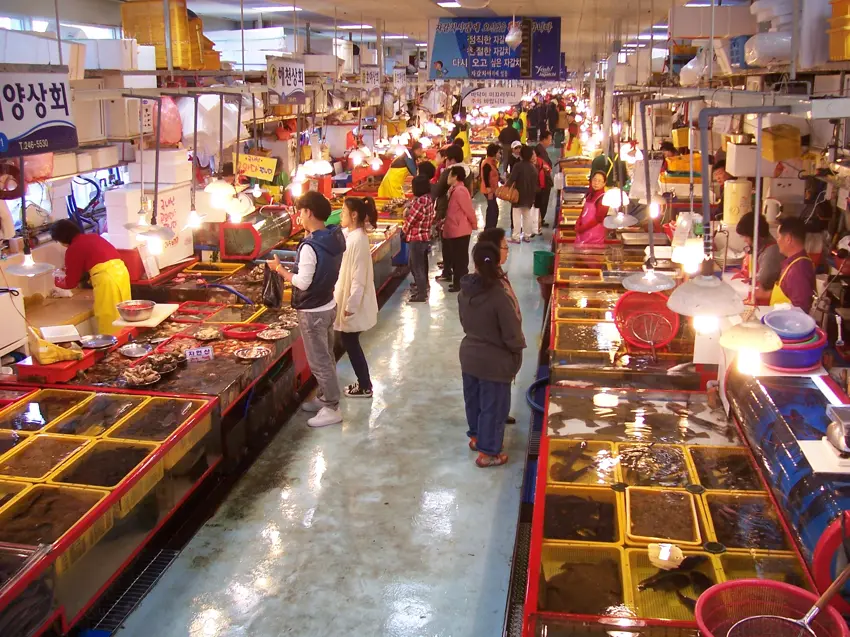
Behind it, Gukje Market is kilometres of covered alleys that grew out of the Korean War, when this was where the refugee city bought everything. It burned catastrophically in 1953 and rebuilt. It is still the rain plan for this whole city.
Five things the plaques won't tell you
- Ssiat hotteok is the thing: a sugar pancake cut open and packed with seeds. It is served scalding — wait.
- Look down. The handprints of directors are in the pavement under the stalls.
- Gukje Market's alleys are entirely covered. This is where to be if it rains.
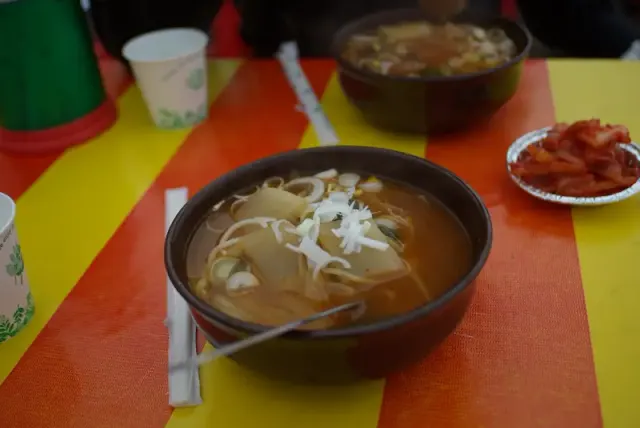
- Eomuk on a skewer with a paper cup of its broth — the broth is free and you refill it yourself.
- Cash. Several of the best stalls still prefer it.
It is still the rain plan for this whole city.
Guided days from Busan
Booked before you sail — there is no tour desk at the pier. Booking through these links supports the site.
Questions people ask here
What is there to eat at BIFF Square?
Ssiat hotteok — a griddled sugar pancake cut open and packed with sunflower and pumpkin seeds and peanuts, served scalding, so wait before biting. Also eomuk fish cake on skewers with free broth you refill yourself, and dwaeji gukbap shops in the surrounding streets.
What is Gukje Market?
Kilometres of covered alleys behind BIFF Square that grew out of the Korean War, when Busan's refugee population bought everything here. It burned catastrophically in January 1953 and rebuilt. Because it is entirely roofed, it is the default plan when it rains in this city.