
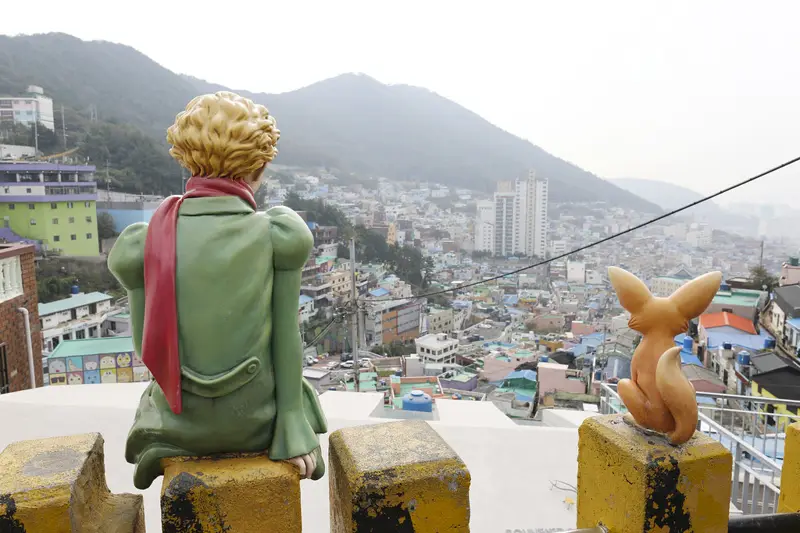
 Photo: bryan... / CC BY-SA
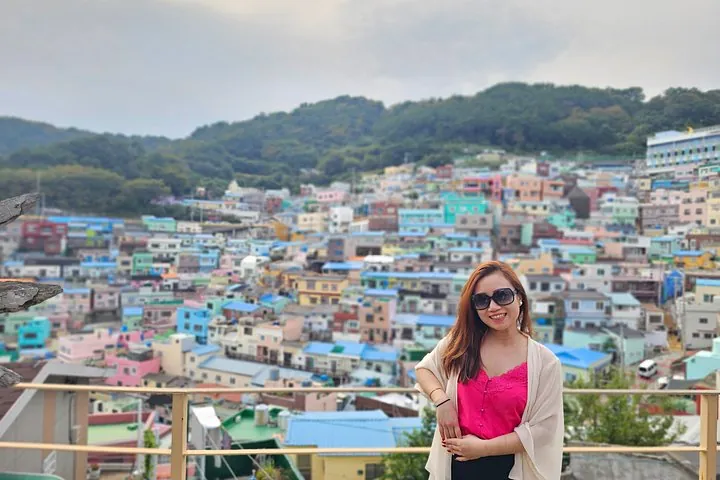
The stepped rows of pastel houses in every photograph of Busan are a refugee settlement. People fleeing the Korean War in the 1950s built on the hillside because it was the only land nobody had claimed, and a religious community moved up there with them. It stayed poor and it stayed standing.
From 2009 an arts regeneration project brought murals, sculpture and colour, and it became the most photographed place in the city. Several thousand people still live in it, many elderly, with alleys two feet wide between their front doors.
Five things the plaques won't tell you
- It is somebody's street. Signs ask for quiet and they mean it — this is a residential neighbourhood, not an attraction.
- Wear real shoes. It is stairs and slopes throughout, and the surfaces are uneven.
- Go early. Before ten it is quiet and the light on the pastel walls is much better.
- Take a taxi up and walk down toward the main road — the descent is the pleasant direction.
- The paid viewpoints are unnecessary. The free ones along the main lane are as good.
Several thousand people still live in it, many elderly, with alleys two feet wide between their front doors.
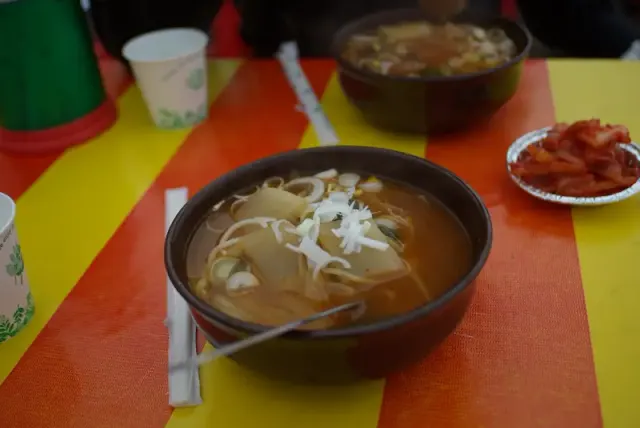
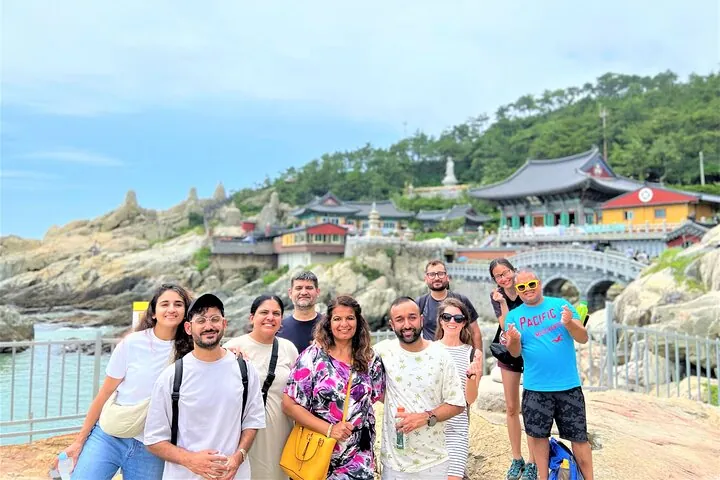
Guided days from Busan
Booked before you sail — there is no tour desk at the pier. Booking through these links supports the site.

Questions people ask here
Is Gamcheon Culture Village worth visiting?
Yes, if you go early and walk slowly. It is a Korean War refugee settlement from the 1950s, regenerated through an arts project from 2009 into the most photographed place in Busan. It is also home to several thousand people, so quiet is genuinely requested rather than decorative.
How hard is the walking at Gamcheon?
It is stairs and slopes throughout, on uneven surfaces. Take a taxi up and walk down toward the main road — the descent is the manageable direction — and wear proper shoes. Budget ninety minutes for a single loop.