
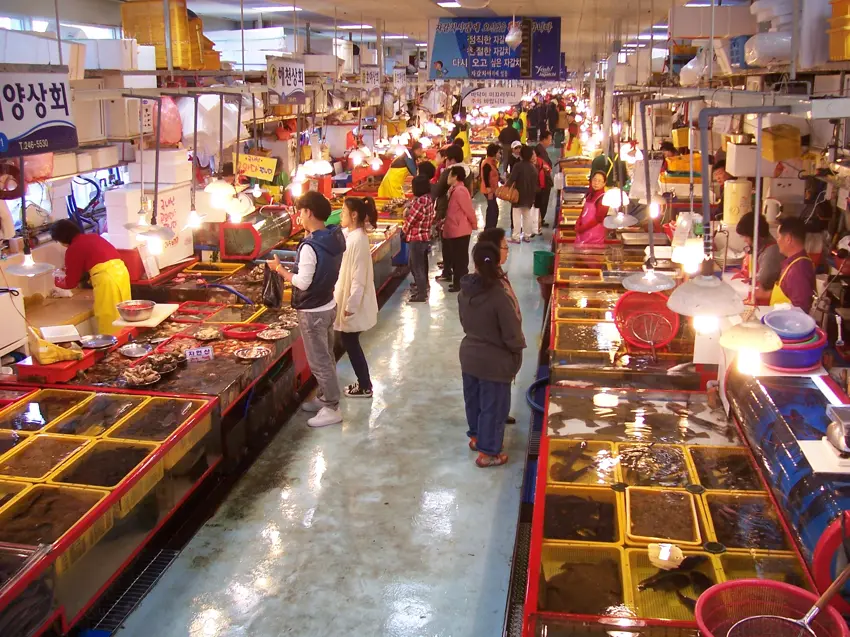
 Photo: Weli'mi'nakwan / CC BY
The name comes from jagal, gravel — this shore was gravel before it was a market. Jagalchi as it stands was made in the 1950s, when the refugee city needed feeding and the people available to do it were overwhelmingly women, many of them war widows. They are still called the Jagalchi ajumma and the term carries respect.
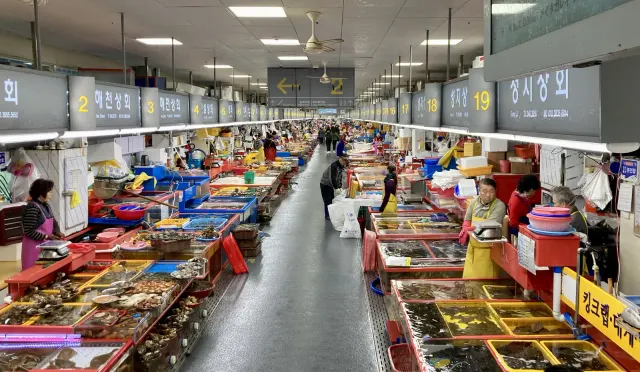
The system is two-step and confuses everyone: choose a live fish on the ground floor, agree a price, then carry it upstairs where a restaurant prepares it for a per-person fee. You are not ordering from a menu — you are buying an animal and having it cooked.
Five things the plaques won't tell you
- Buy downstairs, eat upstairs. Ordering from an upstairs menu costs the same and skips the experience.
- Prices are negotiated, cheerfully. Ask, look unconvinced, and see what happens.
- Point at the tank and hold up fingers for the number of people. She will choose better than you will.
- Autumn and winter are the seasons — flounder and rockfish for hoe, hairtail grilled.
- The outdoor charcoal grills along the waterfront in autumn are the version worth planning around.
You are not ordering from a menu — you are buying an animal and having it cooked.
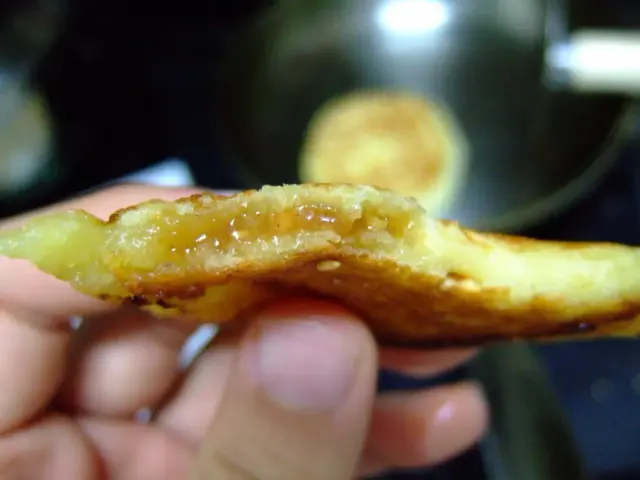
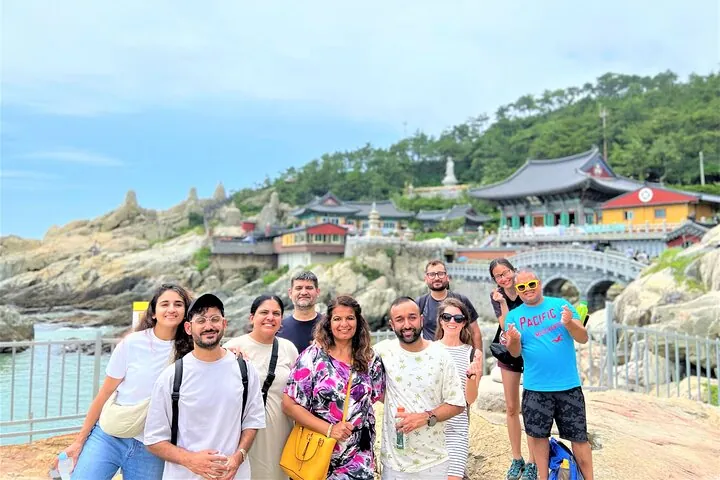
Guided days from Busan
Booked before you sail — there is no tour desk at the pier. Booking through these links supports the site.
Questions people ask here
How do you eat at Jagalchi Market?
Choose a live fish from a ground-floor vendor and agree a price, then carry it up to the second-floor restaurants, which prepare it — raw as hoe, grilled, or in a stew — for a per-person fee on top. Prices downstairs are expected to be negotiated, and doing so cheerfully is good manners.
Is Jagalchi Market close to the cruise terminal?
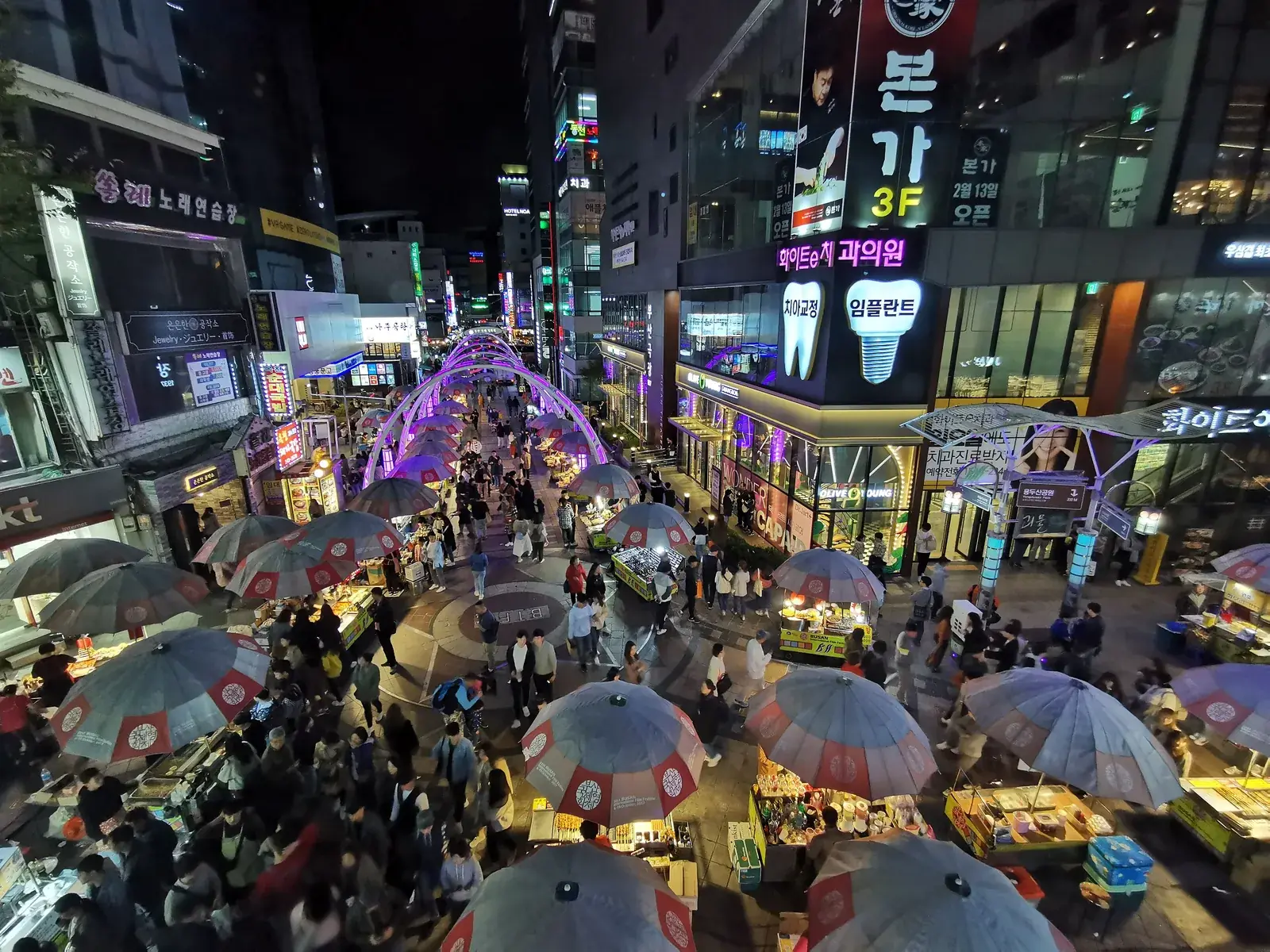
Yes — about fifteen minutes by taxi from the Busan International Passenger Terminal, or a short subway ride to Jagalchi station. It is the easiest major sight to reach here, and BIFF Square and Gukje Market are a further ten minutes on foot.