Pick your hours and you get a finished day — every step timed from the gangway and back, and each route says how much room it leaves you before all-aboard. Swap anything you don't fancy.
Timed shore plans, measured from your gangway · port-of-japan.com/busan/ · Verified
Finished days, timed from the gangway
Your day in Busan, hour by hour
Pick the one that fits your call. Times count from the moment you step off, and every plan is back on board an hour before all-aboard.
For a 5-hour call or longer · 3 hr door to door
The Yeongdo close-in
Only if your ship is at the Yeongdo terminal (4 of the 61 calls listed to March 2027). At North Port, take the Nampo classic instead
Fits a 5-hour stop with nothing to add (off the ship 30 minutes after arrival, back at the gangway an hour before all-aboard). A longer call gives you the extra time; on this one, do not add a stop.
+0:00
From Yeongdo: walk to the National Maritime Museum (same road)
Free, modern, harbor-facing; closed Mondays
+0:50
Taxi to Huinnyeoul culture village
The white seaside lanes over the strait
+1:50
Samjin Eomuk HQ — fish cakes since 1953
The bakery-style trays; eat one warm
+2:30
Taxi back to the terminal
Keep 10,000 won small bills for fares
Running late? Taxis scarce? The museum alone plus the terminal skyline deck is a complete short call.
Fish market, film square, the everything-market and the tower
Fits a 7-hour stop with nothing to add (off the ship 30 minutes after arrival, back at the gangway an hour before all-aboard). A longer call gives you the extra time; on this one, do not add a stop.
+0:00
Taxi to Jagalchi Market (~15 min from North Port)
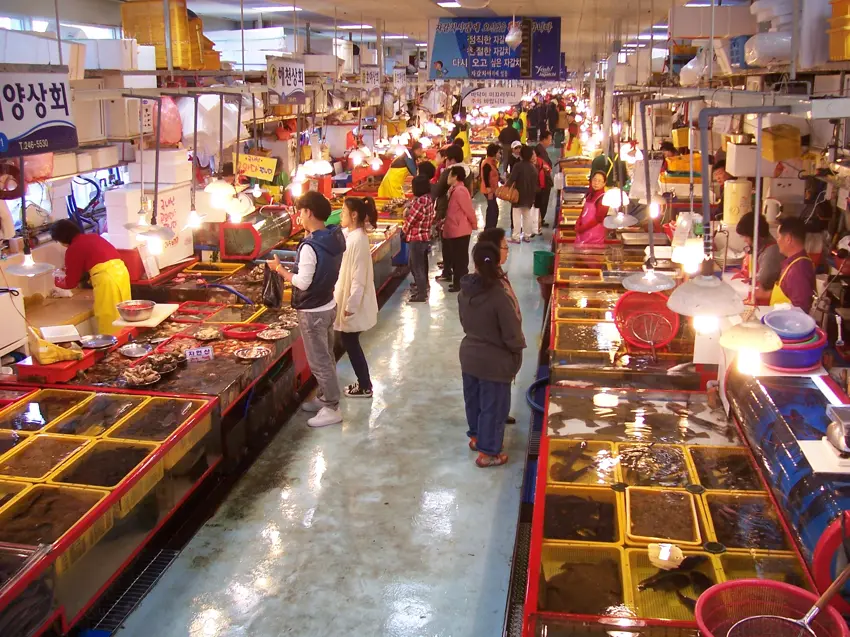
Korea’s greatest fish hall — walk the wet floor. Closed the 1st, 3rd and 5th Tuesdays: on those days start at BIFF Square instead
+1:00
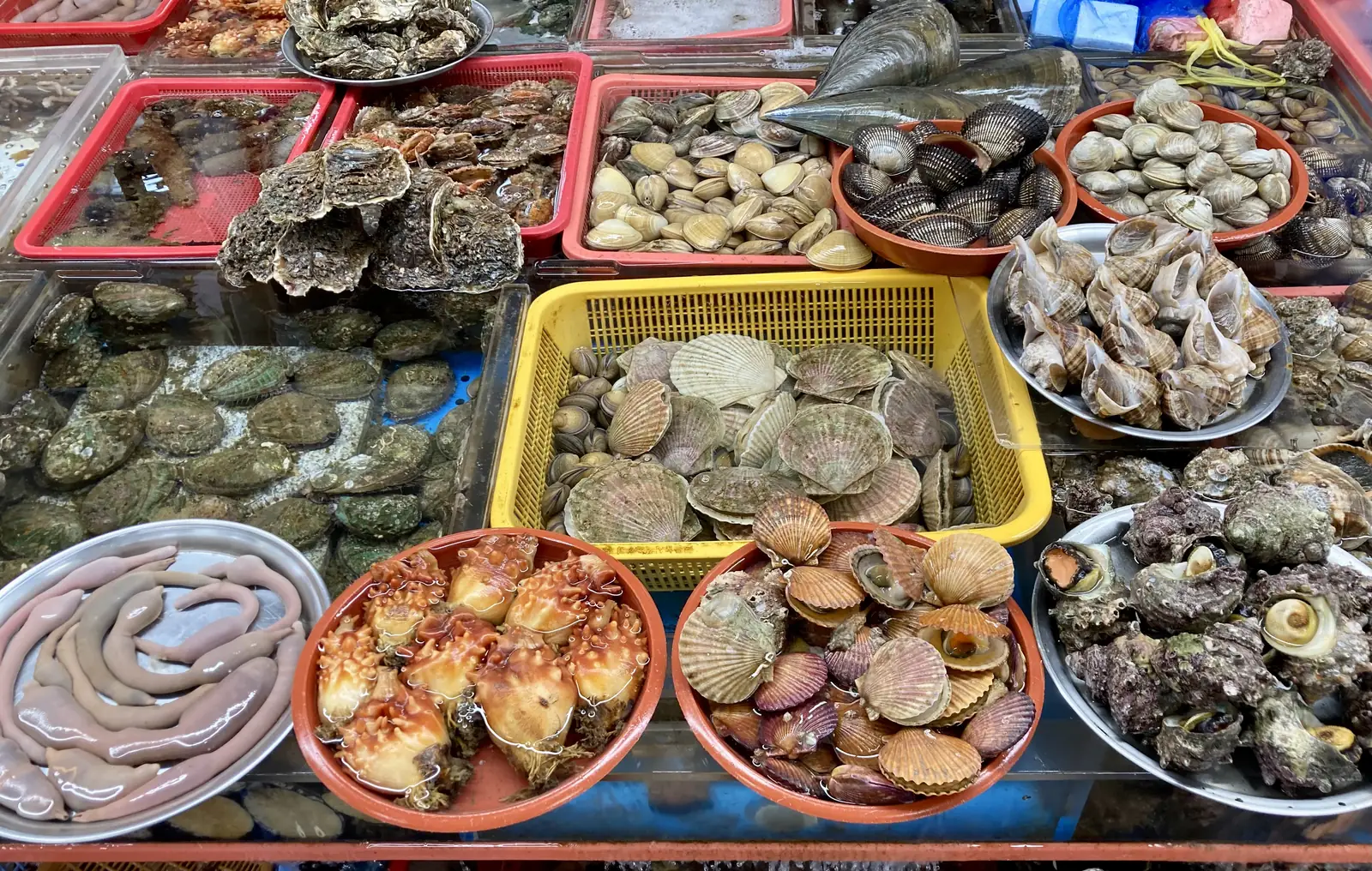
Hoe lunch upstairs — point downstairs first
Thick-cut, gochujang, lettuce wraps
+2:10
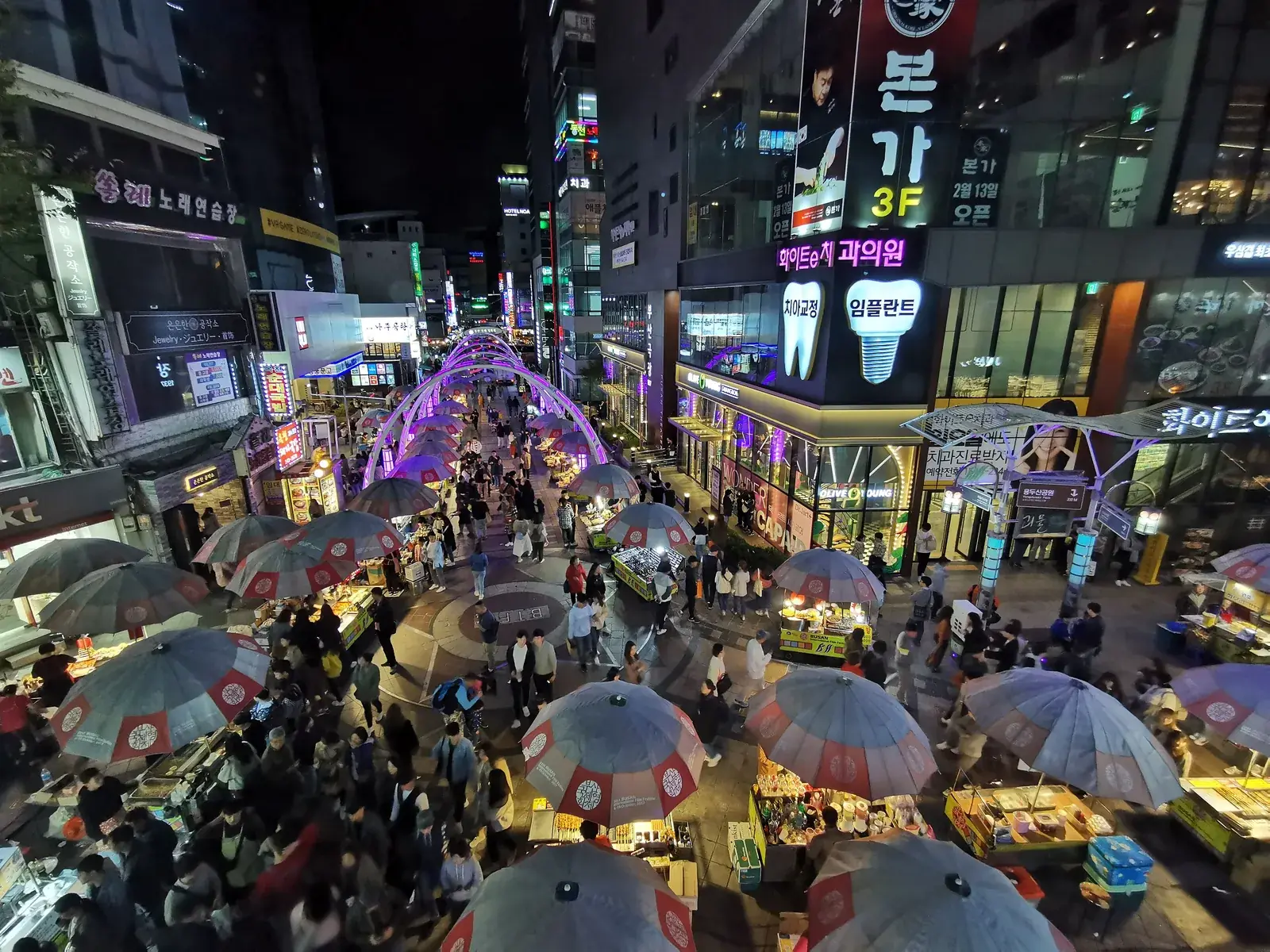
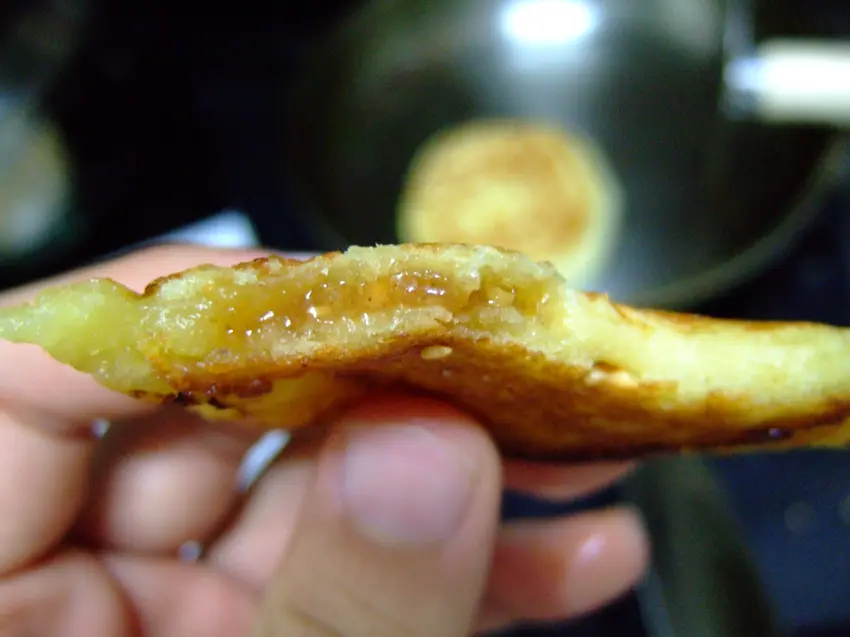
BIFF Square: ssiat hotteok from the famous stalls
Seeds and brown sugar, fried to order
+2:40
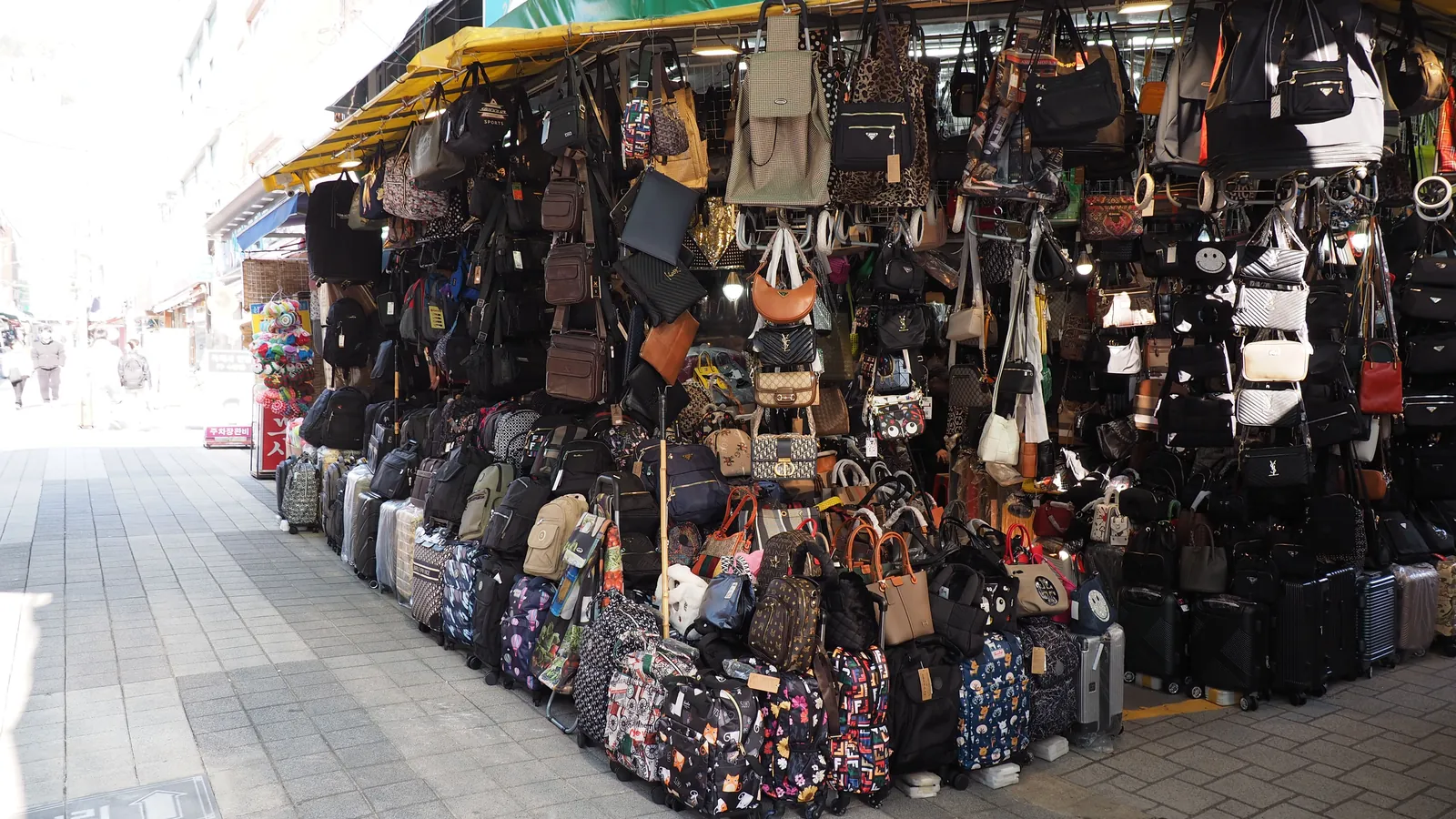
Gukje Market rummage
Haggling is the entertainment. Closed on Sundays: spend the time at Busan Tower instead
+3:30
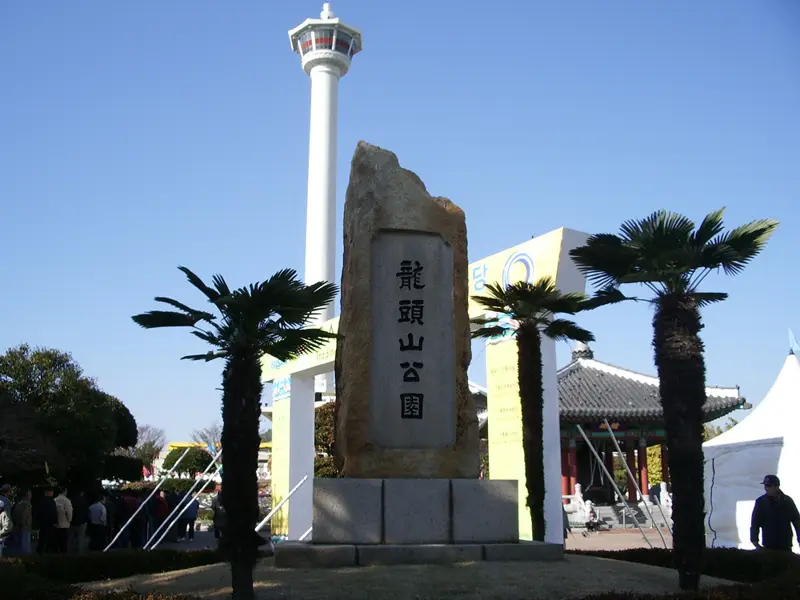
Yongdusan escalators up to Busan Tower
The harbor panorama with your ship in it
+4:20
Taxi back to the terminal
Running late? Time bleeding at Gukje? The tower is the designated sacrifice — the markets ARE Busan.
For a 9.5-hour call or longer · 7 hr 30 min door to door
Gamcheon + Nampo
The pastel hillside plus the market quarter, in the right order
Fits a 9.5-hour stop with nothing to add (off the ship 30 minutes after arrival, back at the gangway an hour before all-aboard). A longer call gives you the extra time; on this one, do not add a stop.
+0:00
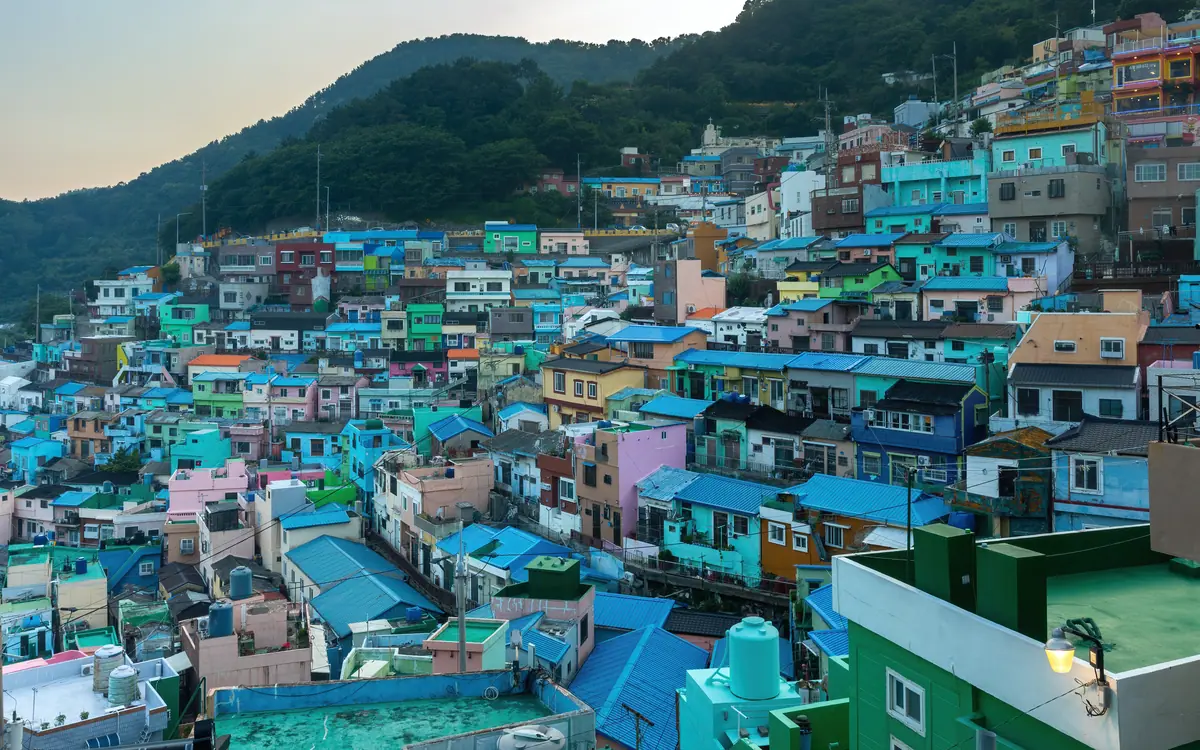
Taxi to Gamcheon Culture Village (~15 min from North Port)
Morning light favors the pastel walls
+0:35
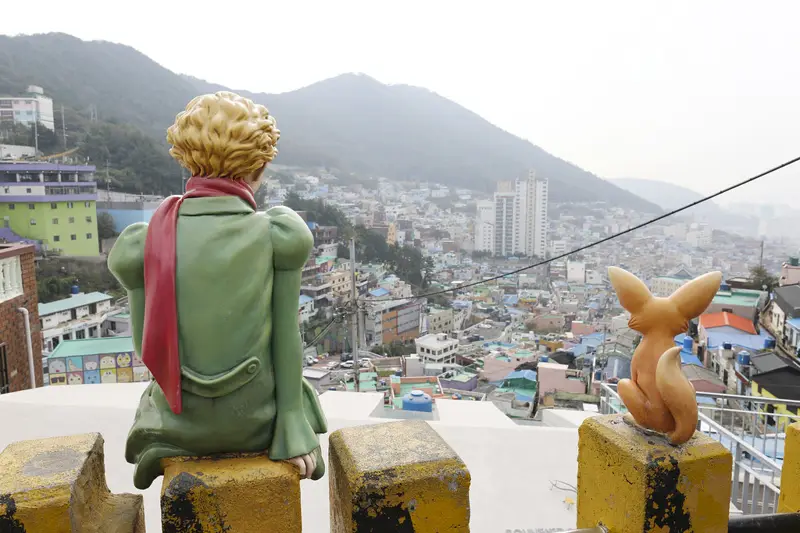
Two hours of lanes, lookouts and the Little Prince
Buy the stamp map; it routes you well
+2:45
Taxi down to Jagalchi
15 min downhill
+3:00
The Nampo classic: market lunch, hotteok, Gukje
As the half-day plan, compressed. Jagalchi is closed the 1st, 3rd and 5th Tuesdays, Gukje Market on Sundays
+5:30
Busan Tower, OR Choryang Ibagu-gil
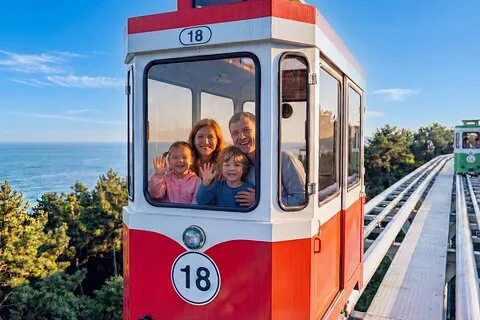
Ibagu-gil is 2 min from Busan Station exit 7 (metro Line 1). Ask at the tourist desk whether the 168 Stairs monorail is running. Pick one, not both
+6:30
Taxi back to the terminal
This day needs a 10-hour call. On the usual 9-hour call, skip the 5:30 stop and head back from Nampo
Running late? Cruise-day traffic on the coastal road? Leave Nampo at 6:00 sharp regardless of what remains — the bridge queues.
Fits a 7-hour stop with nothing to add (off the ship 30 minutes after arrival, back at the gangway an hour before all-aboard). A longer call gives you the extra time; on this one, do not add a stop.
+0:00
Taxi or subway to Nampo-dong
~15 minutes from the terminal
+0:30
Gukje Market, entirely covered
Kilometres of roofed alleys; this is where the city goes in rain — but closed on Sundays
+1:30
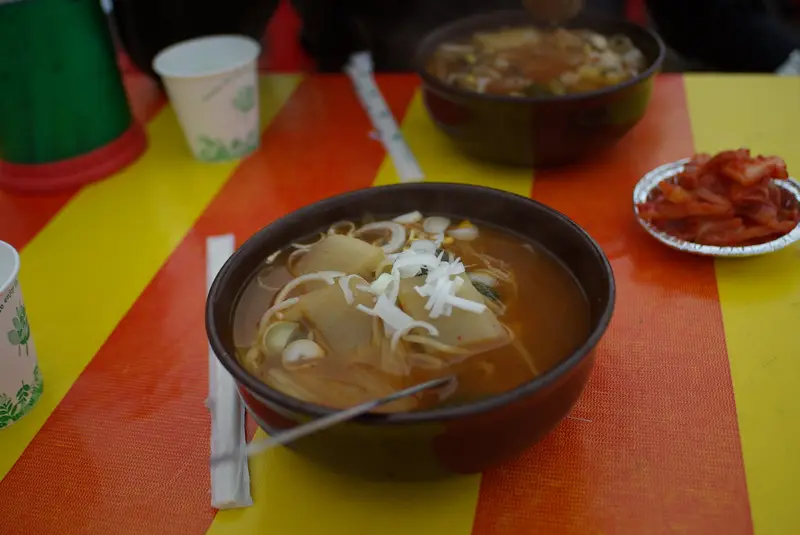
Dwaeji gukbap for lunch
Pork broth over rice — season it yourself with the shrimp sauce
+2:30
Jagalchi Market, indoors
Buy downstairs, carry it up, pay to have it cooked. Closed the 1st, 3rd and 5th Tuesdays
+3:45
Ssiat hotteok at BIFF Square
Under the awnings; served scalding, so wait
+4:30
Back to the terminal
Running late? Gamcheon and Taejongdae are both cliff-and-stairs walks. In real rain they are miserable and slippery — skip both.
Round trips are measured from the gangway and include getting back. Two stops in the same direction overlap, so a real day usually comes in under the total you see, never over it.
From the International Passenger Terminal (North Port): the elevated walkway, ~10–15 min on the flat
From the Yeongdo cruise terminal: taxi (~20 min to the Busan Station area), or walk ~15 min to Dongsam Samgeori for bus 101 or 88. A cruise shuttle at Yeongdo is not confirmed
Which of the two you get is decided by ship size and how full North Port is, sometimes late. Listen to the port talk before you plan the morning.
₩1,600 with a Korean transit card (T-money, Hanaro), ₩1,700 for a single ticket from the station machines (Zone 1, 2026). Japanese IC cards do not workevery ~5 minT-money or card
How to get there
① Metro Line 1 from Busan Station — Nampo for the shopping streets, Jagalchi for the fish market (3–4 stops, under 10 min)
② For Gamcheon: Line 1 to Toseong, exit 6, then village bus Saha 1-1, Seo-gu 2 or Seo-gu 2-2 to Gamjeong Elementary School and a 5-min walk. A taxi from North Port, ~15 min, is simpler
③ Or city bus 5-1 from the North Port terminal to Jagalchi and BIFF Square, every 16 min, ₩1,550 by card
For Gamcheon Culture Village, stay on to Toseong and take the village bus up the hill — it is a steep climb otherwise. City bus 5-1 runs from the North Port terminal to Jagalchi every 16 min (₩1,550 by card). The national cruise office lists a free tourist shuttle for cruise calls, but its route and schedule are not published; do not rely on it.
The one rule: be back on board 60 minutes before all-aboard — every day above already banks it.Phones auto-switch to local time, but all-aboard runs on ship time. Check the daily programme's clock, not your lock screen.More to pick from on the Busan guide and theTop 10.
MY SHIP DAY — fill this in before you walk off
Ship
Date
Docked at (berth)
All-aboard (SHIP time)
My deadline = all-aboard − 60 min
Last shuttle back
Phones auto-switch to local time; all-aboard runs on ship time. Write both if they differ.
GETTING AROUND — the facts that don't change by day (today's times: ship's program or Google Maps)
Busan Station & Metro Line 1: From the International Passenger Terminal (North Port): the elevated walkway, ~10–15 min on the flat From the Yeongdo cruise terminal: taxi (~20 min to the Busan Station area), or walk ~15 min to Dongsam Samgeori for bus 101 or 88. A cruise shuttle at Yeongdo is not confirmed
Nampo-dong, Jagalchi, BIFF Square, Gukje & Gamcheon: ① Metro Line 1 from Busan Station — Nampo for the shopping streets, Jagalchi for the fish market (3–4 stops, under 10 min) ② For Gamcheon: Line 1 to Toseong, exit 6, then village bus Saha 1-1, Seo-gu 2 or Seo-gu 2-2 to Gamjeong Elementary School and a 5-min walk. A taxi from North Port, ~15 min, is simpler ③ Or city bus 5-1 from the North Port terminal to Jagalchi and BIFF Square, every 16 min, ₩1,550 by card Fare ₩1,600 with a Korean transit card (T-money, Hanaro), ₩1,700 for a single ticket from the station machines (Zone 1, 2026). Japanese IC cards do not work. every ~5 min.
SHOW THIS TO A TAXI DRIVER
Busan has two terminals about 7 km apart: point at the one your ship is at.
North Port: Busan Port International Passenger Terminal
THE TWO-MINUTE PORT TALK — read aloud at breakfast
The embassies. Between 1607 and 1811, Korea sent twelve grand embassies to Japan — four to five hundred people at a time, escorted across the country as a spectacle. Every one of them sailed from Busan. And in Busan itself, Japan kept a walled trading settlement so large it makes Nagasaki's famous Dejima look like a car park.
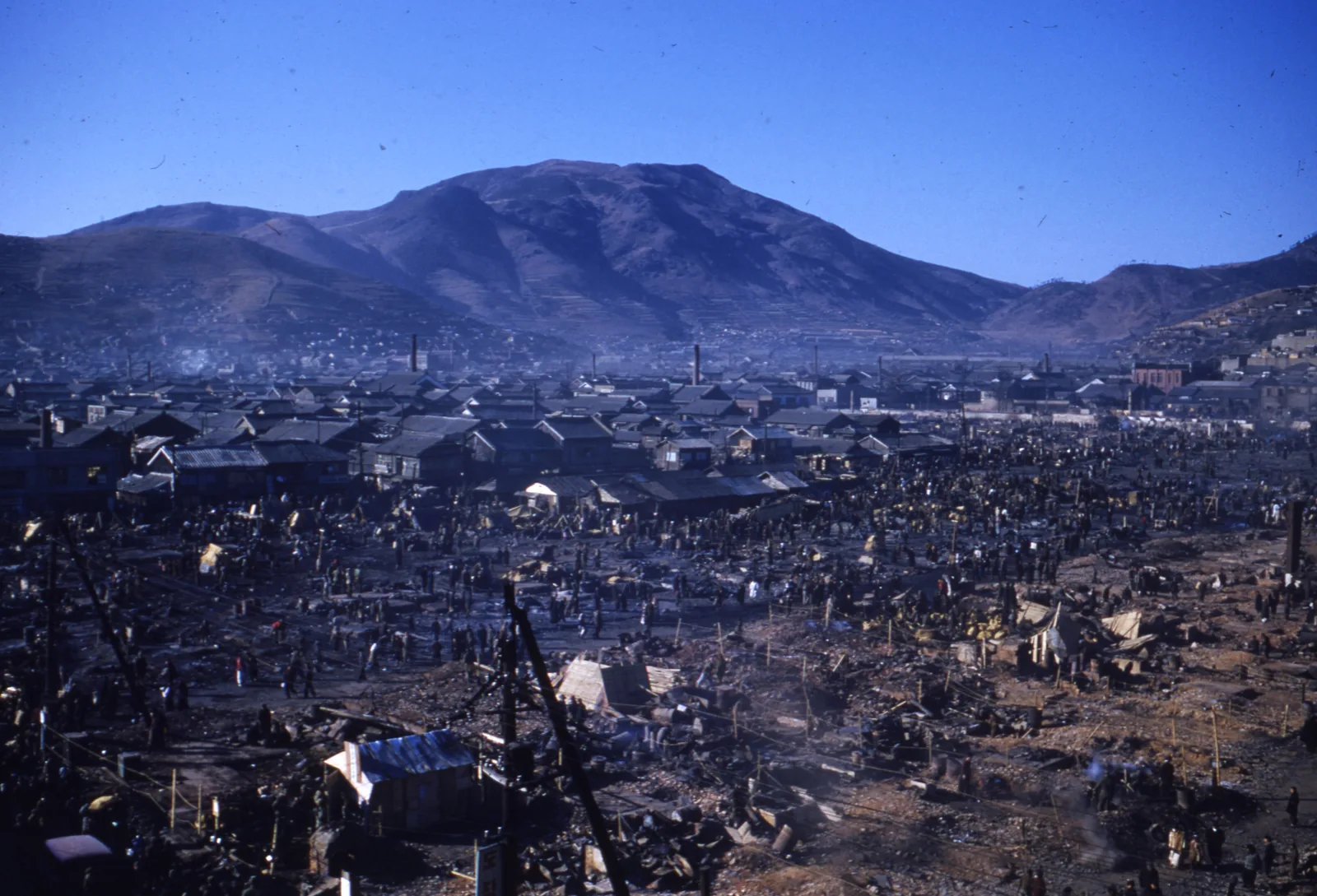
The last city. In August 1950 the Republic of Korea consisted of Busan and a defensive line drawn around it. The government moved here, the refugees came here, and the city they improvised in those three years is the city you are walking through.
Jagalchi. The men were at the war or at sea or dead. The women sold the fish. Seventy years later the Jagalchi ajumma are still the ones behind the tanks, they will still shout at you, and being shouted at is part of the transaction.
Refugee cooking. Busan's signature dishes are not old. Almost all of them were invented in the 1950s by people who had lost everything and were cooking with whatever the port and the American aid shipments provided. They are among the best cheap food in East Asia and every one of them has a reason.
The one rule: be back on board 60 minutes before all-aboard — every plan above already banks it. · Free guide: port-of-japan.com/busan/ · By Takumi Yamada, Tokyo, Japan