~4h — the round trip from the gangway, with the 60-minute margin kept aside.
Tap a photo to see it large. 8 photographs, each credited.
Korea’s greatest fish market — tanks of everything the strait holds, auntie vendors in rubber boots, and lunch upstairs minutes after you pointed at it.
Korea's largest fish market, run for seventy years by women
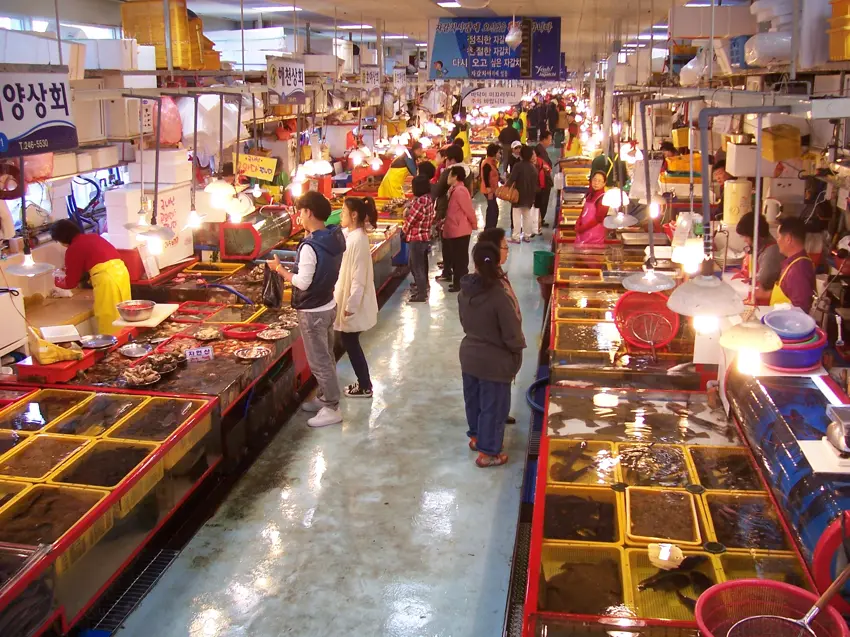
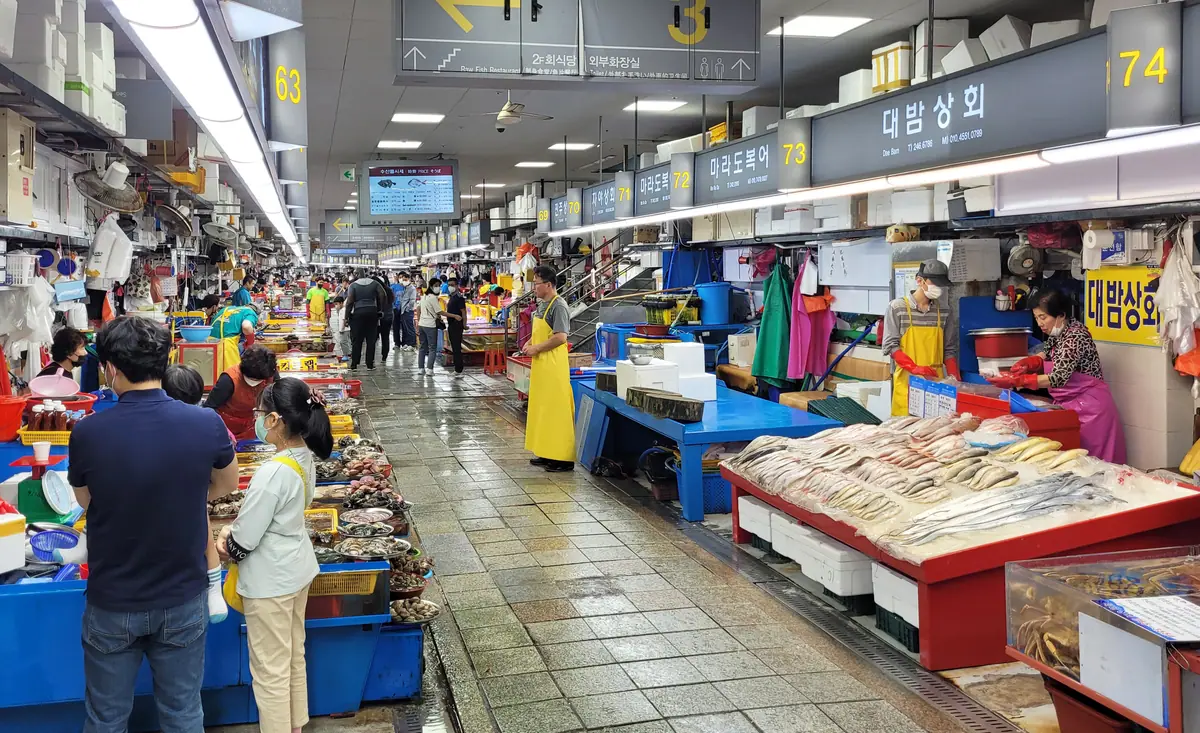
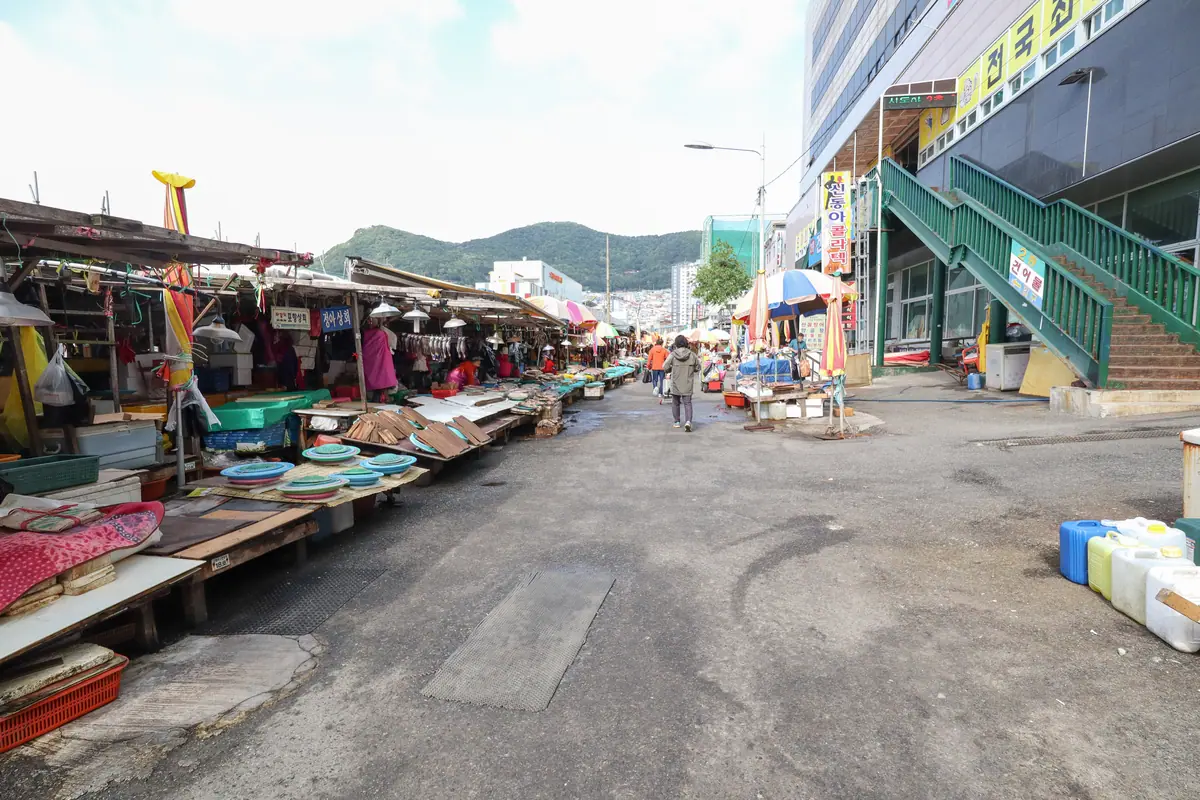
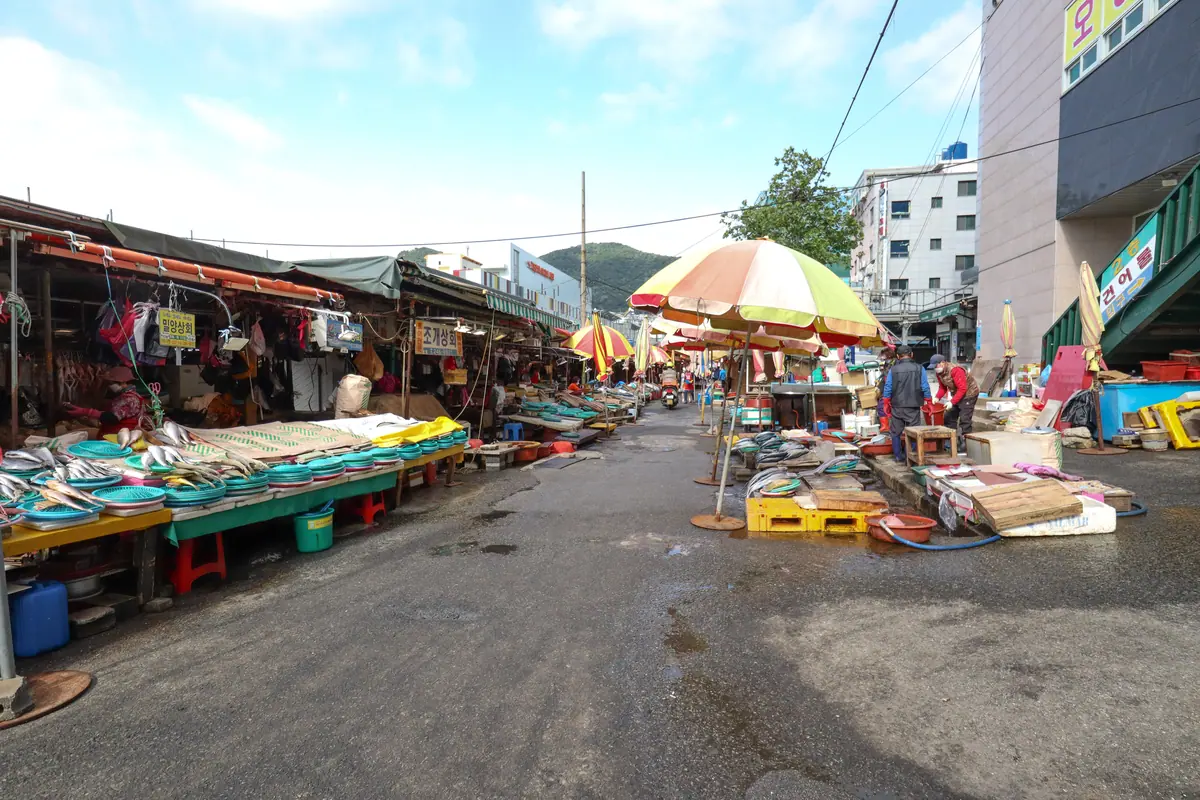
Korea's largest seafood market, run since the Korean War almost entirely by women, the jagalchi ajumma, who sell from the floor and the tanks. The name comes from the pebbled shore it started on. You choose a fish downstairs and it is prepared upstairs, which is the whole system.
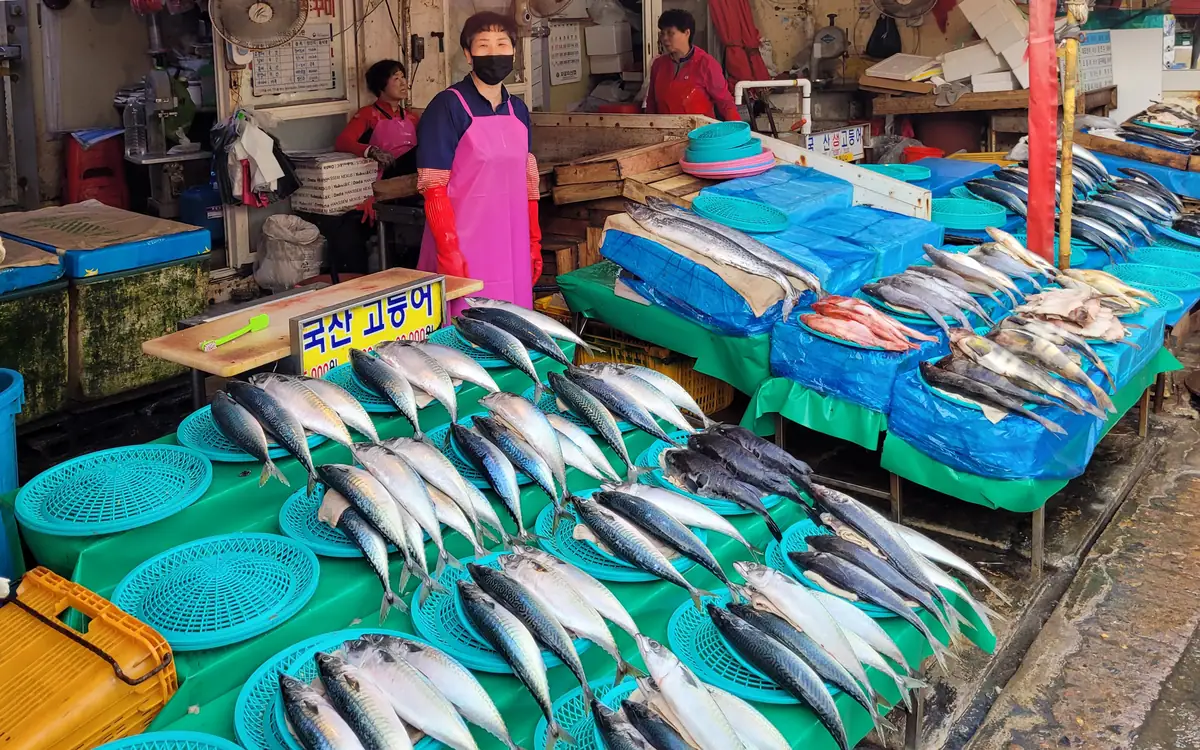
The men were at the war or at sea or dead. The women sold the fish. Seventy years later the Jagalchi ajumma are still the ones behind the tanks, they will still shout at you, and being shouted at is part of the transaction.
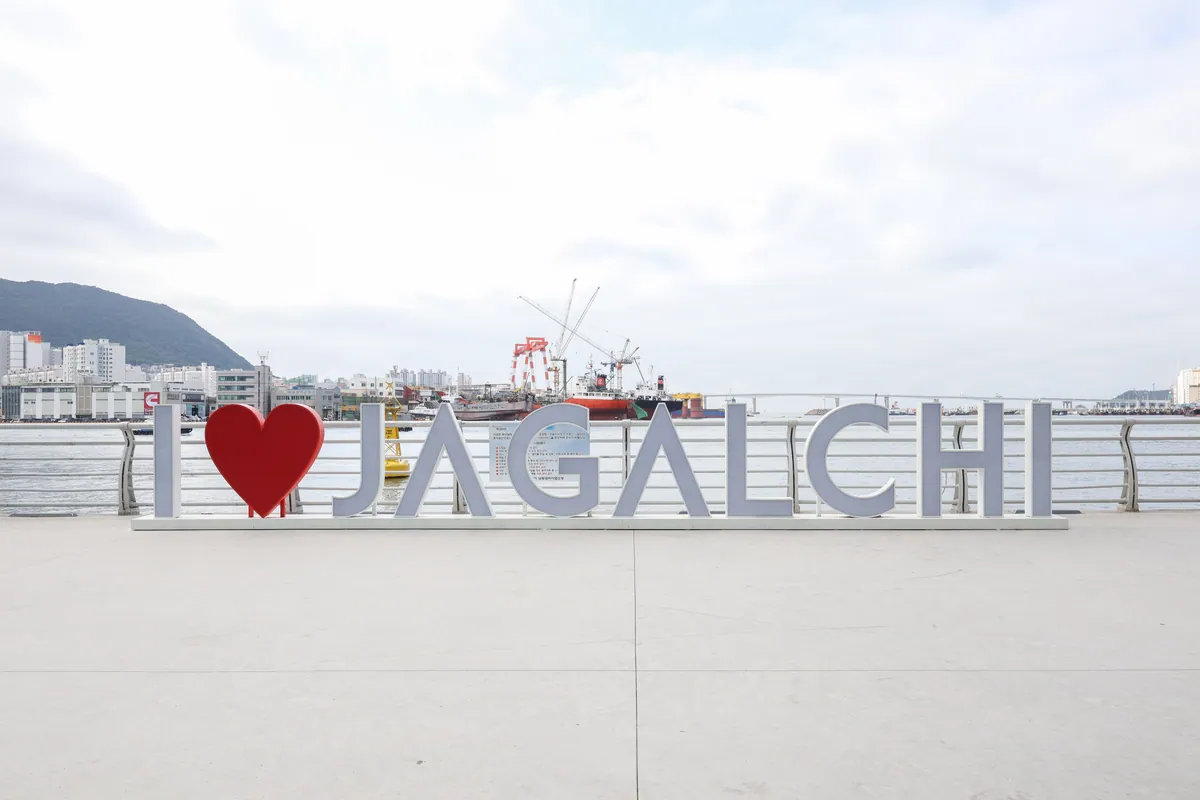
The name comes from jagal, gravel — this shore was gravel before it was a market. Jagalchi as it stands was made in the 1950s, when the refugee city needed feeding and the people available to do it were overwhelmingly women, many of them war widows. They are still called the Jagalchi ajumma and the term carries respect.
The system is two-step and confuses everyone: choose a live fish on the ground floor, agree a price, then carry it upstairs where a restaurant prepares it for a per-person fee. You are not ordering from a menu — you are buying an animal and having it cooked.
Hence the name — jagal, gravel
The women who do it become the Jagalchi ajumma
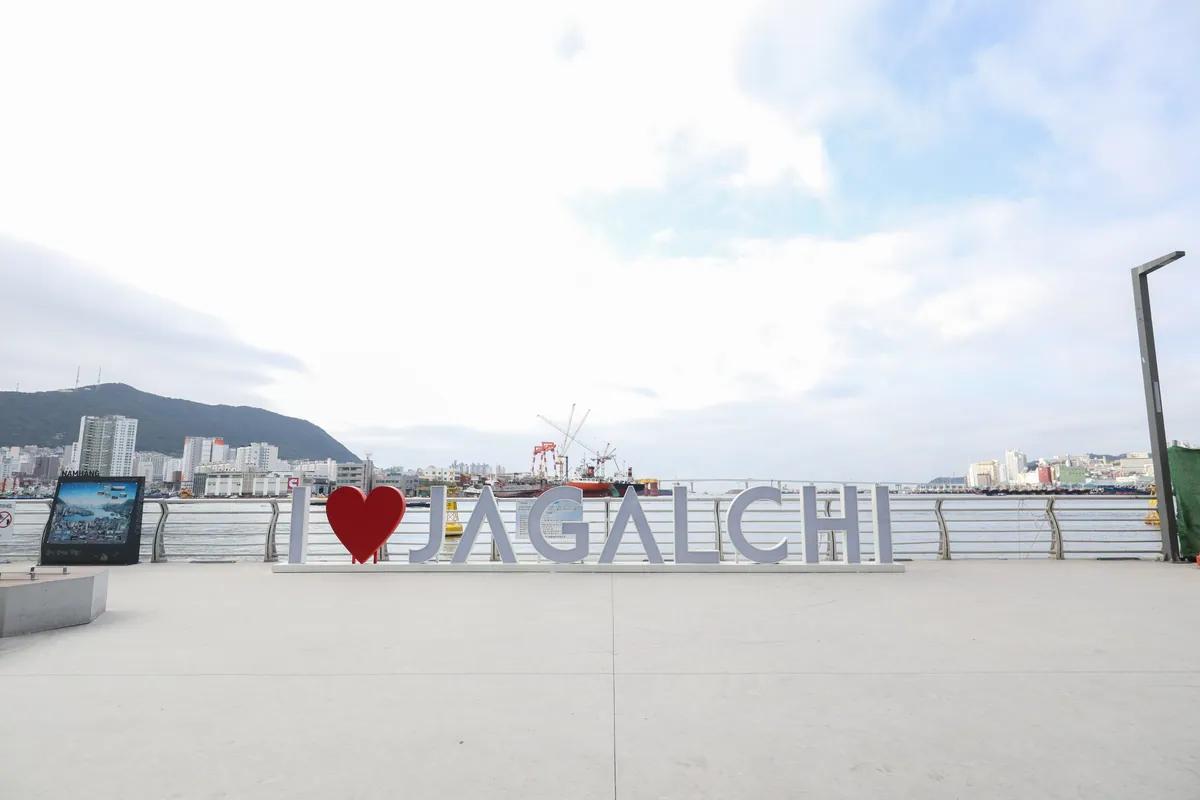
A roof shaped after a seagull in flight
Buy downstairs, carry it up, pay to have it cooked
Buy on the ground floor, carry it upstairs, pay the preparation fee. Do not order from a menu.
Both pins on one map, so the distance is a fact rather than a feeling.
Choose a live fish from a ground-floor vendor and agree a price, then carry it up to the second-floor restaurants, which prepare it — raw as hoe, grilled, or in a stew — for a per-person fee on top. Prices downstairs are expected to be negotiated, and doing so cheerfully is good manners.
Yes — about fifteen minutes by taxi from the Busan International Passenger Terminal, or a short subway ride to Jagalchi station. It is the easiest major sight to reach here, and BIFF Square and Gukje Market are a further ten minutes on foot.
Each one is a finished day we have walked and timed, with this stop in it. Read the route rather than assembling it yourself.
Each of these still lands you back aboard with the hour to spare.
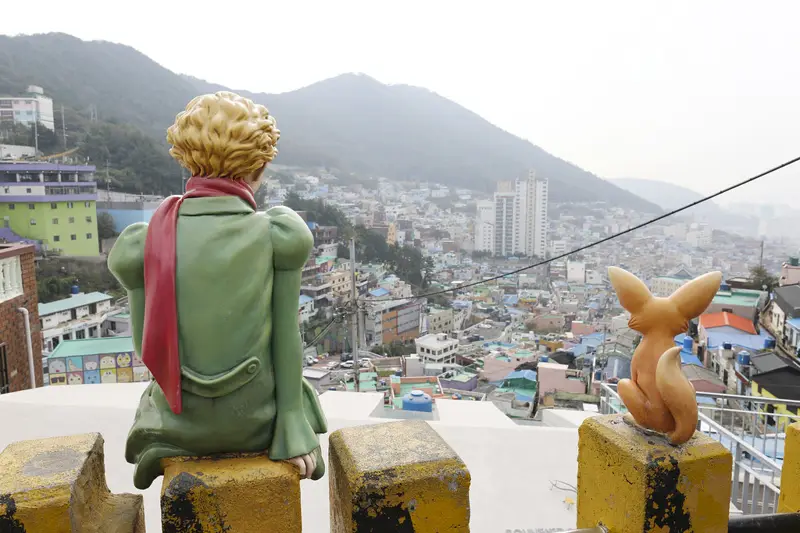 See · ~5h round trip
A hillside of Lego-colored houses threaded with art alleys and the Little Prince gazing over it all.
See the detail →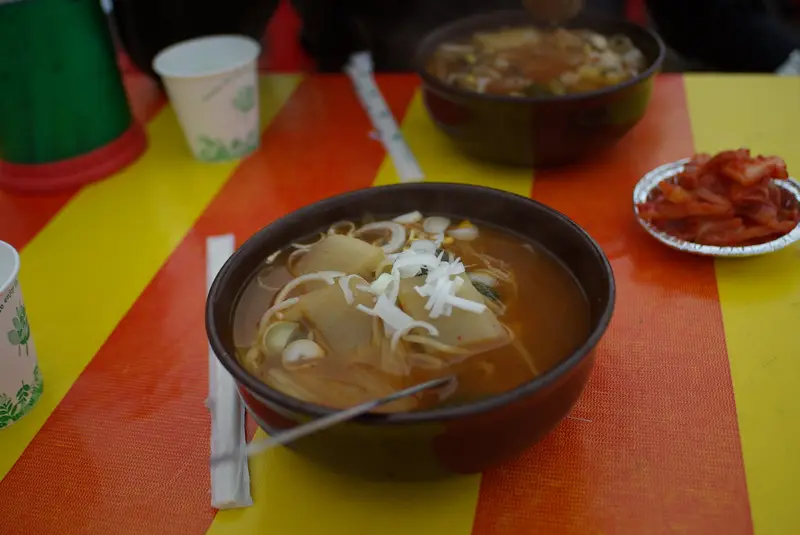 Eat · ~4h
Busan’s soul in a bowl — milky pork broth, rice, wild chives.
See the detail → See · ~7h guidedCandy-colored capsules gliding above the blue coast to Cheongsapo — Korea’s most photogenic train ride, paired with Haeundae beach.
See the detail →No typing needed — jump straight in:
Just docked? — the gangway toolStart from your shipThe ride from every berthAsk the editorGlossary