Korea's largest fish market, run for seventy years by women
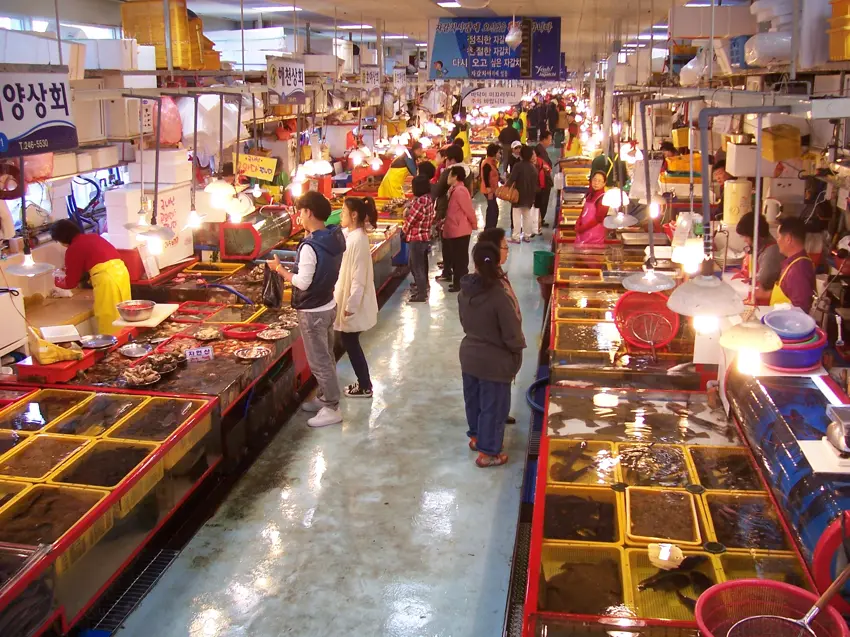
The men were at the war or at sea or dead. The women sold the fish. Seventy years later the Jagalchi ajumma are still the ones behind the tanks, they will still shout at you, and being shouted at is part of the transaction.
The name comes from jagal, gravel — this stretch of shore was gravel before it was a market. Fish has been sold here since the colonial period, but Jagalchi as it is now was made in the 1950s, when the refugee city needed feeding and the people available to do it were overwhelmingly women.
Many were war widows. They took a patch of ground, a basin and a knife, and they held it. The term Jagalchi ajumma — roughly "the Jagalchi aunties" — is not a nickname a tourist board invented. It is what they are called, and it carries respect.
The current building opened in 2006 and its roof is shaped after a seagull in flight. The market it houses is considerably older than the architecture.
The ground floor is the market: tanks, ice, and several hundred vendors. You choose a fish there, alive, and agree a price. Then you carry it upstairs, where restaurants prepare it — sliced raw as hoe, or grilled, or made into a stew — for a per-person preparation fee on top of what you paid downstairs.
That two-step system confuses almost every first-time visitor. It is also the whole appeal: you are not ordering from a menu, you are buying an animal and having it cooked.
Prices are negotiable and the negotiation is expected. Ask the price, look unconvinced, and see what happens. Doing this cheerfully is good manners; doing it aggressively is not.
Autumn and winter are the seasons here. Look for flounder and rockfish for hoe, hairtail grilled, and — if you are the kind of person who wants the local benchmark — gomjangeo, hagfish, cooked over charcoal at the stalls outside. It is a Busan speciality and it is not for everyone.
In autumn the outdoor grills go up along the waterfront and the whole street smells of it. That is the version of Jagalchi worth planning around.
Hence the name — jagal, gravel
The women who do it become the Jagalchi ajumma
A roof shaped after a seagull in flight
Buy downstairs, carry it up, pay to have it cooked
Buy on the ground floor, carry it upstairs, pay the preparation fee. Do not order from a menu.
You buy a live fish from a vendor on the ground floor and agree a price, then carry it upstairs to a restaurant that prepares it — raw as hoe, grilled, or in a stew — for a per-person preparation fee on top. It is not a menu-ordering system, and prices downstairs are expected to be negotiated, cheerfully.
The women who have run the market since the 1950s, many of them originally war widows who took a patch of ground and held it while the refugee city needed feeding. The term means roughly "the Jagalchi aunties" and it carries respect, not condescension.
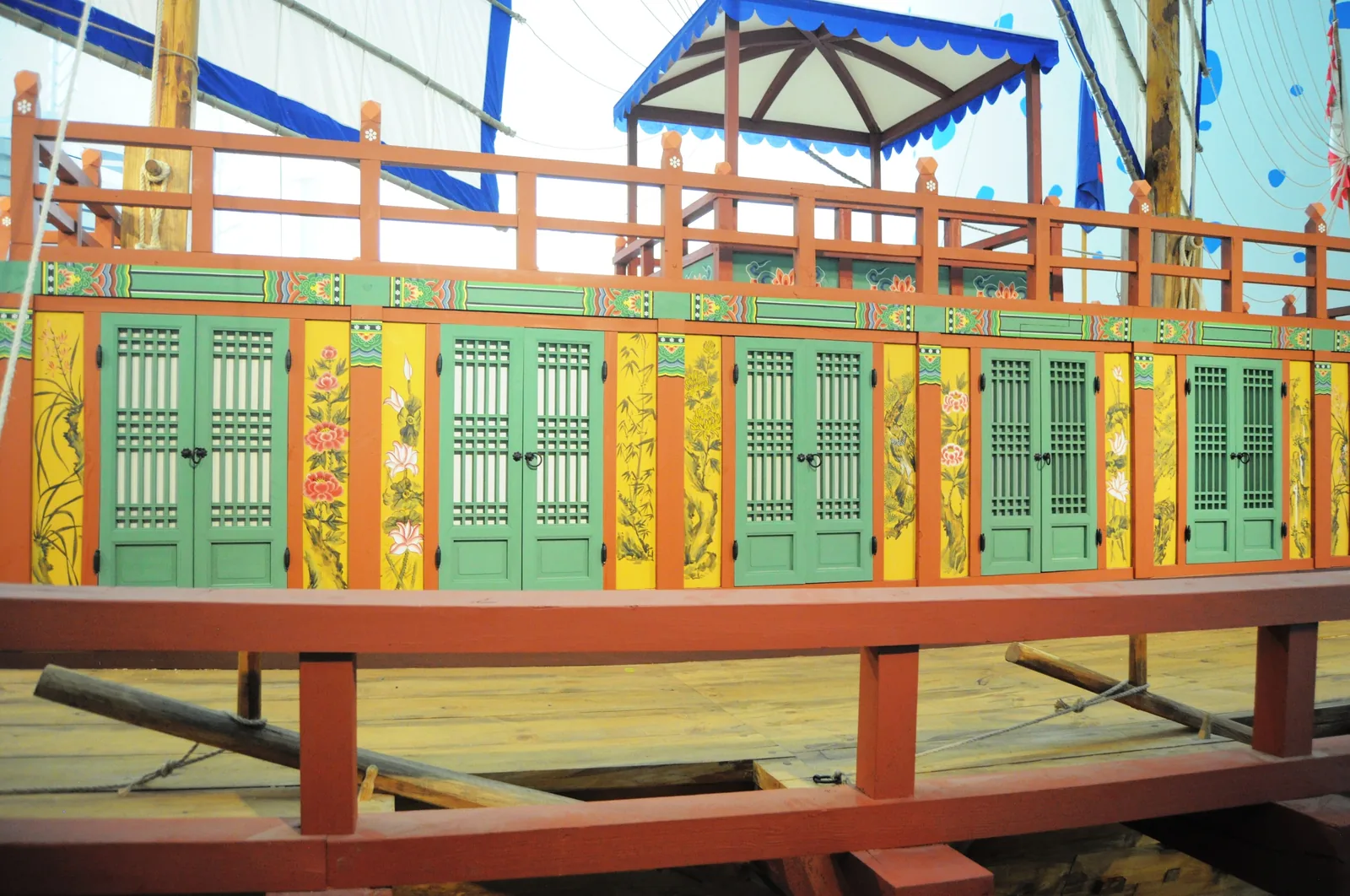
Twelve Korean missions to Japan, and a Japanese trading post here ten times the size of Dejima
Read →
For most of 1950, free Korea was this city and a perimeter around it
Read →
Four dishes this city invented because it had to
Read →
How a port city became the centre of Asian cinema in about a decade
Read →No typing needed — jump straight in:
Just docked? — the gangway toolStart from your shipThe ride from every berthAsk the editorGlossary