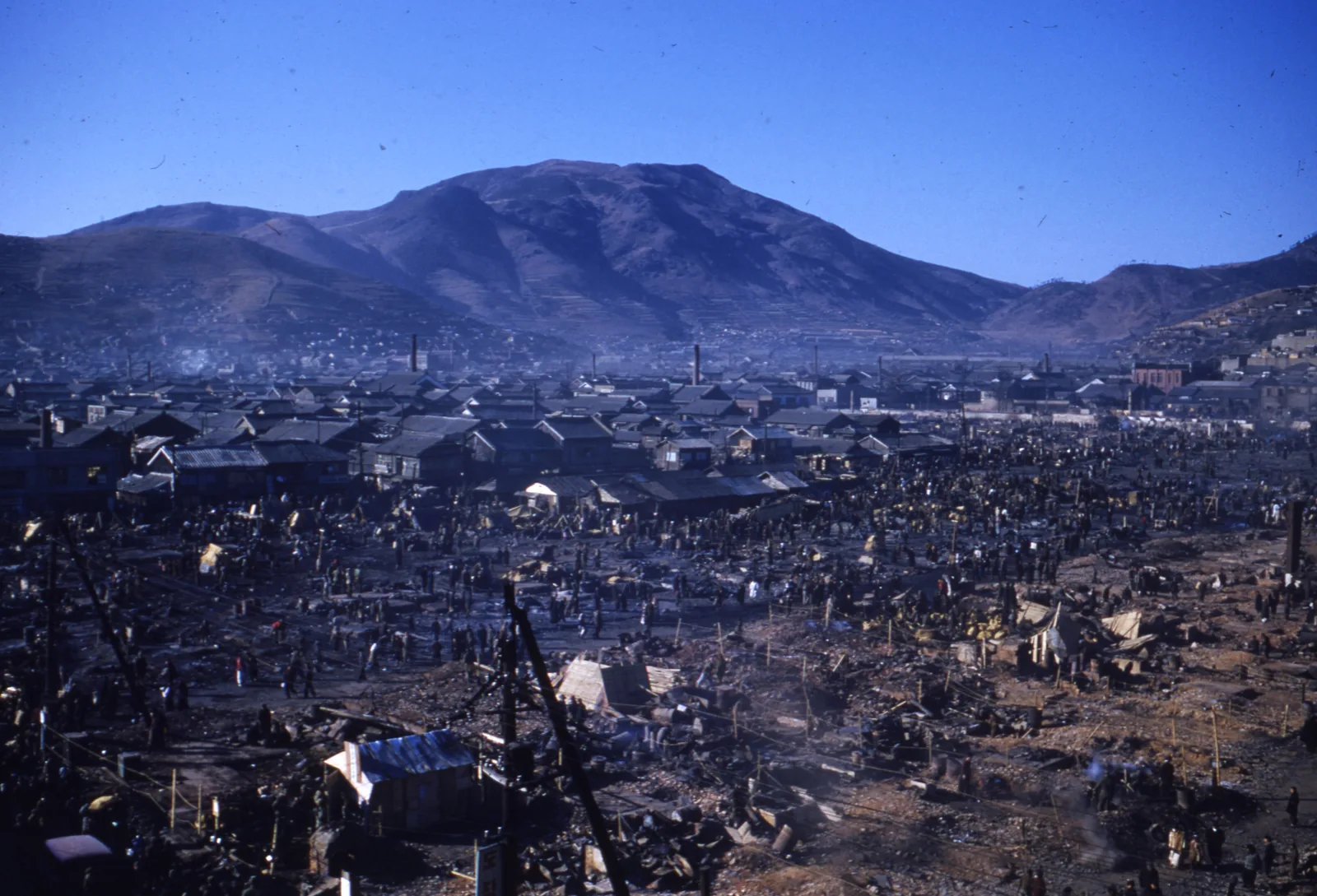
For most of 1950, free Korea was this city and a perimeter around it
In August 1950 the Republic of Korea consisted of Busan and a defensive line drawn around it. The government moved here, the refugees came here, and the city they improvised in those three years is the city you are walking through.
The invasion in June 1950 pushed south fast. By August, what remained of South Korea was a rectangle in the far south-east corner, held along the Nakdong River — the Pusan Perimeter. Busan was the provisional capital, the only major port still functioning, and the destination of everyone fleeing.
The population roughly doubled. There was no housing, so people built on the hillsides — the only land nobody had claimed — in whatever could be carried up a slope. Whole neighbourhoods went up the mountains in stepped rows.
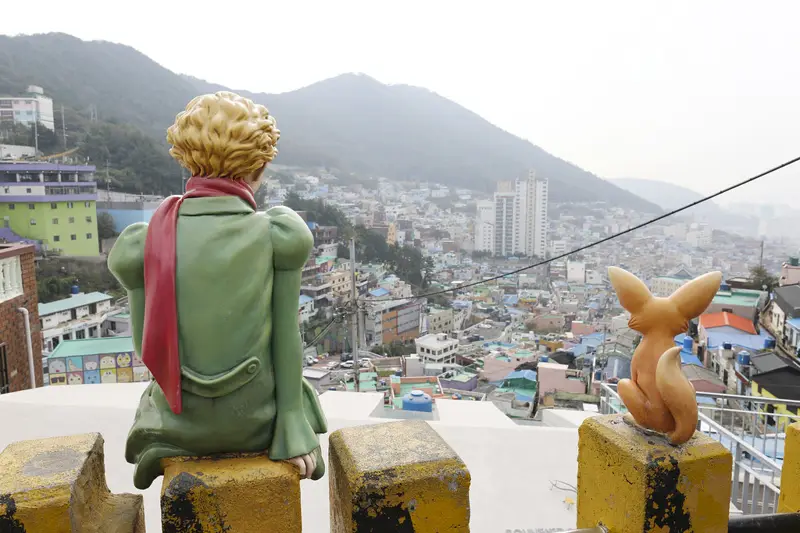
Gamcheon Culture Village is one of those neighbourhoods. The stepped rows of pastel houses in every photograph of Busan are a refugee settlement that was never cleared.
Gamcheon was settled in the 1950s by war refugees and by followers of a religious movement who moved there together. It stayed poor and stayed standing. From 2009, an arts regeneration project brought in murals, sculpture and colour, and it became the most photographed place in the city.
It is worth going. It is also, and this matters, somebody's street. Around eight to nine thousand people still live there, many of them elderly, and the alleys between their front doors are two feet wide. Signs ask for quiet. They mean it.
Almost every dish Busan is known for was invented by people improvising in these years, and knowing that changes how it tastes.
Dwaeji gukbap — pork-bone broth over rice — came from using the cuts and bones that were available and cheap. Milmyeon exists because refugees from the north wanted the cold buckwheat noodles of home, could not get buckwheat, and used American aid wheat flour instead. Ssiat hotteok, the seed-stuffed pancake sold at BIFF Square, is a later Busan improvement on an older street snack.
The UN Memorial Cemetery in Busan is the only United Nations cemetery in the world. Around two thousand three hundred graves, from eleven countries. At eleven in the morning on 11 November, veterans' organisations across the world turn toward it for a minute of silence.
Within weeks, only the south-east corner holds
Busan is the provisional capital and the last port
Gamcheon and the stepped neighbourhoods
The market that fed the refugee city
And becomes the image of Busan
Go to Gamcheon early, walk slowly, and keep your voice down. Nine thousand people live in the photograph.
It was settled in the 1950s by Korean War refugees and a religious community who built on the hillside because no other land was available. It stayed poor and intact, and from 2009 an arts regeneration project added murals, sculpture and paint. Around eight to nine thousand people still live there, so it is a residential street first and a photograph second.
For most of 1950, Busan was effectively all that remained of South Korea — the provisional capital inside the Pusan Perimeter and the only functioning major port. Its population roughly doubled with refugees, who built the hillside neighbourhoods still standing today, and the city's signature dishes were improvised in those years.
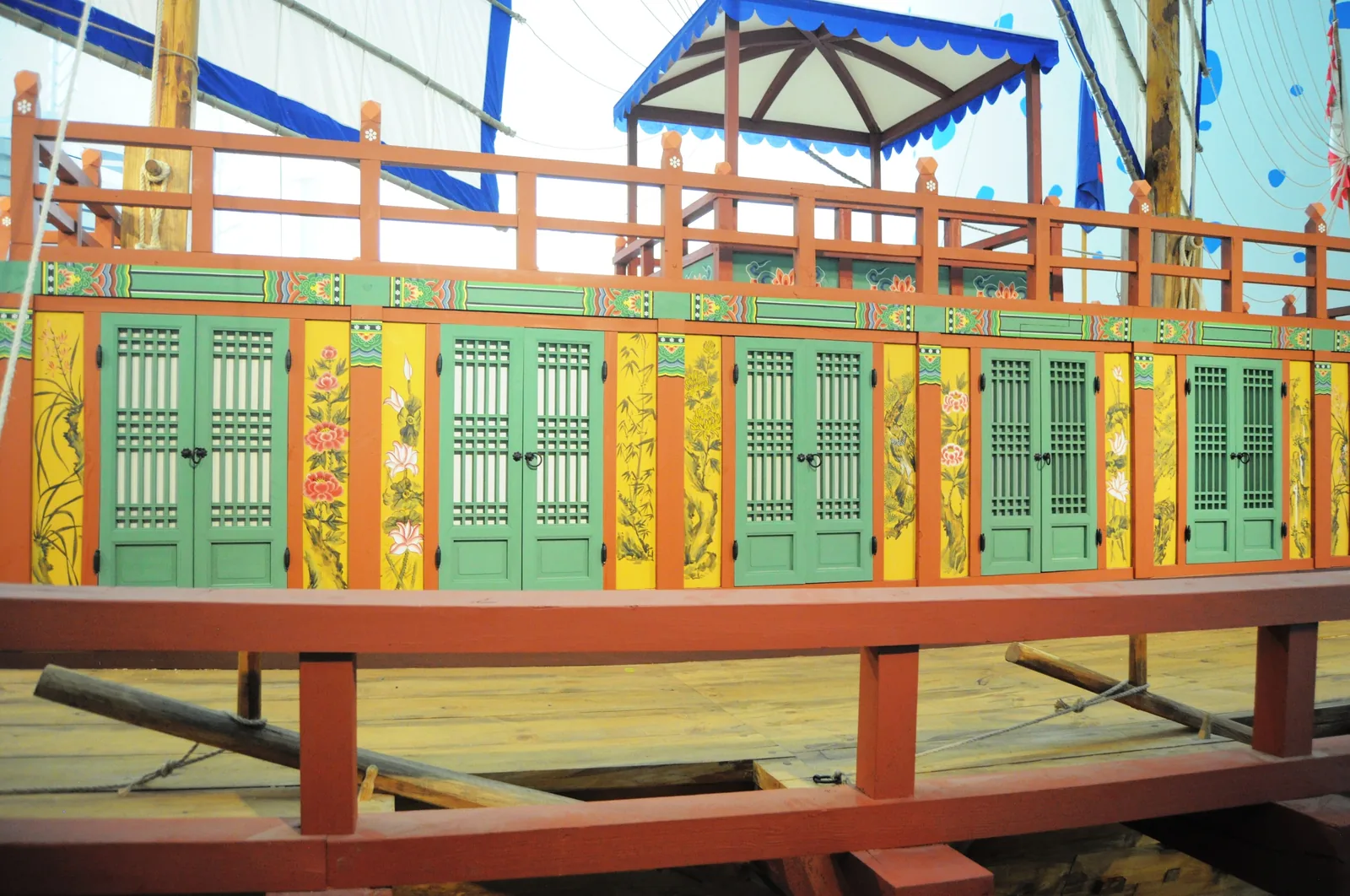
Twelve Korean missions to Japan, and a Japanese trading post here ten times the size of Dejima
Read →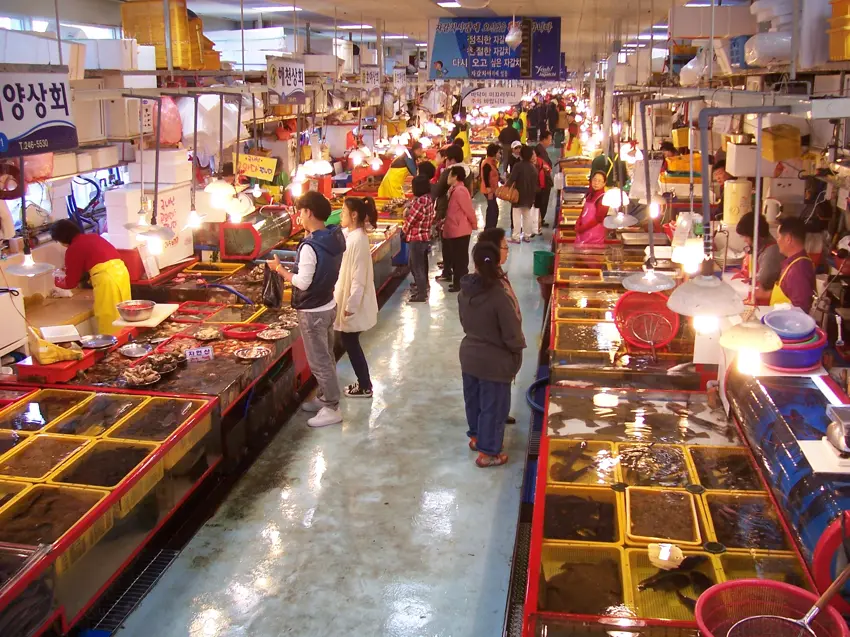
Korea's largest fish market, run for seventy years by women
Read →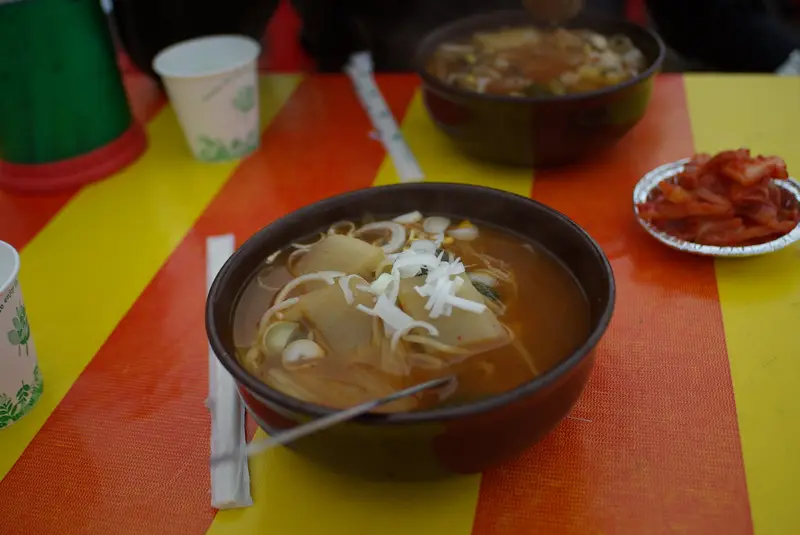
Four dishes this city invented because it had to
Read →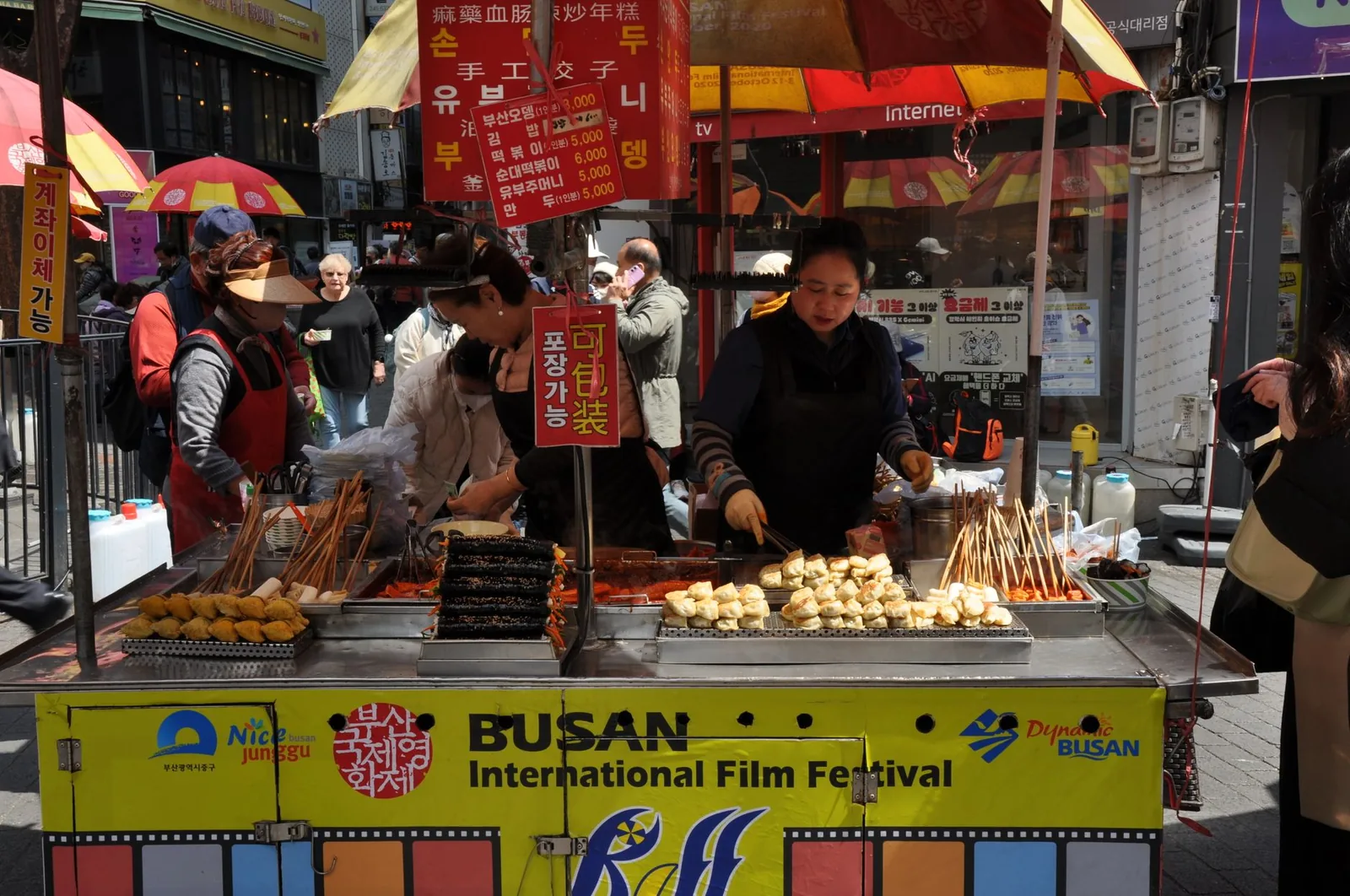
How a port city became the centre of Asian cinema in about a decade
Read →No typing needed — jump straight in:
Just docked? — the gangway toolStart from your shipThe ride from every berthAsk the editorGlossary
![[BUSAN,GamcheonVillage] Private Korean Art Painting Class](/img/viator/9abca122c23e.webp)