Four dishes this city invented because it had to
Busan's signature dishes are not old. Almost all of them were invented in the 1950s by people who had lost everything and were cooking with whatever the port and the American aid shipments provided. They are among the best cheap food in East Asia and every one of them has a reason.
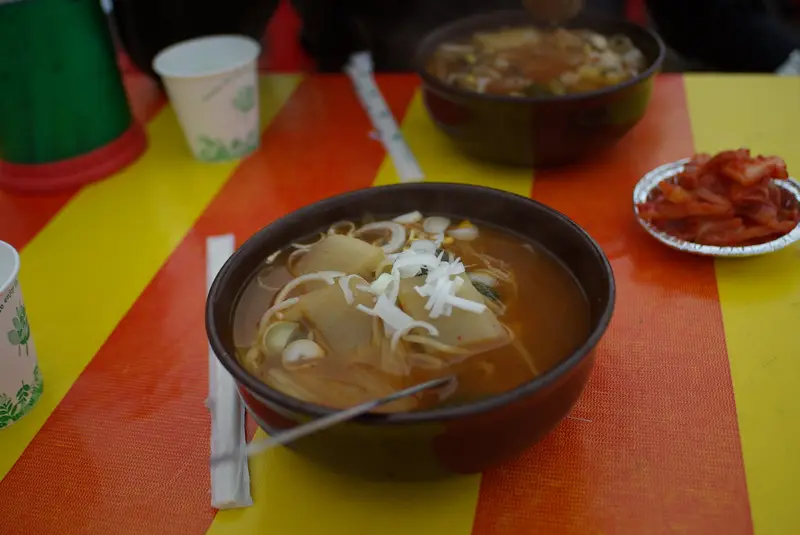
Pork bones boiled for hours into a milky broth, poured over rice, served with a plate of shrimp sauce, chive salad and raw garlic to season it yourself. Dwaeji gukbap is Busan's definitive dish and it costs less than a coffee in most cruise ports.
It came from the war, when refugees from the north used the pork bones and offcuts that the American army units did not want, and applied northern soup technique to them. It is now sold on entire streets of specialist shops, several open twenty-four hours.
Season it yourself. The broth arrives deliberately under-salted; you add the shrimp sauce (saeujeot) to taste. Doing nothing to it is the tourist error.
Refugees from Pyongyang and Hamhung wanted naengmyeon, the cold buckwheat noodles of the north. There was no buckwheat. There was American aid wheat flour, in quantity.
Milmyeon — literally "wheat noodles" — is what they made instead: chewier, softer, in an icy beef-and-herb broth with mustard and vinegar added at the table. It became Busan's own, and in summer the queues are serious.
A dish named after the flour it was forced to use, which then became the thing people prefer. That is Busan in one bowl.
Korean fish cake is a Busan product. The technique arrived through the port during the colonial period, the city had the fish and the processing plants, and eomuk from Busan is what the rest of Korea buys.
Eat it from a street cart on a skewer, standing, with a paper cup of the broth it was simmering in — which is free, and which you refill yourself. In winter this is the single most comforting thing in the city.
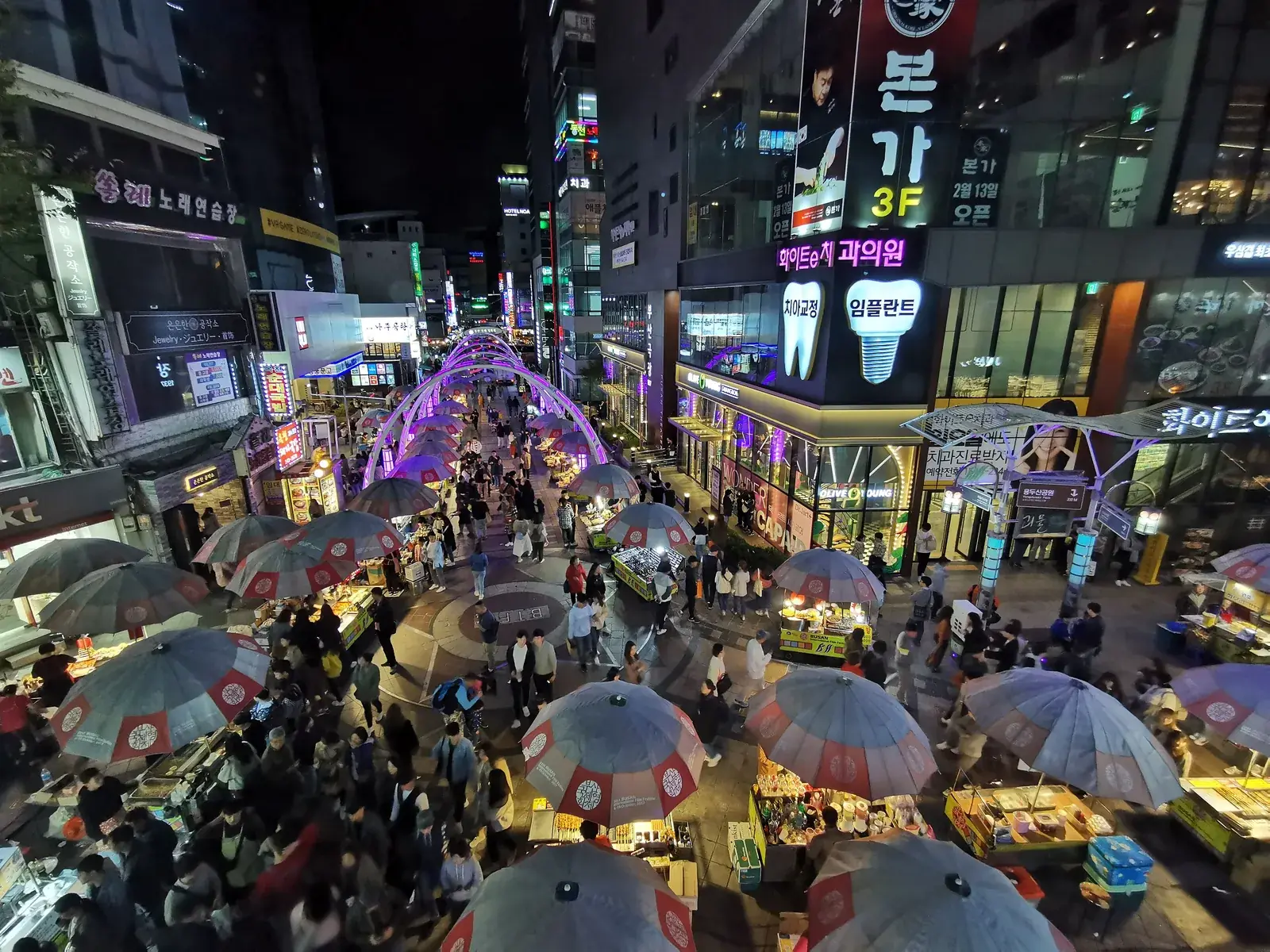
A hotteok is a griddled pancake filled with brown sugar syrup. Busan's version, sold at BIFF Square, is cut open after frying and packed with sunflower seeds, pumpkin seeds and peanuts.
It is served scalding. The syrup inside is molten sugar and it will burn you. Wait, genuinely wait, and then eat it before it cools past the point where the seeds still crunch against the syrup.
Pork bones, aid wheat flour, and northern technique
And becomes the thing people prefer
Eomuk from here is what the country buys
Seeds packed into a sugar pancake, served scalding
Dwaeji gukbap for lunch, season it yourself with the shrimp sauce, then ssiat hotteok at BIFF Square.
Dwaeji gukbap (pork-bone broth over rice, seasoned at the table with salted shrimp sauce), milmyeon (cold wheat noodles that replaced northern buckwheat naengmyeon), eomuk fish cake from street carts, and ssiat hotteok — a sugar pancake stuffed with seeds, sold at BIFF Square. All four were invented or perfected by war refugees in the 1950s.
Very little. A bowl of dwaeji gukbap is typically a few dollars, ssiat hotteok is under two, and a skewer of eomuk with a cup of its broth is about a dollar with free refills. Lunch, a snack and a beer comes in well under fifteen dollars per person.
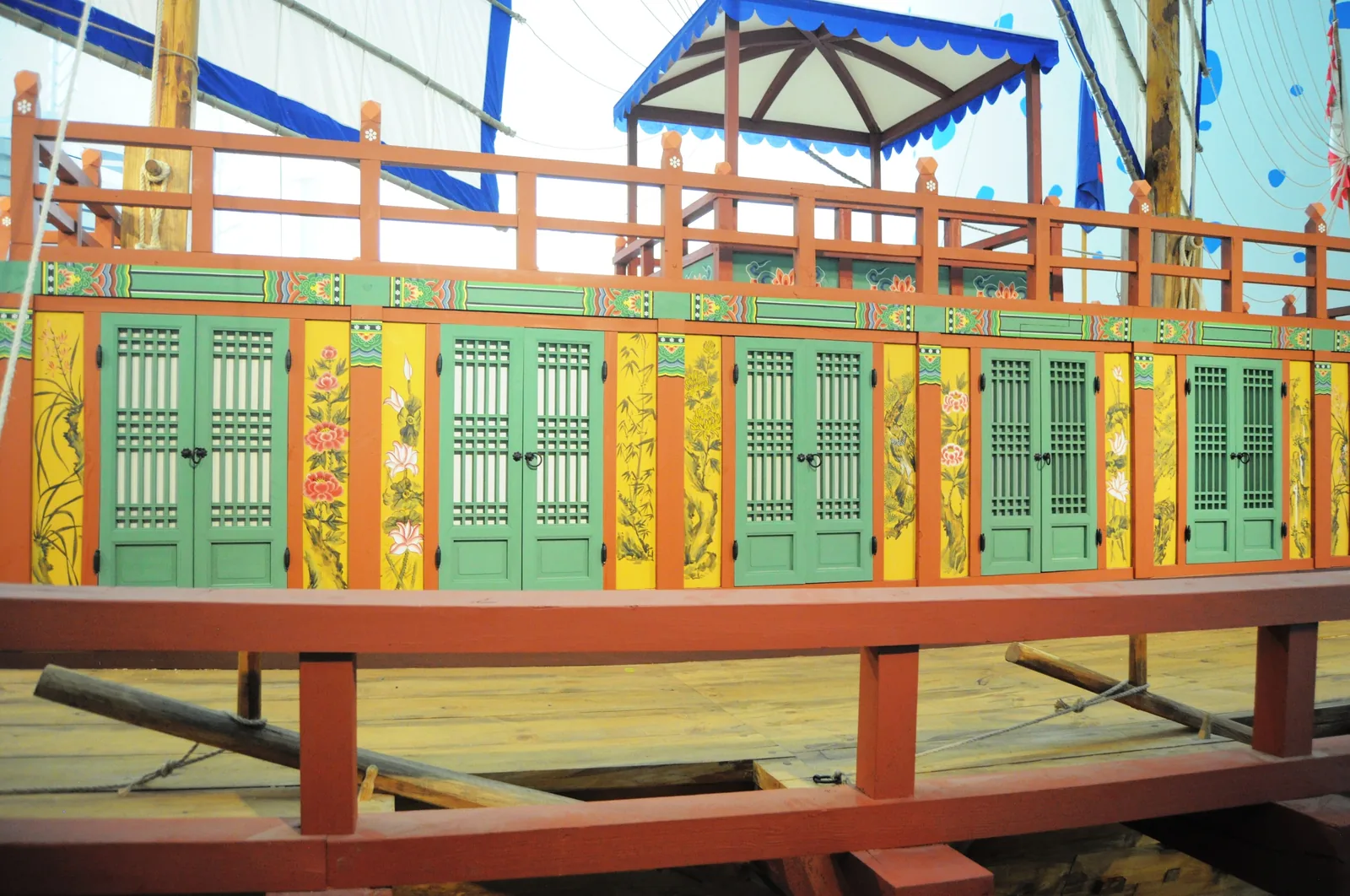
Twelve Korean missions to Japan, and a Japanese trading post here ten times the size of Dejima
Read →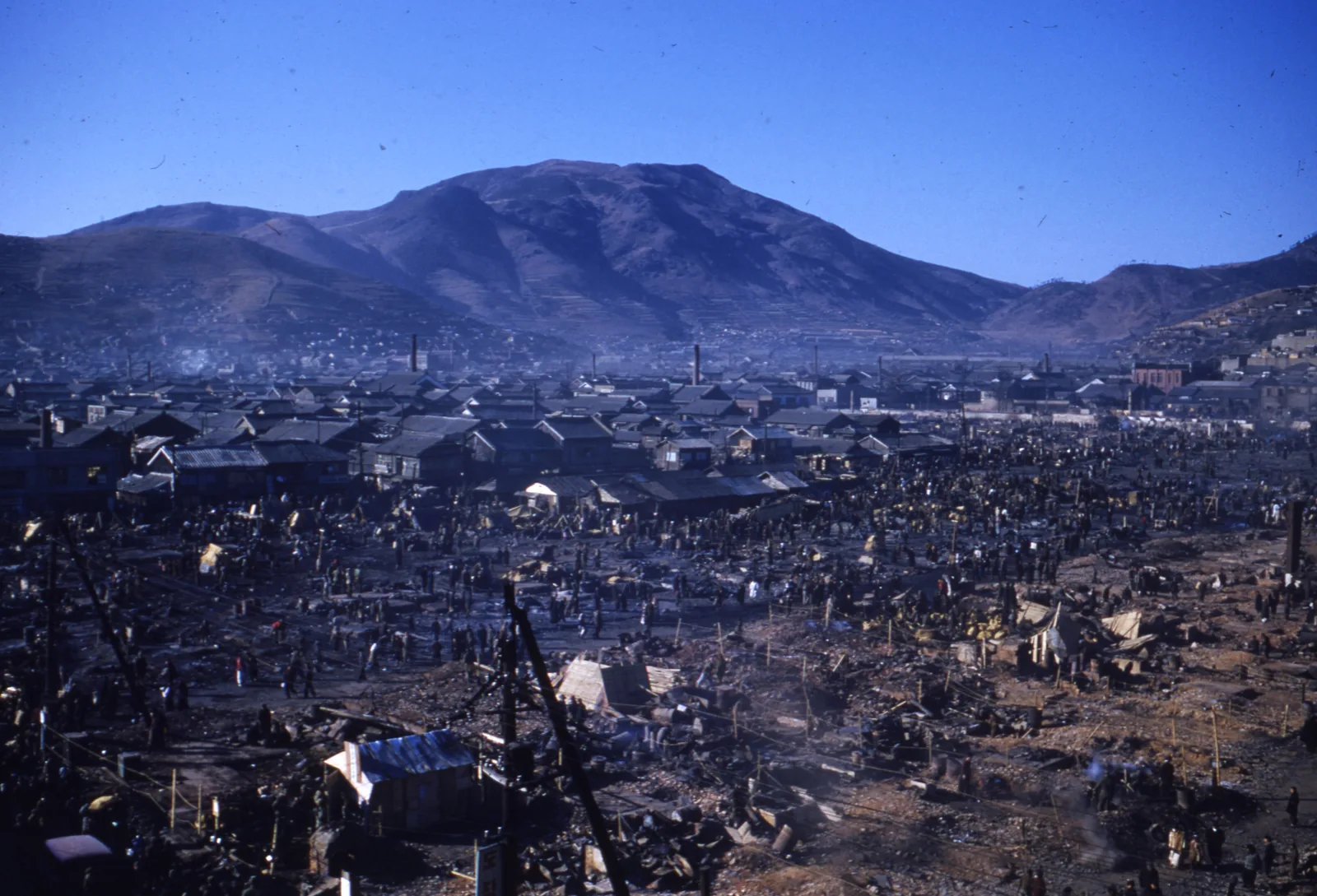
For most of 1950, free Korea was this city and a perimeter around it
Read →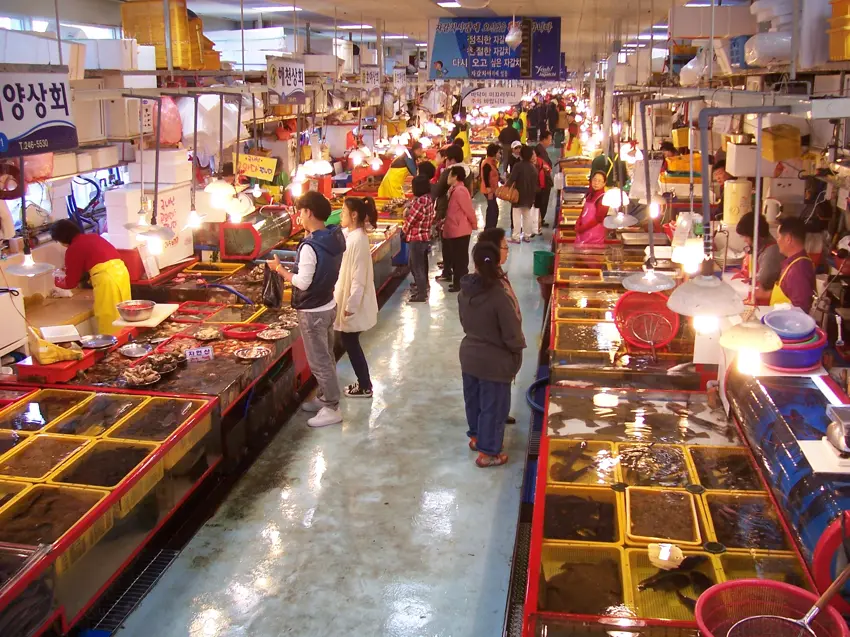
Korea's largest fish market, run for seventy years by women
Read →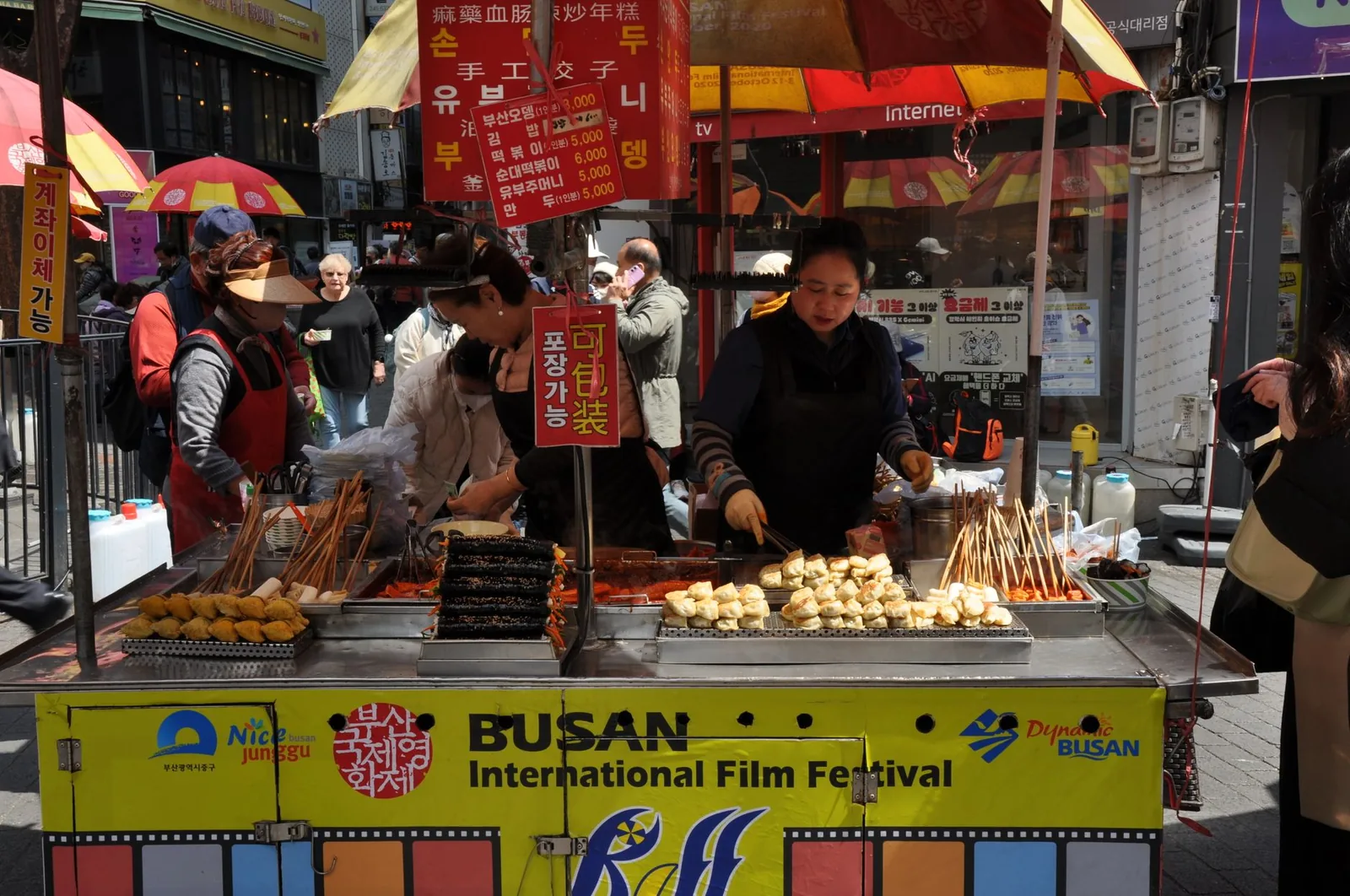
How a port city became the centre of Asian cinema in about a decade
Read →No typing needed — jump straight in:
Just docked? — the gangway toolStart from your shipThe ride from every berthAsk the editorGlossary