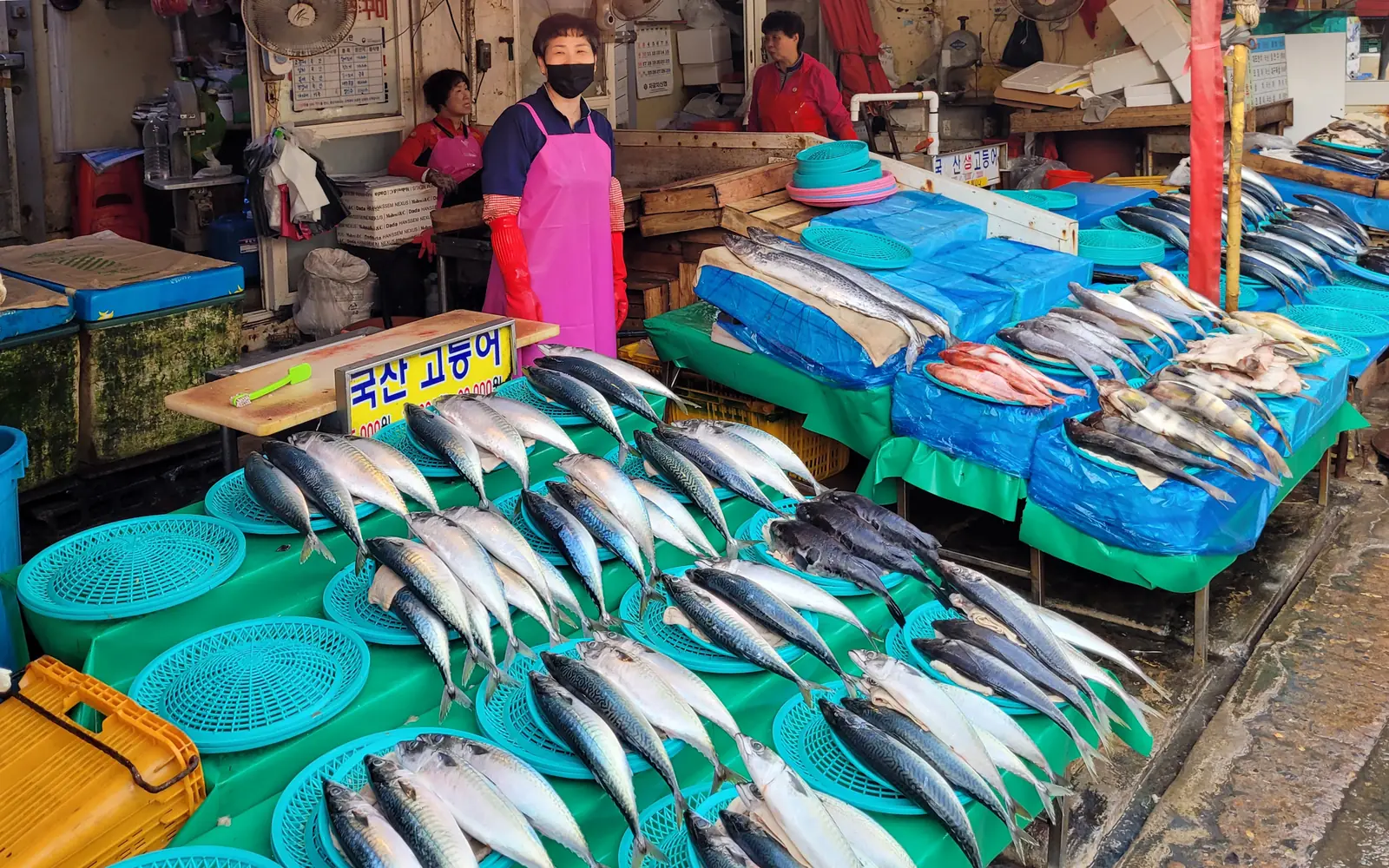
~4.5h — the round trip from the gangway, with the 60-minute margin kept aside.
Tap a photo to see it large. 2 photographs, each credited.
Choose a fish downstairs, eat it upstairs sliced thick with gochujang, garlic and lettuce wraps — the Korean answer to sashimi, louder and more alive.
Korean hoe is raw fish, but the handling is not Japanese: it is usually cut thicker, served chewy rather than melting, and eaten wrapped in lettuce with chogochujang, a sweet chilli-vinegar paste. The remains of the fish come back as a spicy stew, which is expected rather than optional.
The one the queue agrees on, the one people who live here use instead, and the one nearest your ship. Opening days change; check before you build a day around one.
Choose the fish from the tanks downstairs, eat it upstairs. The remains come back as a spicy stew, which is expected.
Open in Google MapsWhere locals goMillak Raw Fish Town민락회타운Where Busan goes for hoe without the market audience, facing Gwangalli.
Open in Google MapsEach one is a finished day we have walked and timed, with this stop in it. Read the route rather than assembling it yourself.
Each of these still lands you back aboard with the hour to spare.
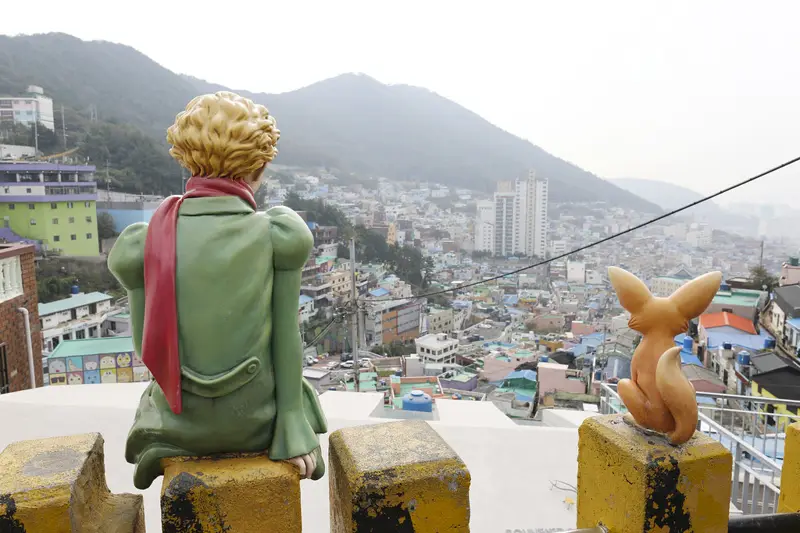 See · ~5h round trip
A hillside of Lego-colored houses threaded with art alleys and the Little Prince gazing over it all.
See the detail →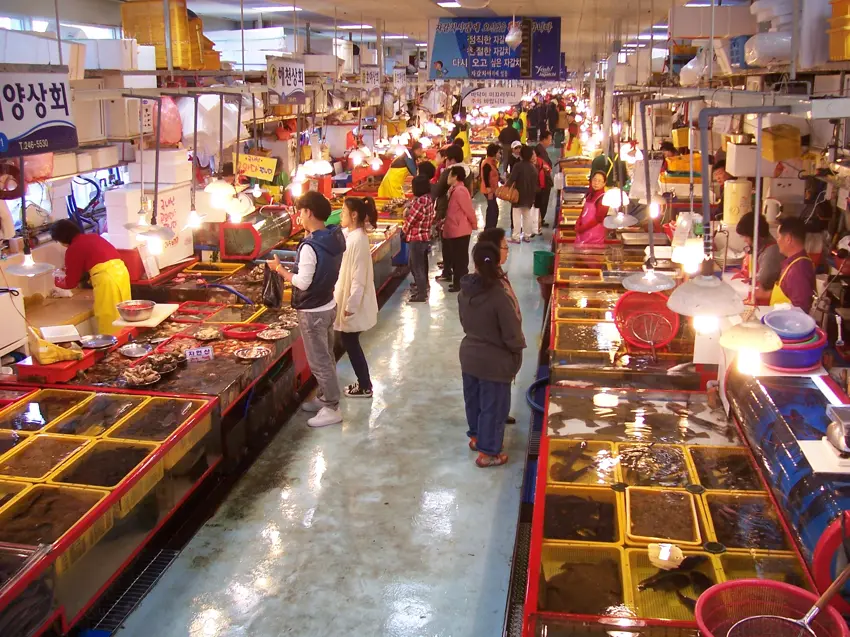 See · ~4h
Korea’s greatest fish market — tanks of everything the strait holds, auntie vendors in rubber boots, and lunch upstairs minutes after you pointed at it..
See the detail →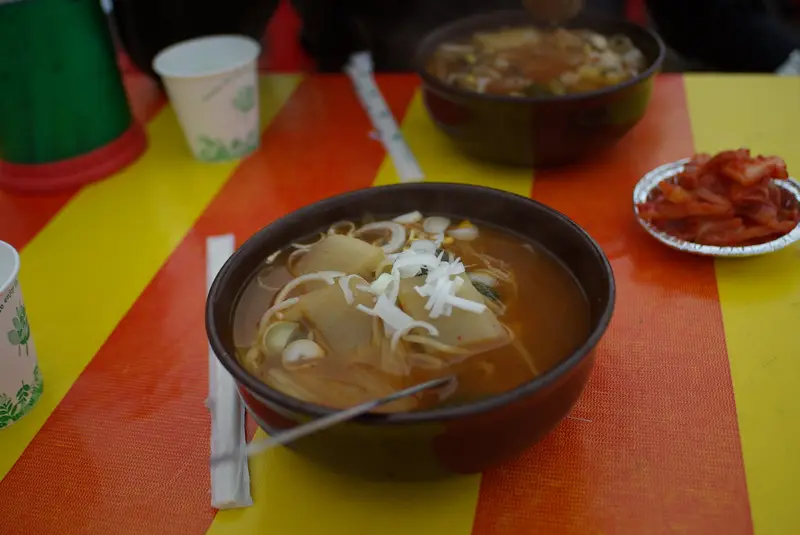 Eat · ~4h
Busan’s soul in a bowl — milky pork broth, rice, wild chives.
See the detail →No typing needed — jump straight in:
Just docked? — the gangway toolStart from your shipThe ride from every berthAsk the editorGlossary