![Guided: [BUSAN,GamcheonVillage] Private Korean Art Painting Class](/img/viator/9abca122c23e.webp)
~5h with the village — the round trip from the gangway, with the 60-minute margin kept aside.
Tap a photo to see it large. 2 photographs, each credited.
A two-hour Korean art class inside the pastel village you just walked — you leave with your own painting as the souvenir. Slots are small; book ahead.
For most of 1950, free Korea was this city and a perimeter around it
Gamcheon exists as it is because artists and residents repainted it together rather than for it. Painting there, with the people who live in the houses, is a different transaction from photographing it, and the village has been explicit about preferring the first.
In August 1950 the Republic of Korea consisted of Busan and a defensive line drawn around it. The government moved here, the refugees came here, and the city they improvised in those three years is the city you are walking through.
The stepped rows of pastel houses in every photograph of Busan are a refugee settlement. People fleeing the Korean War in the 1950s built on the hillside because it was the only land nobody had claimed, and a religious community moved up there with them. It stayed poor and it stayed standing.
From 2009 an arts regeneration project brought murals, sculpture and colour, and it became the most photographed place in the city. Around eight to nine thousand people still live in it, many elderly, with alleys two feet wide between their front doors.
Within weeks, only the south-east corner holds
Busan is the provisional capital and the last port
Gamcheon and the stepped neighbourhoods
The market that fed the refugee city
Go to Gamcheon early, walk slowly, and keep your voice down. Nine thousand people live in the photograph.
Both pins on one map, so the distance is a fact rather than a feeling.
Booked before you sail — there is no tour desk at the pier. Booking through this link supports the site.
Yes, if you go early and walk slowly. It is a Korean War refugee settlement from the 1950s, regenerated through an arts project from 2009 into the most photographed place in Busan. It is also home to eight or nine thousand people, so quiet is genuinely requested rather than decorative.
It is stairs and slopes throughout, on uneven surfaces. Take a taxi up and walk down toward the main road — the descent is the manageable direction — and wear proper shoes. Budget ninety minutes for a single loop.
Each one is a finished day we have walked and timed, with this stop in it. Read the route rather than assembling it yourself.
Each of these still lands you back aboard with the hour to spare.
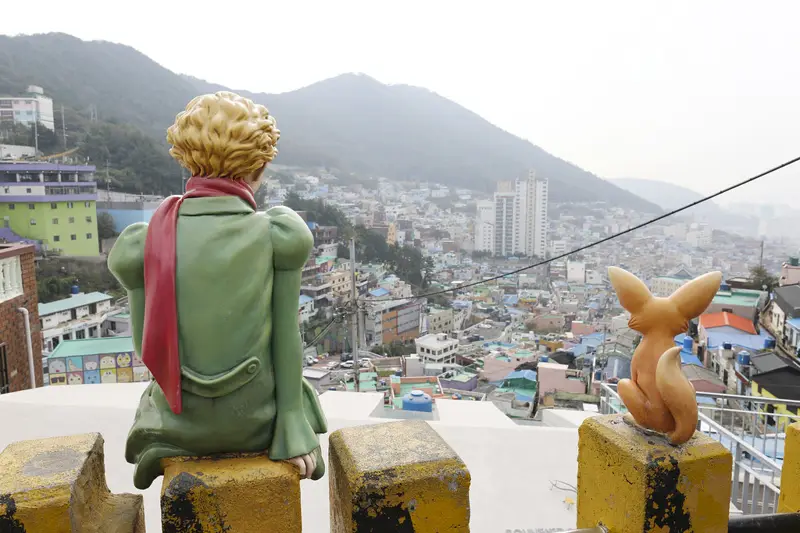
A hillside of Lego-colored houses threaded with art alleys and the Little Prince gazing over it all.
See the detail →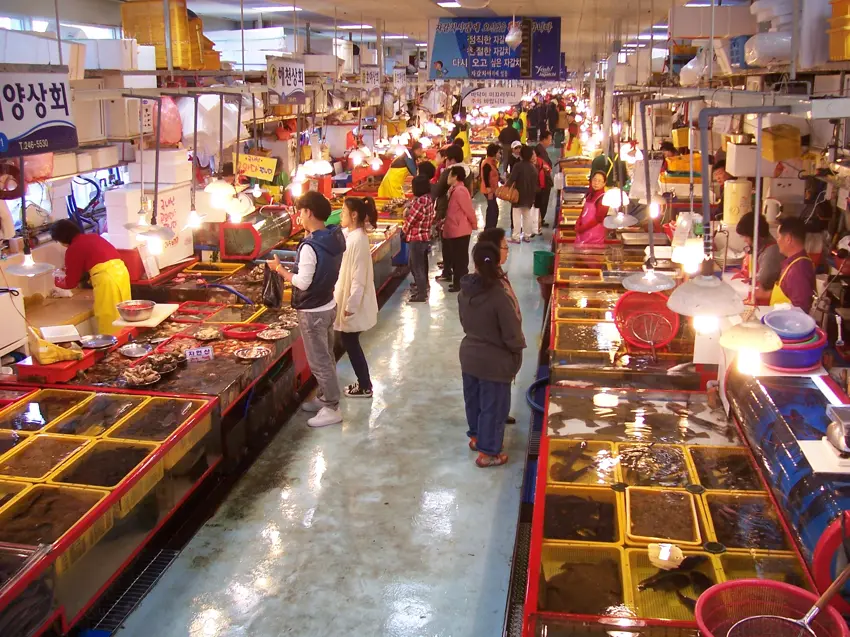 See · ~4h
Korea’s greatest fish market — tanks of everything the strait holds, auntie vendors in rubber boots, and lunch upstairs minutes after you pointed at it..
See the detail →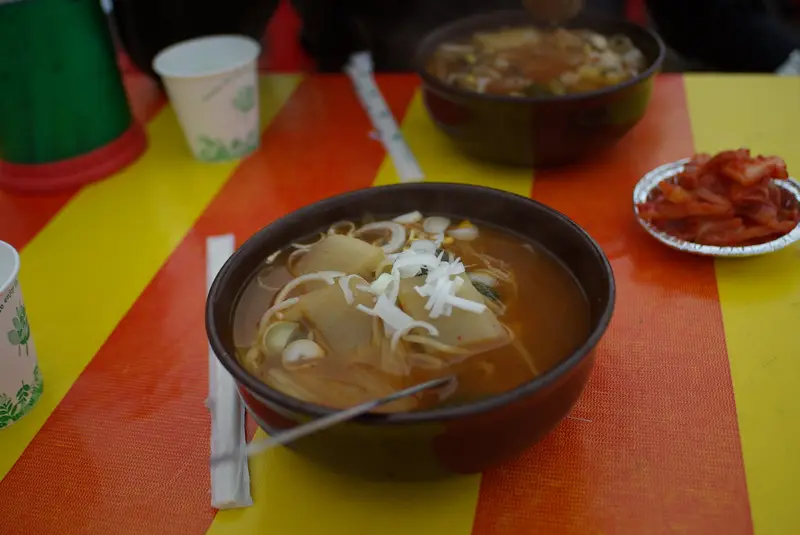 Eat · ~4h
Busan’s soul in a bowl — milky pork broth, rice, wild chives.
See the detail →No typing needed — jump straight in:
Just docked? — the gangway toolStart from your shipThe ride from every berthAsk the editorGlossary