Tap a photo to see it large. 5 photographs, each credited.
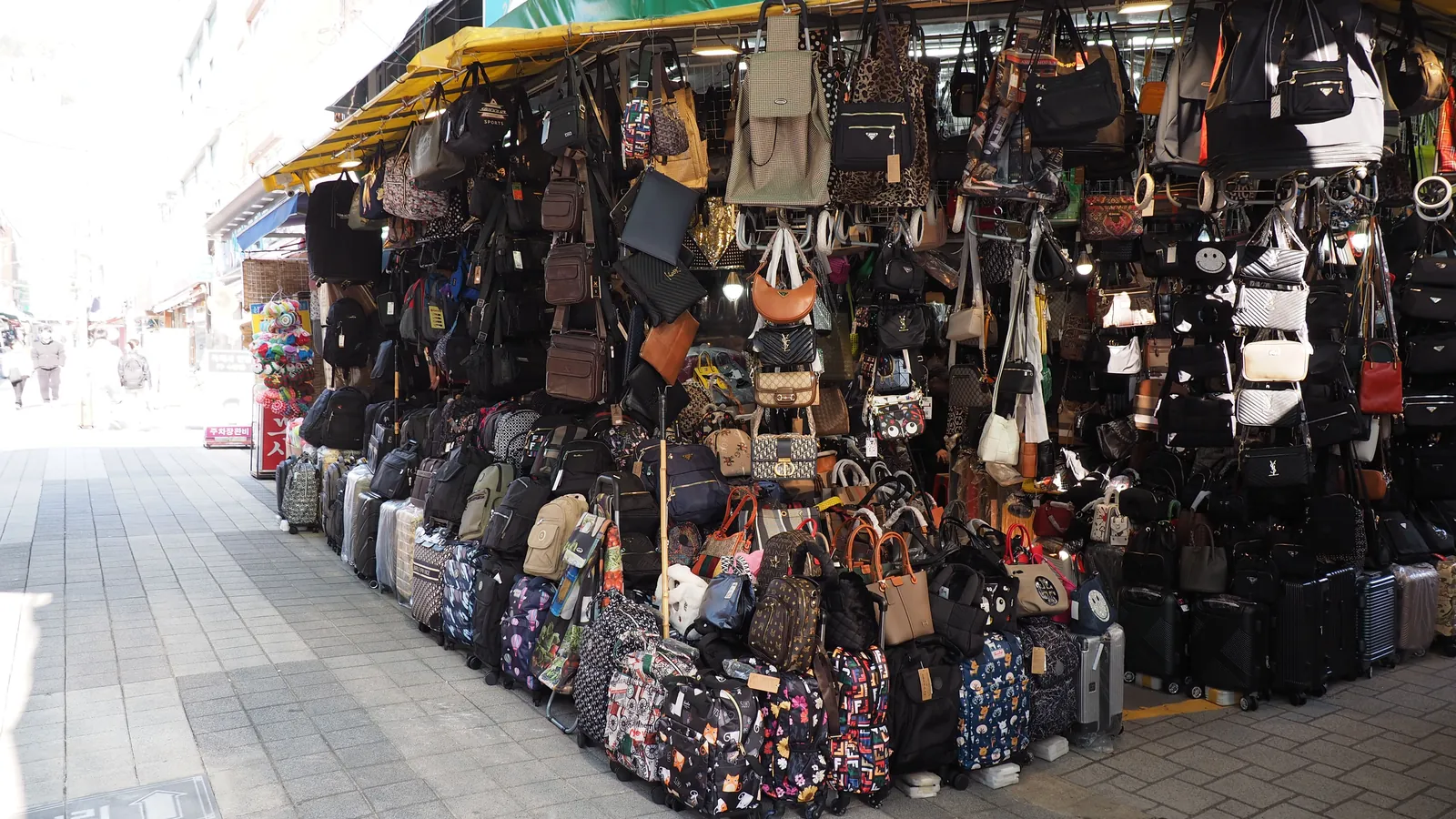
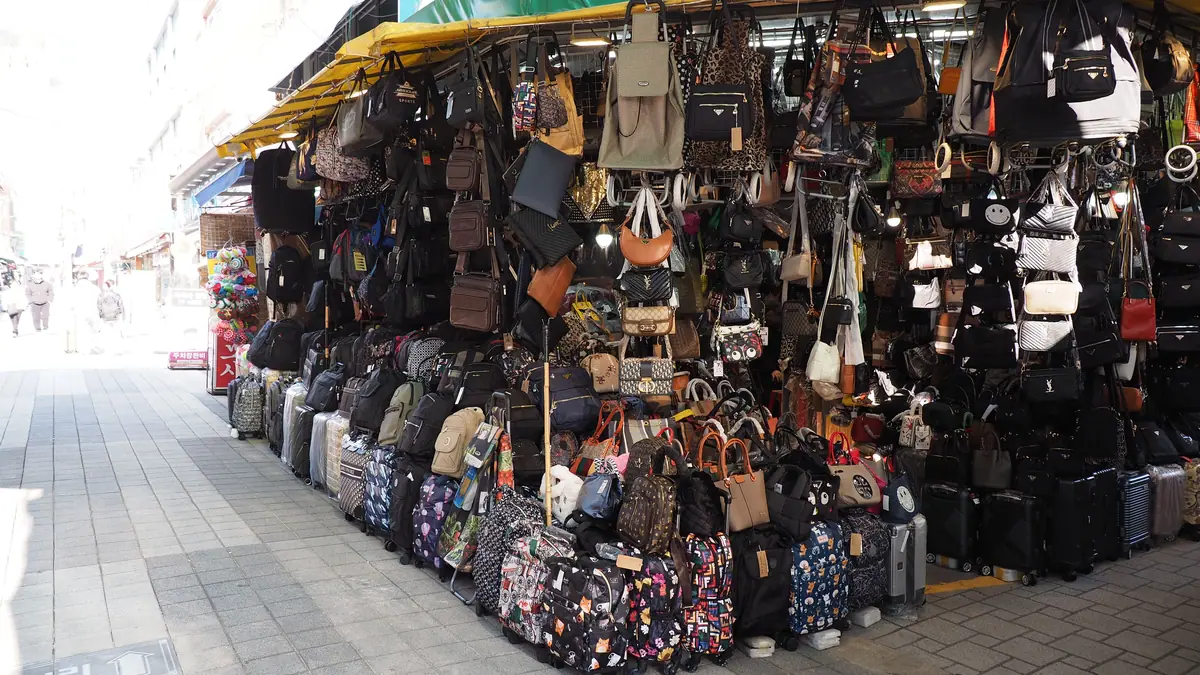
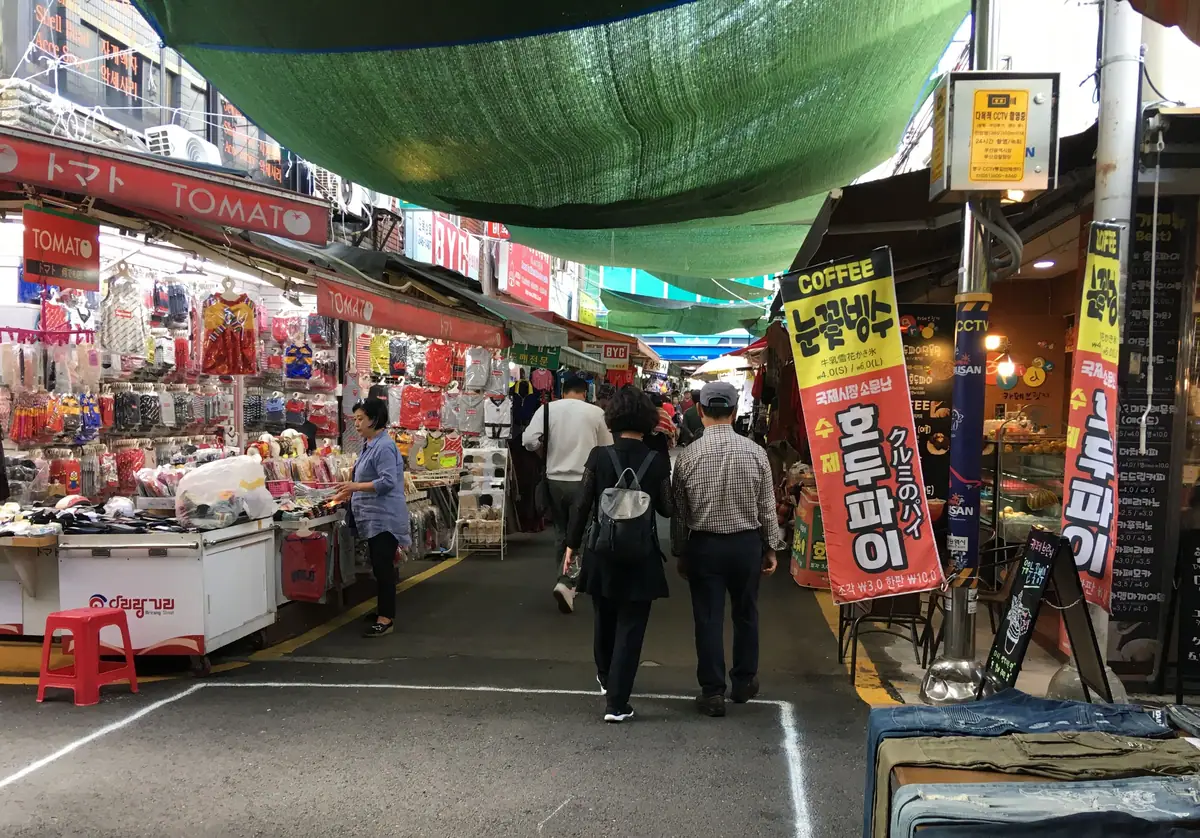
The post-war everything-market — dried seaweed bricks, K-beauty at source prices, socks with your face on them if you ask. Haggling is the entertainment.
Four dishes this city invented because it had to
Gukje means international, and the market began in 1945 when Japanese colonists left goods behind, then grew as war refugees traded whatever they had. It is several blocks of everything, and it is the setting of Ode to My Father, the film that made it a national symbol of the post-war generation.
Busan's signature dishes are not old. Almost all of them were invented in the 1950s by people who had lost everything and were cooking with whatever the port and the American aid shipments provided. They are among the best cheap food in East Asia and every one of them has a reason.
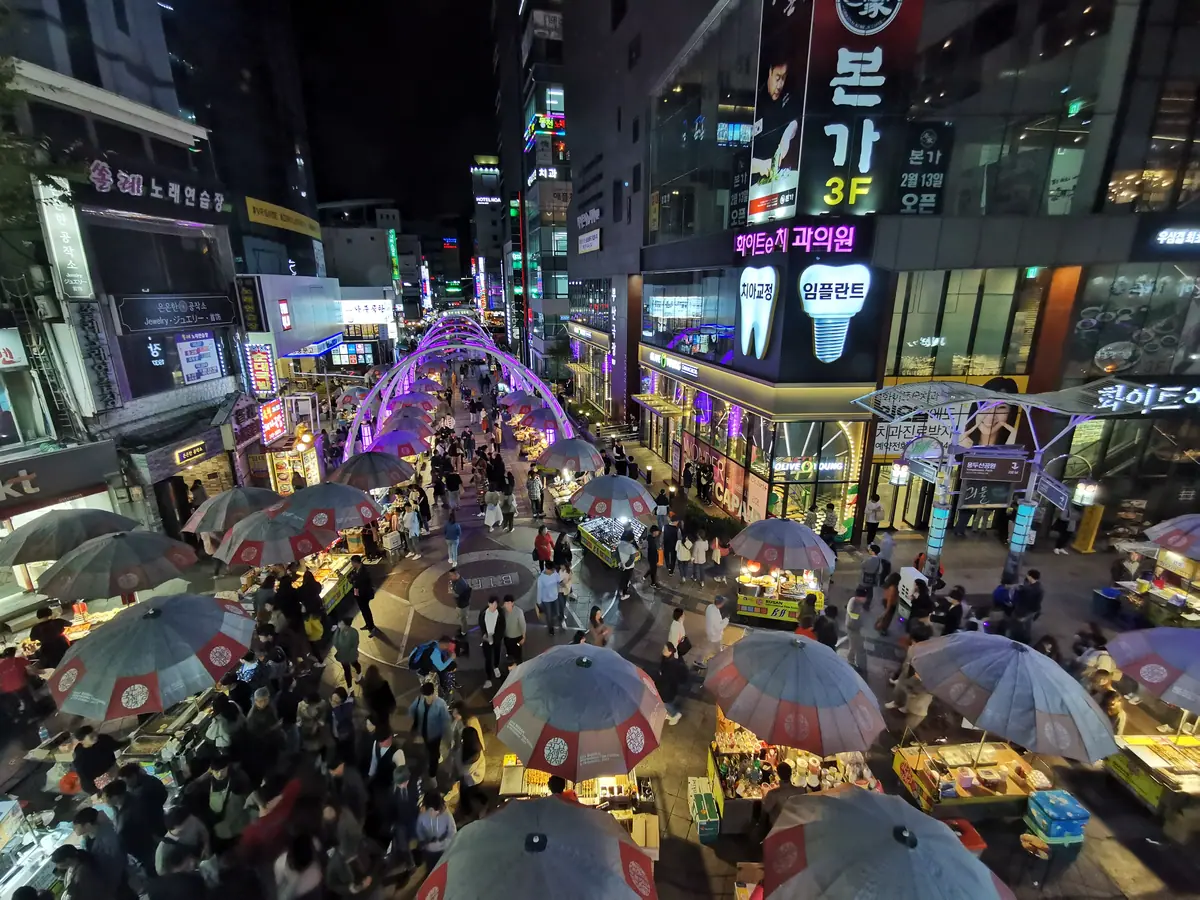
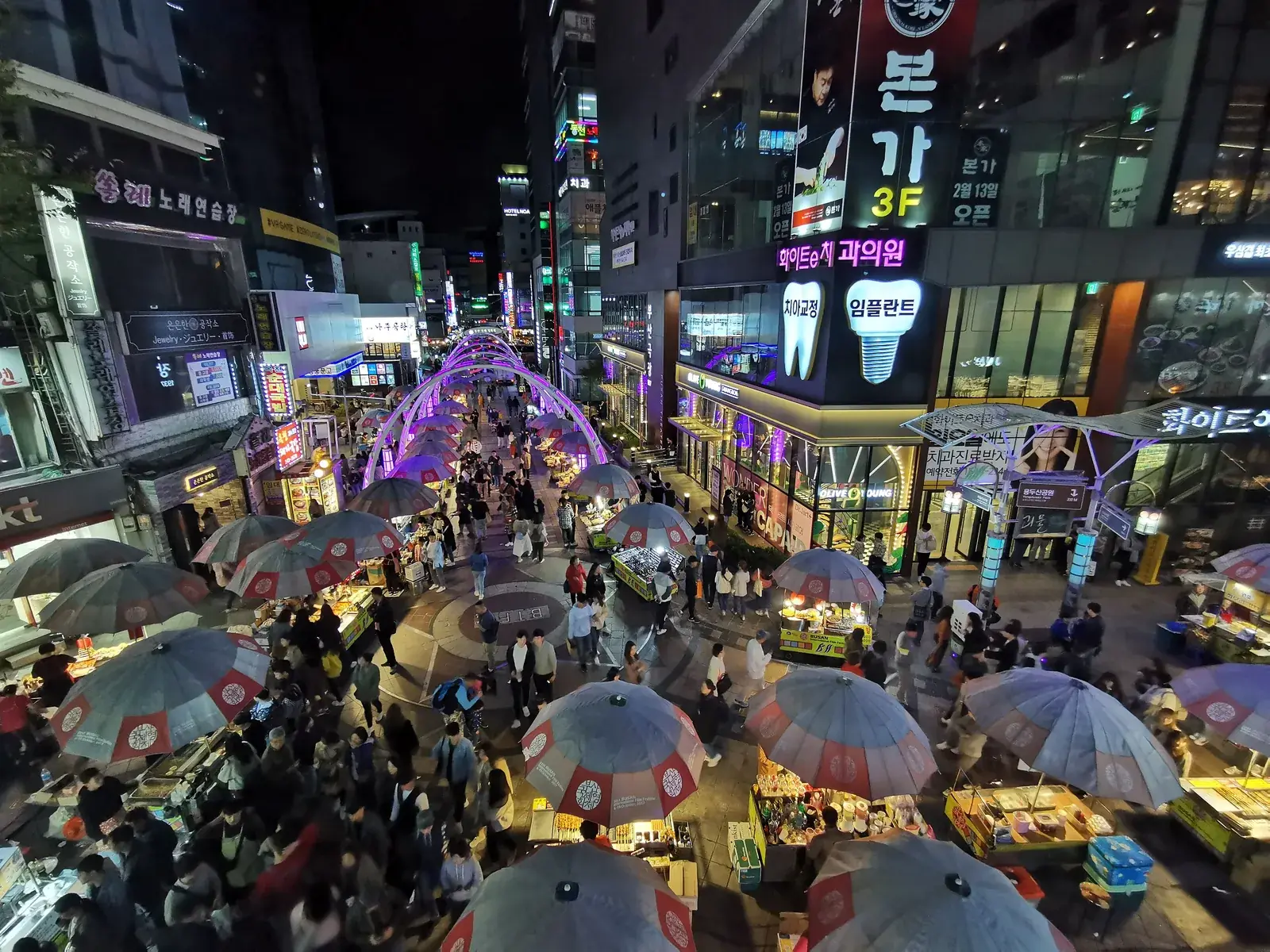
Nampo-dong was Busan's cinema district, and in 1996 it hosted the first Busan International Film Festival — which became the largest in Asia. The square is named after it and directors' handprints are set into the pavement, now underneath the food stalls.
Behind it, Gukje Market is kilometres of covered alleys that grew out of the Korean War, when this was where the refugee city bought everything. It burned catastrophically in 1953 and rebuilt. It is still the rain plan for this whole city.
Pork bones, aid wheat flour, and northern technique
And becomes the thing people prefer
Eomuk from here is what the country buys
Seeds packed into a sugar pancake, served scalding
Dwaeji gukbap for lunch, season it yourself with the shrimp sauce, then ssiat hotteok at BIFF Square.
Both pins on one map, so the distance is a fact rather than a feeling.
Ssiat hotteok — a griddled sugar pancake cut open and packed with sunflower and pumpkin seeds and peanuts, served scalding, so wait before biting. Also eomuk fish cake on skewers with free broth you refill yourself, and dwaeji gukbap shops in the surrounding streets.
Kilometres of covered alleys behind BIFF Square that grew out of the Korean War, when Busan's refugee population bought everything here. It burned catastrophically in January 1953 and rebuilt. Because it is entirely roofed, it is the default plan when it rains in this city.
Each one is a finished day we have walked and timed, with this stop in it. Read the route rather than assembling it yourself.
Each of these still lands you back aboard with the hour to spare.
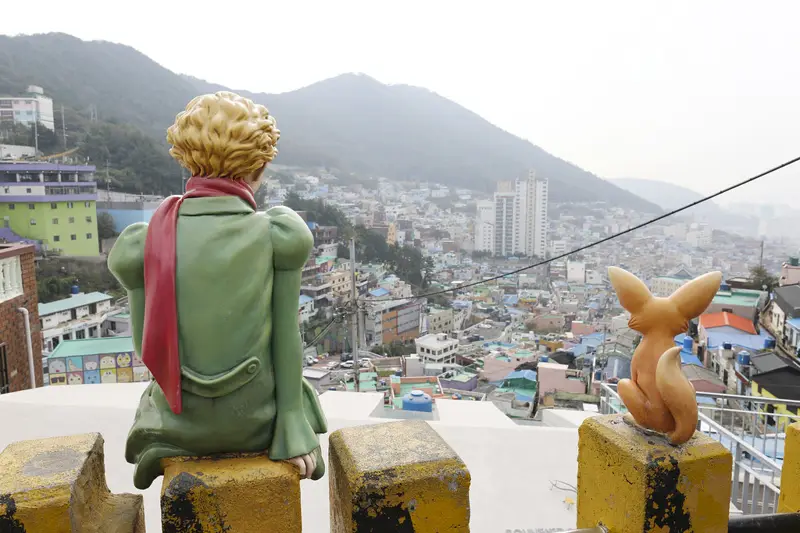 See · ~5h round trip
A hillside of Lego-colored houses threaded with art alleys and the Little Prince gazing over it all.
See the detail →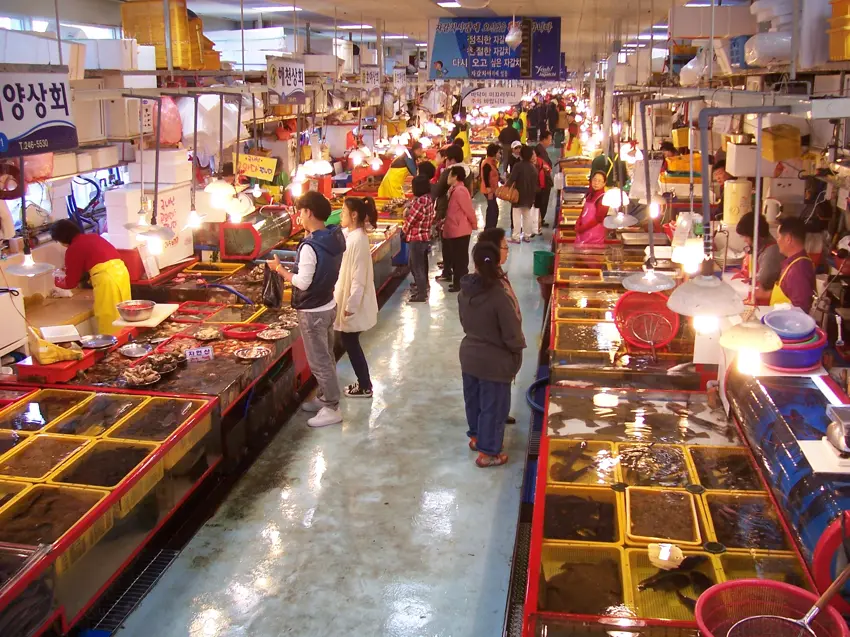 See · ~4h
Korea’s greatest fish market — tanks of everything the strait holds, auntie vendors in rubber boots, and lunch upstairs minutes after you pointed at it..
See the detail →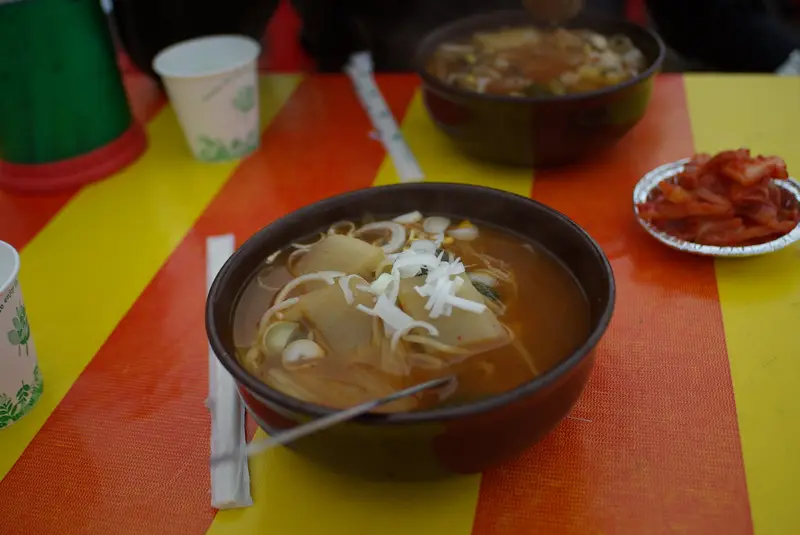 Eat · ~4h
Busan’s soul in a bowl — milky pork broth, rice, wild chives.
See the detail →No typing needed — jump straight in:
Just docked? — the gangway toolStart from your shipThe ride from every berthAsk the editorGlossary