
Nagoya Castle
Two golden fish, a keep you cannot enter and a palace rebuilt from Edo-period plans
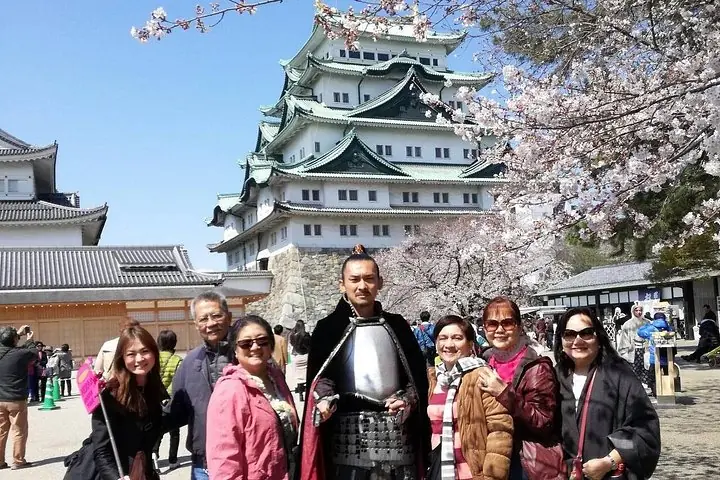
The keep on the skyline is a 1959 rebuild in concrete, and it has been shut since 2018. The palace beside it was rebuilt from Edo-period plans. That is the reason to come.
Nagoya Castle was built for the Tokugawa. In 1610 Tokugawa Ieyasu, who had won at Sekigahara in 1600 and become shogun in 1603, called on daimyo who had once been his enemies to build it. It was meant for his ninth son, Yoshinao. The keeps and watchtowers were finished in 1612. The castle's own site says the stones of the walls still carry the marks of the 20 daimyo ordered to build them.
The city came with the castle. In 1609 Ieyasu ordered the people of Kiyosu, the old castle town, to move to the new town of Nagoya, and the move was complete in 1613. For the rest of the Edo period, about 260 years, the castle was the seat of the Owari Tokugawa. Ieyasu himself ran the country from Sunpu, near our next port: see the retired shogun in the Shimizu guide.
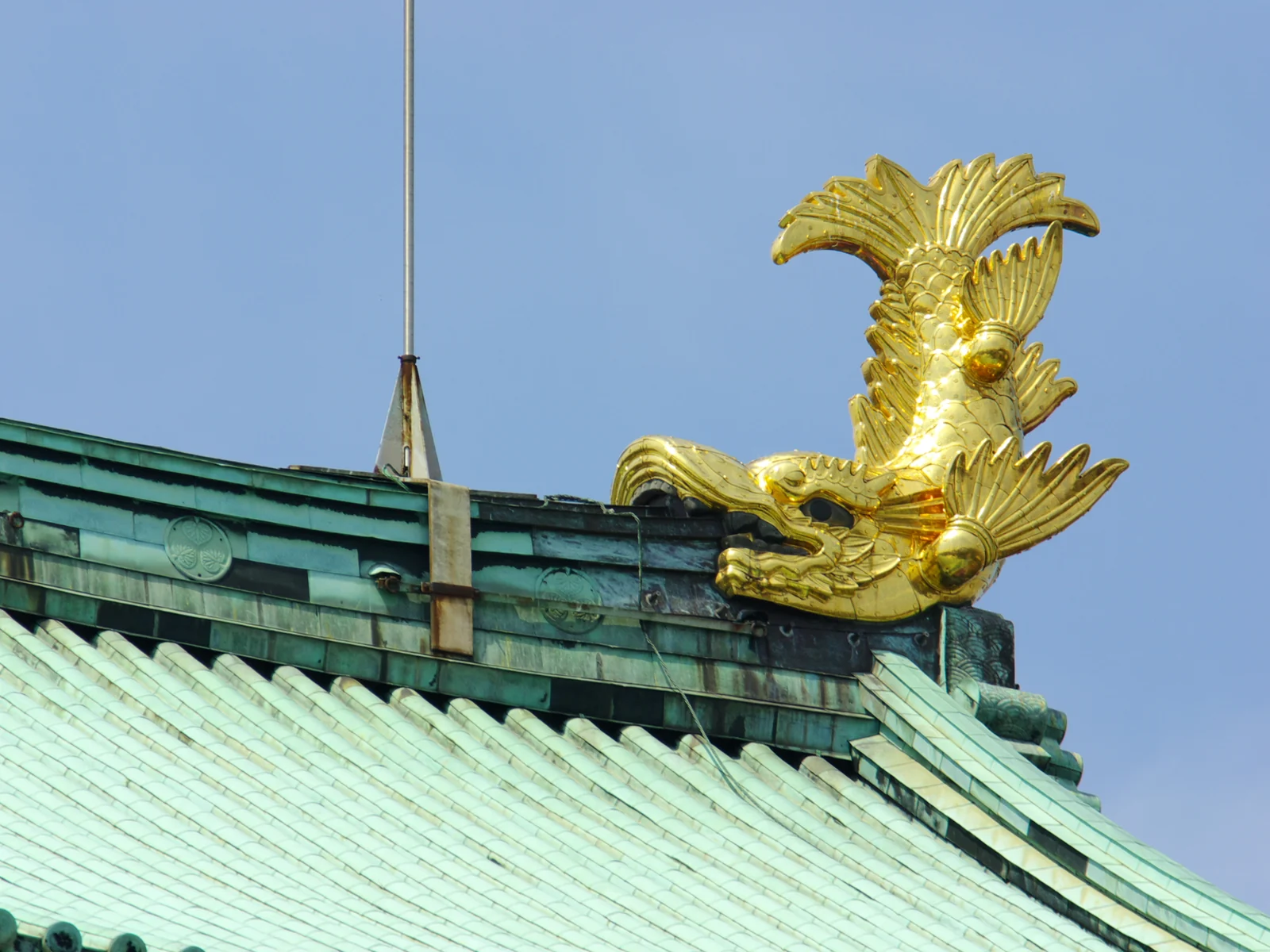
The golden fish
On each end of the roof ridge sits a kinshachi, a golden shachihoko: a creature with a tiger's head and a fish's body. The castle gives their sizes. The male, on the north end, is 2.621 metres tall and weighs 1,272 kg. The female, on the south end, is 2.579 metres and 1,215 kg. Their scales are covered in 18-carat gold.
The originals had a rough modern history. In 1871 they were taken down and sent to Tokyo. One was shown in Tokyo and the other went to the Vienna world exhibition of 1873; both came back to the castle in 1879. Scales were stolen more than once. In January 1937 a thief took 58 scales from the north fish. Work to take the scales down for safety began in April 1945.
In January 1937 a thief took 58 gold scales from the north fish.
1945 and the concrete keep
In 1930 the keeps, the Hommaru Palace and 24 other structures were named National Treasures, among the first castle buildings to be listed. On 14 May 1945 an air raid burned the keep and the palace. Only six structures from the Owari era survived, including the south-west and south-east corner turrets. More than a thousand painted panels from the palace had been taken down and moved to a storehouse before the raid, and they survived.
The keep was rebuilt in 1959 in steel-reinforced concrete, with a small keep beside it. New golden fish were cast at the Osaka Mint in 1958 and set on the roof. The completion ceremony was held on 1 October 1959.
That keep closed to visitors on 7 May 2018. The castle says it is closed because of its age and its earthquake resistance. The city plans to replace it with a wooden keep. The first completion target, December 2022, has passed, and the city has not published a new date. The castle's guide page lists the keep as closed.
The palace that came back
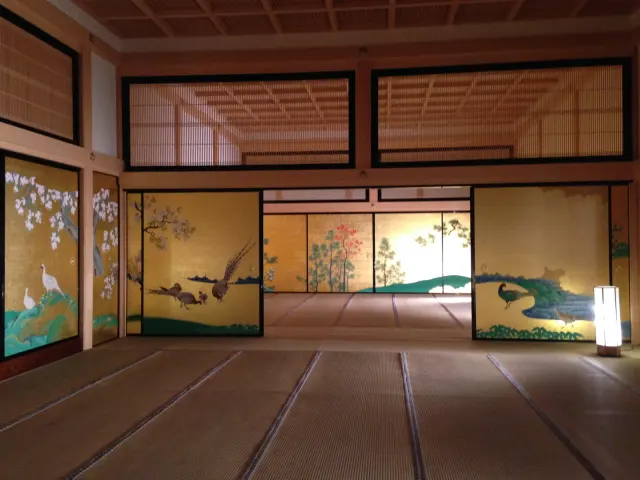
The Hommaru Palace was completed in 1615. It was the official residence and administrative office of the Owari Tokugawa. In 1633 work began on further halls, including the Jorakuden, and in 1634 the third shogun, Tokugawa Iemitsu, stayed in it.
Restoration began in 2009. The builders worked from Edo-period plans, survey drawings, old photographs and the surviving paintings. The palace opened in full on 8 June 2018. The castle counts about 1,049 panels of wall and ceiling paintings that survive from the original. Painters of the Kano school chose subjects by the rank of each room: landscapes, figures, birds and flowers, and animals. Originals are shown in exhibitions at the Nishinomaru Gozo Castle Museum in the grounds.
The fee doubled this October
From 1 October 2026 the adult fee is ¥1,000, up from ¥500. Junior high pupils and younger are free. A combined ticket with Tokugawaen garden costs ¥1,040. The castle is open 9:00–16:30, with last entry at 16:00 for both the castle and the palace. It closes only from 29 December to 1 January, so it is open on all three Norwegian Jade calls.
The palace is about a 10-minute walk from the Main Gate or the East Gate. The Nagoya Castle Autumn Festival runs from 19 September to 23 November. Meijo Park, next to the castle, has autumn colour in mid to late November. Beside the castle is Kinshachi Yokocho, a row of restaurants that opened in March 2018.
How it happened
- 1609Kiyosu moves to Nagoya
Ieyasu orders the old castle town's people to the new town; the move ends in 1613
- 1610Building begins
Former enemy daimyo are called in to build a castle for Ieyasu's ninth son, Yoshinao
- 1612The keeps are finished
Golden shachihoko on the roof; work on the Hommaru Palace starts
- 1615The Hommaru Palace is completed
Residence and office of the Owari Tokugawa for the rest of the Edo period
- 1634The shogun visits
Tokugawa Iemitsu stays in the new Jorakuden
- 1930National Treasures
The keeps, the palace and 24 other structures are listed
- 1937The scale theft
58 gold scales are taken from the north fish
- 1945Burned in an air raid
14 May. The keep and the palace are lost; over a thousand painted panels survive in storage
- 1959A concrete keep
Rebuilt in steel-reinforced concrete with new golden fish cast at the Osaka Mint
- 2018Palace open, keep shut
The keep closes on 7 May; the restored palace opens in full on 8 June
- 2026¥1,000
The adult fee doubles from 1 October
Where this becomes real on your port day
From Kinjo Pier take the Aonami Line to Nagoya (24 min, ¥360), then the subway to Nagoyajo, Exit 7, five minutes on foot. Go straight to the Hommaru Palace. Allow about two hours. It is open 9:00–16:30 on all three Jade calls; the keep is closed.
The rebuilt palace is open, the 1959 keep is closed, and the fee is now ¥1,000
Full guide →
The vocabulary of Nagoya Castle
- Kinshachi 金鯱
- The golden shachihoko on the roof: tiger's head, fish's body, 18-carat gold scales. The male faces north, the female south.
- Tenshu 天守
- The keep. Nagoya's is a 1959 concrete rebuild, closed to visitors since 7 May 2018.
- Hommaru Goten 本丸御殿
- The Hommaru Palace, completed 1615, burned 1945, reopened in full in 2018.
- Jorakuden 上洛殿
- The palace hall built for the 1634 visit of the third shogun, Tokugawa Iemitsu.
- Owari Tokugawa 尾張徳川家
- The branch of the Tokugawa family that held the castle through the Edo period.
- Kinshachi Yokocho 金シャチ横丁
- The row of restaurants beside the castle, opened in March 2018.
FAQ
Can you go inside Nagoya Castle's keep?
No. The 1959 concrete keep closed to visitors on 7 May 2018 because of its age and earthquake resistance, and the castle still lists it as closed. The city plans a wooden rebuild but has published no completion date. The Hommaru Palace, the grounds and the gardens are open.
How much is Nagoya Castle?
From 1 October 2026 the adult fee is ¥1,000, up from ¥500. Junior high pupils and younger are free. The ticket covers the grounds and the Hommaru Palace. A combined ticket with Tokugawaen garden is ¥1,040.
How do I get to Nagoya Castle from the cruise port?
Walk or take the shuttle, if one runs, to Kinjo-futo Station, then the Aonami Line to Nagoya (24 min, ¥360). Change to the subway for Nagoyajo Station, Exit 7, five minutes on foot. The station was called Shiyakusho until it was renamed. A taxi is about 19 km, roughly ¥8,500 by our estimate, before traffic.
Are the golden shachihoko real gold?
Their scales are covered in 18-carat gold, the castle says. The pair now on the roof were cast in 1958 for the 1959 rebuild; the originals were lost when the keep burned in May 1945.
More from Nagoya
A shrine built around one of the three imperial treasures, and a museum of the swords you can see
Read →
Eel in three rounds, pork in dark miso, and toast with red beans at breakfast
Read →
A loom-maker's brick plant, a car company and Japan's busiest cargo port
Read →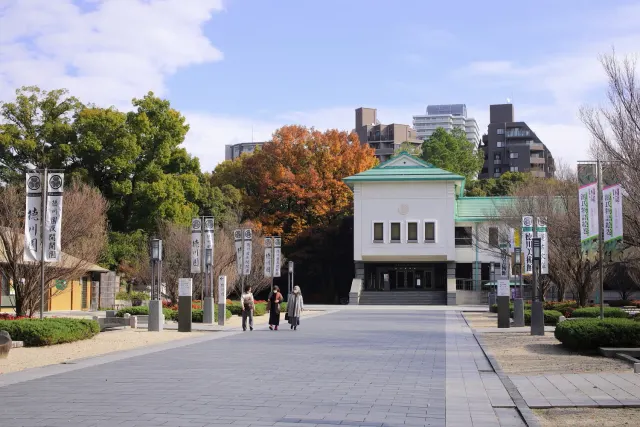
Ieyasu's bequest, a wedding set from 1639, the Tale of Genji scrolls and a lord's retirement garden
Read →