
The Owari Tokugawa and their treasures
Ieyasu's bequest, a wedding set from 1639, the Tale of Genji scrolls and a lord's retirement garden
The family that held Nagoya Castle kept its belongings. They are now in a museum on the site of a lord's retirement villa, with his garden beside it. On two of the three November calls, the Genji scroll is out of storage.
The Owari Tokugawa were the senior of the three branch houses of the Tokugawa family, the gosanke. The first head was Yoshinao, Tokugawa Ieyasu's ninth son, for whom Nagoya Castle was built. The family held the castle for the rest of the Edo period, about 260 years.
Ieyasu's bequest
When Ieyasu died in 1616, most of what he left at Sunpu Castle was divided between three of his sons: Yoshinao of Owari, Yorinobu of Kii and Yorifusa of Mito. The museum calls these things the Sunpu o-wakemono, the Sunpu bequest. They included Ieyasu's own everyday things and famous pieces once owned by the Ashikaga shoguns, Oda Nobunaga and Toyotomi Hideyoshi. Ieyasu spent his last years at Sunpu, near our next port: see the retired shogun in the Shimizu guide.
Yoshinao's share is the core of the Tokugawa Art Museum. To it the family added the things a great daimyo house collected over two and a half centuries. The museum counts more than 10,000 items, among them 9 National Treasures, 60 Important Cultural Properties and 50 Important Art Objects. It says the pieces are not replicas: many survived because the family kept them as heirlooms.
A wedding in 1639
In 1639 Chiyohime, daughter of the third shogun, Tokugawa Iemitsu, married Mitsutomo, the second head of the Owari house. Her wedding furnishings were made by the lacquer master Koami Nagashige. Their main design follows a poem in the Hatsune chapter of the Tale of Genji, so the set is called the Hatsune no chodo. The museum counts 70 surviving pieces: 47 in the Hatsune set, 10 in a set named for the Kocho chapter, and others. They are one of the museum's National Treasures. The museum last showed them all together from 12 April to 8 June 2025.
The Genji scrolls
The museum's best-known holding is the Genji monogatari emaki, the illustrated scrolls of the Tale of Genji. They are a National Treasure from the 12th century, in the Heian period. The museum describes them as the oldest surviving illustrated narrative scroll. Each scene pairs a painting with its passage of text, on decorated paper.
In 1932 the scrolls were remounted as framed panels to preserve them. They have since been returned to scroll form, with the painting and text of each scene made up as one roll. The museum keeps them as 15 rolls.
They are not on permanent display. The museum shows one or two rolls each year in mid to late November, and plans its next showing of the whole set for 2035. In 2026 the display runs from 14 to 29 November, with chapter 37, Yokobue (The Flute), and chapter 49, Yadorigi (II). In the Yokobue scene, a year after Kashiwagi's death, Yugiri visits his widow and is given Kashiwagi's flute. That night Kashiwagi appears to him in a dream.
The Genji scroll is shown from 14 to 29 November 2026. It is not on show on Tuesday 10 November.
The marquis who made a museum
After the Meiji Restoration the old daimyo collections began to scatter. In 1931 Tokugawa Yoshichika (1886–1976), the 19th head of the family, set up a foundation to keep the family's things together. It is now the Tokugawa Reimeikai. The museum opened in Nagoya in 1935.
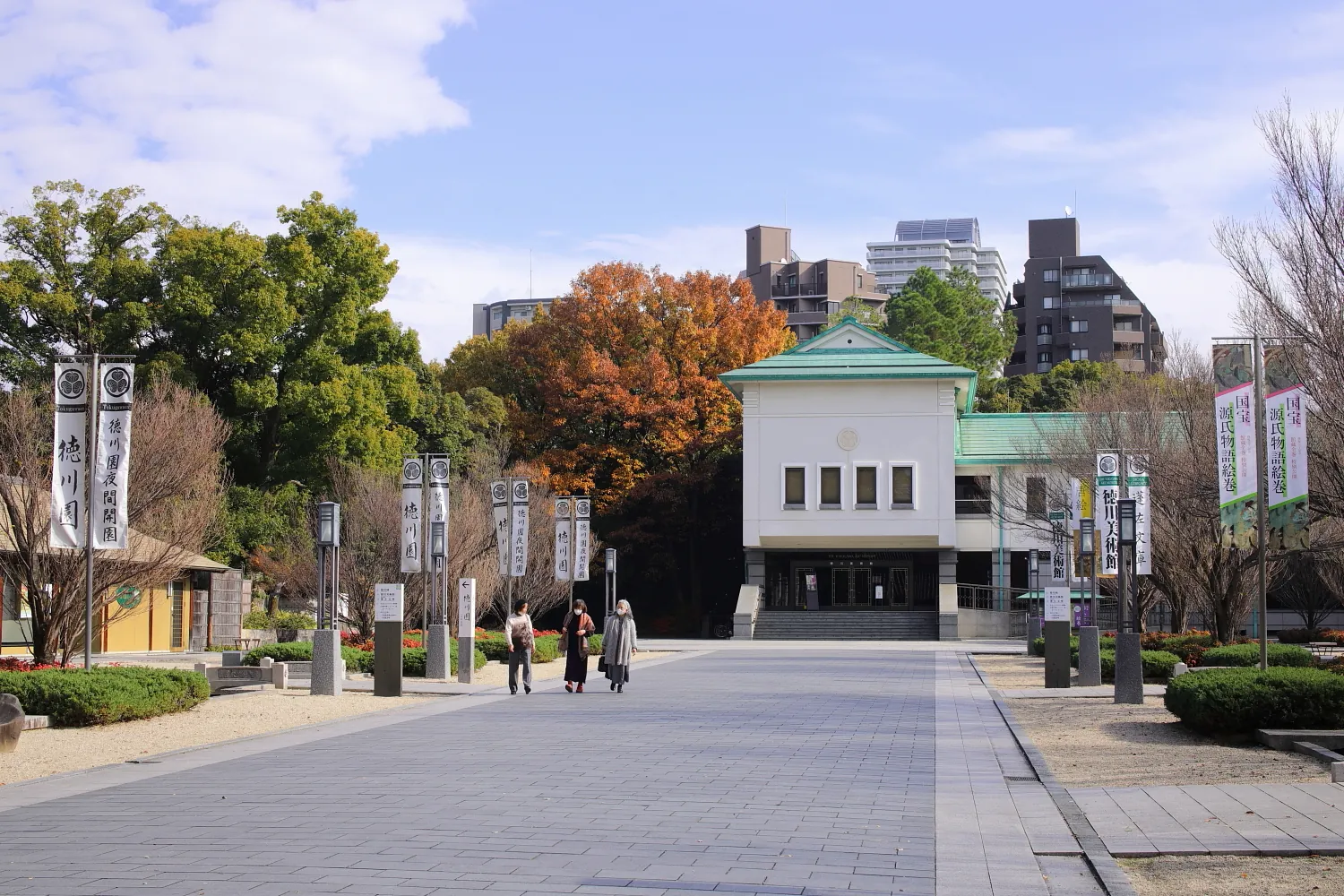
Its main building was begun in 1932 after a public competition for the design. It is in the Imperial Crown style, which the museum says recalls a castle, and the original galleries and storehouse are registered tangible cultural properties. A new wing opened in 1987.
Yoshichika is the subject of one of this autumn's exhibitions, The Travelling Marquis: Tokugawa Yoshichika, from 8 October to 13 December 2026. It marks 140 years since his birth and 50 since his death. The museum describes a man of wide curiosity who collected art on journeys to South-East Asia and Europe, and Japanese regional folk toys. A special exhibition about boxes, Tokimeku Hako, runs from 8 October to 15 November, so it is on for 10 and 14 November but not 28 November.
The garden next door
Tokugawaen began with the same Mitsutomo who married Chiyohime. In 1695 he moved into a retirement villa he had built at Ozone. The garden says the site then covered about 130,000 tsubo, about 44 hectares. After his death it passed to three senior retainer families, the Naruse, Ishikawa and Watanabe. From 1889 it was the Owari Tokugawa residence.
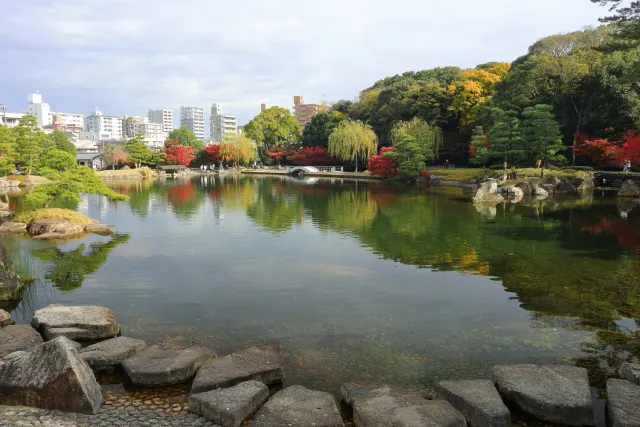
In 1931, the year he set up the foundation, Yoshichika gave the residence and garden to the City of Nagoya, which opened it the next year. Air raids in 1945 burned most of it. The city rebuilt it as a Japanese strolling garden around a pond, and it reopened in autumn 2004. The museum stands on the same old estate, beside the garden.
The garden uses a drop of up to about 11 metres. A waterfall feeds a stream that runs down a valley into Ryusenko, a pond made to stand for the sea. The prefecture says the Ryumon waterfall was rebuilt in 2004 with about 360 stones, some 250 tonnes, from the site of the Owari house's Edo residence at Toyama, and that the water rises every 20 minutes to cover its stepping stones. The Kuromon, a black gate of zelkova completed in 1900, survived the 1945 raids.
Autumn colour
Visit Nagoya puts Tokugawaen's autumn colour at mid-November to early December. The garden says the colour starts around Ryusenko each year and spreads to the east side. So Saturday 28 November sits in the window, and on 10 November the colour will be early. The 2026 dates of the garden's autumn festival and of any night opening are not confirmed.
On a cruise day
The garden is open 9:30–17:30, last entry 17:00, and adults pay ¥300. It closes on Mondays, and its 2026 calendar lists 2, 9, 16, 24 and 30 November as closed, so it is open on all three Jade calls. A combined ticket with Nagoya Castle costs ¥1,040.
The museum is open 10:00–17:00, last entry 16:30. Its visitor page lists an adult fee of ¥2,000; the fee varies with the exhibition, and the collection display alone is listed at ¥1,600. It closes on Mondays, and on 24 November after the holiday, so it is open on all three calls. The museum says it sells no combined ticket with the garden or the castle. It suggests 60 to 90 minutes for a visit.
From Kinjo Pier take the Aonami Line to Nagoya (24 min, ¥360), then the JR Chuo Line to Ozone, about 20 minutes, and walk 10 minutes from the south exit. A city bus from stop 10 at the Nagoya Station bus terminal takes about 30 minutes to Tokugawaen Shindeki, 3 minutes away. The Me~guru sightseeing bus stops right outside. By our estimate that is about 1 hour 20 minutes each way from the berth.
How it happened
- 1616Ieyasu's bequest
What he left at Sunpu is divided; Yoshinao's share becomes the core of the collection
- 1639The Hatsune wedding set
Chiyohime, the shogun's daughter, marries Mitsutomo of Owari
- 1695The Ozone villa
Mitsutomo retires to the estate that becomes Tokugawaen
- 1889Family residence
The Ozone site becomes the Owari Tokugawa home
- 1931Foundation and gift
Yoshichika sets up the foundation and gives the garden to the city
- 1932Framed and building
The Genji scrolls are remounted as framed panels; the museum building is begun
- 1935The museum opens
In Nagoya, in an Imperial Crown style building
- 1945Air raids
Most of the garden burns; the Kuromon gate survives
- 1987New wing
The museum's new wing opens
- 2004Tokugawaen reopens
Rebuilt as a Japanese strolling garden around a pond
- 2026Yokobue on show
Two Genji rolls are shown from 14 to 29 November
- 2035The whole set
The museum's planned next showing of all the Genji rolls
Where this becomes real on your port day
Aonami Line to Nagoya, JR Chuo Line to Ozone and 10 minutes on foot. Walk the garden from 9:30 and enter the museum at 10:00. Allow about two and a half hours. Saturday 28 November gives you the Genji scroll and the best of the colour.
A lord's garden in autumn colour, the Owari Tokugawa treasures, and the Genji scroll on show 14–29 November
Full guide →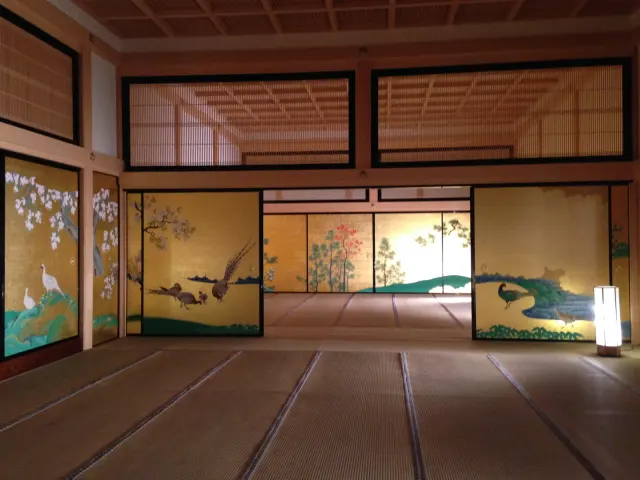
The rebuilt palace is open, the 1959 keep is closed, and the fee is now ¥1,000
Full guide →
The vocabulary of the Owari Tokugawa
- Owari Tokugawa 尾張徳川家
- The branch of the Tokugawa family that held Nagoya Castle, founded by Ieyasu's ninth son, Yoshinao.
- Gosanke 御三家
- The three senior branch houses of the Tokugawa: Owari, Kii and Mito. Owari ranked first.
- Sunpu o-wakemono 駿府御分物
- The things Ieyasu left at Sunpu, divided between three sons. Yoshinao's share is the core of the museum.
- Genji monogatari emaki 源氏物語絵巻
- The 12th-century illustrated scrolls of the Tale of Genji. A National Treasure, shown for a few weeks each November.
- Hatsune no chodo 初音の調度
- The lacquer wedding set made for Chiyohime in 1639, named for a chapter of the Tale of Genji.
- Ryusenko 龍仙湖
- The pond at the centre of Tokugawaen, made to stand for the sea. The autumn colour starts around it.
FAQ
Is the Tale of Genji scroll on show in November 2026?
Yes, from 14 to 29 November 2026: chapter 37, Yokobue, and chapter 49, Yadorigi (II). That covers the Norwegian Jade's calls on Saturday 14 and Saturday 28 November, but not Tuesday 10 November. The museum shows one or two rolls each year in mid to late November.
How much are the Tokugawa Art Museum and Tokugawaen?
The museum lists ¥2,000 for adults; the fee varies with the exhibition. The garden is ¥300. The museum sells no combined ticket with the garden. A combined ticket for Nagoya Castle and the garden costs ¥1,040.
Are they open on Tuesday 10 November 2026?
Yes. The garden's 2026 calendar lists 2, 9, 16, 24 and 30 November as closed, and the museum closes on Mondays. Both are open on 10, 14 and 28 November.
When is the autumn colour at Tokugawaen?
Mid-November to early December, by Visit Nagoya's guide. The colour starts around the pond and spreads east. Saturday 28 November is the best of the three Jade dates; 10 November will be early. The 2026 festival and night-opening dates are not confirmed.
How do I get to Tokugawaen from the cruise port?
Walk or take the shuttle, if one runs, to Kinjo-futo Station. Take the Aonami Line to Nagoya (24 min, ¥360), then the JR Chuo Line to Ozone, about 20 minutes, and walk 10 minutes from the south exit. That is about 1 hour 20 minutes each way by our estimate.
More from Nagoya
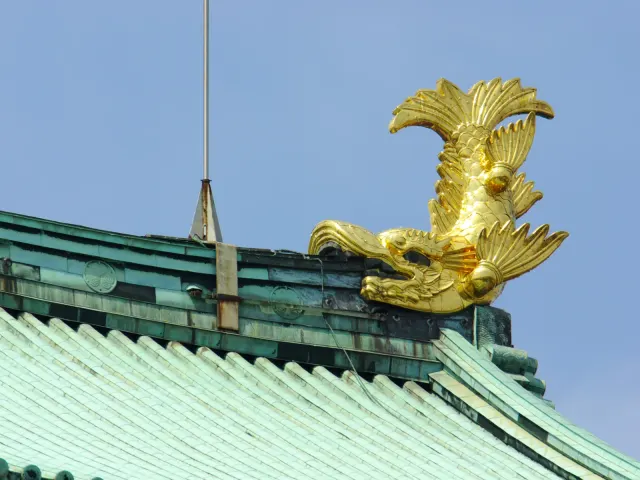
Two golden fish, a keep you cannot enter and a palace rebuilt from Edo-period plans
Read →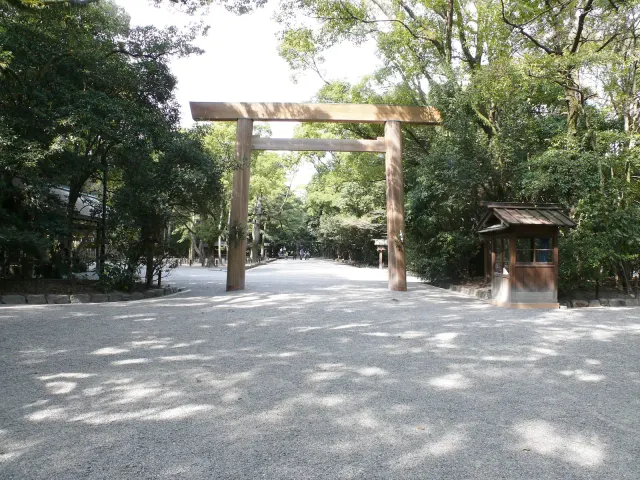
A shrine built around one of the three imperial treasures, and a museum of the swords you can see
Read →
Eel in three rounds, pork in dark miso, and toast with red beans at breakfast
Read →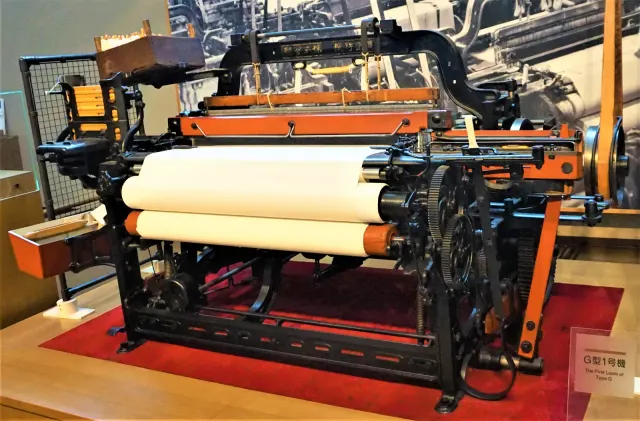
A loom-maker's brick plant, a car company and Japan's busiest cargo port
Read →