
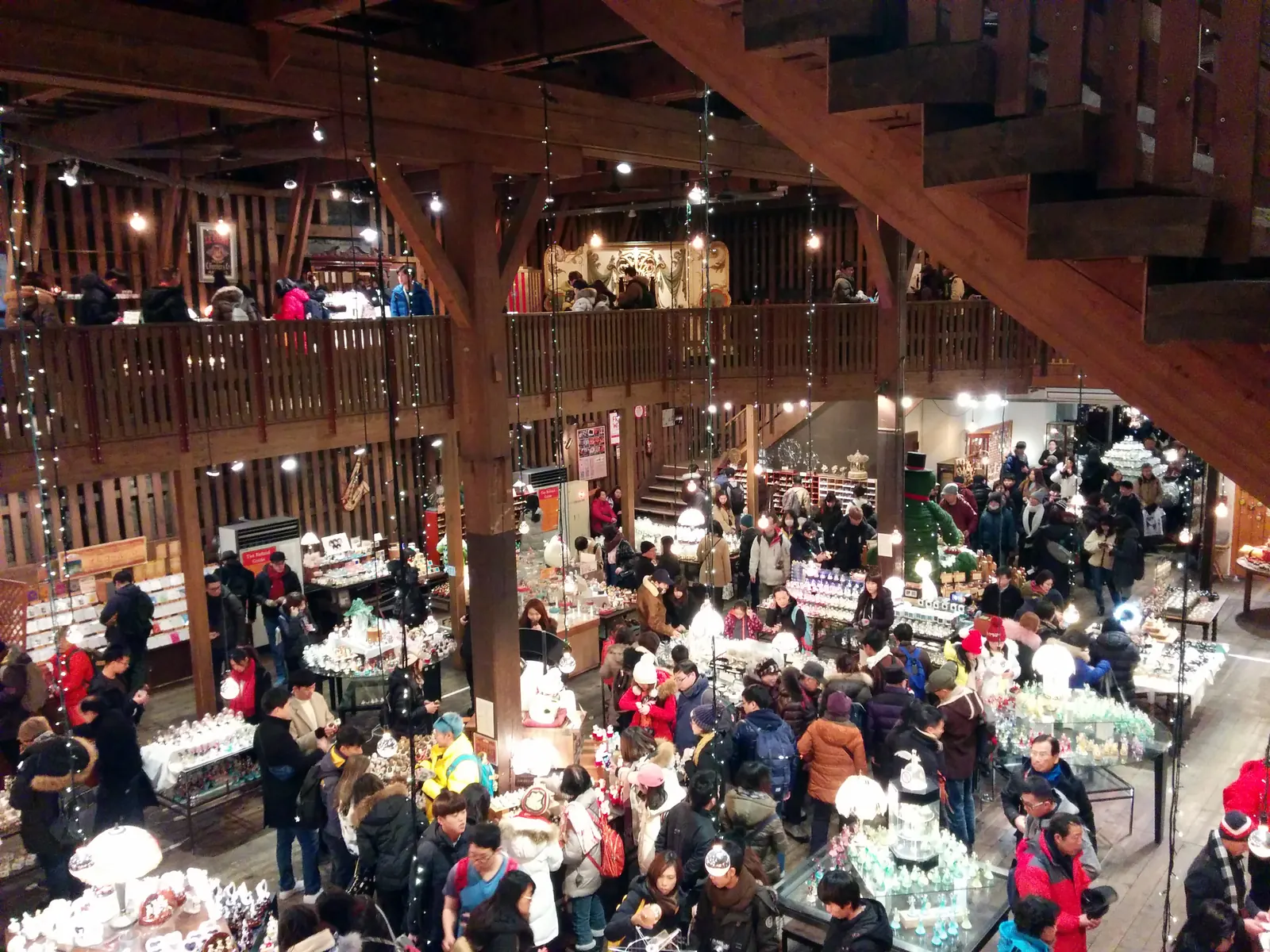
From fishing floats to lamps
An industry that survived by losing both of its products
Otaru’s glassworks were founded to make two things: floats to hold up herring nets, and oil lamps for a town with no electricity. Plastic killed the first and the power grid killed the second. The workshops survived by making things nobody needed at all.
The first glassworks opened here around 1901. Herring nets needed thousands of blown glass floats, and a rapidly growing northern town needed kerosene lamps. Both were industrial products, made in volume, with no artistic pretension whatsoever.
Losing the business twice
Plastic floats arrived and were cheaper, lighter and unbreakable. Electricity arrived and lamps became decoration. Within a couple of decades both markets were gone, and the workshops had furnaces, glassblowers and no orders.
What they had left was skill. So they turned to ornament — vases, glasses, wind chimes, lampshades — and by accident became the thing the town is now known for.
A glass float is a functional object that became beautiful when it stopped being useful. That is Otaru’s entire twentieth century in one item.
The music boxes, which are not local at all
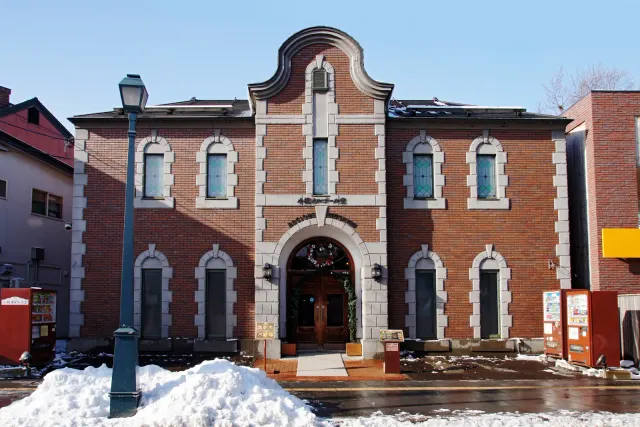
The Otaru Music Box Museum occupies the 1915 brick headquarters of a former rice merchant (Kyōsei Co.) and stocks about 38,000 music boxes. There is no historic Otaru music-box industry — the business was established here in the 1980s, precisely because the town had beautiful empty buildings and a growing visitor trade.
The steam clock outside was installed on 25 June 1994. It is the second clock by Raymond Saunders, who built the original in Vancouver’s Gastown in 1977, and the two are billed as sisters. It sounds every fifteen minutes and it is entirely un-Japanese, and the town is completely relaxed about that.
What to buy
Buy from a workshop where you can see the furnace, not from a counter in a souvenir hall. The price difference is small and the object is different.
Small, heavy and packable is the rule for a ship: a sake cup, a wind chime, a paperweight. Large blown pieces are lovely and will not survive your suitcase.
How it happened
- 1901Glassmaking begins in Otaru
Net floats and kerosene lamps, in volume
- 20th c.Plastic and electricity destroy both products
The workshops keep the furnaces
- post-warThe pivot to ornamental glass
Skill without a market finds a new one
- 1994Otaru’s steam clock is installed
The second one Raymond Saunders built; it sounds every fifteen minutes
- 1980sThe music-box business is established
In a 1915 merchant’s headquarters
Where this becomes real on your port day
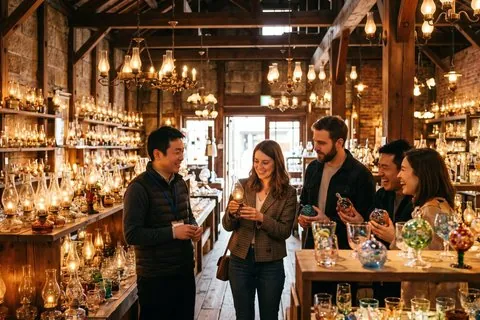
Order coffee at Kitaichi Glass No.3 and sit under the oil lamps. Twenty minutes, and the best value on the street.
The vocabulary of the glass
- Ukidama 浮き玉
- A glass net float. The original product.
- Kitaichi 北一硝子
- The oldest works, from 1901. No.3 is the lamp-lit warehouse.
- Orgel オルゴール
- Music box, from the Dutch. A 1980s industry in a 1915 building.
- Sakaimachi 堺町
- The street. A kilometre of merchant houses turned workshops.
FAQ
Why is Otaru famous for glass?
Because its glassworks lost both original products. They opened around 1901 making floats for herring nets and kerosene lamps for a town without electricity; plastic and the power grid destroyed both markets. The workshops kept their furnaces and skills and turned to ornamental glass, which became what the town is known for.
Are Otaru music boxes traditional?
No. The music-box business was established in the 1980s in a 1915 brick merchant’s headquarters, because Otaru had beautiful empty buildings and a growing visitor trade. The steam clock outside was installed in 1994, the second one made by the Canadian clockmaker Raymond Saunders. The town is entirely relaxed about both facts.
More from Otaru
Thirty years of absurd wealth, and then the fish stopped
Read →
What a town does when the thing that made it rich is gone
Read →
A chemist went to Scotland, married a Scot, and came back to build this
Read →
Why a town of 100,000 has more sushi bars than it can possibly need
Read →