
The island that kept it
Two hundred and fifty years of hiding, and then a brick church built by hand
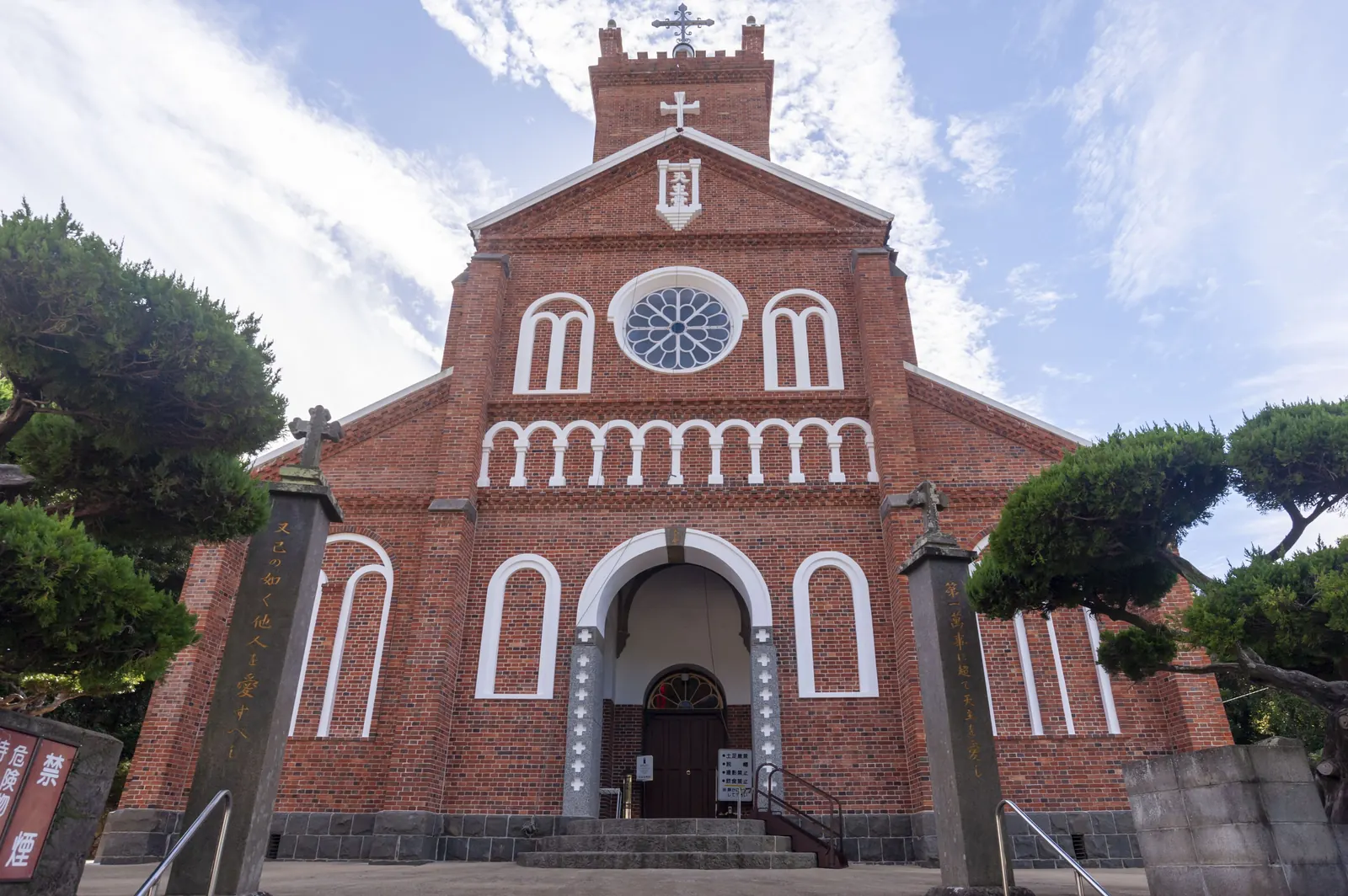
Christianity was banned in Japan in 1614 and the penalty was death. On small islands off this coast, families kept practising in secret for two hundred and fifty years, without priests, disguising prayers as Buddhist chants. When the ban lifted they came out — and on Kuroshima they built a church out of around four hundred thousand bricks they made themselves.
Missionaries reached Japan in 1549 and converted large numbers in Kyushu. Then the shogunate banned the religion, executed those who would not renounce it, and required every household to register with a Buddhist temple. Officials used fumi-e — images to be trodden on — to identify believers.
How you hide a religion for 250 years
The kakure kirishitan continued in secret, in isolated coastal villages and on offshore islands where inspection was infrequent. Without priests, ordinary people took over the roles: one to baptise, one to keep the calendar, one to lead prayers.
The prayers, memorised and passed down orally, drifted over generations into a language that was no longer Latin or Portuguese but sounded like Buddhist chanting. Statues of Kannon were used as the Virgin. Some communities settled on remote islands specifically because nobody watched them there.
When the ban was lifted in the 1870s, some hidden Christian communities rejoined the Catholic Church and some did not — having practised for ten generations, they no longer recognised the original as the same religion.
Kuroshima
Kuroshima lies about fifty minutes by ferry from Sasebo. Christian families migrated there from the eighteenth century, and by the nineteenth most of the island’s population was of hidden Christian descent.
The church was completed in 1902, designed by a French missionary priest and built by the islanders themselves — around 400,000 bricks fired on the island, with a floor of local tiles and, reportedly, an altar step of Arita porcelain. It is Romanesque, plain, and completely out of scale with the settlement around it.
World Heritage, and how to visit
It was inscribed by UNESCO in 2018 as part of the Hidden Christian Sites in the Nagasaki Region. Access is managed — the community asks that visitors give advance notice, because it is a working parish church and not a monument.
On a cruise call this needs eight hours and a plan. If you cannot do it, the Nagasaki port guide on this site covers the same history at Oura and in the Goto islands.
How it happened
- 1549Missionaries reach Japan
And convert large numbers in Kyushu
- 1614Christianity is banned
The penalty is death; fumi-e are used to find believers
- 18th c.Christian families migrate to Kuroshima
Islands are watched less closely
- 1870sThe ban is lifted
Some communities rejoin the Church; some do not
- 1902Kuroshima Church is completed
~400,000 bricks, made by the islanders
- 2018UNESCO World Heritage
Hidden Christian Sites in the Nagasaki Region
Where this becomes real on your port day
Give advance notice before you go. It is a working parish church, not a monument, and the community asks.
The vocabulary of the faith
- Kakure kirishitan 隠れキリシタン
- Hidden Christians. Ten generations, without priests.
- Fumi-e 踏み絵
- An image to be trodden on. The test officials used.
- Orasho オラショ
- The prayers, drifted from Latin over 250 years of oral transmission.
- Maria Kannon マリア観音
- A Kannon statue used as the Virgin. Hidden in plain sight.
FAQ
What is Kuroshima Church?
A brick Romanesque church completed in 1902 on an island about fifty minutes by ferry from Sasebo, designed by a French missionary and built by the islanders from around 400,000 bricks fired on the island. Most of the population descended from hidden Christian families who had migrated there from the eighteenth century, and it was inscribed by UNESCO in 2018.
Can I visit Kuroshima Church on a cruise call?
Realistically not on a day call: the ferry leaves from Ainoura (22 min by taxi from Sasebo Station) three times a day (10:00, 13:00, 17:00 out; 11:10, 15:30 back), the church is 25–30 min on foot from the island’s port, and the 15:30 return reaches Ainoura at 16:20 — too late for an 18:00 departure with a safe margin. Advance contact is required, because it is a working parish church rather than a monument. If it does not fit, the Nagasaki port guide on this site covers the same hidden Christian history at Oura and in the Goto islands.
More from Sasebo
Four thousand people in 1886. A naval base in 1889. Two navies today.
Read →
The only rule is that it must be made after you order it
Read →
A coastline that drowned, and a name that gave up counting
Read →
Korean potters, a domain’s secret kiln, and children painted on white porcelain
Read →