
A village that became a fleet
Four thousand people in 1886. A naval base in 1889. Two navies today.
Sasebo was a fishing village of about four thousand people when the Imperial Navy chose its harbour in the 1880s — deep, sheltered, and pointing at the Asian mainland. Within a generation it was one of Japan’s four naval districts, and it has been a navy town ever since, for two different navies.
The harbour is the reason: a long, narrow, deep inlet screened by islands, on the side of Kyushu facing Korea and China. The Navy established a district here in 1889, and the town grew around it at a speed that left almost nothing of what came before.
What the base built
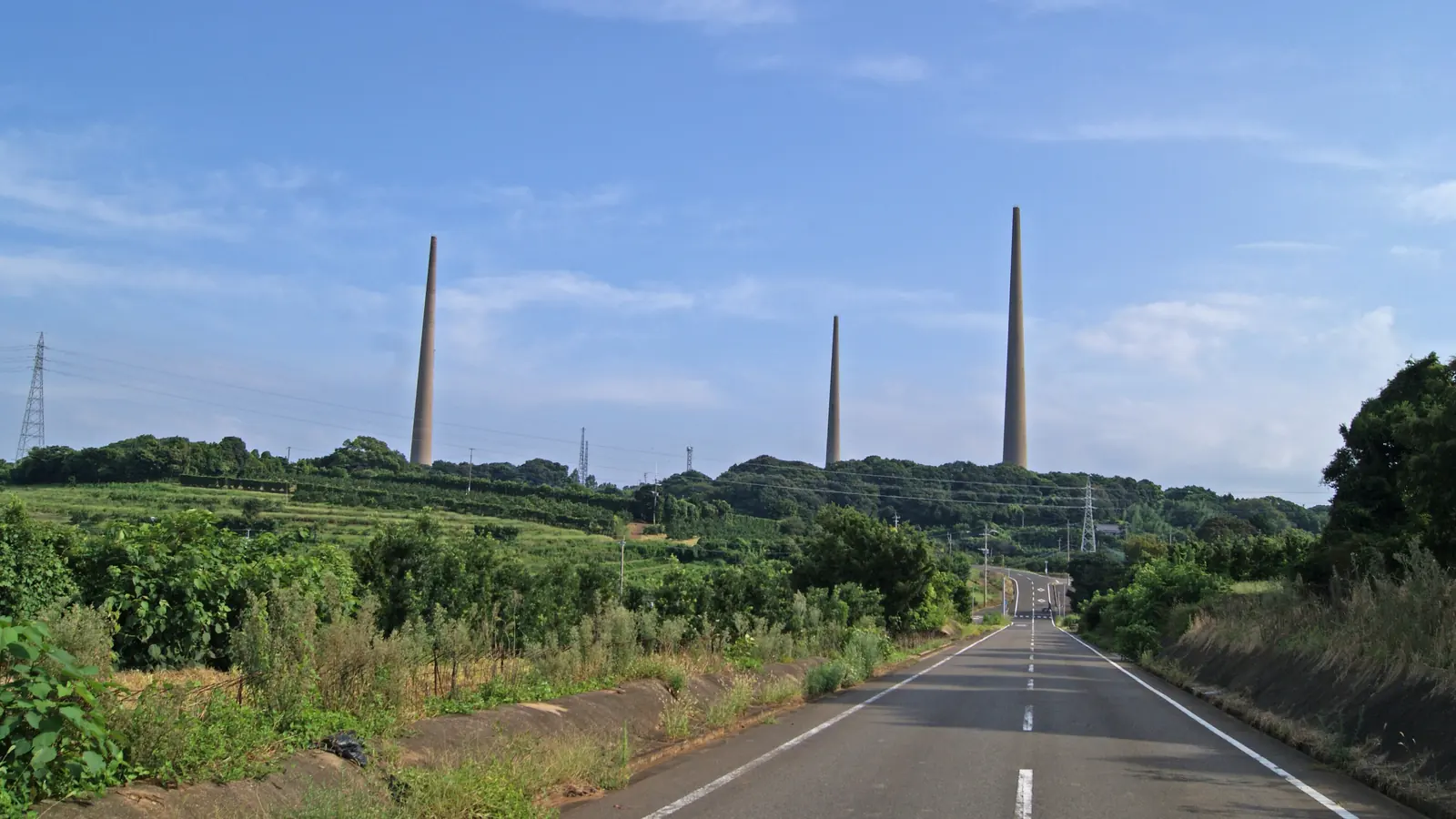
Docks, arsenals, a rail link and a water supply. And, out at Hario, three reinforced concrete radio towers completed in 1922 — 136 metres tall, built to reach submarines across the Pacific, and among the tallest concrete structures in the world at the time.
They are still standing. The signal that carried the order to begin the attack on Pearl Harbor is widely said to have been relayed from here, and the towers are open to visit, empty and unnervingly quiet.
On 29 June 1945 the city was firebombed, and about a third of it burned. The base survived the war; the town largely did not.
The second navy
From 1946, the United States Navy has operated Fleet Activities Sasebo from the same harbour, and Japan’s own Maritime Self-Defense Force is based here too. Two navies, one inlet, and a city that has organised itself around both for eighty years.
This is why the arcade sells American-sized portions, why the burger exists, and why English is more common on signage here than in comparable Kyushu towns.
What a visitor can actually see
Grey hulls, from the waterfront and from the harbour cruise that runs at weekends past both fleets. The JMSDF Sasebo Museum (Sail Tower) covers the history and is free: 9:30–17:00, closed the third Thursday of each month.
The base itself is not open, and photography near the gates is not welcome. That is worth knowing before you point a lens at anything.
How it happened
- 1880sA fishing village of ~4,000 people
And a very good harbour
- 1889The Navy establishes a district here
One of Japan’s four
- 1922The Hario radio towers are completed
136 m of concrete, to reach submarines
- 29 Jun 1945The city is firebombed
About a third of it burns
- 1946US Fleet Activities Sasebo established
And is still here
- todayTwo navies share one inlet
And the town is organised around both
Where this becomes real on your port day
Take the weekend harbour cruise past both fleets, and give the free naval museum forty minutes.
The vocabulary of the navy town
- Chinjufu 鎮守府
- A naval district. Sasebo was one of four in Imperial Japan.
- Hario 針尾送信所
- Three 1922 concrete towers, 136 m, still standing.
- Kaijo Jieitai 海上自衛隊
- The Maritime Self-Defense Force. Based here, alongside the US Navy.
- Gunko 軍港
- A naval port. The word this city is still described by.
FAQ
Why is Sasebo a navy town?
Because of the harbour — a long, narrow, deep inlet screened by islands on the side of Kyushu facing Korea and China. The Imperial Navy established a district here in 1889 when Sasebo was a village of about four thousand people, and the US Navy has operated Fleet Activities Sasebo from the same water since 1946.
Can you see the naval base in Sasebo?
Not inside it, and photography near the gates is not welcome. You can see the grey hulls from the waterfront and from a harbour cruise that runs at weekends past both the Japanese and American fleets, and the free JMSDF Sasebo Museum (Sail Tower) covers the history.
More from Sasebo

The only rule is that it must be made after you order it
Read →
A coastline that drowned, and a name that gave up counting
Read →
Two hundred and fifty years of hiding, and then a brick church built by hand
Read →
Korean potters, a domain’s secret kiln, and children painted on white porcelain
Read →