
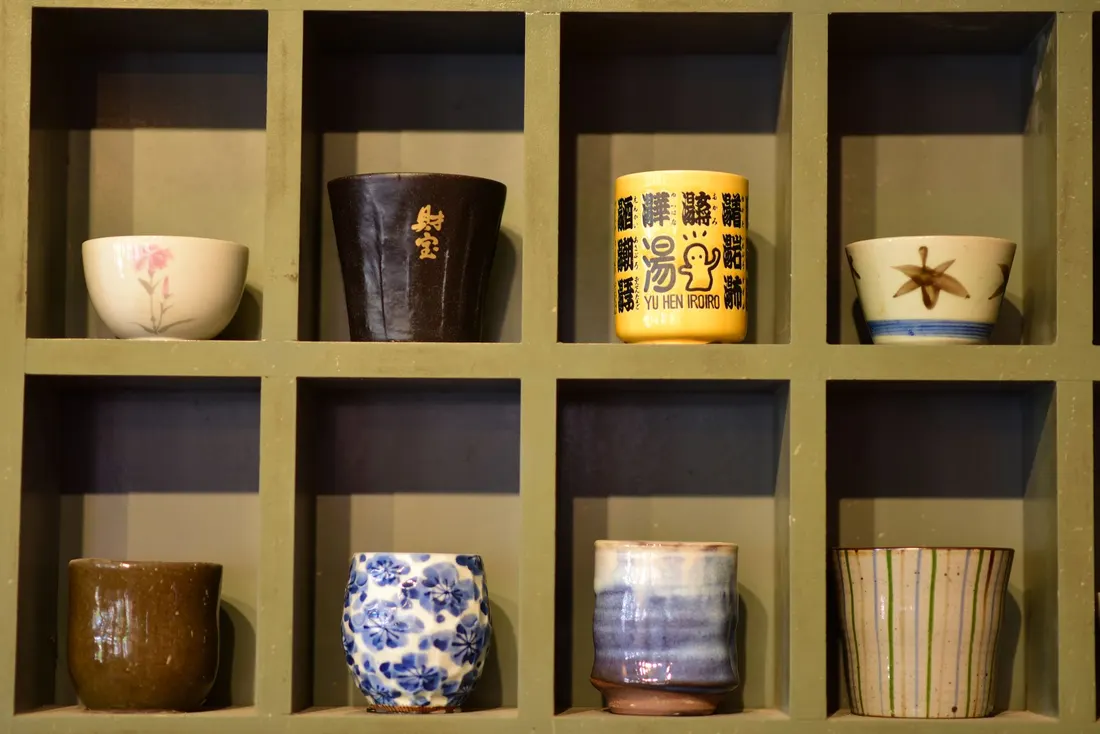
Mikawachi
Korean potters, a domain’s secret kiln, and children painted on white porcelain
In the hills behind this port, potters have made blue-and-white porcelain since the early 1600s. The founders were Korean, brought to Japan by force after the invasions of the 1590s. The ware became the private product of the Hirado domain, and its signature is a group of playing children whose number tells you the grade.
When Hideyoshi’s armies withdrew from Korea in the 1590s, they brought back potters. Japanese ceramics changed permanently as a result, and several of the country’s great porcelain traditions — Arita, Satsuma, Hagi — begin with those forced migrations.
Mikawachi is one of them. Korean potters settled in the hills inland of Sasebo, found suitable stone at Amakusa, and by the mid-1600s were producing a very white, very fine porcelain.
The domain kiln
The Hirado domain took the kilns under direct control. Production was restricted, the best work was reserved for presentation to the shogunate and to other lords, and the technical methods were protected.
That is why Mikawachi ware — also called Hirado ware — is finer and whiter than most Japanese porcelain of the period, and why so little of it was on the open market.
The signature motif is the <strong>karako</strong>: Chinese-styled children at play, painted in cobalt blue. The number of children indicated the grade — three, five or seven — with seven reserved for the highest.
Where it went
After the domain system ended, Mikawachi went to the international exhibitions of the late nineteenth century and won prizes at Paris and Vienna. Much of the finest work was exported and is now in European collections rather than Japanese ones.
That is also why it is less known at home than Arita, which sits about an hour away and had a much larger commercial output.
Seeing it on a port day
The Mikawachi district is a short train or taxi ride inland, and several kilns are open with shops attached. There is a ceramics museum, and in late April and early May a pottery fair fills the village.
A single small piece — a sake cup, a tea bowl — is a few thousand yen and is the most specific souvenir available in this port. Look for the karako, and count the children.
How it happened
- 1590sKorean potters are brought to Kyushu by force
And Japanese ceramics change permanently
- early 1600sKilns established at Mikawachi
With porcelain stone from Amakusa
- Edo periodThe Hirado domain takes direct control
The best work is for presentation, not sale
- late 1800sPrizes at Paris and Vienna
And much of the finest work leaves Japan
- todayKilns still working in the village
Look for the karako, and count the children
Where this becomes real on your port day
Go inland to the kilns and buy one small piece. Nobody will offer you this, which is why almost nobody goes.
The vocabulary of the kilns
- Mikawachi-yaki 三川内焼
- The ware. Also called Hirado ware, after the domain.
- Karako 唐子
- Painted children. Three, five or seven — seven is the highest grade.
- Sometsuke 染付
- Blue-and-white underglaze cobalt. The house style.
- Hirado han 平戸藩
- The domain that owned the kilns and restricted the output.
FAQ
What is Mikawachi ware?
A very white, fine blue-and-white porcelain made in the hills behind Sasebo since the early 1600s, founded by Korean potters brought to Japan after the 1590s invasions. The Hirado domain took the kilns under direct control and reserved the best work for presentation, which is why so little reached the open market.
What is the karako motif?
A group of Chinese-styled children at play, painted in cobalt blue — the signature of Mikawachi ware. The number of children indicated the grade: three, five or seven, with seven reserved for the highest-quality pieces. Count them when you buy.
More from Sasebo
Four thousand people in 1886. A naval base in 1889. Two navies today.
Read →
The only rule is that it must be made after you order it
Read →
A coastline that drowned, and a name that gave up counting
Read →
Two hundred and fifty years of hiding, and then a brick church built by hand
Read →