
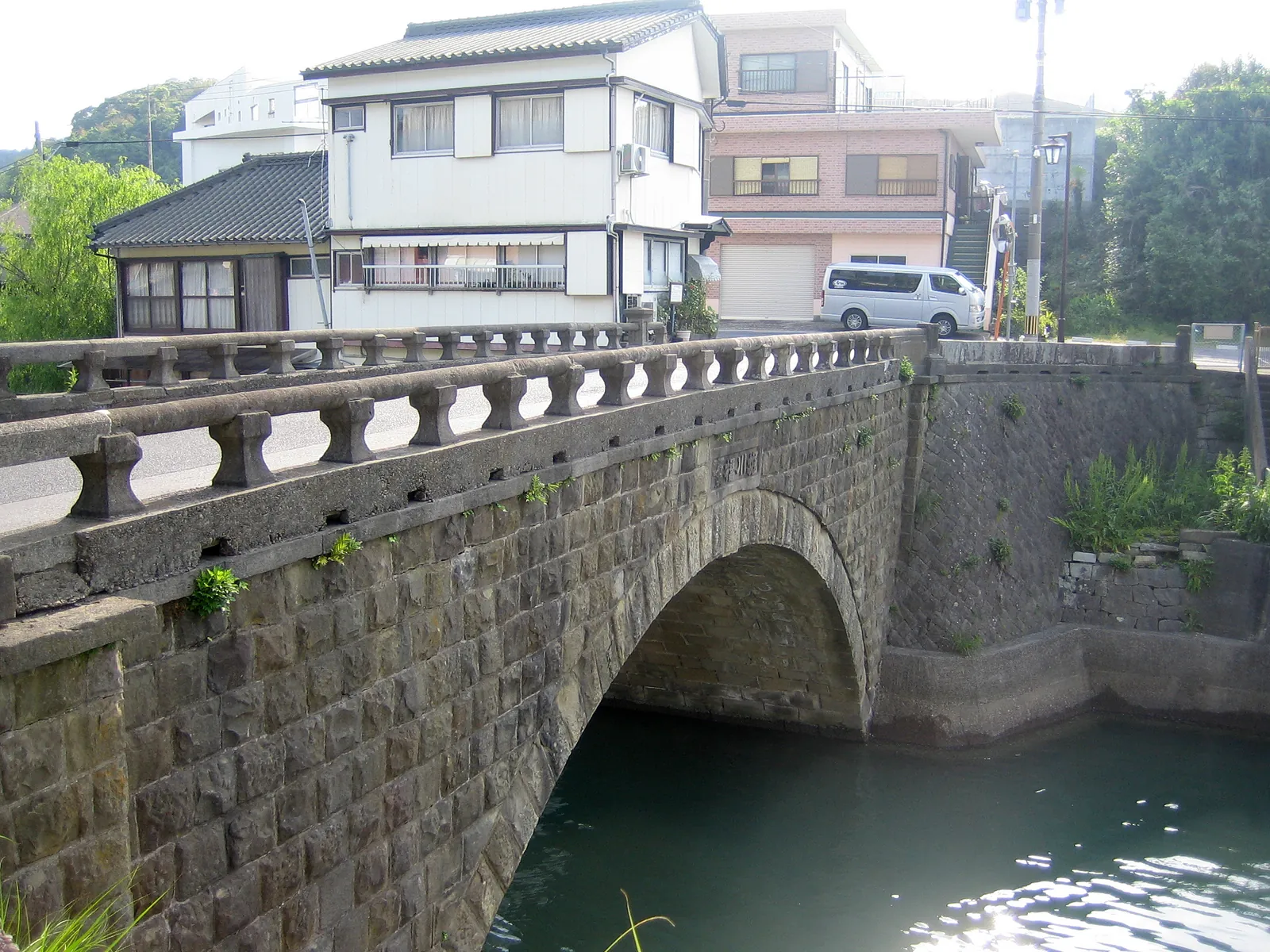
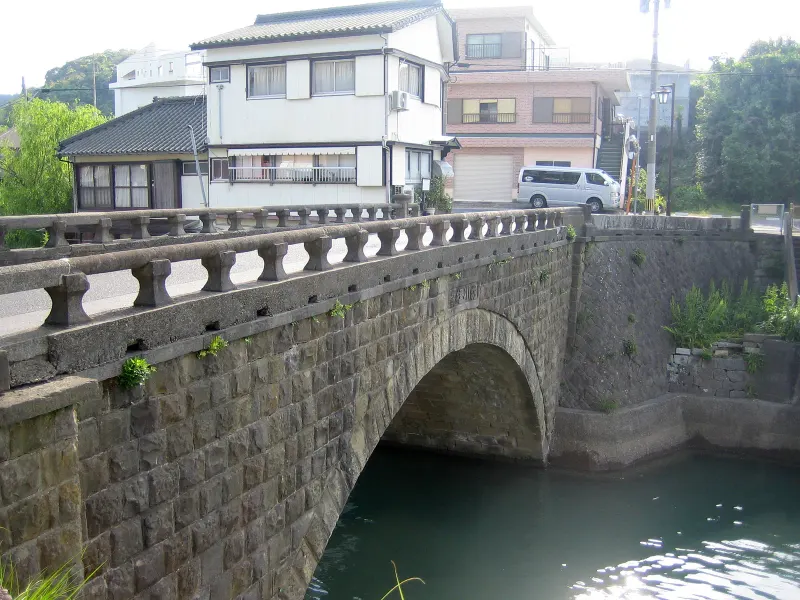
The Horikawa Canal and its bridgesPhoto: mari / CC BY 2.0
The Horikawa Canal was cut on the order of the Obi lord Ito Sukezane between 1683 and 1686 to float cedar from the hills down to the port, and it took 28 months to dig through 50 metres of rock.
- Getting there
- 2.4 km from the quay: taxi about ¥1,200 (our estimate); 5 min on foot from the Tourist Center
Checked · Researched, not yet visited · times from official timetables and our estimates · Takumi Yamada
The Obi domain dug this canal in 1683–86 to float its cedar to the port. A stone arch of 1903, Horikawa Bridge, still crosses it, and the roofed Yumemi Bridge of Obi cedar, built without nails in 2007, stands upstream. The 1922 brick warehouse beside it, Aburatsu Akarenga-kan, is free to look round.
- Short enough to be certain of: 2 hr door to door.
- 2 hr door to door needs a 4-hour call: a 2–3 hour stop cannot hold it. Pick something closer instead.
The Horikawa Canal and its bridges and your ship
Both pins on one map, so the distance is a fact rather than a feeling.
Routes that already include it
Finished days timed from official timetables and our estimates, with this stop in them.
What to put beside it
Each of these still lands you back aboard with the hour to spare.
 4 hr for both
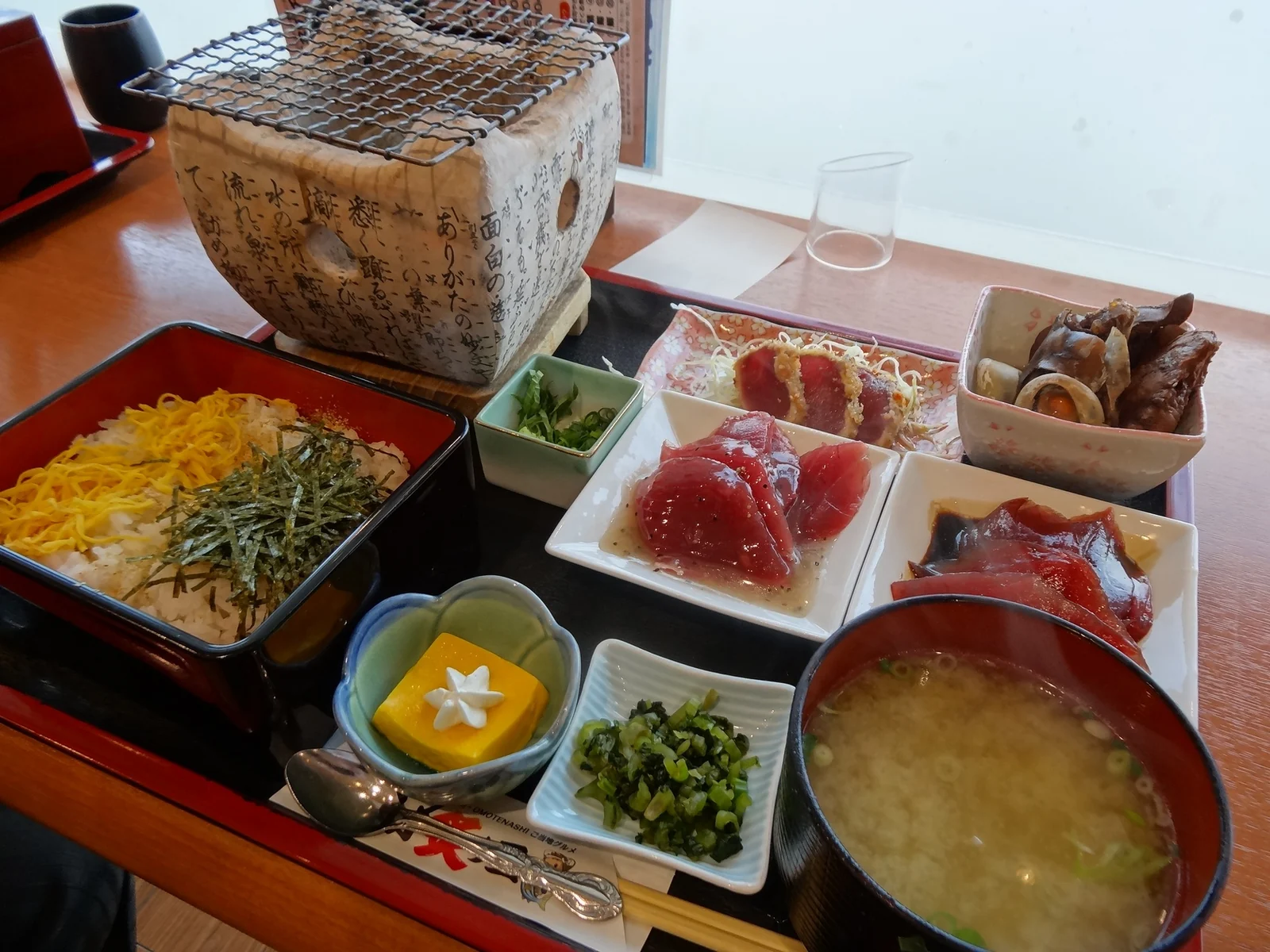
Katsuo aburi-ju
Nichinan’s own dish: line-caught bonito marinated two ways, seared at your table over a small charcoal brazier and eaten on rice from a lacquer box.
See the detail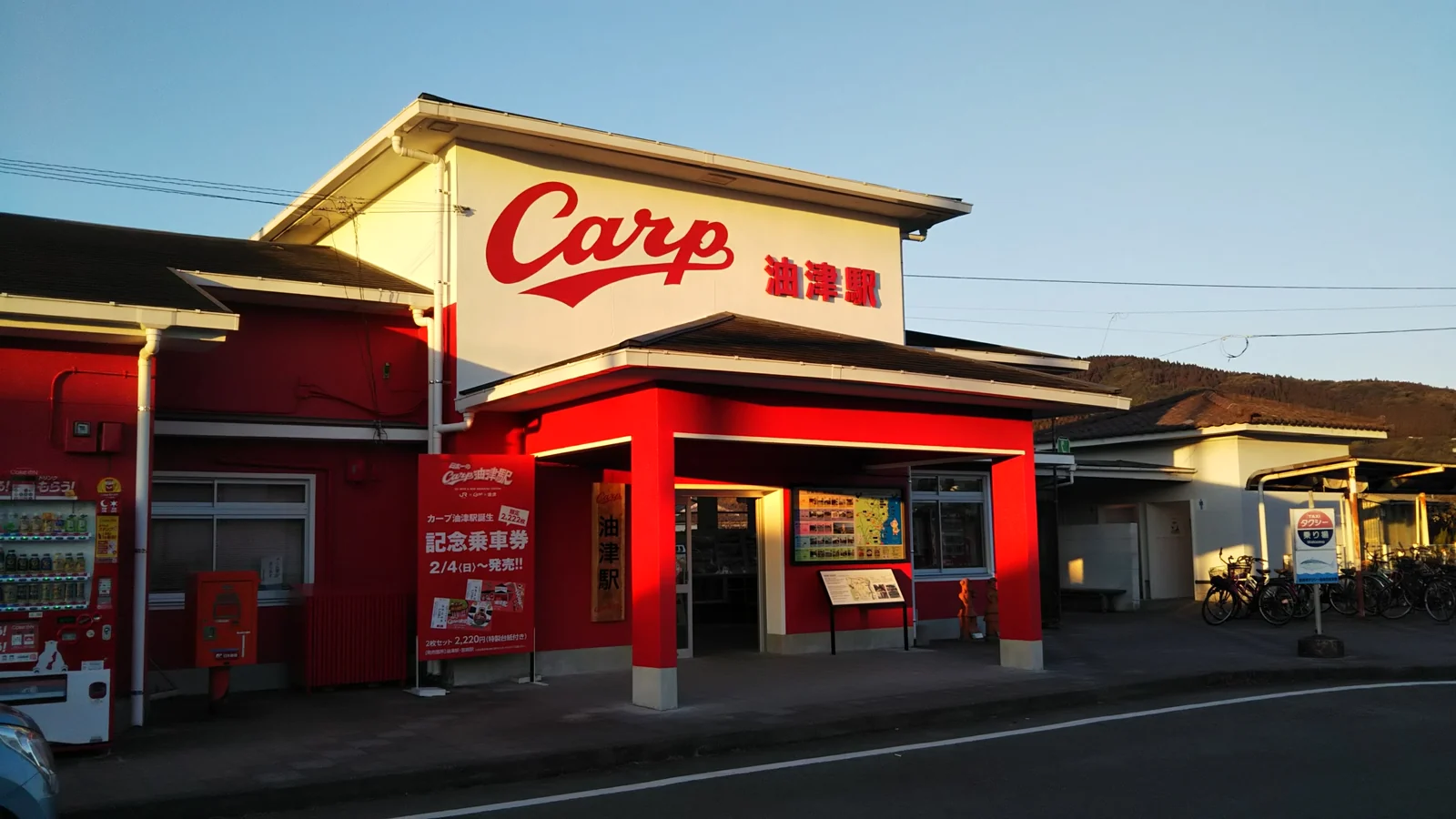 4 hr for both
Aburatsu Station in Carp red
Nichinan has hosted the Hiroshima Carp baseball team’s camp at Tenpuku Stadium since 1963, and the town painted its station in the team’s red.
See the detail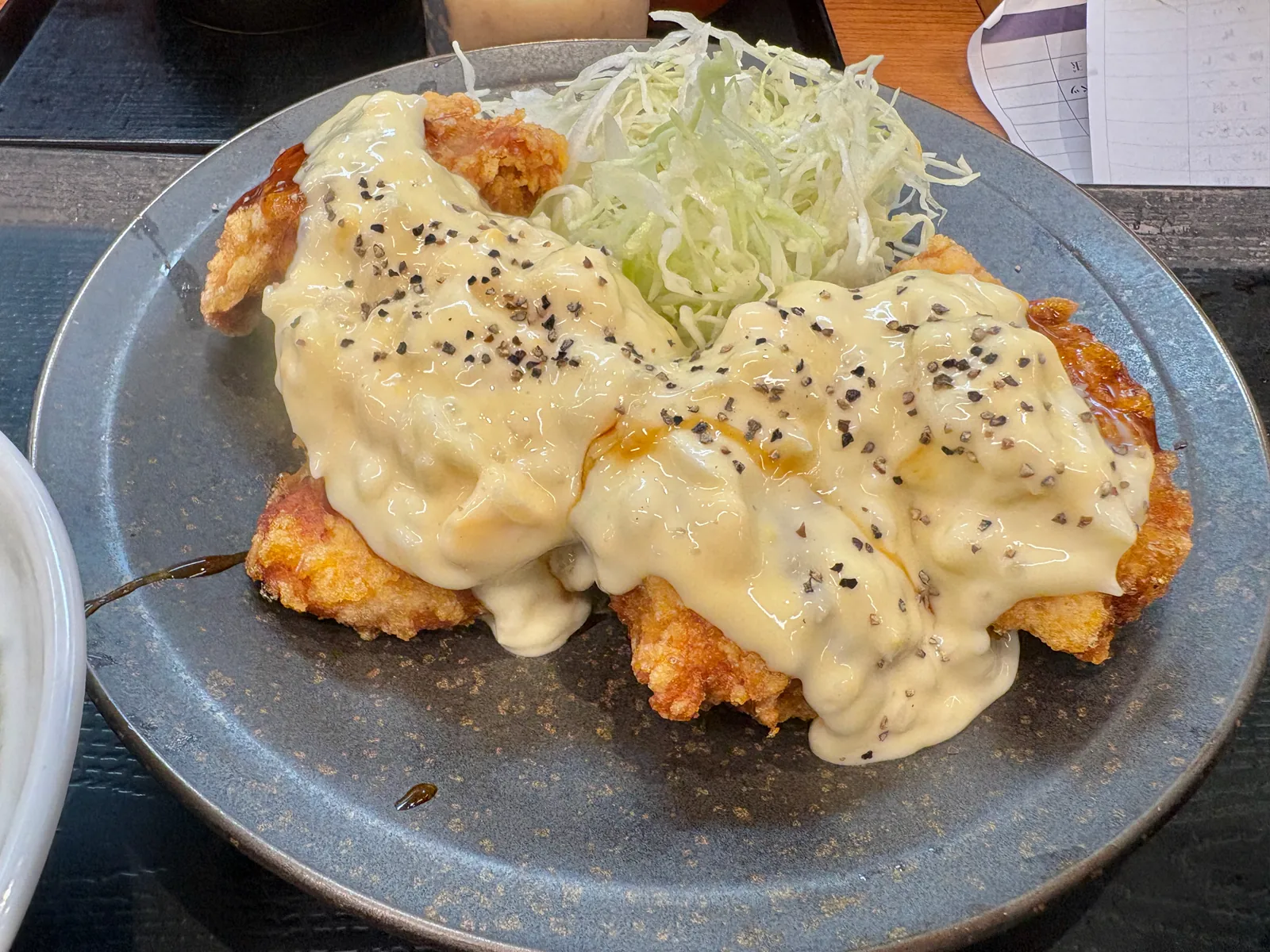 4 hr for both
Chicken nanban
Miyazaki’s own fried chicken: battered, dipped in sweet vinegar and topped with tartare sauce.
See the detail