Pick your hours and you get a finished day — every step timed from the gangway and back, and each route says how much room it leaves you before all-aboard. Swap anything you don't fancy.
Long calls with a charter — the whole island, without the rush
On an 8-hour stop that leaves 1 hr 30 min spare — the full hour this site recommends, and then some.
+0:00
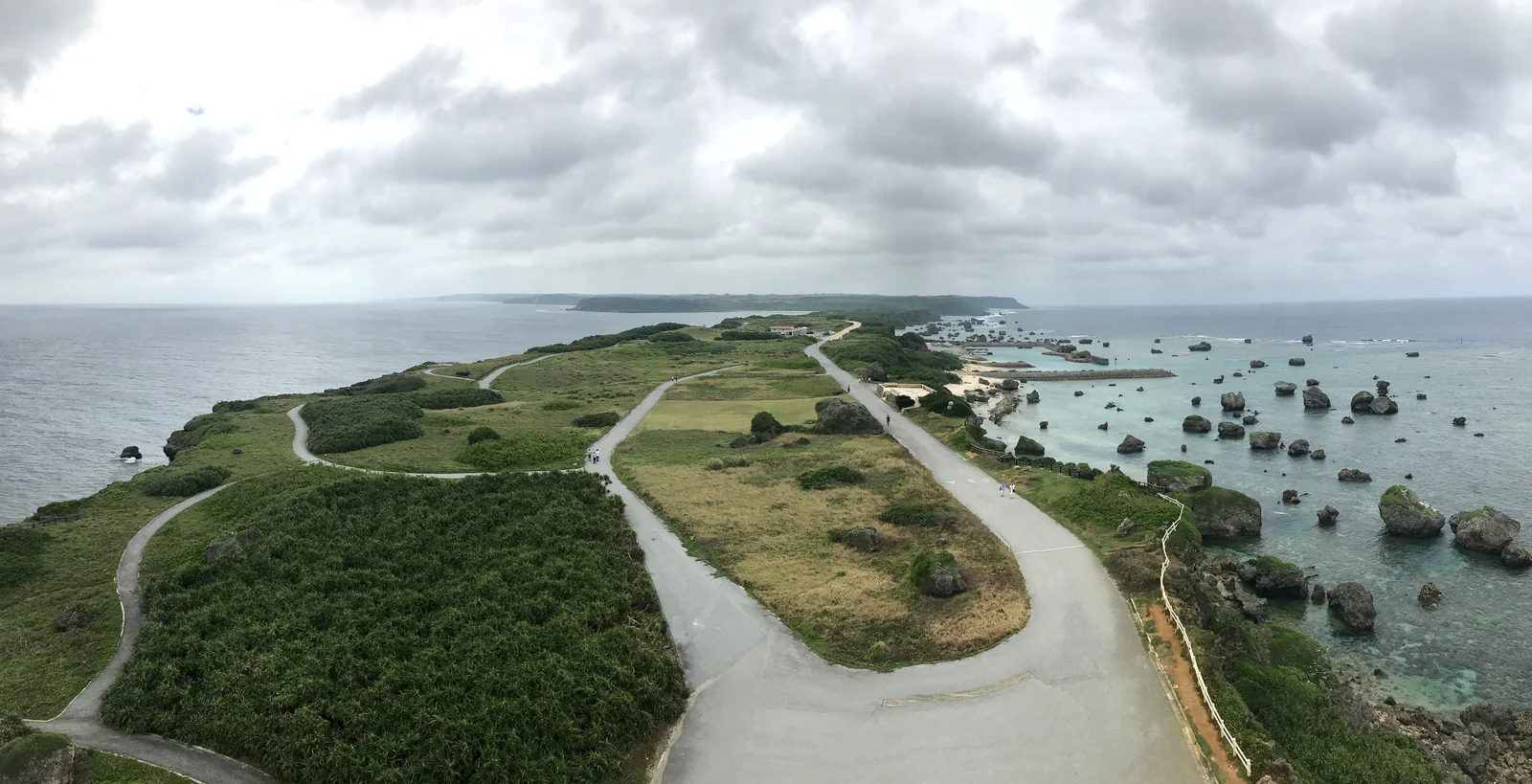
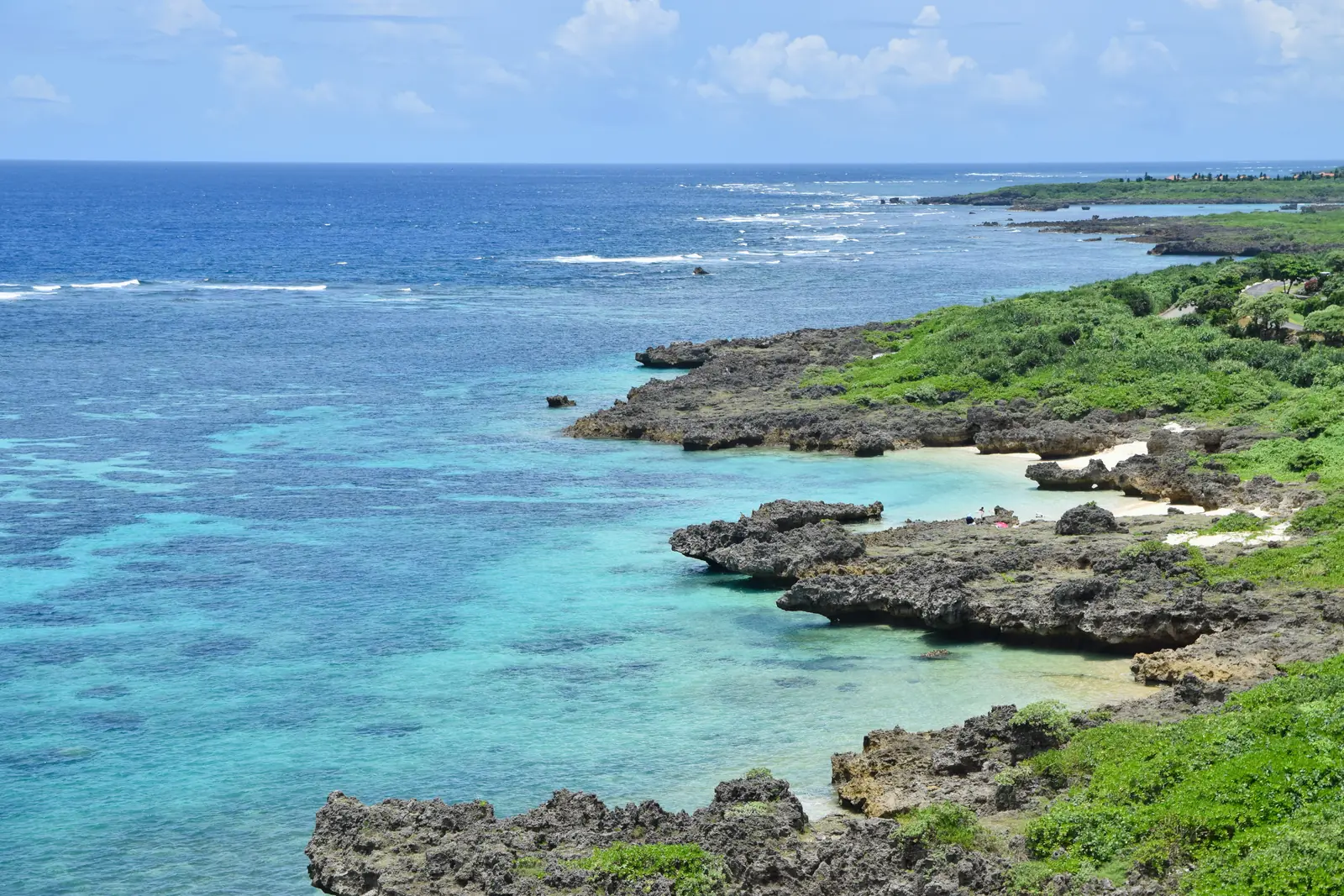
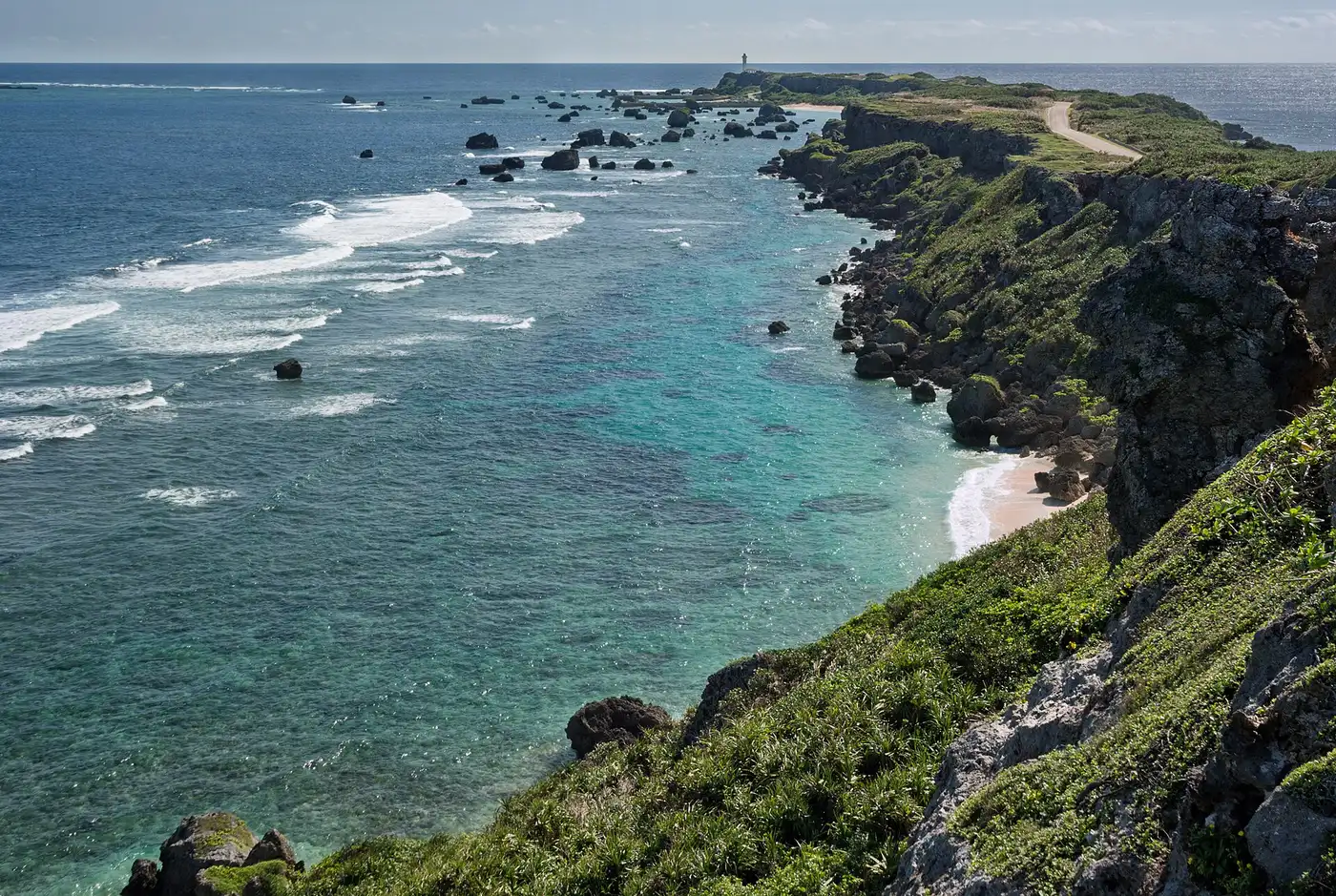
Charter east first: Higashi-Henna Cape
~40 min drive; 2km cliff walk to the lighthouse
+1:30
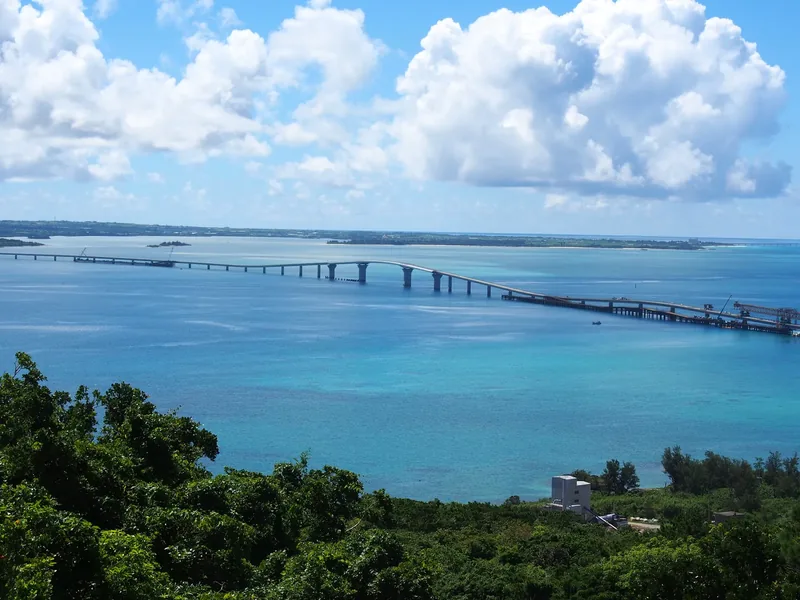
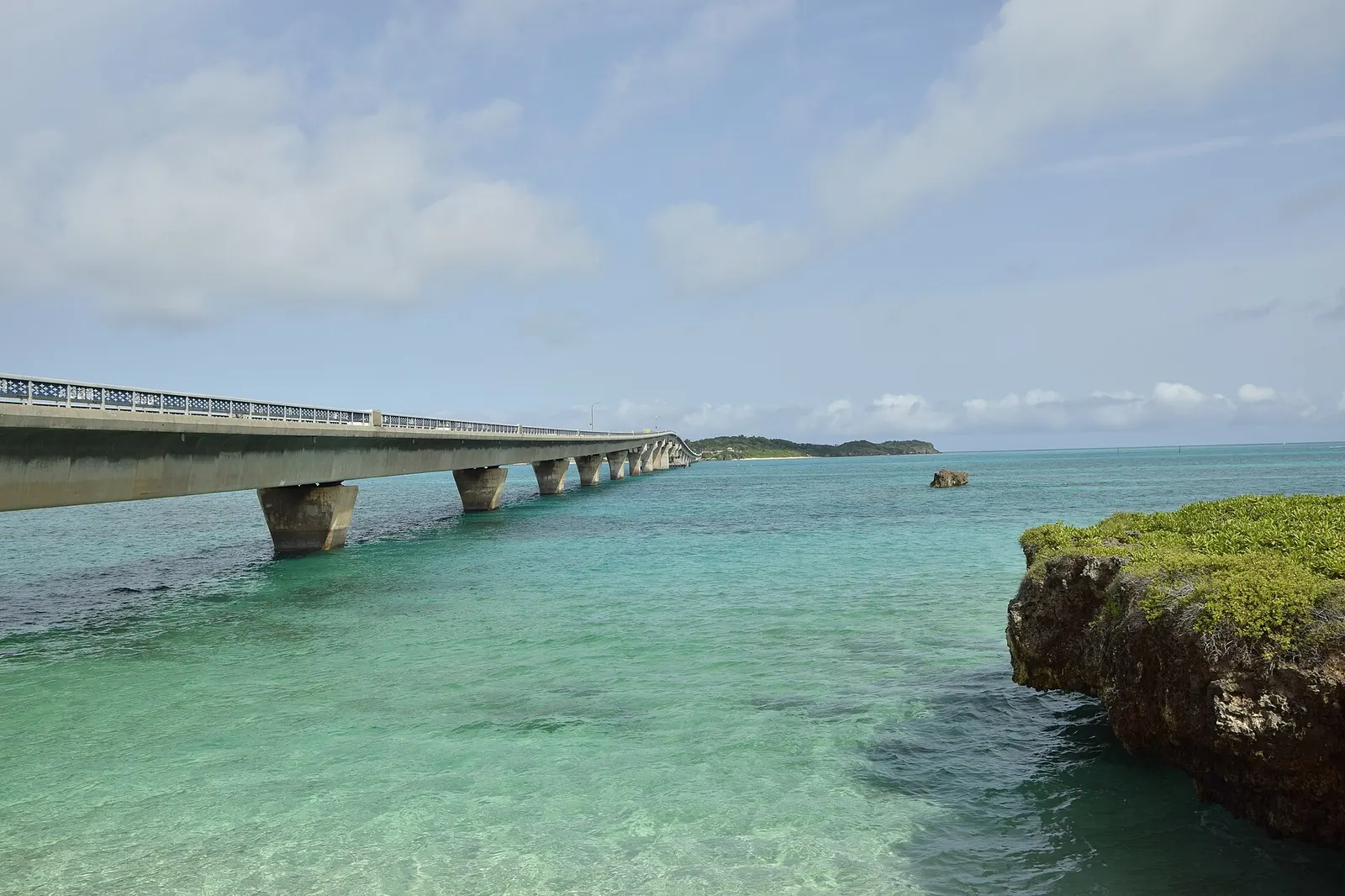
North coast road to Ikema Ohashi
Cross to the fishing island; reef lookouts on the strait
+2:45
Yukishio Museum
How reef seawater becomes powder salt; the soft serve is obligatory
+3:30
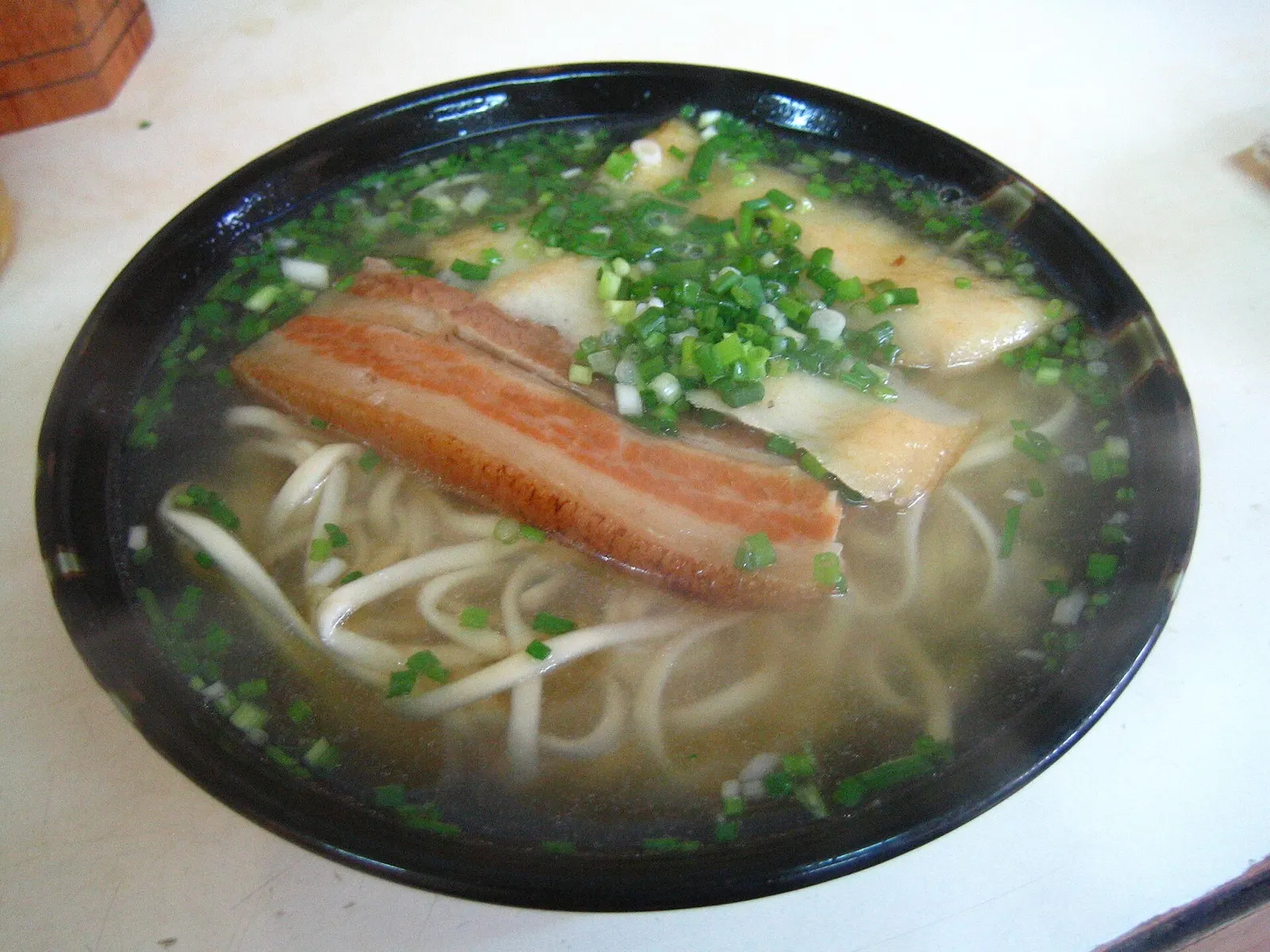
Late soba lunch back in Hirara
+4:30
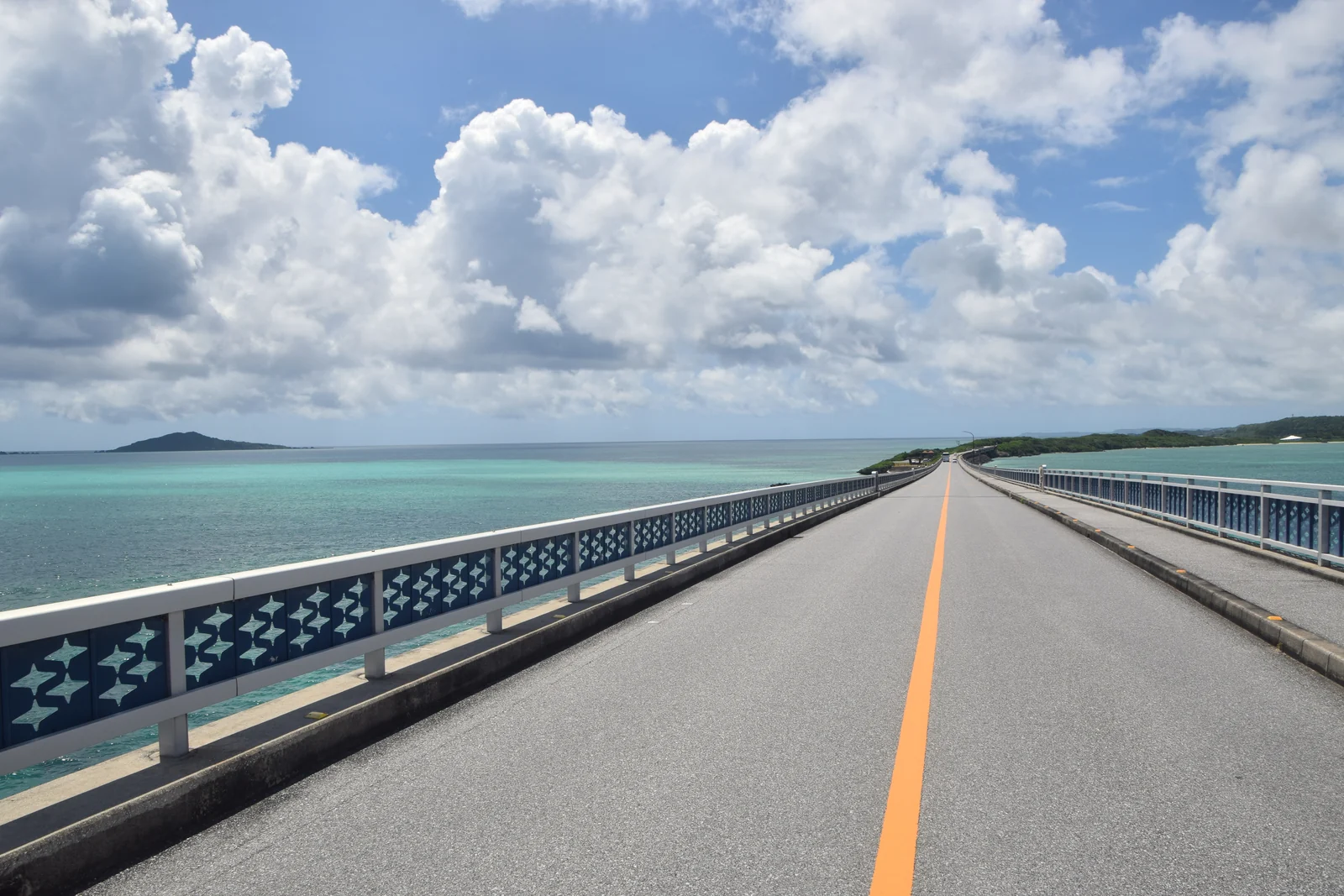
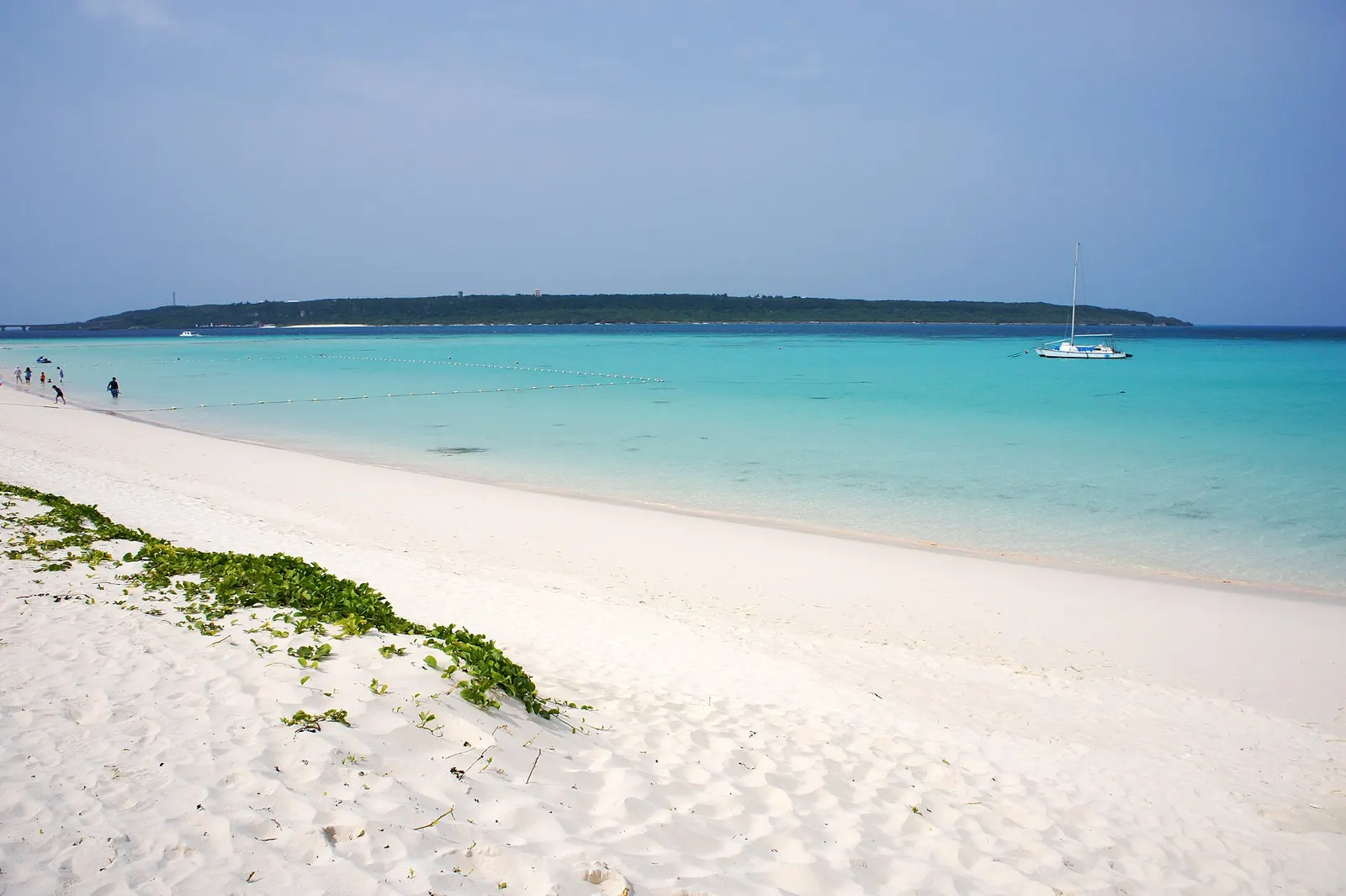
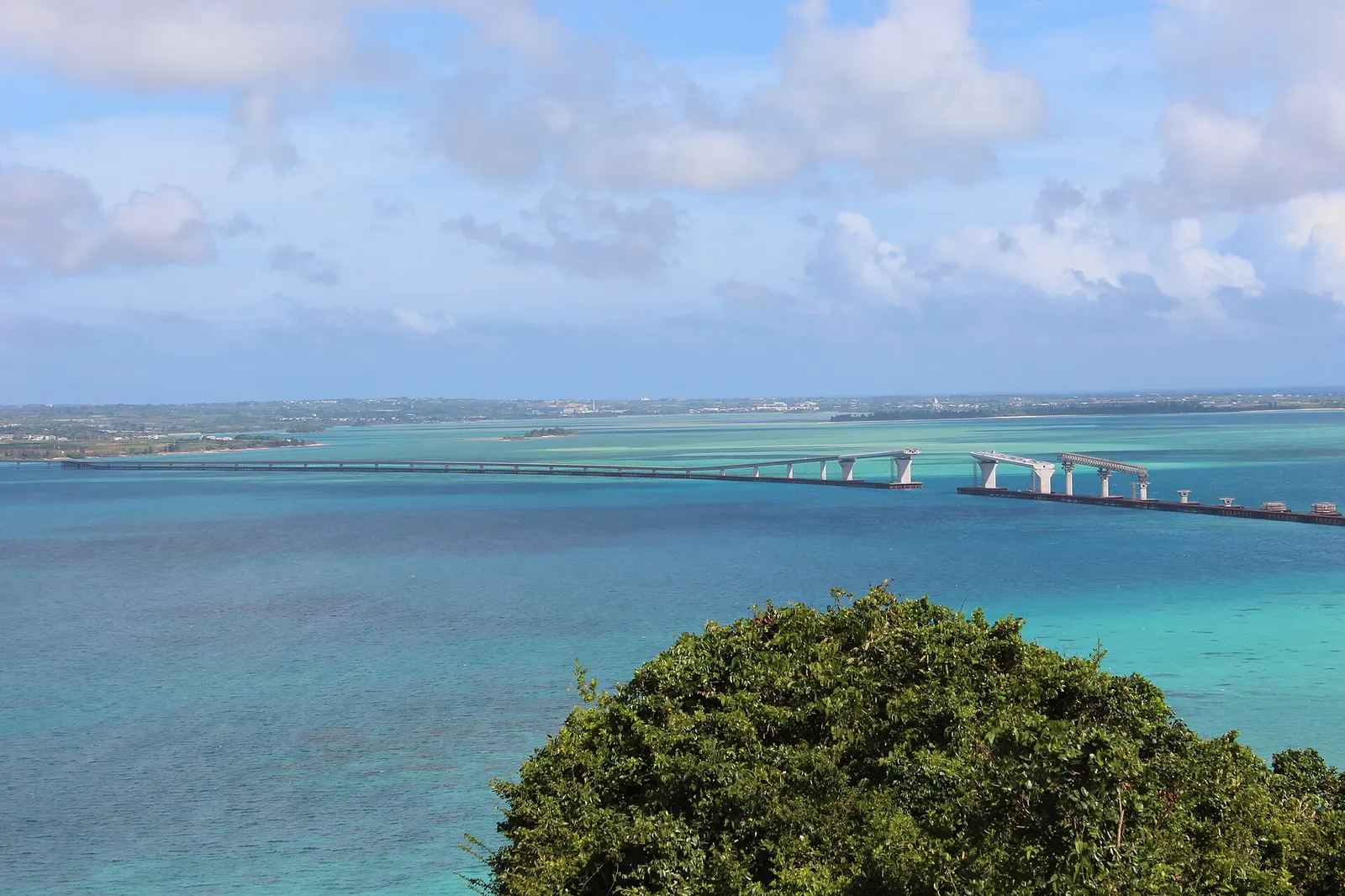
Irabu Ohashi crossing, or Maehama hour
Pick one — the bridge for the drive, the beach for the swim
+5:45
Back at the gangway
60-minute reserve intact
Running late? Anything slips? The bridges are the sacrifice — they are magnificent, and they are also the thing you partly see from the ship as you sail.
Wet weather — and a caveat: this island is built for sun
On a 6-hour stop that leaves 2 hr 30 min spare — the full hour this site recommends, and then some.
+0:00
Walk or shuttle into Hirara town
Umbrella weather is workable; typhoon weather cancels the call itself
+0:20
The public market and shopping streets
Covered stalls, island fruit, salt and awamori shelves
+1:00
Miyako soba, long lunch
The old houses take their time — let them
+2:00
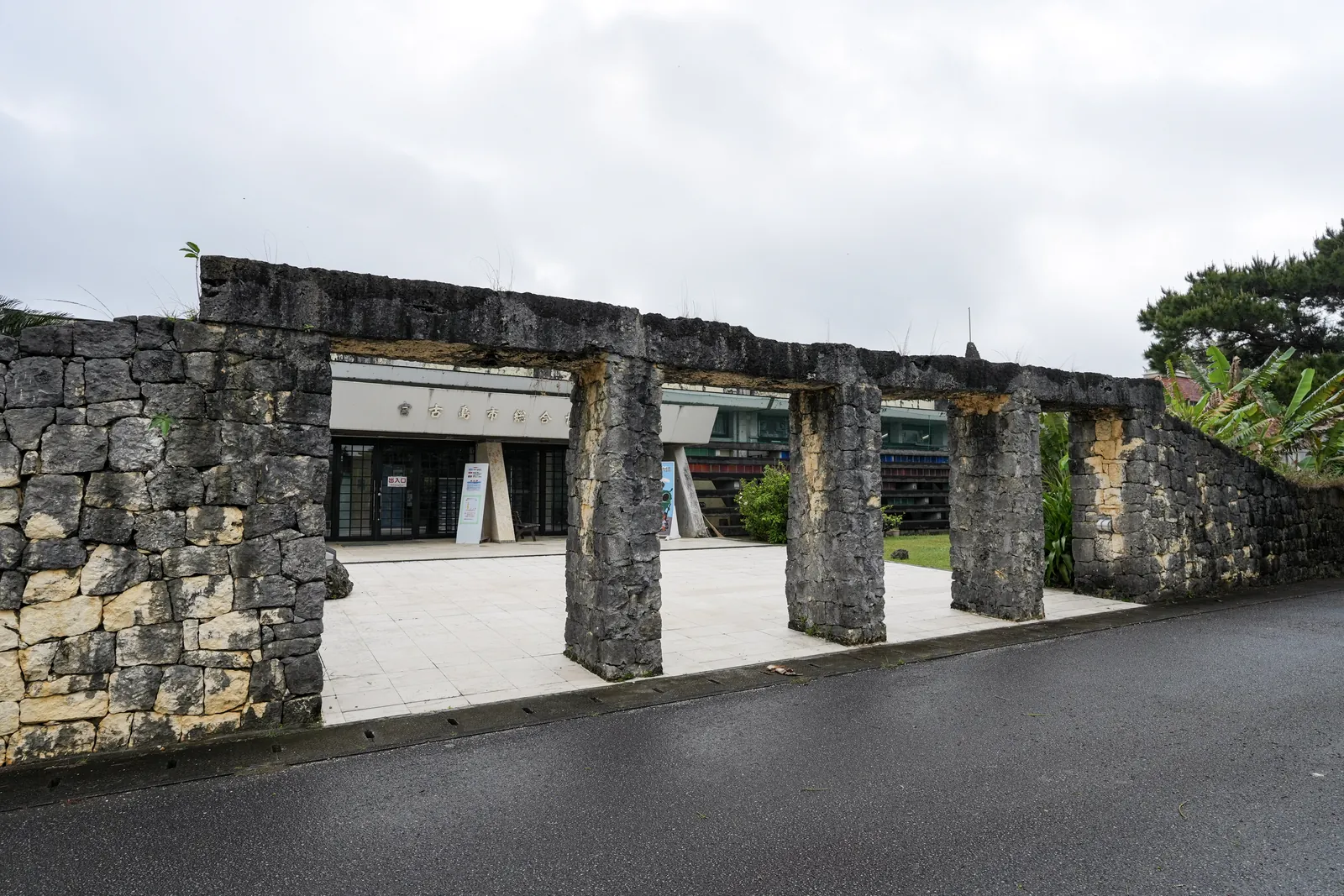
City museum by taxi (~10 min)
Paantu masks, poll-tax history, the underground dams explained. Closed Mondays, national holidays and Dec 29–Jan 3; free for visitors 70+ with ID
+3:15
Back to the ship
Running late? The truth: Miyako’s rain plan is the thinnest on this site. If the forecast is grim, spend ashore lightly and keep the sea day for the next port.
Round trips are measured from the gangway and include getting back. Two stops in the same direction overlap, so a real day usually comes in under the total you see, never over it.
No usable public transport for the beaches and bridges — no trains, a thin bus timetable, and the taxi fleet is spoken for on ship days. Pre-booked wheels (charter ~¥4,000–5,000/hour) or the town on foot. The one port where improvising fails.
The one rule: be back on board 60 minutes before all-aboard — every day above already banks it.Phones auto-switch to local time, but all-aboard runs on ship time. Check the daily programme's clock, not your lock screen.More to pick from on the Miyakojima guide and theTop 10.
MY SHIP DAY — fill this in before you walk off
Ship
Date
Docked at (berth)
All-aboard (SHIP time)
My deadline = all-aboard − 60 min
Last shuttle back
Phones auto-switch to local time; all-aboard runs on ship time. Write both if they differ.
GETTING AROUND — the facts that don't change by day (today's times: ship's program or Google Maps)
Hirara town & Painagama: ① Berth shuttle bus to the terminal (~1 km) — walking inside the port is not allowed ② Walk ~15 min into Hirara
The island’s sights: No usable public transport for the beaches and bridges — no trains, a thin bus timetable, and the taxi fleet is spoken for on ship days. Pre-booked wheels (charter ~¥4,000–5,000/hour) or the town on foot. The one port where improvising fails.
SHOW THIS TO A TAXI DRIVER — 運転手さんへ
Please take me back to the cruise ship (Miyakojima port)
クルーズ船乗り場までお願いします
Yonaha Maehama beach
与那覇前浜
Irabu Ohashi crossing
伊良部大橋
Higashi-Henna Cape
東平安名崎
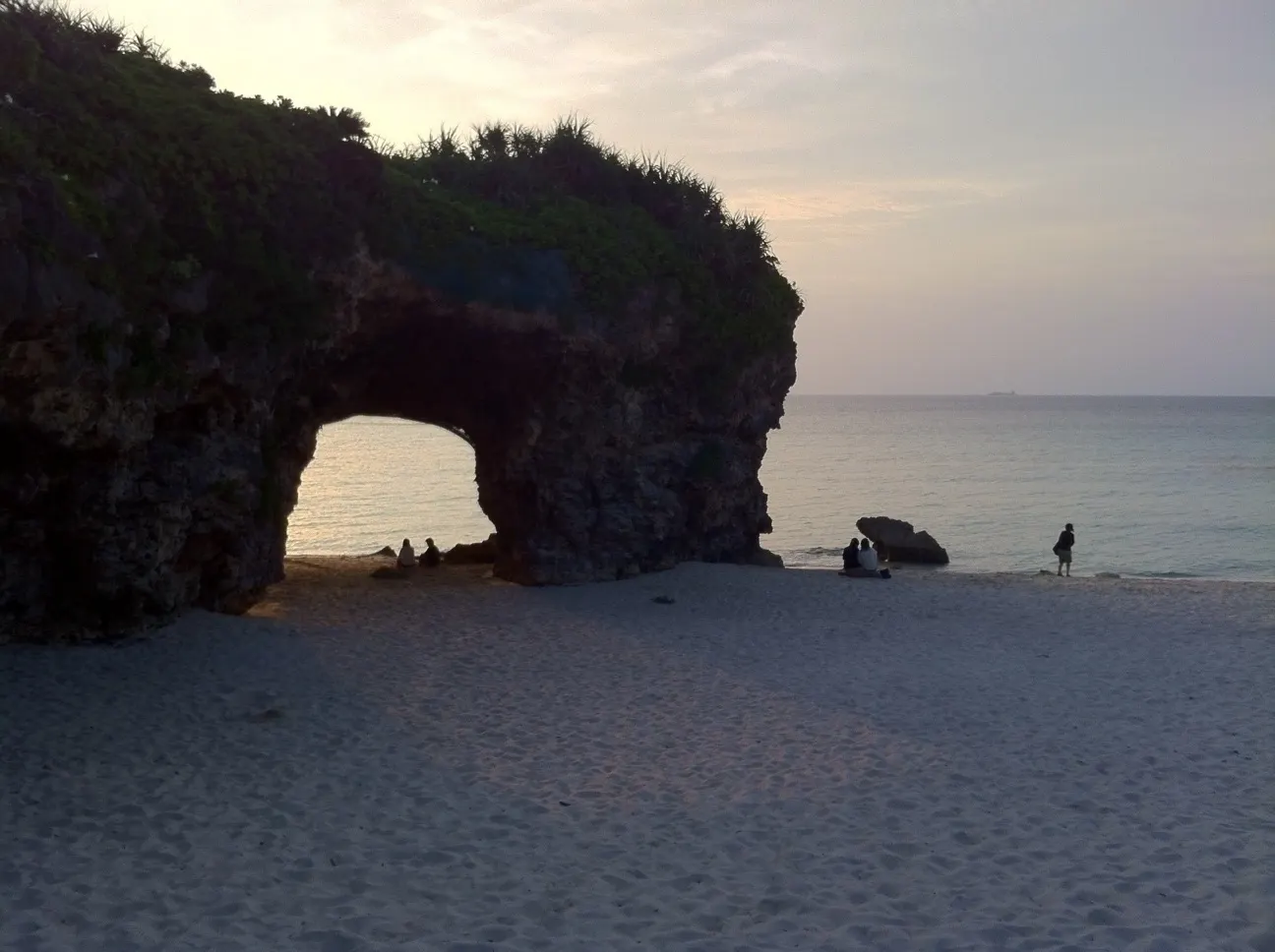
Sunayama Beach
砂山ビーチ
Ikema Ohashi & the north cape
池間大橋
Miyako soba at an old house
古謝そば屋
Point at a line. Taxis are metered and honest; tipping is not expected in Japan.
THE TWO-MINUTE PORT TALK — read aloud at breakfast
Miyako blue. Every island in Okinawa claims beautiful water. Miyako’s claim is different in kind: the island has no rivers, and that single fact explains the colour that ended up with its own name.
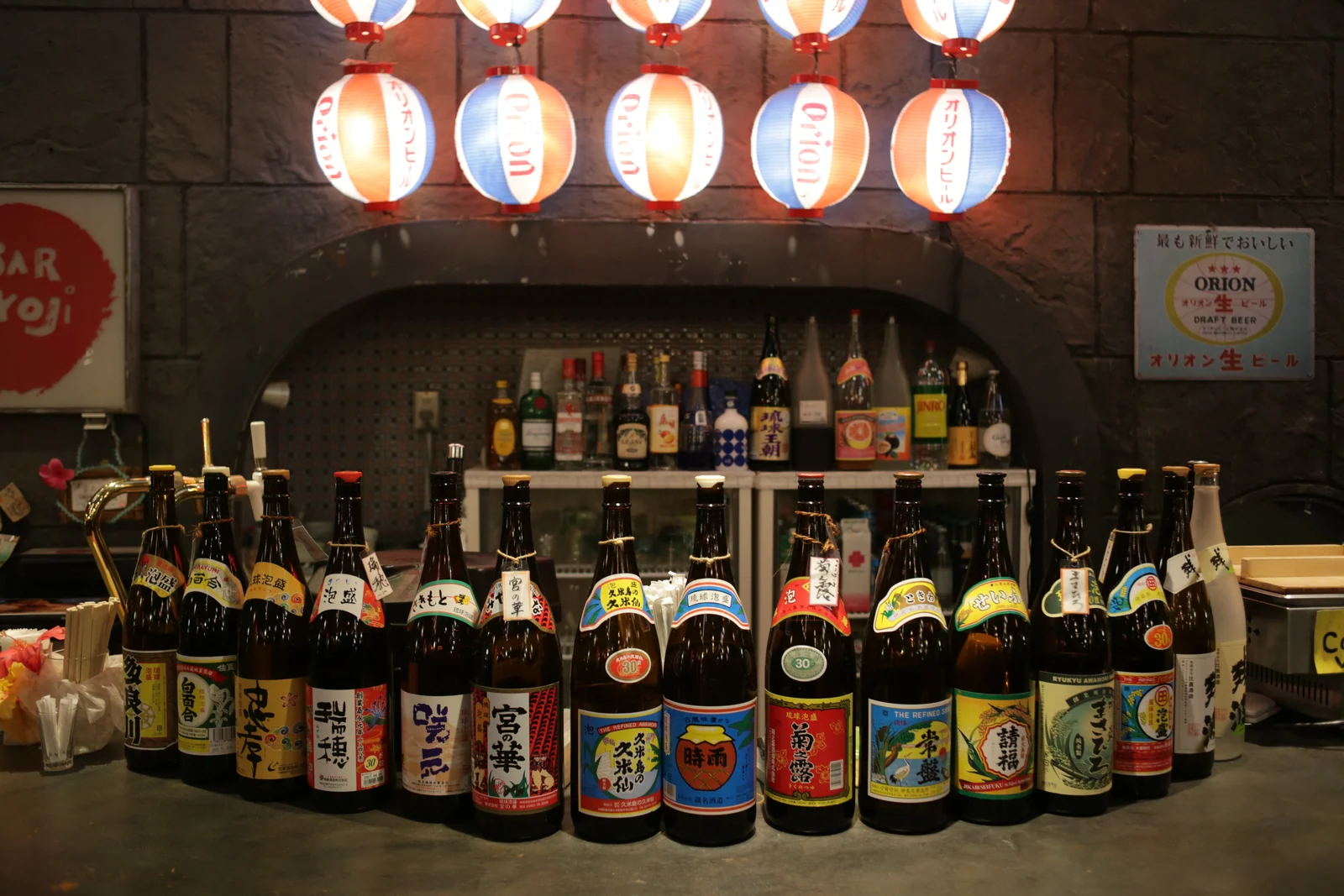
Otori, the rotating toast. On most of Okinawa you drink awamori at your own pace. On Miyako there is a system, it has a name, and once it starts it does not naturally stop.
Paantu, the mud gods. One evening a year in the north of the island, three figures come out of a sacred well wearing masks, vines and a full-body coat of stinking mud — and everything they touch is blessed.
The poll-tax stone. Near the port stands a plain upright stone, 143 centimetres tall. The story attached to it — grow taller than the stone and you owe the kingdom tax — may be legend. The tax itself was brutally real.
The one rule: be back on board 60 minutes before all-aboard — every plan above already banks it. · Free guide: port-of-japan.com/miyakojima/ · By Takumi Yamada, Tokyo, Japan