Updated 1 October 2026 · 29 official and operator sources · Researched from official timetables, operators and the port authority · Takumi Yamada
Miyakojima is a beach-and-bridge port: you come for Yonaha Maehama's seven kilometres of white sand, the 3,540 m drive across Irabu Ohashi and the long headland of Higashi-Henna Cape, all of them outside town. Every ship uses the same berth at Hirara Port, a shuttle ride of about 1 km from the terminal, and the terminal is another 1 km from town. On the usual 9- or 10-hour call you can see two of the three with a car and driver — on 10 hours, the cape, Maehama and the north — but the island has only 194 taxis and no useful bus, so the decision that shapes the day is made before you sail: book a charter taxi or a rental car, or settle for Hirara town and its beach on foot.
Your call, your day
What fits the time your ship gives you?
Pick your ship from the official Miyakojima schedule — or just the hours you have — and this page picks the plan and the tours that fit, with the hour before all-aboard already set aside.
Hours your ship is in port
Why people sail here
The three reasons to get off the ship in Miyakojima
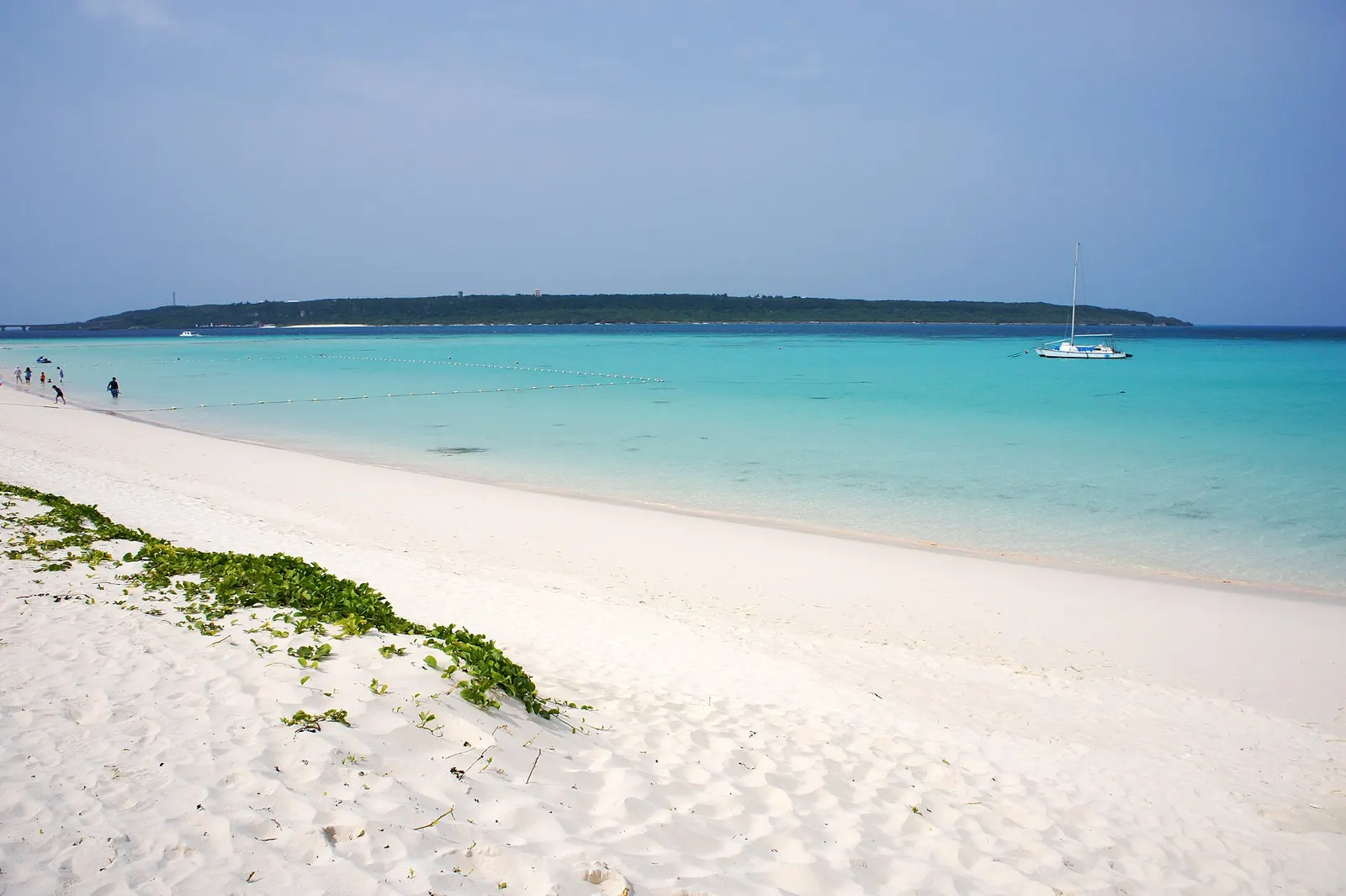
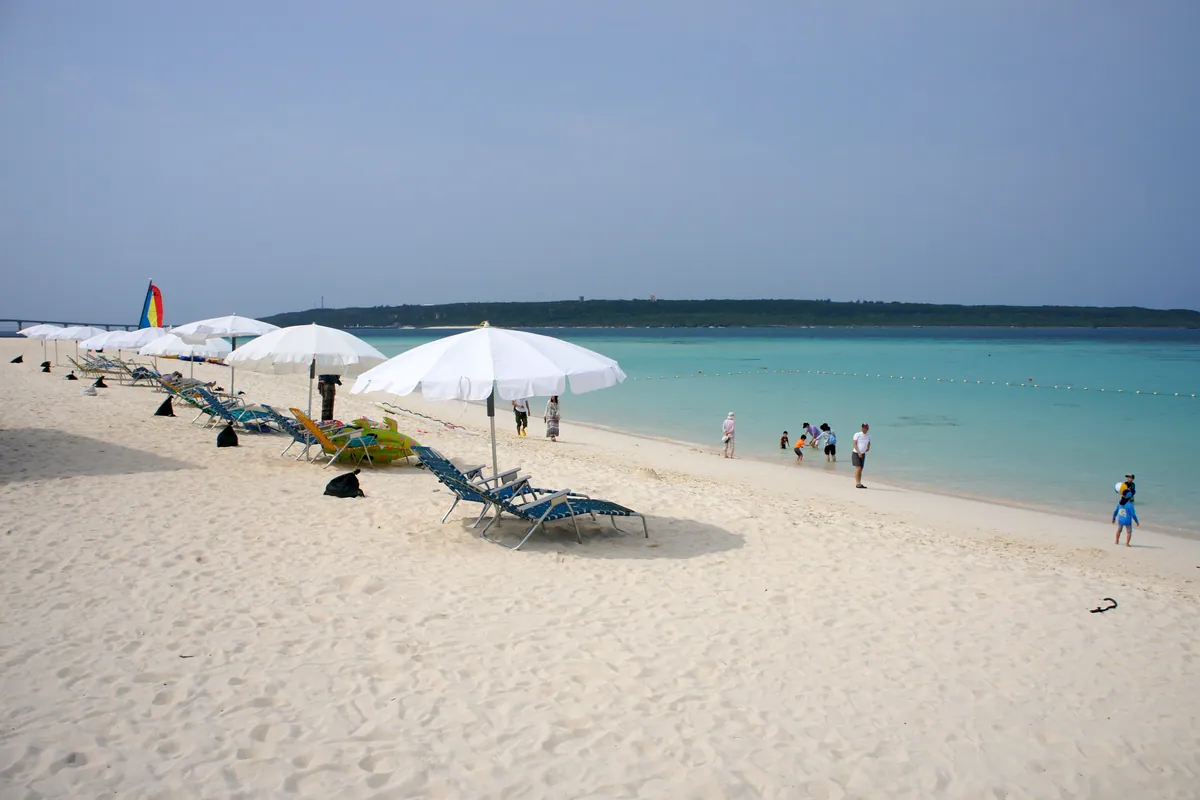
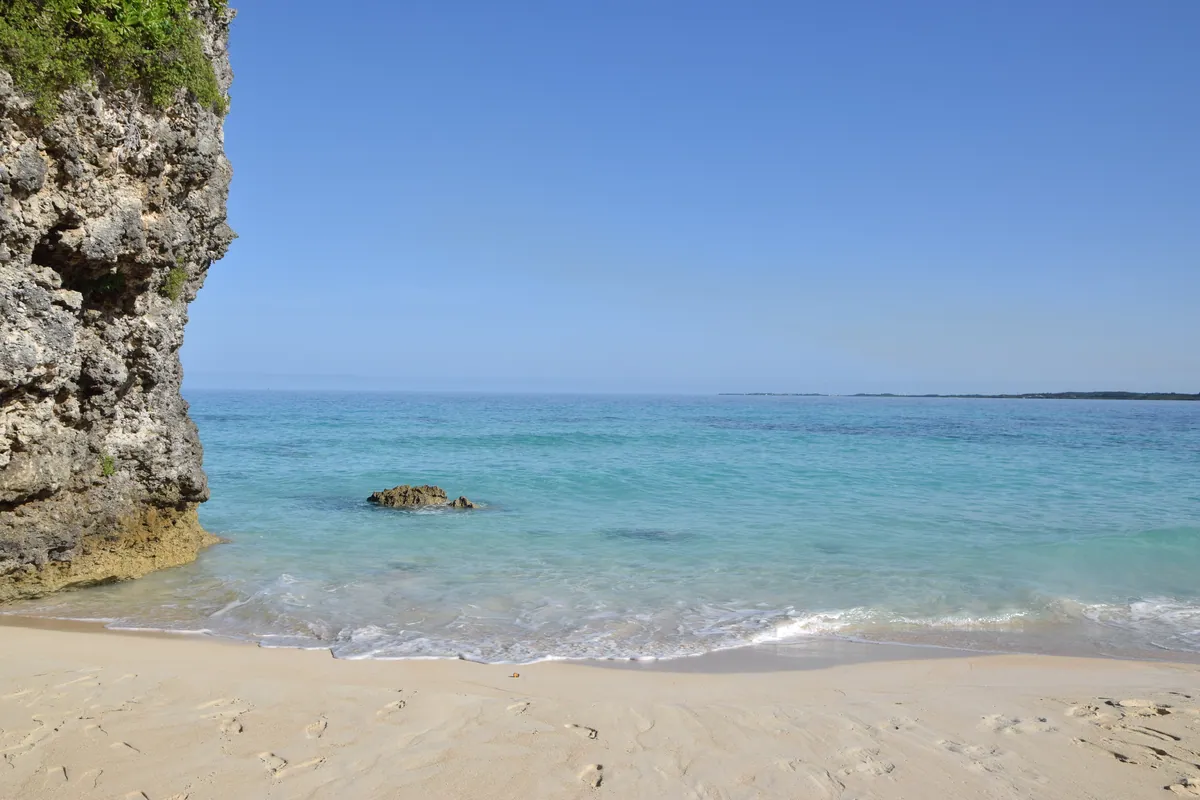
About 7 km of white sand on the south-west coast, and the start line of the island's triathlon. Miyako is flat coral limestone with no rivers, so nothing muddies the shallows — this is where that shows best.
From the shipCar or taxi only: officially 20 minutes and 10 km from the port, about ¥2,700 by taxi on our estimate of the island tariff. No bus worth planning around.
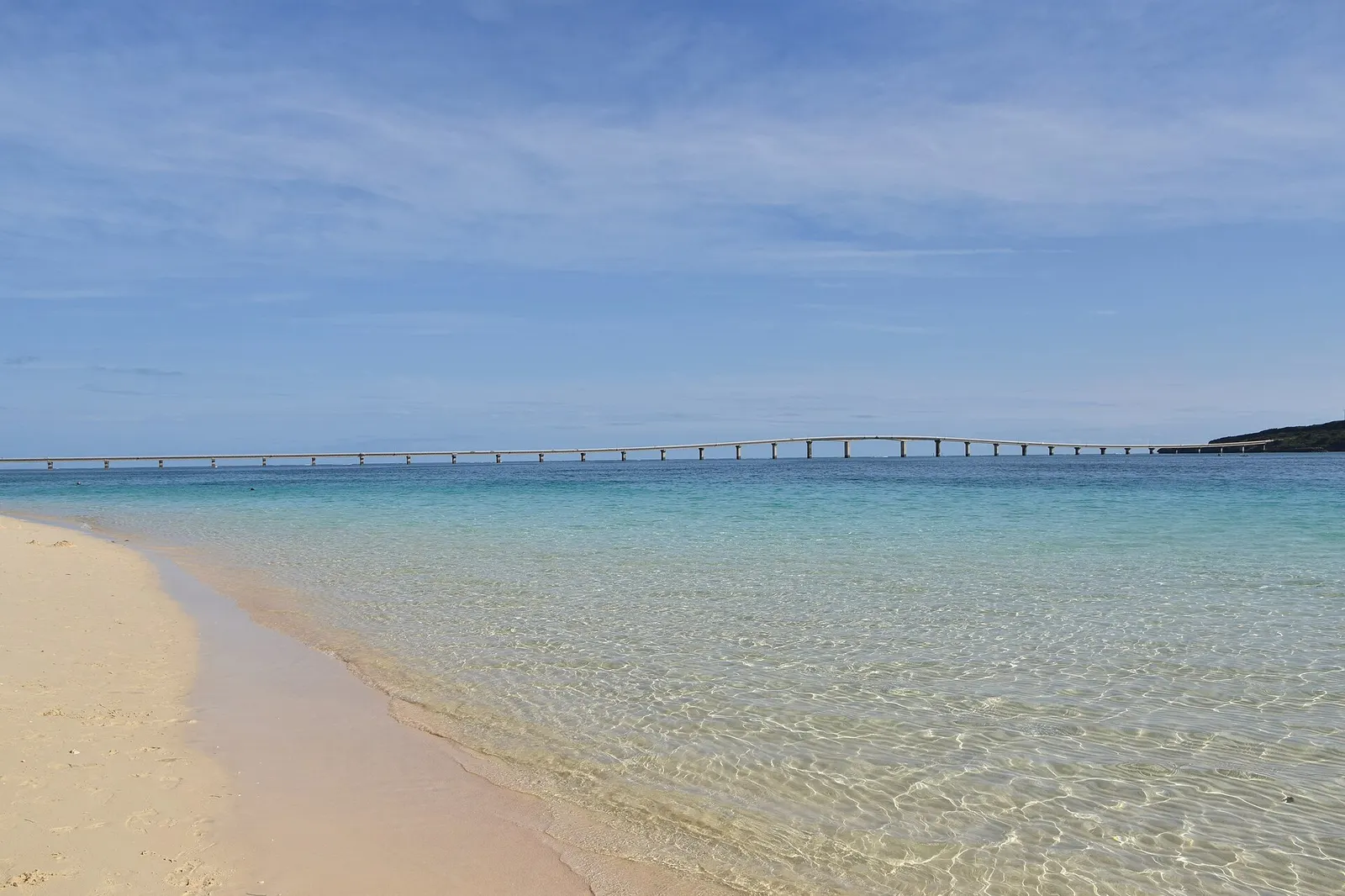
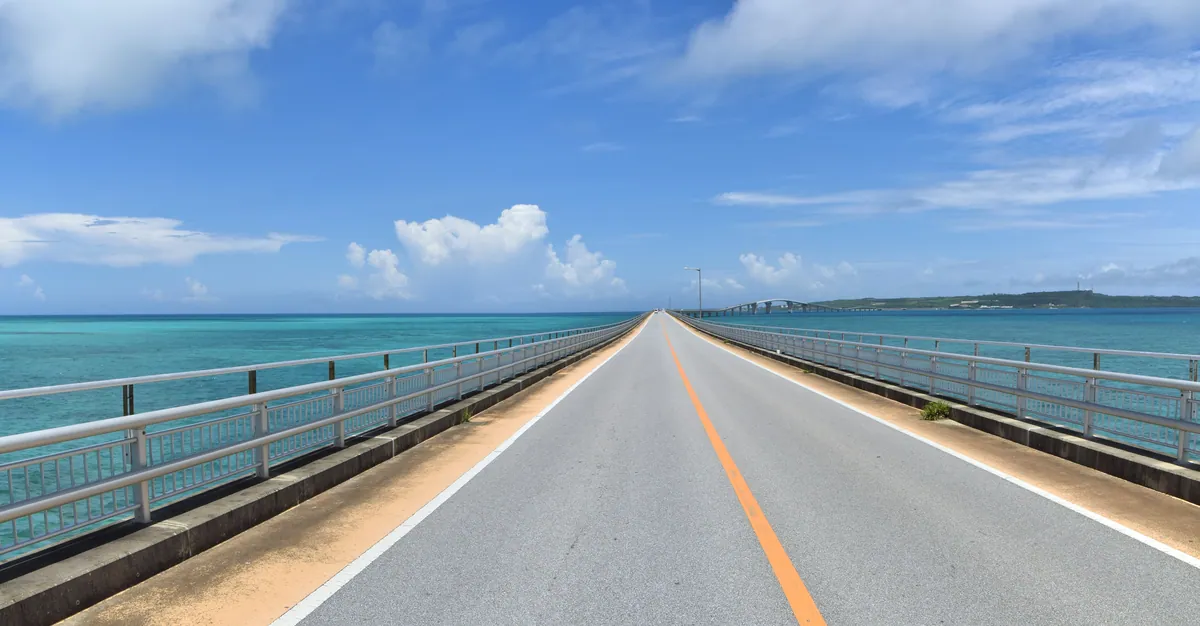
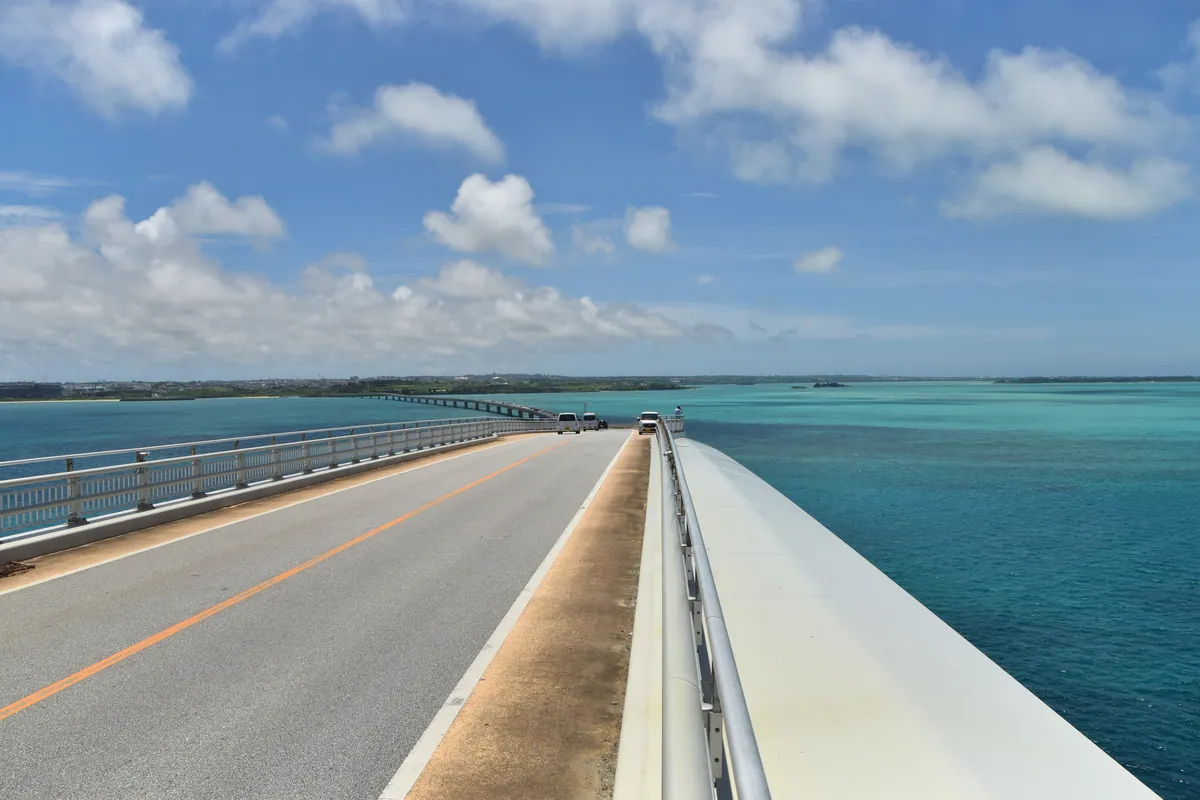
At 3,540 m, the longest bridge in Japan that is free to cross, running low over open water to Irabu island. The crossing is the experience; the lookouts on the Irabu side are where you stop for it.
From the shipAbout 7 minutes by car from the terminal to the bridge, about ¥1,700 by taxi to mid-bridge and about ¥3,000 to the Irabu-side lookout (our estimates). Free to cross.
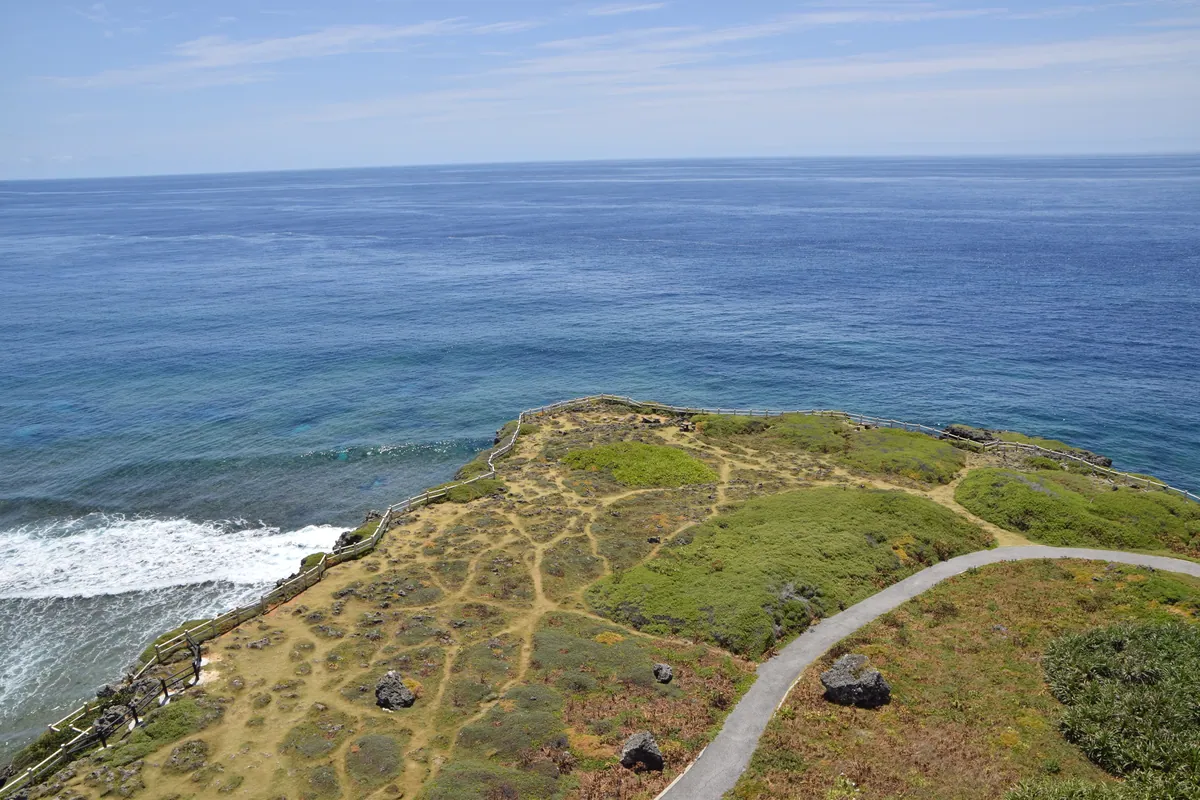
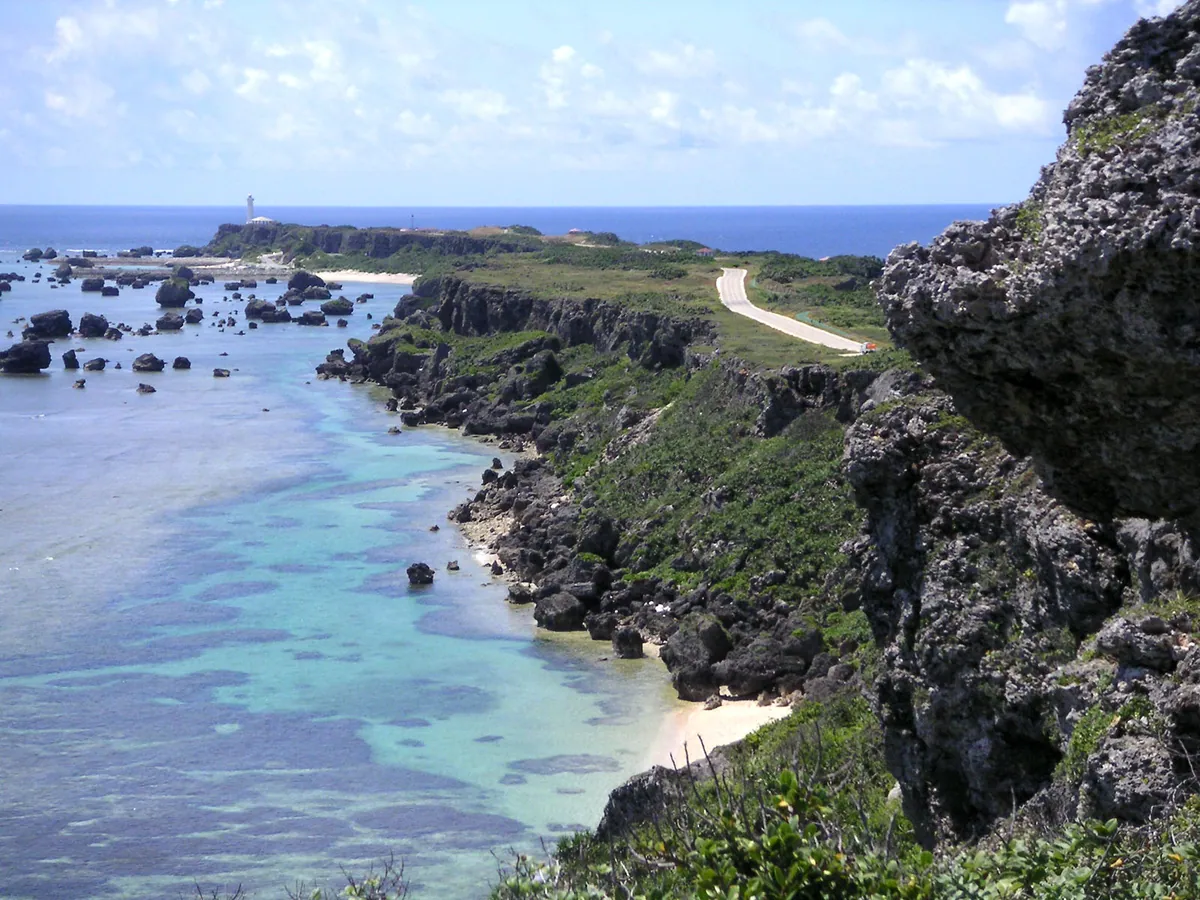
A headland 2 km long and about 200 m wide at the island's eastern tip, a national Place of Scenic Beauty, with a lighthouse you can climb — 97 steps — at the end.
From the shipOfficially 20 km and 30 minutes by car from the port; about ¥5,400 by taxi one way on our estimate. No route bus goes there.
Miyakojima is flat. It is a raised block of coral limestone with no mountains and no rivers, and the island lives on groundwater — which is the plain reason its sea looks the way it does: nothing washes silt into it. The colour has a local name, Miyako blue, and the whole reason to come ashore is to stand next to it. Yonaha Maehama gives you seven kilometres of white sand in front of it. Irabu Ohashi takes you 3,540 m across it on the longest toll-free bridge in Japan. Higashi-Henna Cape pushes two kilometres out into it at the island's eastern tip, with a lighthouse to climb at the end.
What Miyakojima is not: a port where you step off into the sights. All three lie outside Hirara, the island's main town, and none of them is on a bus route you can trust on a port day. The island has 194 taxis for a city of visitors and a ship that can land several thousand people at once. So this guide starts with a question you need to answer before you sail, not on the quay: will you have wheels? With a pre-booked charter taxi or rental car, a normal 9- or 10-hour call covers two of the three signatures comfortably. Without one, you get Hirara — a small, pleasant port town with an old shrine, a market and a beach of its own — and that is an honest, modest day.
Everything below is built from the Japan Tourism Agency's specification sheet for the port, the city's official call list, the City Museum's own page, Okinawa Prefecture, the Japan Meteorological Agency, and the tourism association, checked on 30 September 2026. Where we give a drive time or a taxi fare without an official source, it is our estimate from map routing and the island tariff, and we say so.
First: which berth are you at?
This is the easy part. Miyakojima has one cruise berth, the Hirara Port Cruise Berth: 420 m long, 10 m deep, with no air-draft limit. The city's booking system lists all 167 calls from October 2026 to December 2027 there, with no two ships on the same day and no overnights. There is no berth rule to learn.
Hirara Port Cruise Berth
Where
The north side of Hirara, the island's town, on the west coast
Getting off
A shuttle bus carries passengers about 1 km from the berth to the terminal; walking inside the port area is not allowed
Terminal
Permanent immigration and customs, toilets. No exchange desk, no shop, no vending machine; Wi-Fi is listed only as "to be prepared"
Tourist information
Only on ship days, in English and Chinese, opening a few hours after the ship arrives
Transport at the terminal
Taxi pool of about 15–20 cars, space for 10–15 tour buses, no private-car parking
Town
About 1 km, 15 minutes on foot
Airport
About 10 minutes by car
The berth is new. A first stretch of quay for 50,000-ton ships opened in 2017; the dedicated berth for larger ships, built with Carnival Corporation as a partner, was finished in 2020 and took its first foreign cruise ship in April 2023. Before it, in 2016, about 30% of calls anchored offshore and tendered. MSC Bellissima, at 171,598 tons the largest ship on the list, is booked at the berth 14 times this season; no official source says whether she ties up alongside, so check her daily programme for the word "tender".
The terminal building is where you meet drivers, taxis and tour buses. Take a photo of the shuttle stop when you get off: some sources call the building the Hirara Marine Terminal, others the international cruise terminal, and you want to find it again at 15:45.
Getting from the Hirara cruise terminal around Miyakojima
Every trip starts at the terminal, after the shuttle. The honest summary: the town is a walk, everything else is a car. The bus companies exist — four on the main island, one on Irabu — but we could not obtain a timetable for any of them, and the lighthouse association says no route bus reaches the cape. A trial loop bus from the airport past the beaches ran until February 2026; do not count on it this season.
To
How
Time
Cost
Harimizu Utaki, town centre
Walk
11–17 min (0.8–1.3 km)
Free
Painagama Beach
Walk
about 29 min (2.1 km)
Free
Sunayama Beach
Taxi, or walk
6 min by car; 41 min on foot
about ¥900
City Museum
Taxi
about 8 min
about ¥1,400
Irabu Ohashi (mid-bridge)
Car
about 7 min
about ¥1,700
Irabu-side lookout
Car
about 14 min
about ¥3,000
Yonaha Maehama
Car
officially 20 min
about ¥2,700
Yukishio Museum (north)
Car
about 13 min
about ¥2,900
Ikema Ohashi
Car
about 15 min
about ¥3,400
Higashi-Henna Cape
Car
officially 30 min
about ¥5,400
Times without "officially" are from map routing with no traffic; add 30–50% for real driving on narrow rural roads with photo stops. Taxi fares are our estimates from the remote-island tariff that operators applied for in 2023 (¥550 for the first 1.139 km, then ¥70 per 334 m), without time charges — treat them as a floor.
Three ways to get wheels, all booked before you sail:
Charter taxi. A driver who waits for you, stops where you ask and knows the lookouts. There is no official hourly rate; published quotes run about ¥3,000–4,000 an hour, or ¥12,000–16,000 for four hours. A booking-site "private taxi tour from Hirara Port" starts at ¥17,500 per car, and a chartered-car listing offers 3- to 10-hour plans from about US$111 for four seats or US$196 for a nine-seat jumbo taxi. Ask to be met at the cruise terminal and give the driver your all-aboard time in writing.
Rental car. The island has 309 rental companies and about 6,000 cars, with offices near the port — but on a ship day, book ahead. A small car is about ¥5,000–8,000 for four hours on published quotes. You need an International Driving Permit under the 1949 Geneva Convention; allow 30–45 minutes for pick-up. Japan drives on the left, the town has one-way streets, and outside town there are few traffic lights and some unclear stop signs.
A taxi from the pool. Fifteen to twenty cars wait at the terminal. With a big ship in, they go in the first minutes. If you get one, agree the whole day with the driver rather than a single ride.
Bike share (HELLO CYCLING) has a station at the terminal building and one at Painagama, according to OpenStreetMap; whether bikes are there on a ship day is anyone's guess.
Miyakojima to Maehama, Irabu and the cape: what is actually possible
The three signatures lie in three directions: Irabu Ohashi to the north-west, Maehama to the south-west, Higashi-Henna Cape at the far eastern tip, 20 km away. Think of the island as two loops from Hirara.
The west loop: Irabu Ohashi, Maehama, Sunayama. The short drives — 7, 20 and 6 minutes from the terminal — make this the efficient day. Across the bridge you can add the lookouts at Makiyama, a beach on Irabu, and 17END, the sandbar at the end of Shimojishima airport's runway, where the shallows are at their brightest when the tide is low. Cars are banned beyond the barrier on the airport perimeter road; park in the general car park (free, 6:00–21:00) and walk about 15 minutes. This loop is our first model day and fits a 9-hour call.
The east loop: the cape, the south coast, Maehama. Thirty minutes out to the cape, then back west along the south coast with a stop at Imgya Marine Garden, a sheltered cove, before Maehama. Add the north — the snow-salt museum and Ikema Ohashi — and it becomes the whole-island day, which needs 10 hours.
Both loops in one day is too much driving for a 10-hour call if you want time on the sand. On the 12- and 13-hour calls (Sapphire Princess on 19 January 2027, Regatta on 28 March, Adora Mediterranea on 13 March) you can do the east loop and add Irabu Ohashi at the end.
On a 7- or 8-hour call — Star Seeker's 08:00–16:00 on 9 November, Adora Mediterranea's 07:00–14:00 on 17 March — choose one: Irabu Ohashi and Maehama with a 3- or 4-hour charter, or the cape alone.
Yonaha Maehama is about 7 km of white sand on the south-west coast, the start line of the All-Japan Triathlon Miyakojima and the place where the tourism association opened the 2026 beach season, on 5 April. It is always open and free. There are two showers (¥100 for four minutes) and 38 free parking spaces — enough for a charter to drop you and wait.
Two things to know. Most Miyako beaches have no lifeguards, and the tourism association warns of rip currents and, in summer, habu box jellyfish; paddle and float close in, and if you want to snorkel the reef, go with a guided shop, which is what the association recommends. And look south: Kurima Ohashi, 1,690 m, crosses to Kurima island about a kilometre beyond the beach, and the view of it is part of the visit.
An hour on the sand is enough for most people; two if you swim. From the terminal, officially 20 minutes by car.
Irabu Ohashi: the crossing
Irabu Ohashi opened on 31 January 2015 and runs 3,540 m to Irabu island — the longest bridge in Japan that is free to cross. From the terminal you are on it in about 7 minutes. The bridge has a roadside strip that people walk and cycle along, but in a car do not stop on it: pull in at the lookouts on the Irabu side, where the bridge lies below you across the water. The crossing and the lookouts take about 1–1.5 hours with the drive; with 17END, allow 2.5–3 hours.
Higashi-Henna Cape is a headland 2 km long and about 200 m wide at the island's eastern tip: a national Place of Scenic Beauty, windswept, with a coastal plant community and white Easter lilies in spring. It is always open and free. The Hennazaki lighthouse at the end has been open to the public since 1996 and is the southernmost lighthouse in Japan you can climb: 97 steps up a spiral stair to a gallery beside a light 43 m above the sea. Admission is a ¥300 donation for adults, free for children of primary-school age and under.
The lighthouse association's brochure gives no opening hours. The published times — from a travel planner and the Coast Guard's 2025 open day — are 9:30–16:30 on weekdays from October to February and 9:30–17:00 at weekends, daily except in bad weather. The number on site is 090-8294-4010.
The cape is officially 30 minutes by car from the port, and no route bus goes there. Allow an hour on site and two hours or more for the round trip. It is the most exposed place on the island; in winter's north-easterly, bring a layer.
The best things to do in Miyakojima on a port day
Our full list, with the time each takes from the berth, is on the Miyakojima top 10. In brief:
Yonaha Maehama beach — seven kilometres of white sand, 20 minutes by car; allow about two hours.
Irabu Ohashi crossing — 3,540 m of free bridge and the lookouts beyond; about 1.5 hours.
Snorkel the reef, guided — the way the tourism association recommends; about three hours, and book before you sail. To see the reef without swimming, Miyakojima Undersea Park in Karimata, about 14 minutes north by car, has an underwater observatory with 24 windows: 9:00–17:00 (last entry 16:45), ¥1,000 for adults, closed in typhoons and rough weather.
Higashi-Henna Cape — the headland and its 97-step lighthouse; an hour on site, 30 minutes each way.
Sunayama Beach — a dune down to a small cove, 6 minutes by car from the terminal; the coral arch is fenced off.
The walk-off day is real but modest, and it is the right choice if you could not book a car or you are happy with a slow day. From the terminal, start with the poll-tax stone (jintozeiseki) in Nikadori — the terminal's own district; local tradition says anyone taller than the stone was taxed. Harimizu Utaki, about 11 minutes from the terminal, is a shrine tied to the island's creation story and said to date from about 1525. The Miyakojima City Public Market, rebuilt in 2023, sells mango juice and soba downstairs, with a café upstairs; stalls keep roughly 8:00–21:00.
Painagama Beach, the town's own beach, is about 29 minutes' walk from the terminal and faces west. Sunayama Beach is 41 minutes on foot for strong walkers, the last stretch over a dune; about ¥900 by taxi. For history, the City Museum — 9:00–16:30, ¥300, free for visitors aged 70 and over — is a short taxi ride away, and closed on Mondays and holidays.
One day in Miyakojima: model days
Bridges and beaches: a 10-hour call with a booked driver
Fits 08:00–18:00, the commonest slot here (MSC Bellissima, Star Voyager — 22 of the 61 calls from October to March). On 09:00–18:00 (Star Navigator, Azamara Pursuit) follow the note.
The west side of the island and its best beach, with a charter taxi waiting at the terminal. All-aboard is about 17:30, so our target is back at the gangway by 16:30. Drive times are the official ones where they exist and map-routing estimates otherwise, padded for photo stops.
08:00Clearance, then the berth shuttle about 1 km to the terminal — walking inside the port area is not allowed.
08:40Meet your pre-booked charter driver at the terminal's taxi and bus area. If you rented a car instead, add 30–45 minutes for the paperwork and your International Driving Permit.
08:50Irabu Ohashi, 3,540 m, about 7 minutes from the terminal. Do not stop on the bridge; the pictures come next.
09:05The Irabu-side lookouts at Makiyama, with the whole bridge below you.
09:45Watoguchi beach, or 17END at the end of Shimojishima's runway if the tide is out — cars are banned beyond the barrier, so it is about 15 minutes on foot each way from the car park.
10:45Back across the bridge to Hirara (25–30 minutes) and lunch at Koja Soba (11:00–16:00, closed on Wednesdays), a Miyako soba house in an old home. On a Wednesday, eat at the public market in town.
12:30Yonaha Maehama, about 15 minutes' drive from Koja Soba, with the view of Kurima Ohashi a kilometre beyond. Most Miyako beaches have no lifeguards: paddle, do not swim far out.
14:15North to Sunayama Beach, about 25 minutes: a sand dune down to a small cove and a coral arch, now fenced off because it may collapse.
15:40Drop-off at the terminal, about 6 minutes, then the berth shuttle.
16:00Back at the gangway, 30 minutes ahead of the 16:30 target. Charter for the day: about seven hours.
Hirara on foot: a 9-hour call with nothing booked
Fits any call; timed for 09:00–18:00 (Star Navigator, Azamara Pursuit). The museum at the end needs about 8 hours and a day it is open — not a Monday or a holiday.
The plan if you could not get wheels, or do not want them: the old stones and shrines of the port town, its market, its own beach, and the island's history in the City Museum. All-aboard about 17:30, target back at the gangway 16:30. Walking times are map estimates.
09:00Clearance and the berth shuttle to the terminal.
09:35The poll-tax stone (jintozeiseki) in Nikadori, the terminal's own district. Local tradition says anyone who grew taller than it was taxed.
09:55Walk to Harimizu Utaki, about 0.8 km and 11 minutes from the terminal: the shrine tied to the island's creation story, said to date from about 1525. Free.
10:30The Miyakojima City Public Market (new building, 2023; stalls roughly 8:00–21:00) and the main street.
11:30Walk to Painagama Beach, about 15 minutes from the town centre, and give it an hour — it faces west, and there is no lifeguard.
13:00Lunch in town: Miyako soba at the market's stalls or a soba house on the main street.
14:00Taxi to the City Museum, about 8 minutes and about ¥1,400 (our estimate). 9:00–16:30, last entry 16:00; ¥300, free for visitors aged 70 and over with ID.
15:30Taxi back to the terminal — ask the museum's front desk to call one or agree a pickup time with your driver — then the berth shuttle.
16:00Back at the gangway, 30 minutes ahead of target. Spend for the day: about ¥2,800 of taxis per car and the museum fee.
The whole island: a 10-hour call with a charter
Fits 08:00–18:00 or longer (MSC Bellissima, Star Voyager; Sapphire Princess and Regatta at 07:00–19:00). Needs a driver for about 7 hours.
The cape at the far end, the south coast, Maehama, and the northern bridge — the island's highlights in one loop. Irabu Ohashi is the sacrifice. All-aboard about 17:30, target 16:30.
08:40Off the berth shuttle and into your charter at the terminal. East to Higashi-Henna Cape, officially 30 minutes.
09:30Walk the cape to the Hennazaki lighthouse: ¥300 donation, 97 steps, the light 43 m above the sea. Published opening times start at 9:30. Leave the cape about 10:15.
10:30A short stop at Imgya Marine Garden, a sheltered cove on the south coast about 15 minutes back west.
10:45Along the south coast to Yonaha Maehama, about 30 minutes.
11:15Maehama and the Kurima Ohashi view — an hour on the sand.
12:15Drive to Hirara and lunch. On a Wednesday, Thursday, Saturday or Sunday you could instead eat earlier at Maruyoshi Shokudo near the cape (opens 10:30; closed Monday, Tuesday and Friday).
13:30North, about 20 minutes, to the Yukishio Museum: the snow-salt works, free entry, 9:00–17:00 from September to March, and a snow-salt soft serve.
14:30Ikema Ohashi, 1,425 m, across to Ikema island and back.
15:15Drive to the terminal, about 20 minutes, then the berth shuttle.
16:00Back at the gangway, 30 minutes ahead of target.
How to think about your hours
Work backwards from the ship. All-aboard is usually 30 minutes before departure (check the daily programme), you want to be back at the gangway an hour before that, and the first half hour after arrival goes on clearance and the berth shuttle. So the time you can actually use is the call length minus about two hours — and here, allow 15 minutes of that for the shuttle back.
Call
Usable
On foot, nothing booked
With a pre-booked charter or car
7 hours
about 5
Town, the market and Painagama
Irabu Ohashi, the lookouts and Maehama; not the cape
8 hours
about 6
Town, Painagama, taxi to the museum (not on Mondays)
The west side with lunch, or the cape and Maehama
9 hours
about 7
The whole town day in our model
The west loop: Irabu Ohashi, Maehama, Sunayama
10 hours
about 8
As 9 hours, slower
The west loop with 17END, or the whole-island loop
12–13 hours
about 10–11
Add Sunayama
The east loop and Irabu Ohashi
Most calls this season are 9 hours (26 of 61) or 10 hours (23). The commonest slot is 08:00–18:00, used by MSC Bellissima and Star Voyager; Star Navigator runs 09:00–18:00 and Piano Land 10:00–19:00.
Watch the afternoon arrivals. Star Navigator (15 December, 13:00–22:00) and Adora Mediterranea (23 December, 13:00–22:00; 4 January, 14:30–21:30) arrive in winter, when the sun sets at about 17:50–18:00. That leaves roughly 4 hours of daylight ashore on the 13:00 calls and about 3 hours on the 14:30 one. Go straight to Maehama or Irabu Ohashi and leave the town for after dark. Adora Mediterranea's 06:00–14:00 call on New Year's Eve starts before sunrise, at about 07:20.
Charters, rental cars and tours
There is no tour for Miyakojima in our catalogue, and we will not pad this page with weak ones. For this island the best "tour" is a private charter taxi from the terminal, following one of the model days above. It suits a couple on a 9- or 10-hour call; a group of up to nine splits a jumbo taxi best; two rental cars work for six if two of you hold the right permit. For anyone with limited mobility, a charter can stop at the Irabu lookouts, the Maehama car park and the Kurima view with little walking — but skip 17END (steps and sand), the Sunayama dune and the lighthouse stair. The City Museum publishes barrier-free information.
Guided snorkelling is the one activity worth a specialist; operators, prices and pickups vary, so book before you sail and confirm a terminal pickup. See our plans page and the upcoming calls.
About the return to the ship. None of the charter listings in our research puts an on-time-return promise in writing, and none could be read in full. Three habits protect you: be met at the cruise terminal rather than a hotel, give the driver your all-aboard time on paper when you meet, and plan to be back at the terminal 90 minutes before all-aboard — the berth shuttle takes about 15 minutes, and there is no walking round it.
The terminal has no currency exchange and no shop, so arrive with yen. Where you will need what:
Place
Pay with
Charter taxi
Ask the operator when you book
Rental car
Card is normal
Taxi from the pool
Carry cash
Hennazaki lighthouse
¥300 donation, cash
City Museum
¥300; bring cash
Koja Soba, Maruyoshi Shokudo
Bring cash
Maehama showers
¥100 coins
Cash machines. None at the terminal. The safest in town is Hirara Nishizato Post Office, about 17 minutes' walk; Japan Post machines generally take foreign cards. FamilyMart stores with an E-net machine accept Visa, Mastercard, JCB and UnionPay (check the store has one); there are also Ryukyu Bank and Okinawa Bank branches about 1.2 km from the terminal. OpenStreetMap shows no 7-Eleven near the port. ¥10,000 a person covers a charter share, lunch and the small fees.
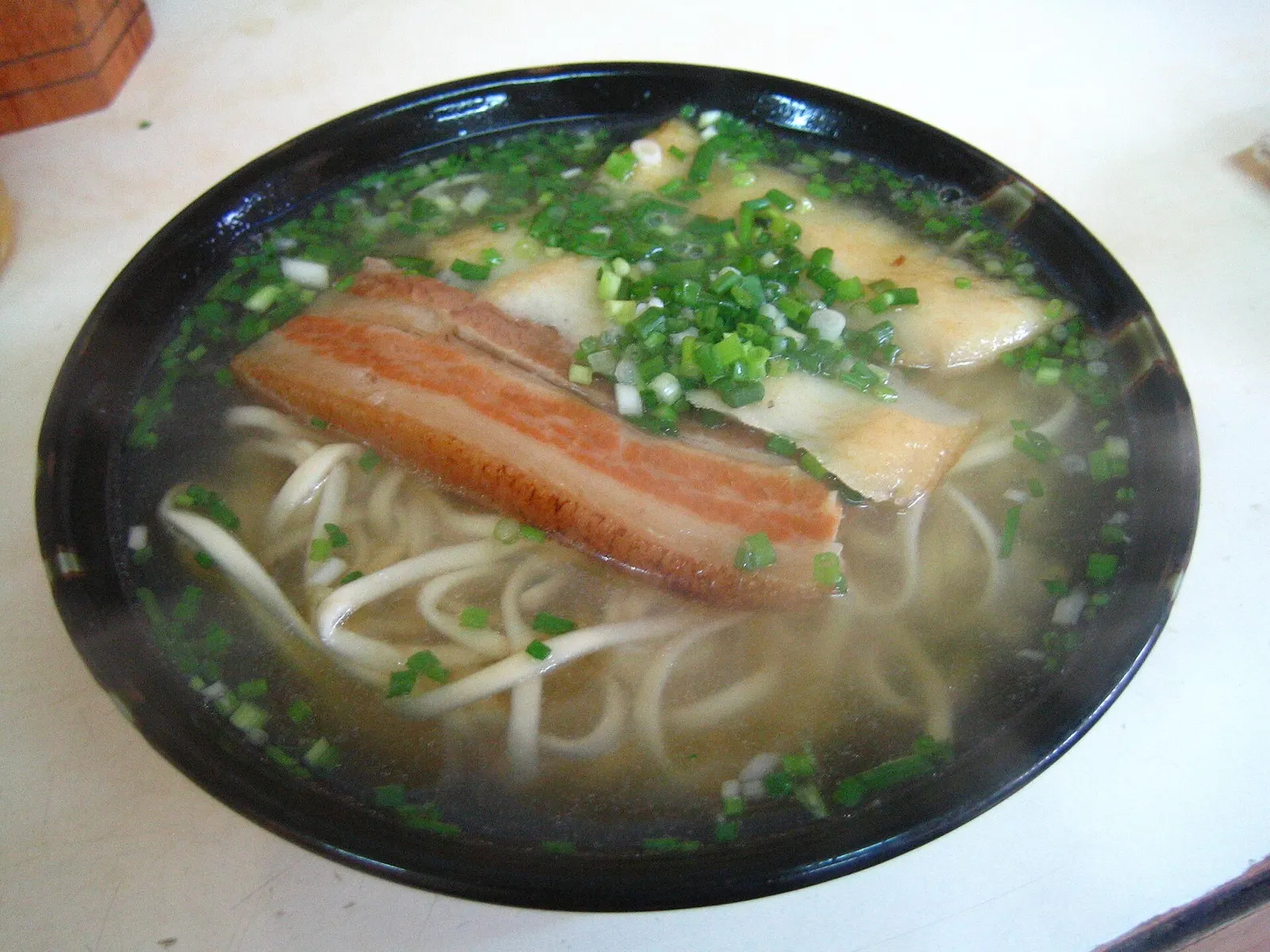
Food, and when it is closed. Miyako soba — flat noodles, pork and a clear broth — is the island's lunch. Koja Soba, in Hirara Shimozato, opens 11:00–16:00 and is closed on Wednesdays, which catches nine calls this season, among them Seabourn Encore on 18 November, MSC Bellissima on 9 December and Asuka II on 10 March. Maruyoshi Shokudo is not in Hirara but in Gusukube, on the way to the cape: from 10:30 until sold out, Miyako soba about ¥600, closed Mondays, Tuesdays and Fridays — open on only 30 of the 61 calls. Utopia Farm (entry 10:00–16:30, ¥360 to walk the farm, mango sweets from about ¥520) is closed on Sundays, which catches seven calls including Norwegian Jade on 6 December and Regatta on 28 March. The Yukishio Museum is free and open daily.
The City Museum's closed days against this season's calls. Mondays: 5 October, 9 November, 21 and 28 December, 4, 11 and 18 January, 8 and 15 February, 8 and 29 March. Holidays and New Year: 29 and 31 December, 2 January, 12 January (the day after a Monday holiday), 23 February and 21 March.
Driving. Left-hand traffic, an International Driving Permit under the 1949 Geneva Convention, one-way streets in town, and do not stop on the bridges or at unsafe viewpoints. On the day of the All-Japan Triathlon in April (19 April in 2026), roads across the island close for about 13½ hours; the 2027 date had not been published when we checked, and April 2027 has calls every few days.
When to go: seasons and crowds
Most calls fall between December and March, and that matters more here than at a city port, because Miyako's colour needs sun.
Months
Daytime high
Sunshine a day
What it means
October
27.8 °C
about 5 h
Warm, still some typhoon risk
November
25.3 °C
about 3.7 h
Mild, fewer calls
December–February
20.6–22.2 °C
about 3 h
Grey and breezy from the north-north-east
March
22.8 °C
about 3.7 h
Busiest month for calls, brightening
July–August
31–32 °C
about 7–8 h
The blue at its best; typhoon peak
Winter averages about three hours of sunshine a day and a steady north-easterly around 5 m/s. The water is still clear, but on a grey day it is not the colour in the photographs. Plan the beach for whichever part of the day has sun, and have the town or the museum in reserve.
Typhoons. Okinawa averages 7.67 approaches a year, peaking in August (2.17) and September (1.93), with about one in October. The tourism association names August to October as the peak, and marine operators haul their boats out when one comes. Rough weather cancelled Star Voyager's call on 25 August 2026. Our typhoon guide covers what happens to your itinerary.
Hikan-zakura, the Okinawan cherry, first blooms around 17 January and peaks around 9 February in a normal year — modest displays, but it lines up with January and February calls.
Easter lilies flower on Higashi-Henna Cape in spring.
Crowds are not the problem here; cars are. The pressure point on a ship day is the taxi rank and the rental desks, not the beaches.
Rain plan: the City Museum (closed Mondays), the public market, the Yukishio Museum, the Undersea Park's observatory (¥1,000, unless the sea is rough) and Utopia Farm's greenhouses (closed Sundays). It is thin — another reason to keep a charter flexible.
What other guides get wrong about Miyakojima
Things you will read about Miyakojima elsewhere — in older port guides, forum posts and some cruise-line pages — set against what the official source says today.
You may read
What the official source says
Source
The cruise terminal is next to downtown Hirara, so you can walk off the ship into town.
The ship ties up at the Hirara Port Cruise Berth, about 1 km from the terminal, and a shuttle bus carries passengers between them. From the terminal, downtown is a further 1 km, about 15 minutes on foot.
The whole of Miyakojima City has 194 taxis, and the terminal's taxi pool holds only about 15–20, for a ship that can land several thousand people. Book a charter taxi or a rental car before you sail.
Hirara's berths only take ships up to 50,000 tons, so larger ships anchor offshore and tender passengers ashore.
That was the case before the dedicated cruise berth was built. Hirara now has a cruise berth 420 m long and 10 m deep with no height limit, and passengers go ashore by shuttle bus to the terminal.
Expecting to walk off the ship into town.Many pages, including older versions of ours, say the town is at the gangway. The berth is about 1 km from the terminal, you are carried by shuttle bus, and walking in the port area is not allowed. Town is a further 15 minutes on foot.
Planning to hail a taxi.194 taxis serve the whole city, the terminal pool holds 15–20, and a ship can land several thousand people. On a two-ship day in 2016 the ranks in town and at the airport emptied. Book a charter or a car before you sail.
Renting a car without the right permit.You need an International Driving Permit issued under the 1949 Geneva Convention. Only a short list of countries — not the US, UK or Australia — can use a licence with an official Japanese translation instead.
Counting on the bus.The island has bus companies, but no route bus goes to Higashi-Henna Cape and we could not obtain a single timetable. Do not build a port day on it.
Swimming off an empty beach.Most Miyako beaches have no lifeguards. The tourism association warns of rip currents and, in summer, habu box jellyfish, and advises snorkelling with a guided shop rather than alone.
Stopping on Irabu Ohashi for a photo.The tourism association warns against stopping at dangerous points on the road. Pull in at the lookouts on the Irabu side instead.
Driving to 17END.Okinawa Prefecture bans vehicles beyond the barrier on the airport perimeter road. Park in the general car park and walk about 15 minutes; the path has steps and loose sand.
Turning up at a closed door.The City Museum shuts on Mondays and holidays, Koja Soba on Wednesdays, Utopia Farm on Sundays and Maruyoshi Shokudo on Mondays, Tuesdays and Fridays. Check your date against the table in this guide.
Researched from official timetables, operators and the port authority. Every time and fare in this guide was checked against the sources listed above on 1 October 2026; where we had to estimate (a walk, a taxi in traffic), the text says so. Timetables change — if you find one that has, tell us and we will fix it.
Quick answers
Miyakojima cruise port questions
Where do cruise ships dock in Miyakojima?
At the Hirara Port Cruise Berth, 420 m long and 10 m deep, on the north side of Hirara, the island's town. Every one of the 167 calls booked from October 2026 to December 2027 uses it, and no two ships are booked on the same day. A shuttle bus takes passengers about 1 km from the berth to the cruise terminal; from there town is about 1 km, 15 minutes on foot.
Is Miyakojima a tender port?
Not any more, as a rule. Since 2020 Hirara Port has a dedicated cruise berth 420 m long and 10 m deep, and every call booked from October 2026 to December 2027 — including MSC Bellissima's 14 this season — is listed at it. In 2016, before the berth, about 30% of calls anchored offshore and tendered. No official source says how the very largest ships tie up, so check your ship's daily programme for the word "tender".
Can you walk from the Miyakojima cruise ship to town?
Not from the ship itself. The berth is about 1 km from the cruise terminal and passengers ride a shuttle bus, which a local guide site describes as free; walking in the port area is not allowed. From the terminal, the Harimizu Utaki shrine is about 11 minutes on foot and the town centre about 15. Whether a separate shuttle to the town centre runs depends on the port and your cruise line, so photograph the terminal stop to find it again.
What facilities are at the Miyakojima cruise terminal?
Toilets, permanent immigration and customs, and — on ship days only — a tourist information desk in English and Chinese that opens a few hours after the ship arrives. There is no currency exchange, no shop and no vending machine, and the Japan Tourism Agency's sheet lists Wi-Fi only as "to be prepared". Outside are a taxi pool of about 15–20 cars and space for 10–15 tour buses, but no private-car parking. Town, with cash machines and cafés, is about 1 km away.
Are there taxis at the Miyakojima cruise terminal?
Some, but not enough: the terminal pool holds about 15–20 taxis and the whole city has 194, for a ship that can land several thousand people. On a two-ship day in 2016 the ranks in town and at the airport emptied. If you get one, agree the whole day with the driver; better, book a charter taxi or rental car before you sail. One-way fares run from about ¥900 to Sunayama Beach to about ¥5,400 to Higashi-Henna Cape on our estimate of the island tariff.
How much does a charter taxi cost in Miyakojima?
There is no official hourly rate. Published quotes run about ¥3,000–4,000 an hour — ¥12,000–16,000 for four hours — with a booking-site private taxi from Hirara Port from ¥17,500, and a chartered-car listing with 3- to 10-hour plans from about US$111 for four seats or US$196 for a nine-seat jumbo taxi. Book before you sail.
Can I rent a car at the Miyakojima cruise port?
Yes, from offices near the port — the island has 309 rental companies and about 6,000 cars — but book ahead for a ship day, allow 30–45 minutes for the paperwork, and bring an International Driving Permit under the 1949 Geneva Convention. A small car costs about ¥5,000–8,000 for four hours on published quotes. Japan drives on the left.
How do I get from the cruise port to Yonaha Maehama beach?
By car or taxi: the official figure is 10 km and 20 minutes, and the taxi fare is about ¥2,700 each way on our estimate of the island tariff. There is no bus you can rely on, and taxis are scarce on ship days, so book a charter taxi or a rental car before you sail. At the beach there are 38 free parking spaces and two showers at ¥100 for four minutes; allow one to two hours.
How do I get from the Miyakojima cruise port to Irabu Ohashi?
About 7 minutes by car from the terminal to the bridge, and about 14 minutes to the Makiyama lookouts on the Irabu side — roughly ¥1,700 to mid-bridge and ¥3,000 to the lookout by taxi on our estimates. The 3,540 m bridge is free to cross. No bus is worth planning around, so book a charter or rental car. Do not stop on the bridge for photos; pull in at the Irabu-side lookouts. The crossing and lookouts take about 1–1.5 hours.
How do I get from the Miyakojima cruise port to Higashi-Henna Cape?
By car only: 20 km and officially 30 minutes from the port, about ¥5,400 by taxi one way on our estimate. No route bus goes there, according to the lighthouse association's brochure — only a seasonal sightseeing bus. Allow an hour on site and two hours or more for the round trip, so the cape needs a booked charter or rental car and a call of six hours or more. The headland is free; the lighthouse at its tip is a ¥300 donation.
How much is the Higashi-Henna lighthouse?
A ¥300 donation for adults; children of primary-school age and under go free. It is 97 steps to the gallery, 43 m above the sea. Published opening times are 9:30–16:30 on weekdays from October to February and to 17:00 at weekends, in fair weather; the phone number on site is 090-8294-4010.
Is there a beach within walking distance of the Miyakojima cruise port?
Yes, two. Painagama Beach, the town beach, is about 2.1 km and 29 minutes on foot from the terminal and faces west. Sunayama Beach, a dune down to a small cove, is about 3.1 km and 41 minutes for strong walkers, the last stretch over sand — or about 6 minutes and ¥900 by taxi; its coral arch is fenced off. Most Miyako beaches have no lifeguards, so paddle rather than swim far out. Yonaha Maehama is 10 km away and needs a car.
What are the best things to do in Miyakojima on a cruise stop?
With a car: Yonaha Maehama beach, 20 minutes away (allow about two hours); the 3,540 m Irabu Ohashi and its lookouts (about 1.5 hours); and Higashi-Henna Cape with its 97-step lighthouse (30 minutes each way, an hour on site). Add guided snorkelling (about three hours, booked before you sail), Sunayama Beach, Ikema Ohashi with the free Yukishio snow-salt museum, and a Miyako soba lunch. On foot: the Hirara town walk — the poll-tax stone, Harimizu Utaki and the public market — and Painagama Beach.
Can I see Maehama, Irabu Ohashi and Higashi-Henna Cape in one day?
On a 10-hour call with a car and driver, two of them comfortably, and all three only by cutting each short. Our model days pair Irabu Ohashi with Maehama and Sunayama, or the cape with Maehama and the north; each is about seven hours of driving and stops, back at the ship an hour and a half before all-aboard.
What can I see in Miyakojima on a short or afternoon call?
Take the call length minus about two hours. On a 7-hour call that leaves about 5 hours: with a pre-booked charter, Irabu Ohashi, its lookouts and Yonaha Maehama, but not the cape; on foot, the town, the market and Painagama Beach. On the winter afternoon arrivals at 13:00 and 14:30 the limit is daylight — sunset is about 17:50–18:00, leaving roughly 4 and 3 hours — so go straight to Maehama or the bridge and leave the town for after dark.
Should I book the ship's excursion or a private taxi in Miyakojima?
There is no tour in our catalogue for Miyakojima, so the choice is the cruise line's own excursion or a private charter taxi. The ship's tour solves transport on an island where taxis run out on ship days, and the cruise line manages the timing back. A charter of six or seven hours — about ¥3,000–4,000 an hour on published quotes, shared by a couple or up to nine in a jumbo taxi — lets you follow our model days. None of the charter listings in our research promises in writing to get you back on time.
Can I snorkel or see the coral on a Miyakojima cruise day?
Yes, best with a guided shop: the tourism association warns of rip currents and, in summer, habu box jellyfish, and recommends guided snorkelling over going alone. Allow about three hours and book a terminal pickup before you sail. To see the reef without getting wet, Miyakojima Undersea Park in Karimata, about 14 minutes north of the terminal by car on map routing, has an underwater observatory with 24 windows: 9:00–17:00, last entry 16:45, ¥1,000 for adults, and it may close in rough weather.
Can you swim in Miyakojima in winter?
The water is swimmable for the hardy, with daytime highs of 20–23 °C from December to March, but the official beach season opened on 5 April in 2026 and most beaches have no lifeguards. Winter is also cloudy — about three hours of sunshine a day — and steadily windy from the north-east.
Will a typhoon cancel my Miyakojima cruise call?
It can. Okinawa averages 7.67 typhoon approaches a year, peaking in August (2.17) and September (1.93), with about one in October and few from November to March, when most Miyakojima calls fall. The tourism association names August to October as the peak, and marine operators haul their boats out when a typhoon comes. Rough weather cancelled Star Voyager's call on 25 August 2026. On a summer or autumn call, book charters and snorkel trips with free cancellation.
Do I need cash in Miyakojima?
Yes. The terminal has no exchange desk, the lighthouse takes a cash donation, and small soba houses usually take cash only. The nearest cash machines to the terminal are in town: Hirara Nishizato Post Office about 17 minutes on foot, and FamilyMart stores with E-net machines, which accept Visa, Mastercard, JCB and UnionPay (not every store has one). Carry ¥10,000 each.
Is the Miyakojima City Museum open on cruise days?
It opens 9:00–16:30 (last entry 16:00) but closes every Monday, national holidays, and 29 December–3 January, which rules out 17 of the 61 calls from October 2026 to March 2027. Admission is ¥300 for adults, and free for visitors aged 70 and over with ID.
Is Miyakojima the same as Miyako?
No. Miyakojima is a coral island in Okinawa Prefecture, in Japan's far south-west; its cruise port is Hirara, and this season's ships arrive from or sail on to Keelung, Naha, Ishigaki and Hong Kong. Miyako, without the "jima", is a port on the Sanriku coast of Iwate Prefecture in north-east Honshu, with its own guide on this site. If your itinerary also calls at Naha, Ishigaki or Keelung, your "Miyako" is Miyakojima.