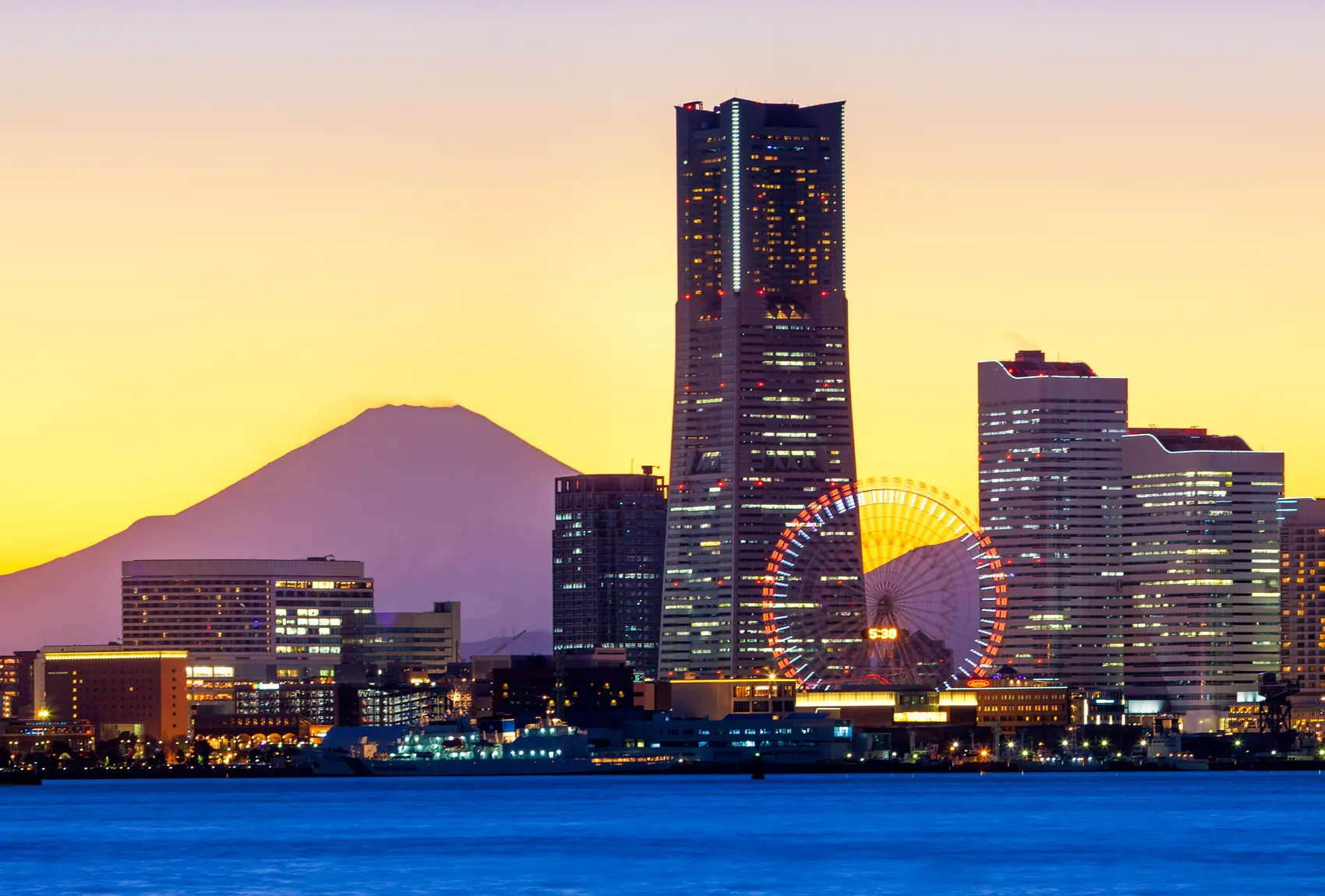
The morning is the ship’s; the rest of the day is yours, and the bags decide how much of it you get. Disembarkation at Yokohama or Tokyo is a short, fixed sequence: your group is called, you find your suitcases in the terminal’s baggage hall, you hand in a customs form, and you are outside with everything you own. What the terminals and Japan Customs publish about that sequence is below, then the only decision that matters afterwards: where the luggage goes while you use the hours before the flight. For the earliest flight you can safely book, and the transfer timelines, see the Yokohama and Tokyo embarkation guides; this page is about the day itself.
What does the terminal look like when you walk off?
Tokyo International Cruise Terminal (Odaiba). The operator’s facility list puts the arrivals flow on the 2F: arrival lobby, baggage hall, CIQ inspection space (customs, immigration, quarantine), a courier counter and a nursing room, with a further CIQ space on the 3F. The 1F has the entrance lobby, a baggage reception and the taxi stand. The list has no lockers, shops, café, ATM or Wi-Fi, and the 4F deck is a send-off deck, not a public observation deck. The terminal’s own hours are 9:00 to 17:00 except on ship days, and its top page warns that passengers frequently go to the wrong terminal. Vehicles sent to collect cruise passengers need an advance reservation, and the operator says unreserved vehicles may be refused entry, so a pre-arranged car must be booked through the terminal’s process, not just hailed. The station, Tokyo International Cruise Terminal on the Yurikamome, is about 8 minutes on foot; a one-day Yurikamome pass is ¥820.
Harumi. The facility page lists a waiting space and vending machines on the 1F, plus a CIQ inspection space and baggage hall that the operator says are closed except when a ship is in. No station is within walking distance; Toei bus 05-1 to Tokyo Station runs from the Harumi Futo stop 1 minute away, about 30 minutes to the Marunouchi South Exit, and the Tokyo BRT stop Harumirai is about a 10-minute walk.
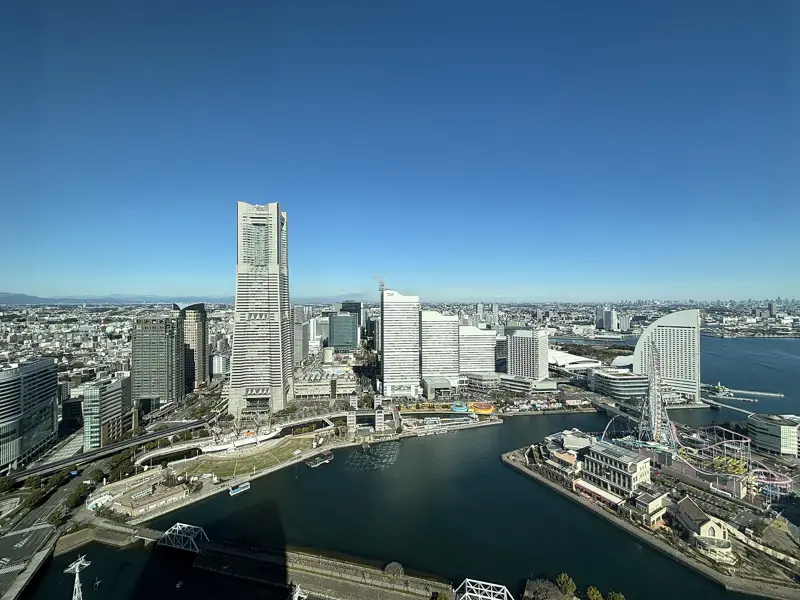
Osanbashi (Yokohama). The 2F lobby is open 9:00 to 21:30 and the rooftop 24 hours. The immigration lobby has free Wi-Fi, a foreign-currency machine that changes 12 currencies to yen (one way only), a note-to-coin changer, and the information desk, 9:00 to 17:30. Nihon-odori station is 7 minutes on foot from exits 3 or 4; city bus 26 and Bayside Blue stop at Osanbashi-iriguchi, 3 minutes away. The FAQ is clear that the terminal does not accept luggage on passengers’ behalf and has no permanent courier counter.
Hammerhead and Daikoku (Yokohama). The city’s access page gives Bashamichi station, exit 4, as about 10 minutes from Shinko Pier. Daikoku Pier has no station, operates only on ship days, admits only passengers, and the city asks passengers to consider a taxi because the buses (109 to Yokohama Station East, 17 to Tsurumi) are very crowded on ship days.
What does customs ask for?
Japan Customs states that all passengers entering Japan are required to declare their belongings, and that it recommends doing so electronically through Visit Japan Web. The electronic customs declaration gates, however, are listed at seven airports: New Chitose, Narita, Haneda, Chubu Centrair, Kansai, Fukuoka and Naha. The page says nothing about seaports, so at a cruise terminal plan on the paper declaration your ship hands out. The published allowances per adult are three bottles of alcohol (about 760 ml each), 200 cigarettes or 50 cigars or 250 g of other tobacco, 2 ounces of perfume, and other goods up to ¥200,000 in total overseas market value, with any single item over ¥200,000 getting no allowance. On a voyage that stayed inside Japan after your first port, you already cleared immigration at that first port; our guide to the port of entry inspection covers that side.
Where do the bags go?
This is the whole decision. Airport TA-Q-BIN, Yamato’s send-ahead service, needs bags by two days before your departure date, three in some areas: useful if you are staying on, useless for a flight tonight. That leaves three options.
Take them with you. The simplest answer if your flight is close. Haneda Terminal 3 has temporary baggage storage in both the 2F arrival lobby and the 3F departure lobby, open 24 hours, at ¥800, ¥1,000 or ¥2,000 per 24 hours for bags up to 120, 199 and 300 cm in combined dimensions; Terminals 1 and 2 have the same prices at B1F counters open 8:00 to 19:30. The limit is 30 kg and two weeks. Check the bags in, then go back into Tokyo if the gap is long.
Lockers at Osanbashi. The terminal has 55 locker doors in two places, next to cruise deck exit 2 and beside the elevator in the immigration lobby, open 9:00 to 21:30. All are 35 cm wide and 67 cm deep: small (32 to 33 cm high) ¥400, medium (51 cm) ¥600, large (86 to 87 cm) ¥800. You pay at deposit with cash, credit card, transit IC card or QR code, and keep the retrieval ticket. The fee is per calendar day and resets at midnight, which only matters if you leave a bag overnight. Measure your case against 35 by 67 cm and the door height before you count on one.
Counters near the piers. Yamato’s storage list (dated 16 October 2026) has three counters within walking distance of Osanbashi and Hammerhead: Yokohama Yamashita Park Center, Yokohama Chinatown Center and Yokohama Kannai Center, each ¥800 a piece, same-day collection until 19:00. In Tokyo the nearest counter on the list is the Tokyo Station Marunouchi North Exit cloak, ¥1,000 for a large piece and ¥700 for a small one, until 19:30; from Harumi that is one bus ride, from Odaiba it is the Yurikamome to Shimbashi and three minutes on the JR Yamanote or Keihin-Tohoku line, by the terminal operator’s figures. Haneda Terminal 2’s international baggage counter, also on Yamato’s list, holds bags until 22:45 at ¥800 to ¥2,000 per day.
How do I use the hours?
With the bags stored, Yokohama’s piers sit inside the walking district: Osanbashi’s own rooftop is open all day, and the Yokohama hub lists the Red Brick Warehouse, Chinatown and Minato Mirai by walking time from the terminal, with plan lengths of two to six hours. From the Tokyo International Cruise Terminal the Yurikamome runs along the Odaiba waterfront to Shimbashi, and the Tokyo hub has the short plans that fit a half day; from Harumi, bus 05-1 puts you at Ginza in about 20 minutes on the operator’s figure. Whichever you choose, run the day by the rule in getting around: decide the hour you must be at the airport, subtract the transfer, and let the remainder set the plan. Our guide to which terminal decides your whole day covers the trade-off between the two cities, and the calendar shows which ships are turning around on your date, which is when the taxi ranks are longest.
Sources
All accessed 28 October 2026.
- Tokyo International Cruise Terminal, facilities; operator top page; access.
- Harumi Passenger Terminal, facilities; access.
- Osanbashi, visitor services; coin lockers; floor guide; FAQ.
- City of Yokohama, cruise terminal access.
- Japan Customs, customs procedures for visitors; electronic customs declaration gates.
- Yamato Transport, baggage storage counters (PDF, 16 Oct 2026 version); Airport TA-Q-BIN.
- Haneda Airport, baggage storage.
- Yurikamome, fares.
Guided days at the ports in this article
Shared cars with a guide first; each page says who should skip it. Booked through Viator; there is no tour desk at the pier.
 YokohamaSmall group4.9★ · 58
Yokohama: Guided Cup Noodles Museum Tour & Make Your Own Cup
A 90-minute guided visit to the Cup Noodles Museum in Minato Mirai, including making your own cup of noodles, …
from US$61 per person · max 8Why it is here TokyoPrivate5.0★ · 180
Private Tailor-made Akihabara Anime Tour with a Local Otaku Guide
Three private hours in Akihabara with a local anime and games enthusiast, built around the series your party a…
from US$154 per person · max 6Why it is hereIf you book, we may earn a small commission at no extra cost to you. It never decides what we recommend.