Plan on the ship leaving between 17:00 and 19:00, and on your real deadline being two hours earlier than the time printed on the port schedule. That is what the published schedules say. We hold the arrival and departure times that the port authorities publish for 37 ports, and for this piece we counted every scheduled call at the 33 Japanese ones for 2026 and 2027: 2,698 calls with both an arrival and a departure time, after removing cancellations. The numbers below come from that data and nothing else. The time-zone section at the end explains why, within Japan, the clock on your phone and the clock on the ship are the same clock.
When do ships actually leave?
Of the 2,560 calls that arrive and leave on the same day:
| Published departure | Calls | Share |
|---|---|---|
| Before 16:00 | 149 | 5.8% |
| 16:00 to 16:59 | 249 | 9.7% |
| Exactly 17:00 | 513 | 20.0% |
| 17:01 to 18:00 | 615 | 24.0% |
| 18:01 to 19:00 | 432 | 16.9% |
| 19:01 to 20:59 | 211 | 8.2% |
| 21:00 or later | 391 | 15.3% |
Six in ten calls (59.6%) are over by 18:00 and three in four (76.5%) by 19:00. The late tail is real but concentrated: of the 391 departures at 21:00 or later, 171 are at Naha and 36 at Ishigaki, and 157 of them belong to one ship, Star Navigator; Hiroshima (23), Kobe (22) and Hakodate (18) are the only other ports with more than 15.
Arrivals are tighter than departures. The two most common arrival times are 08:00 (647 calls) and 07:00 (539), and 58% of all same-day calls are alongside by 08:00. Put the two ends together and the median call is about 9.5 hours long; 46% of calls are 10 hours or longer, 22% are 8 hours or shorter, and only 3% are under 6 hours.
How often do ships leave before 17:00?
15.5% of same-day calls, 398 of 2,560. Before 16:00 it is 5.8%. Where those early sailings happen matters more than the average, because they bunch at a handful of ports:
| Port | Same-day calls | Leave before 17:00 | Most common departure | Most common arrival |
|---|---|---|---|---|
| Toba | 45 | 47% | 16:00 (40% of calls) | 07:00 |
| Yokohama | 181 | 29% | 17:00 (64%) | 09:00 |
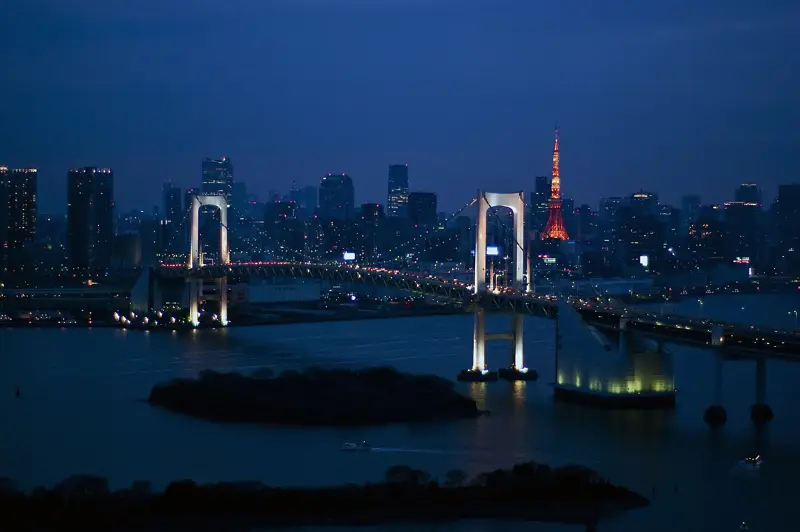
| Tokyo | 39 | 28% | 19:00 (62%) | 08:00 |
| Kochi | 128 | 22% | 17:00 (38%) | 08:00 |
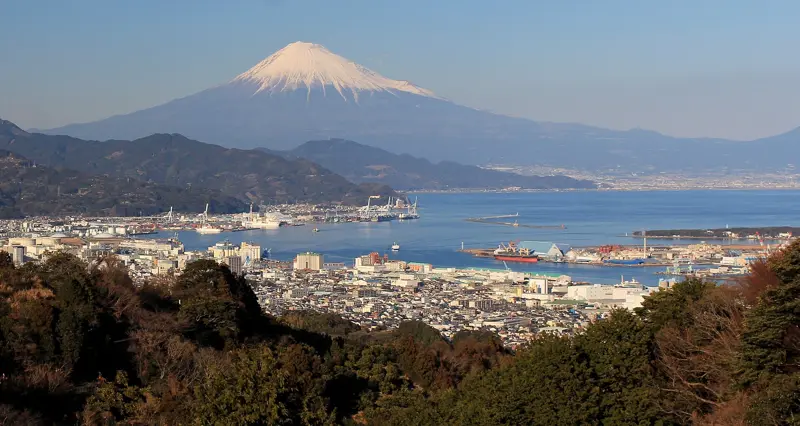
| Shimizu | 94 | 21% | 18:00 (27%) | 07:00 |
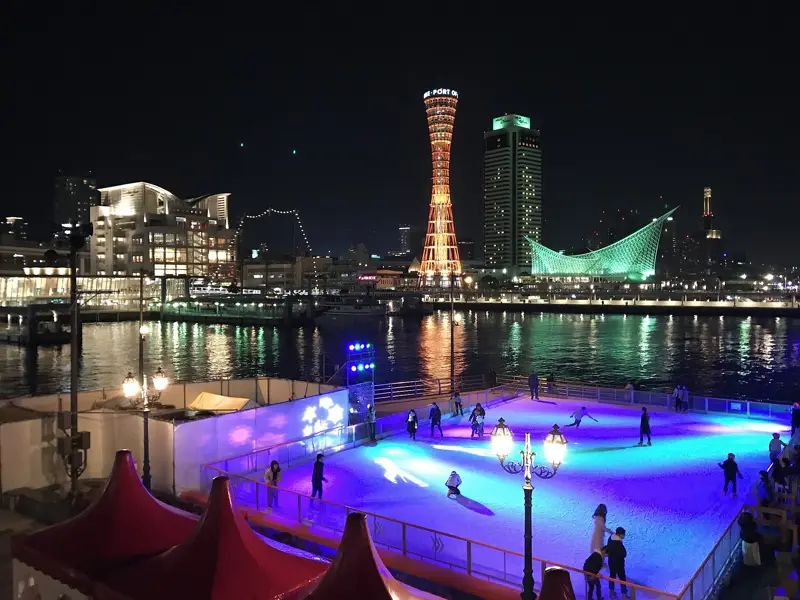
| Kobe | 129 | 20% | 17:00 (40%) | 09:00 |
| Sakaiminato | 59 | 19% | 18:00 (31%) | 08:00 |
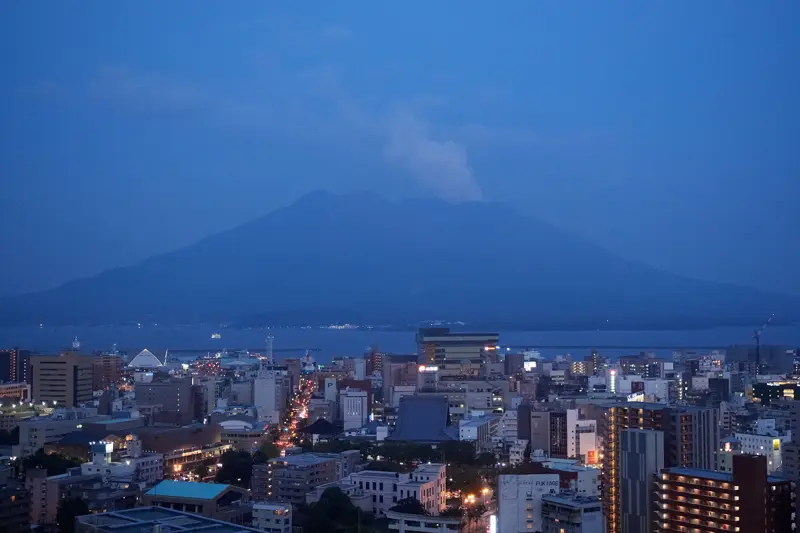
| Kagoshima | 128 | 18% | 17:00 (24%) | 08:00 |
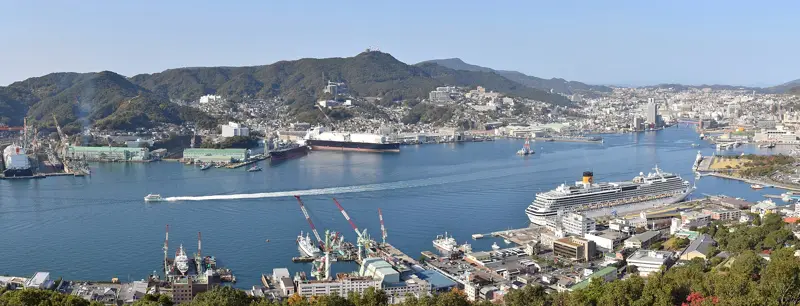
| Nagasaki | 191 | 17% | 18:00 (34%) | 08:00 |
| Hiroshima | 124 | 17% | 18:00 (28%) | 08:00 |
| Fukuoka | 117 | 15% | 17:00 (21%) | 08:00 |
| Kanazawa | 60 | 13% | 18:00 (20%) | 07:00 |
| Hakodate | 70 | 11% | 17:00 (26%) | 08:00 |
| Naha | 442 | 9% | 19:00 (19%) | 07:00 |
| Ishigaki | 203 | 7% | 19:00 (38%) | 10:00 |
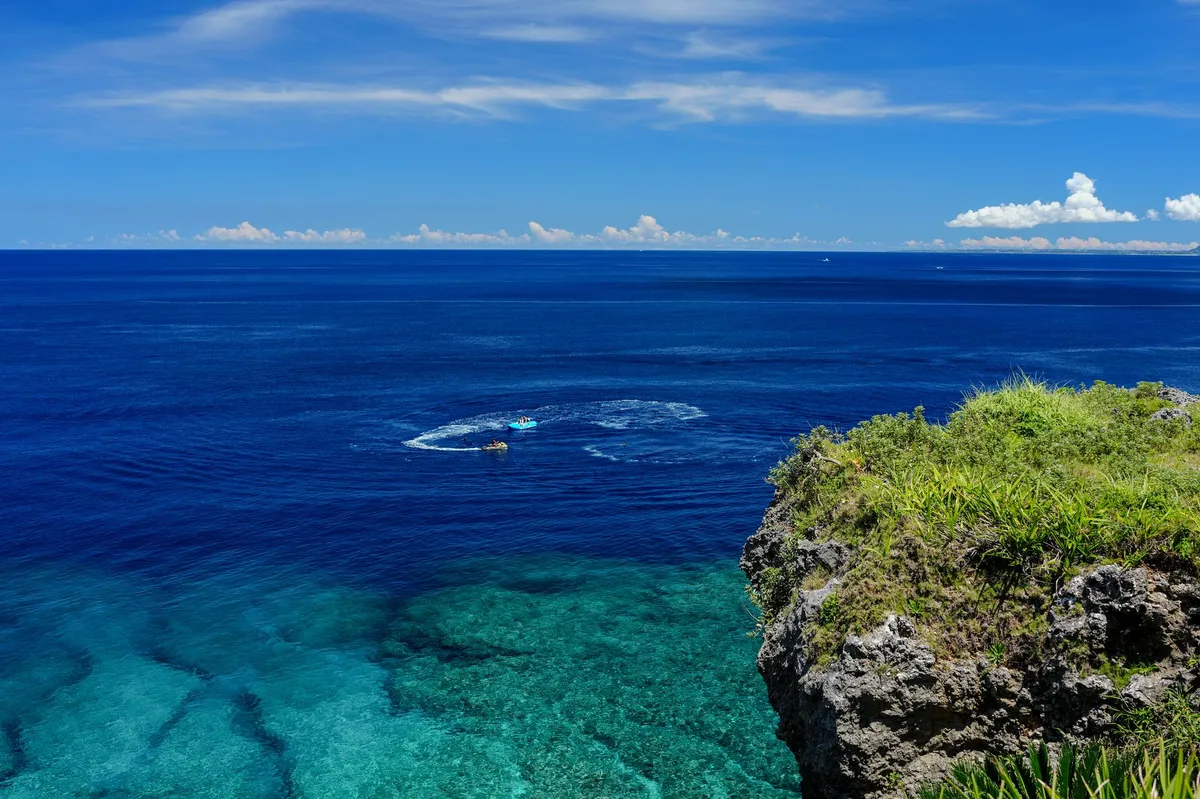
| Miyakojima | 156 | 7% | 18:00 (62%) | 08:00 |
| Osaka | 77 | 6% | 18:00 (27%) | 08:00 |
Three patterns explain most of the early column:
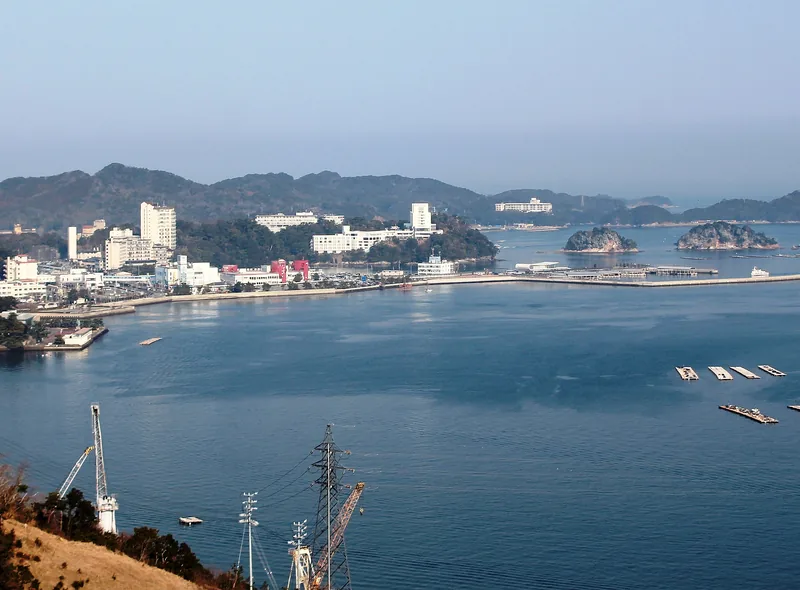
- Toba is a tender port. Its most common departure is 16:00, and with a 07:00 arrival that is still a nine-hour call; the tender is what shortens it. Our tender ports guide covers the mechanics.
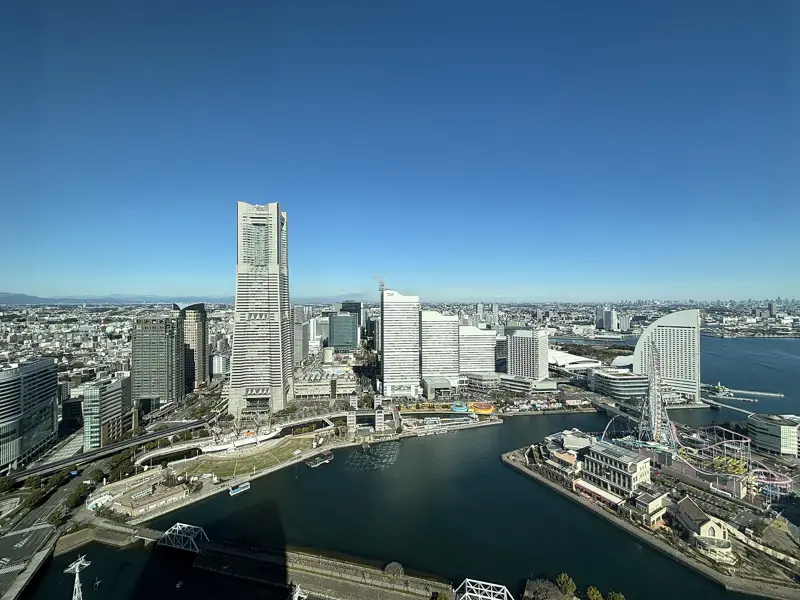
- Yokohama’s early departures are turnarounds, not port days. Of the Yokohama sailings at 15:00, 16:00 and 16:30, 29 are Diamond Princess, which starts and ends voyages there. If you are boarding, that is your embarkation afternoon, and the Yokohama embarkation guide is the page you want. If Yokohama is a port of call mid-cruise, the 09:00-to-17:00 pattern is the norm.
- The shortest calls in the data are expedition and small-ship stops. Shimizu has three calls of five hours or less: National Geographic Resolution 07:00 to 12:00, and Viking Venus and Viking Orion at 08:00 to 13:00. On a five-hour call the site’s rule below leaves three hours ashore.
Where do ships stay overnight?
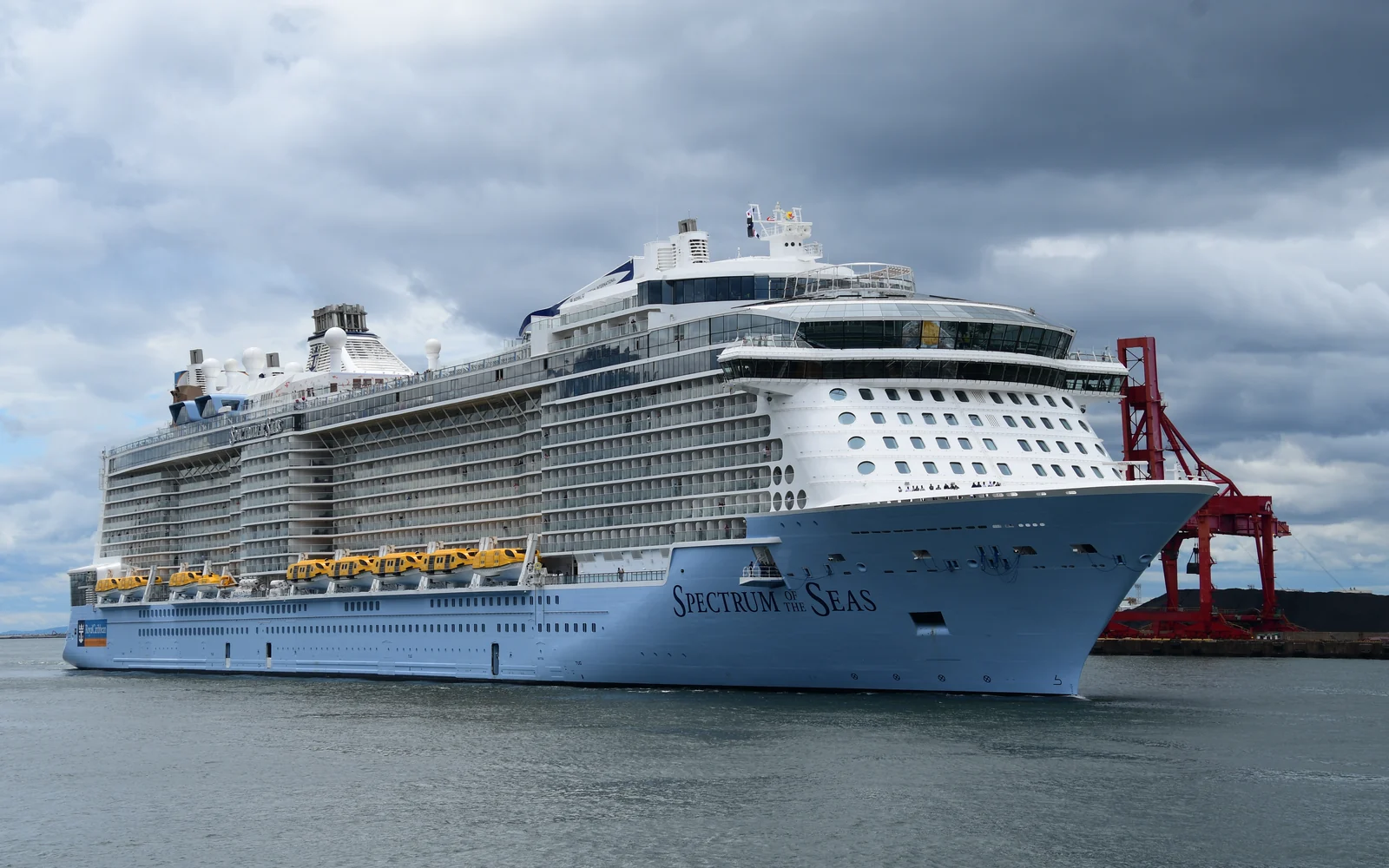
Overnight calls, where the departure date is later than the arrival date, are 111 of the 2,698 timed calls, or 4%. Naha has 66 of them, almost all MSC Bellissima (21), Adora Flora City (20), Costa Serena (11) and Spectrum of the Seas (7). The rest are thin: Kobe 8, Otaru 7, Tokyo 7, Osaka 6, Nagasaki 3, Fukuoka 3, Ishigaki 3, Yokohama 2, Aomori 2, Nagoya 2, Hakodate 1, Akita 1. The Kobe overnight playbook is the one port where an overnight is common enough to plan a Kyoto evening around.
The site’s time rule, and why it is two hours
Every plan, pick and tour on this site is judged by one rule, written into the code that builds the pages so that no two pages can disagree:
- Off the ship 30 minutes after the published arrival.
- All-aboard 30 minutes before the published departure.
- Back at the gangway 60 minutes before all-aboard.
So the time you can actually spend ashore is the call length minus two hours, and a plan fits a call only when its own length, gangway to gangway, is no more than that. A 2.5-hour plan needs a 4.5-hour call; the site prints that figure everywhere rather than rounding differently on different pages. For overnight calls the rule judges the real window, arrival to departure, but counts only the daylight stretch between 08:00 and 21:00 as touring time: a plan has to fit inside one day. The port schedules do not publish all-aboard; the 30 minutes is our assumption, and your line’s daily program overrides it. Applied to the median call of about 9.5 hours, the rule gives about 7.5 hours ashore, which is what the plan lengths and getting around pages work from.
What does ship time versus local time mean in Japan?
Nothing, on a Japan-only itinerary, and that is worth knowing precisely. Japan’s standard time was fixed by Imperial Ordinance No. 51 of 1886 as the time of the 135°E meridian, in force from 1 January 1888 for the whole country. The National Institute of Information and Communications Technology (NICT) determines and maintains Japan Standard Time today, and its own technical account states that the time it broadcasts is UTC(NICT) plus 9 hours. The same NICT account records that summer time was used in Japan four times from 1948, under the Allied occupation, and has not been used since, despite being discussed several times, most recently for 2020. One zone, no seasonal change: from Hakodate to Naha the ship has no reason to move its clock, and your phone will agree with the ship.
The trap opens at the border. Taiwan, Hong Kong and China are UTC+8, one hour behind Japan; Korea is UTC+9, the same as Japan. Our ship time versus phone time guide covers the habit that keeps you safe when the itinerary crosses that line.
What to do with this
Look up your call on the calendar, read the published arrival and departure, subtract two hours, and that is your day. If the departure is before 17:00, check whether the ship is turning around (Yokohama), tendering (Toba) or simply short (the expedition stops at Shimizu), because each changes what the afternoon looks like. And if your ship is one of the Naha overnights, the night is yours but the plans are not: they still run 08:00 to 21:00.
Sources
- Port of Japan schedule data for 37 ports, built from each port authority’s published call list and checked between 18 and 27 October 2026; the per-port lists and their sources are on the cruise calendar. Yokohama example: City of Yokohama Port and Harbor Bureau, 2026 schedule, accessed 27 October 2026.
- Imperial Ordinance No. 51 of 1886 (prime meridian and standard time), e-Gov law database, accessed 28 October 2026.
- NICT, Japan Standard Time, accessed 28 October 2026.
- NICT Journal vol. 65 no. 2, 3-1 Maintenance and operation of Japan Standard Time (PDF), sections on UTC(NICT) + 9 hours and summer time, accessed 28 October 2026.
Guided days at the ports in this article
Shared cars with a guide first; each page says who should skip it. Booked through Viator; there is no tour desk at the pier.
 YokohamaSmall group4.9★ · 58
Yokohama: Guided Cup Noodles Museum Tour & Make Your Own Cup
A 90-minute guided visit to the Cup Noodles Museum in Minato Mirai, including making your own cup of noodles, …
from US$61 per person · max 8Why it is here TokyoPrivate5.0★ · 180
Private Tailor-made Akihabara Anime Tour with a Local Otaku Guide
Three private hours in Akihabara with a local anime and games enthusiast, built around the series your party a…
from US$154 per person · max 6Why it is here NahaPrivate car · per group5.0★ · 12
Okinawa Flexible Tour—Driver and Guide Included 1–8 Guests(4-8H)
A private car with driver and English-speaking guide for four to eight hours, with a sample route in northern …
US$285 per person for 2 · US$570 per carWhy it is hereIf you book, we may earn a small commission at no extra cost to you. It never decides what we recommend.