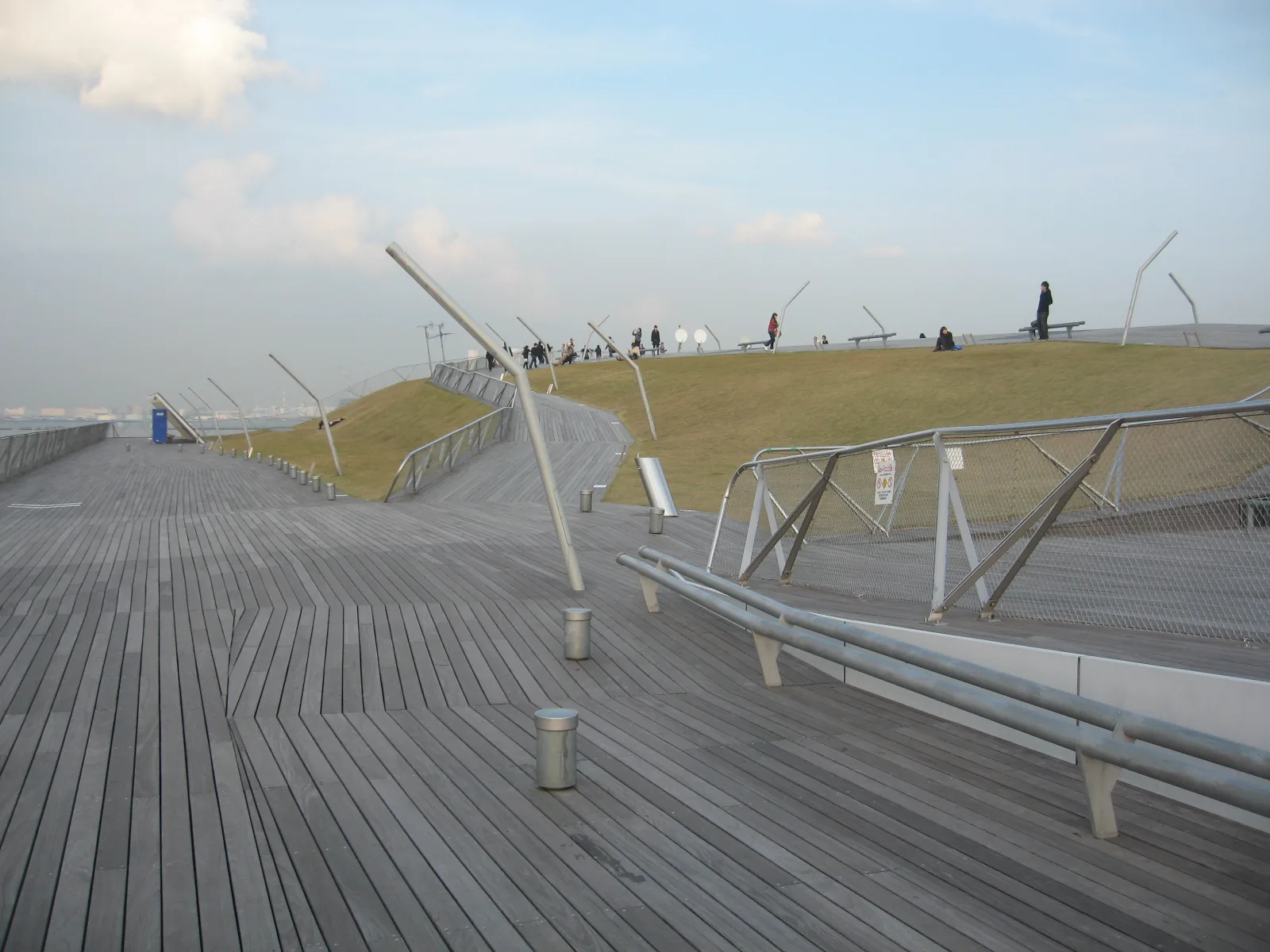
Most “Tokyo” cruises booked by English-speaking passengers start or end in Yokohama. For them Yokohama is a transfer, not a port day: which pier, how to get there from Haneda or Narita with two large suitcases, where to sleep, and the earliest flight home you can safely book.
The answers come from the city’s ship schedule, the terminal operators, the bus and rail operators’ timetables, Yamato Transport’s counter lists and rates, and the Kanagawa taxi tariffs. Journey times for trips that use more than one operator come from a timetable aggregator, using the weekday timetable for Wednesday 7 October 2026. Nobody from this site has done these transfers, so nothing here is first-hand. Where a number is our own estimate, it says so. For the port-day version, see the Yokohama cruise port guide.
The short version
| Question | Answer |
|---|---|
| Which terminal? | Osanbashi for nearly every big international ship. Shinko Pier (Hammerhead) for small luxury ships. Daikoku for ships too tall for the Bay Bridge |
| Haneda → Osanbashi | Keikyu bus to Osanbashi-iriguchi: ¥1,000, ~40 min from T3. Or bus to YCAT (¥800) + taxi. Train: ¥600, 40–45 min, 1–2 changes |
| Narita → Yokohama | Limousine bus to YCAT: ¥4,000, ~100 min. Narita Express: ¥4,480 direct or ¥3,820 with a change at Shinagawa |
| Shin-Yokohama → Osanbashi | Subway or JR to Yokohama, then the Minatomirai Line: ~29 min, ¥480. Taxi: our estimate ~¥4,900 |
| Luggage | Yamato same-day delivery from Haneda or Narita to hotels in the terminal wards. The terminal itself takes no parcels |
| Where to sleep | Kannai/Yamashita Park or Minato Mirai for Osanbashi; Minato Mirai for Shinko; Yokohama Station for late Narita arrivals and for Daikoku |
| Earliest flight home | Haneda international ~13:00, Haneda domestic ~12:00, Narita international ~15:00 (assumptions below) |
Which terminal, and how to tell
The city’s access page says Yokohama has three passenger terminals. It tells passengers to confirm theirs with the cruise line and the city schedule. The schedule for 1 October to 31 December 2026 splits the 46 calls like this:
| Terminal | Calls, Oct–Dec 2026 | Who uses it | Nearest station |
|---|---|---|---|
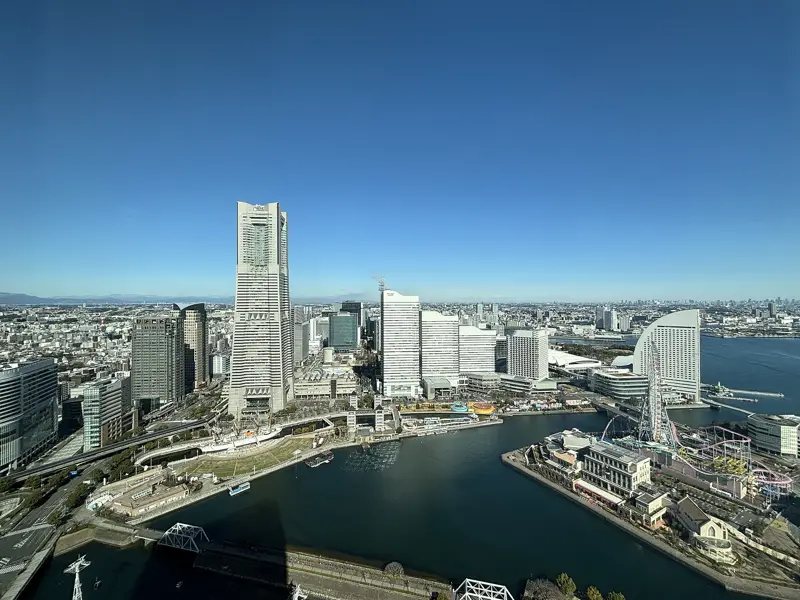
| Osanbashi (大さん橋国際客船ターミナル), 1-1-4 Kaigan-dori, Naka ward | 33 | Diamond Princess, Norwegian Jade, Celebrity Millennium, Asuka II and III | Nihon-odori, 7 min on foot |
| Shinko Pier / Yokohama Hammerhead (新港ふ頭客船ターミナル), 2-14-1 Shinko, Naka ward | 11 | Star Seeker, Luminara, most Mitsui Ocean calls | Bashamichi, 10 min on foot |
| Daikoku Pier (大黒ふ頭客船ターミナル), Daikoku-futo 13, Tsurumi ward | 2 | Costa Serena, Navigator of the Seas | None you can walk to |
Cruise-line listings show the international turnarounds in late 2026 as follows. Diamond Princess, Norwegian Jade and Celebrity Millennium start or end voyages at Osanbashi. Star Seeker and Luminara do so at Shinko. Navigator of the Seas calls at Daikoku on 18 October (in 05:30 from Shimizu, out 17:00 for Nagasaki on the city schedule); the cruise-line listings we saw show it as a turnaround, so confirm with Royal Caribbean. Our rule of thumb from the schedule, not an official rule: mid-size and large ships use Osanbashi, small ships use Shinko, and only ships too tall for the Yokohama Bay Bridge go to Daikoku.
Check your boarding documents first, then the city schedule, which lists ship, date, berth and times for every call and warns that schedules change. If your documents just say “Tokyo”, read the terminal explainer.
Show your taxi driver the Japanese name: “Yokohama cruise terminal” could mean any of three piers.
Haneda to the ship
Haneda is the easy airport: about 23 km by road, 26 minutes in free-flowing traffic by our map routing.
The direct bus to the pier: Keikyu Bus, Haneda ⇔ Yamashita Park, Minato Mirai and Red Brick Warehouse
This is the one most guides miss. Keikyu Bus runs an airport bus that stops at Osanbashi-iriguchi (大さん橋入口). The terminal’s own access page puts that stop 3 minutes on foot from the building.
- Fare: ¥1,000 (children ¥500). From Haneda, buy a ticket at the arrivals-hall machine or counter, or pay with a transit IC card. Contactless credit cards are accepted only on buses going to Haneda.
- Large suitcases go in the hold. The operator accepts no liability for them.
- Not every bus stops at Osanbashi-iriguchi. Some run a different loop via Chinatown and Sakuragicho, and some go only to the Minato Mirai hotels. The weekday buses that do stop there:
| Leave Haneda T3 (T2 +10 min, T1 +15 min) | Arrive Osanbashi-iriguchi |
|---|---|
| 08:40 | 09:20 |
| 09:40, 10:10, 10:40 | 10:20, 10:50, 11:20 |
| 11:40, 12:40, 13:40, 14:40 | 12:20, 13:20, 14:20, 15:20 |
| 15:30, 16:40 | 16:10, 17:20 |
| 18:10, 19:10 (last) | 18:50, 19:45 |
The weekend timetable has the same departures, with arrivals at Osanbashi-iriguchi the same or up to 9 minutes later (19:54 for the last bus). The same buses continue to Bashamichi, the Kokusai-bashi (Cup Noodles Museum) stop and the Red Brick Warehouse. Those stops are the nearer ones for Shinko Pier, though we have not measured the walk from any of them to Hammerhead.
The airport bus to YCAT, then a taxi
YCAT (Yokohama City Air Terminal) is the bus terminal on the east side of Yokohama Station.
- ¥800, payable by IC card or contactless credit card, or with a ticket from the arrivals-hall machines (T3 also has a ticket counter in the 2F arrivals hall). You do not need a reservation.
- Weekday buses leave T2 from 06:20 and T1 from 06:25 until 23:30 / 23:35, every 15–20 minutes, and reach YCAT about 30 minutes later.
- Terminal 3 (international) is served less often. On the current timetable the first bus from T3 is at 09:05 and the last regular one at 21:05, roughly every 30 minutes, taking about 45 minutes to YCAT. Outside those hours, take the train.
- A late-night bus leaves T3 at 01:20, reaching YCAT at 02:02 and Sakuragicho at 02:08. It costs ¥2,000.
From YCAT a taxi to Osanbashi is about ¥2,000 by our estimate (about 4 km). For Shinko, it is about ¥1,500. Yokohama city buses route 26 and Bayside Blue (¥220) also run from Yokohama Station to a stop 3 minutes from Osanbashi.
By train
| From | Route | Time | Fare | Changes |
|---|---|---|---|---|
| Haneda T3 | Keikyu to Yokohama (change at Keikyu-Kamata on many trains), Minatomirai Line to Nihon-odori | 40–45 min | ¥600 | 1–2 |
| Haneda T1/T2 | As above | About 43 min | ¥630 | 2 |
Keikyu gives Haneda T3 to Yokohama as 23 minutes and T1/T2 as 28 minutes on its fastest trains. Then there is a 7-minute walk from Nihon-odori exit 3 or 4 to Osanbashi, or 10 minutes from Bashamichi to Hammerhead. The Minatomirai Line takes IC cards and contactless credit cards at the gates. With one bag each it is fine. With two large cases each, the changes at Kamata and Yokohama are the hard part.
Landing late: the last train connection we found leaves Haneda T3 at 23:37 and reaches Nihon-odori at 00:22. If you land after about 21:00, go to a hotel near Yokohama Station or Minato Mirai, not the pier.
By taxi
The Kanagawa Taxi Association publishes pre-booked fixed fares between Haneda and Yokohama:
| Yokohama area | Fixed fare | 22:00–05:00 |
|---|---|---|
| Nishi ward and the Minato Mirai part of Naka ward (Yokohama Station, Minato Mirai, Shinko Pier) | ¥8,800 | ¥10,300 |
| Kohoku ward and Yokohama Portside | ¥7,800 | ¥9,300 |
The table is headed for trips from Yokohama to Haneda, the fares assume the expressway, and the tolls are extra. Ask the taxi company to confirm the fixed fare when you book. Osanbashi is in Naka ward but not in Minato Mirai, so ask the taxi company whether the fixed fare applies. If it does not, the meter applies. Holland America’s port page quotes about ¥12,000 to Haneda and warns that “taxi availability is limited”. Until 31 January 2027, Haneda T3’s taxi rank for Kanagawa-bound fixed-fare taxis is closed. The association tells fixed-fare users to go to the T1 or T2 rank instead. Haneda’s own taxi page lists stands 1 and 17 at Terminal 1, and 2 and 20 at Terminal 2, for Kawasaki and Yokohama.
Narita to the ship
Narita is about 100 km away. Every option is a long ride.
| Option | Time | Fare | Notes |
|---|---|---|---|
| Limousine bus to YCAT | About 100 min (city’s figure) | ¥4,000 | Book from one month ahead up to 5 min before departure. Walk-up tickets get whatever seat is free |
| Narita Express, through train to Yokohama | 1 h 23–30 min | ¥4,480 | No change. On our sample day these ran only in the evening (20:44, 21:44) |
| Narita Express with a change at Shinagawa | About 1 h 37 min | ¥3,820 | The midday pattern: N’EX to Shinagawa, then JR Tokaido line one stop to Yokohama |
| Keisei/Toei/Keikyu, no reserved seat | 1 h 40 min–2 h | ¥1,630–1,950 | Two or three changes. Not with big luggage |
| Taxi | About 1 h 40 min (Holland America) | Meter from Narita: about ¥70,000 by Holland America’s figure. Yokohama → Narita: ¥37,500 fixed (Kanagawa Taxi Association) + tolls | Narita’s own fixed-fare zones do not include Yokohama |
Limousine bus times (from 1 March 2026): buses leave Narita (T3, T2, then T1) from about 08:05 until 21:55 from T1, which reaches YCAT at 23:20. They run roughly hourly, more often in the afternoon. Most of them (12 of the 18) continue from YCAT to the Yokohama Bay Hotel Tokyu and the Grand InterContinental in Minato Mirai, about 10 minutes later.
Landing late at Narita: after the last bus, the last workable train we found leaves at 22:40 and reaches Yokohama at 00:14–00:21, with two changes. In practice, a Narita arrival after about 20:00 means a night in Yokohama or near Narita, not a same-night run to the ship.
From the Shinkansen and Tokyo stations
| From | Route | Time | Fare | Taxi (our estimate, meter, no traffic) |
|---|---|---|---|---|
| Shin-Yokohama (Shinkansen) | Subway Blue Line or JR to Yokohama, Minatomirai Line to Nihon-odori | About 29 min | ¥480 | About 10 km, 16 min: ~¥4,900 to Osanbashi, ~¥3,600 to Hammerhead |
| Shin-Yokohama, fastest | Tokyu Shin-Yokohama Line to Kikuna, then a through train to Nihon-odori | About 17 min | ¥570 | — |
| Tokyo Station | JR to Yokohama, Minatomirai Line | 45–54 min | ¥760 | Not sensible |
| Shinagawa (Shinkansen) | JR or Keikyu to Yokohama, Minatomirai Line | 31–42 min | ¥550–580 | — |
| Yokohama Station | Minatomirai Line, 6 min, or bus 26/Bayside Blue | About 15 min door to door | ¥230 / ¥220 | About 4 km: ~¥2,000 to Osanbashi |
Taxi estimates use our reading of the Keihin-district tariff in force since 16 March 2026 (roughly ¥500 for the first kilometre, then ¥100 for each further 200 m or so). They are for distance only, so treat them as a rough floor.
Luggage: forwarding, storage and porters
Same-day delivery from the airport to your hotel
This is the single most useful service for a pre-cruise night. Yamato Transport’s counter list, dated 1 September 2026, says:
| Counter | Cut-off | Delivers to | Delivery | Fee |
|---|---|---|---|---|
| Haneda T1, T2 and T3 baggage counters | 11:00 | Hotels in the Tokyo 23 wards and in Yokohama’s Nishi, Naka, Tsurumi, Kanagawa, Hodogaya, Minami and Konan wards | From 18:00 | Standard rate plus an extra charge (amount not shown in the list) |
| Narita T1 (North and South), T2 | 10:30 | Anywhere in Tokyo, Kanagawa and six neighbouring prefectures | 18:00–21:00 | Standard rate |
| Narita T3 | 09:50 | As above | 18:00–21:00 | Standard rate |
Nishi and Naka wards cover Yokohama Station, Minato Mirai, Kannai, Chinatown and both central terminals. Unlike Osaka, where the terminal’s ward is left out, the hotels nearest Yokohama’s terminals are on the list. Shin-Yokohama (Kohoku ward) is not on the Haneda list.
The catch is the cut-off: it suits morning arrivals only.
Standard TA-Q-BIN rates (cash, by size: length + width + height):
| Size | Within Kanagawa (e.g. Yokohama hotel → Yokohama) | Kanto to Kanto (e.g. Haneda or Narita → Yokohama, Yokohama → Tokyo) |
|---|---|---|
| 120 (up to 120 cm, 15 kg) | ¥1,730 | ¥2,040 |
| 160 (up to 160 cm, 25 kg), a typical large suitcase | ¥2,410 | ¥3,020 |
| 200 (up to 200 cm, 30 kg), the maximum | ¥3,690 | ¥4,470 |
Yamato takes ¥100 off per item if you hand it in at a counter or convenience store.
Going on to Tokyo after the cruise
Yamato’s Pacifico Logistics Center, at the Pacifico Yokohama convention complex in Minato Mirai, takes bags until 10:00 for same-day delivery anywhere in Tokyo and Kanagawa by 21:00. If you disembark early and want a free-handed afternoon before a Tokyo hotel, that counter is the tool. You still need a taxi to get the bags there.
To the airport for your flight home
Yamato’s Airport TA-Q-BIN delivers to all major Japanese airports by the day before your flight. You have to hand the bags over two days before departure (three in some areas). Its published rates include a ¥660 airport fee. It is no use for bags coming off the ship on the day you fly. It works if you stay two or more nights after the cruise.
To or from the ship
Osanbashi’s FAQ is blunt. The terminal does not accept luggage on passengers’ behalf, and there is no permanent courier counter. For sending bags ahead, or for any temporary courier desk on ship days, it refers you to your cruise line. Japanese lines such as Asuka Cruise offer an advance courier service. We found no published Yamato service to any Yokohama cruise terminal. Ask your line whether it accepts parcels addressed to the ship, and by what date.
Storage and porters
- Coin lockers: in Osanbashi’s 2F lobby and at Hammerhead. Holland America calls them “limited”. On a turnaround day, assume they will be full.
- Yamato baggage storage, for collection the same day: Yokohama Yamashita Park Center and Yokohama Chinatown Center until 19:00, ¥800 a piece. Pacifico Logistics Center until 18:00, ¥700 a piece. That is useful if you disembark at 08:00 and fly at 20:00.
- Porters: neither Osanbashi nor Hammerhead lists a porter service. On international lines you normally hand your checked bags over at the terminal when you arrive. Your line’s embarkation notice says where. The terminal offers free wheelchair loans from 9:00 to 17:00 (limited numbers, no reservations), and the building is step-free with lifts.
Where to stay the night before
We name districts, not hotels: we have not stayed in them, and there are no affiliate links.
| District | Best for | The morning | Airport links | Yamato same-day from Haneda |
|---|---|---|---|---|
| Kannai / Yamashita Park / Chinatown (Naka ward) | Osanbashi | Kannai station is 15 min on foot from Osanbashi; or a short taxi | Keikyu airport bus stops at Yamashita Park | Yes |
| Minato Mirai (Nishi ward and the Minato Mirai part of Naka ward) | Shinko Pier; Osanbashi by short taxi | Short walk or taxi to Hammerhead | Airport buses call at several Minato Mirai hotels, both to Haneda and to Narita | Yes |
| Yokohama Station (Nishi ward) | Late Narita arrivals, Daikoku, the flight home | Taxi ~¥2,000 to Osanbashi; bus 109 or taxi to Daikoku | YCAT: every Haneda and Narita bus | Yes |
| Shin-Yokohama (Kohoku ward) | Shinkansen arrivals late at night | 17–29 min by train, or taxi ~¥4,900 (our estimate) | Keikyu bus to Haneda, ¥1,000 | No |
| Central Tokyo | Nobody sailing from Yokohama, unless you want a Tokyo stay | 45–55 min by train with luggage, or an expensive taxi | Good | — |
The pre-cruise hotel playbook covers how many nights to book, lodging taxes and what kind of hotel.
The terminal on the day
| Osanbashi | Shinko / Hammerhead | Daikoku | |
|---|---|---|---|
| Opening | 2F lobby 9:00–21:30; rooftop 24 h; info desk 9:00–17:30 (tel. 045-211-2304) | Shops mostly 10:00–21:00 or 11:00–23:00 | Ship days only; passengers only. No farewell or viewing area |
| Food | Cafés, restaurant, shops (hours vary) | Food hall, 24-hour 7-Eleven | Nothing. No café, no shop, no convenience store nearby |
| Money | Floor map marks an ATM by the 2F information desk (card acceptance not stated). Exchange machine for 12 currencies, foreign cash to yen only. Japan Post ATM ~430 m, 7-Eleven ~470 m (straight-line) | Exchange machine; 7-Eleven ATM next door | None |
| Wi-Fi, power | Free Wi-Fi in 2F lobby; phone chargers ¥200/30 min | Free Wi-Fi | — |
| Parking | 400 spaces, 24 h, covered. Cruise rate ¥1,000 per 24 h, up to 31 days | 350 spaces, ¥350 per 30 min; no cruise rate found | None listed |
Check-in windows: your line sets them, and your documents give your time. Asuka Cruise tells passengers on its domestic cruises that check-in usually runs from about two hours to about ninety minutes before departure. International sailings need longer because of immigration. International lines give each cabin its own arrival slot. Do not arrive hours early at Daikoku, where there is nothing to do and nowhere to buy a coffee.
Parking details: the Osanbashi cruise discount is for passengers sailing from Osanbashi only. It does not apply to Shinko or Daikoku sailings or to people dropping someone off. Register on the day you board or the day you return, at the 2F information desk or at the 1F disaster-prevention centre (open 24 hours). The passenger has to show the parking ticket and cruise ticket in person. When the car park is full, it says cruise passengers get priority in the queue.
Money, rail passes and arriving from overseas
- IC cards (Suica, PASMO, or the versions in your phone’s wallet) work on every train in this guide and on the Haneda buses. The Minatomirai Line and the Haneda–YCAT buses also take contactless credit cards. The Minatomirai Line sells a ¥460 one-day pass.
- Rail passes: none is worth buying for this trip alone. Your journeys are short and on several different companies’ lines.
- Cash: have some yen for taxis and the odd cash-only stall. Osanbashi’s floor map marks an ATM, but we could not confirm it takes foreign cards; there are Japan Post and 7-Eleven machines a few hundred metres away. See cash and cards on a Japan cruise.
- Arriving the day before: you clear immigration and customs at the airport, so the cruise terminal formalities on embarkation day are your line’s check-in, not a second arrival. Japan’s Digital Agency runs Visit Japan Web for the airport arrival forms, and Japan Customs lists what you may bring in. If you take prescription medicines, read bringing medications to Japan before you fly.
- Jet lag: arrive at least a full day early; the hotel playbook argues for two nights. Landing at 06:00 on embarkation day means boarding sleepless. Landing at 06:00 the day before means a jet-lagged afternoon and a normal embarkation morning.
Embarkation day: a timeline
Assumed: a 16:00 departure from Osanbashi, a Yokohama hotel the night before, and a noon check-in slot. Adjust to your documents.
| Time | What |
|---|---|
| Night before, by 18:00 | Bags that went by Yamato from the airport arrive at the hotel |
| 08:00 | Breakfast. Check the ship’s berth one last time |
| 09:00 | Osanbashi information desk opens. Lobby open |
| 10:30 | Check out. If you are early, leave bags at the hotel |
| 11:30 | Taxi to the terminal (5–10 min from Kannai or Minato Mirai). Show the Japanese name |
| 12:00 | Your check-in slot. Hand checked bags over as your line directs |
| 13:00–14:30 | On board (example) |
| About 15:00 | All aboard (example; see your documents) |
| 16:00 | Departure under the Bay Bridge |
Flying in the same day: the Haneda timetable makes it look possible. The 08:40 bus from T3 reaches Osanbashi-iriguchi at 09:20. But it depends on your flight landing on time and immigration being quick. Nothing here can recover a missed ship. We do not recommend it.
Disembarkation day: a timeline and the earliest flight
Assumptions: the ship is alongside by about 07:00 (Diamond Princess and Norwegian Jade are scheduled in at 06:30). You are off the ship and through the terminal by 09:00. You want to be at the airport 2.5 hours before an international flight and 1.5 hours before a domestic one. These are our assumptions, not airline rules. Arriving from a foreign port adds immigration on board or in the terminal, so allow more.
| Time | Haneda, international (T3) | Narita, international |
|---|---|---|
| 09:00 | Off the ship | Off the ship |
| 09:15 | Taxi from the rank (allow a queue) | Taxi to Yokohama Station (~¥2,000, our estimate) |
| 09:30 | Either taxi straight to T3 (~26 min without traffic) or at YCAT for the 09:40 bus | 10:28 Narita Express, through train (on our sample weekday) |
| 10:00–10:45 | At T3 (bus scheduled 10:21; the operator warns of traffic delays and showed 50 minutes to T1 on the day we checked) | 11:57 at Narita |
| Earliest flight | About 13:00 | About 15:00 (with the 10:45 limousine bus, arriving at T1 at 12:30 on the timetable, the same) |
For a domestic flight from Haneda T1/T2, the same morning gets you there by about 10:00–10:30, so about 12:00 is the earliest sensible booking. Keikyu Bus also runs pre-booked buses to Haneda from Shin-Kencho-mae, a stop near the landward end of the Osanbashi pier road on our map reading. They leave at 10:03 and 11:05 on weekdays and reach T3 at 10:56 and 11:58. Seats need a reservation from a month ahead until the day before, and they are sold first to people who booked.
Shinko Pier and Daikoku: add 10 minutes for Shinko. For Daikoku, take a taxi to YCAT, about 8.4 km and about ¥4,000 by our estimate plus any toll, and add half an hour.
Mistakes passengers make here
From forum posts and cruise blogs: anecdotal and dated.
- Booking a Tokyo hotel when the ship leaves from Yokohama. “Tokyo” on the brochure usually means Yokohama. A central Tokyo hotel adds 45–55 minutes of trains with your luggage on the morning that matters.
- Hauling luggage onto trains on disembarkation morning. A 2016 Australian Frequent Flyer thread and a 2019 cruise blog both say to take a taxi to the station or to YCAT rather than walk to Nihon-odori with suitcases. One 2016 poster suggested “taxi to limousine bus at YCAT” as the compromise between cost and ease.
- Expecting luggage forwarding to work the same day you fly. The 2016 thread noted the delivery services “don’t guarantee same day service”. Yamato’s airport service needs the bags two days before the flight.
- Underestimating the airport taxi. A forum poster paid ¥7,030 to Haneda in 2016. Holland America now quotes about ¥12,000 to Haneda and about ¥70,000 to Narita. Kanagawa taxi fares rose again on 16 March 2026.
- Taking any bus marked “Yokohama” at Haneda T3. Only some Yamashita Park buses stop at Osanbashi-iriguchi, and the YCAT buses call at T3 only from 09:05 to 21:05. Check the stop list before you board.
- Assuming the terminal will hold bags or take parcels. It will not. Osanbashi’s own FAQ says so.
- Treating Daikoku like Osanbashi. You cannot walk out, there is nothing to buy, and the city itself recommends a taxi over its own crowded buses.
What to do with this
Find your terminal. Flying into Haneda, use the direct bus to Osanbashi-iriguchi or Yamato’s same-day delivery. Flying into Narita, sleep in Yokohama first. Then use the Yokohama port guide for the spare day.