Leave the ship’s food on the ship. Japan’s agriculture ministry says hamburgers, sandwiches, fruit and other items served on board may not go ashore. Sealed snacks with no meat, and a bottle of water, are not on its lists.
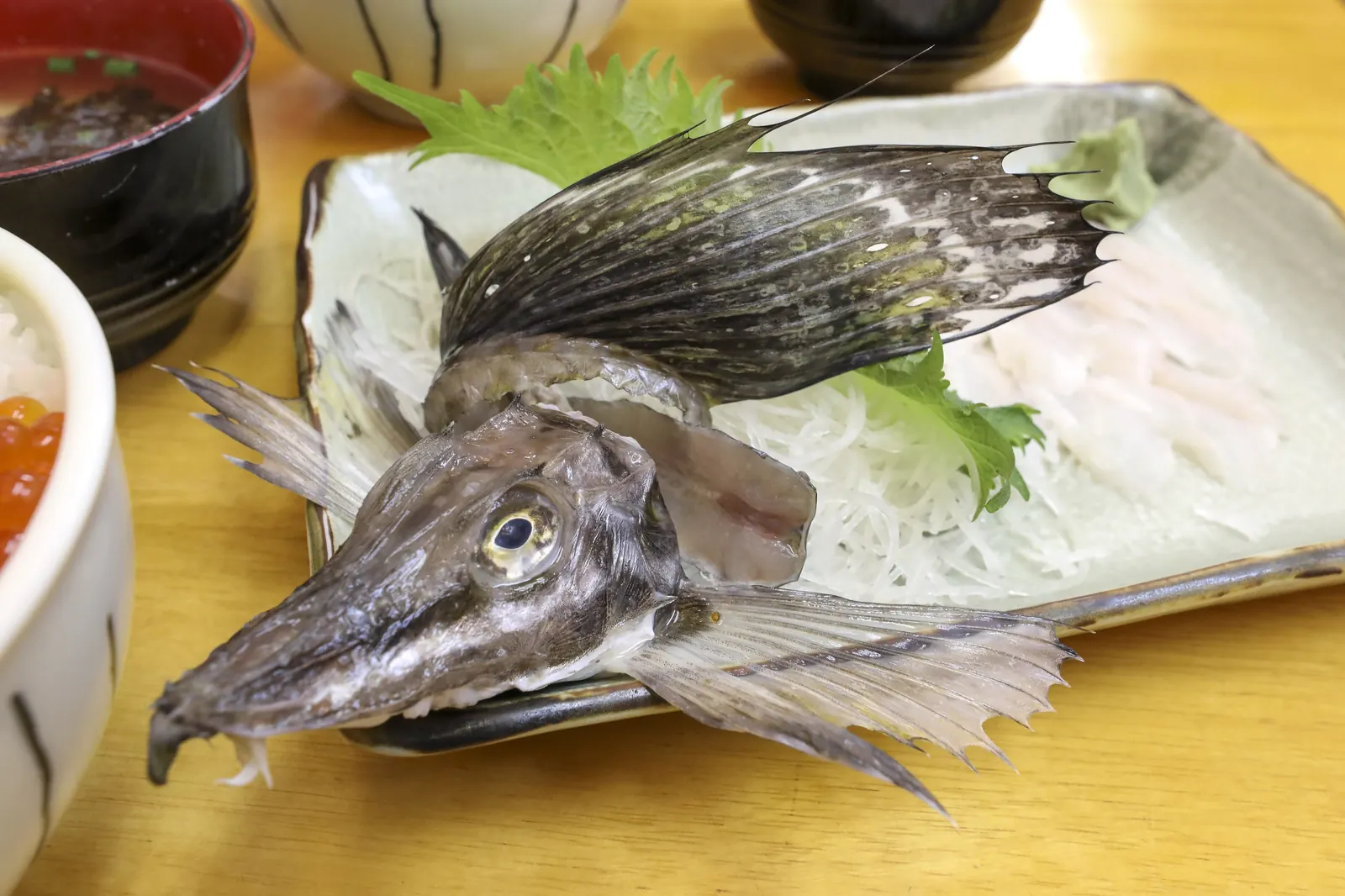
The one safe habit: walk off with water and a sealed, shelf-stable snack that has no meat in it, and eat your real meal ashore. You leave behind a buffet roll. Waiting ashore is a bowl of sea urchin and salmon roe at a fish market.
You can bring things back aboard too, with each line’s limits. On most lines, alcohol bought in port is held by the ship until the end of the cruise.
Food off the ship, item by item
The rule comes from one document written for cruise ships. The Animal Quarantine Service and the Plant Protection Station publish an English announcement for ships arriving in Japan. It names “hamburgers, sandwiches, oranges, apples, bananas, and other items served on board” and asks passengers to leave them aboard.
| Item | Off the ship into Japan | Who says so |
|---|---|---|
| Apple, orange or banana from the buffet | No | Ministry ship announcement; the Plant Protection Station names apples and citrus |
| Ham or chicken sandwich | No | Ship announcement; the Plant Protection Station lists ham sandwiches and hamburgers |
| Cheese sandwich | No, leave it | Ship announcement: sandwiches served on board stay aboard |
| Boiled eggs from breakfast | Leave them | Hard-boiled eggs meet the Animal Quarantine Service’s exclusion standard, but the ship announcement says “other items served on board” stay aboard |
| Yoghurt from the buffet | Leave it | Dairy in your own luggage is outside animal quarantine; the ship announcement still says “other items served on board” stay aboard |
| Jerky, salami, meat snacks | No | Animal Quarantine Service: jerky, ham and sausages, even vacuum-packed or bought duty-free |
| Sealed crisps, biscuits, chocolate, roasted nuts from home | Yes, if there is no meat | Not on either agency’s lists; processed plant foods need no plant inspection |
| Baby formula and baby food | Formula yes; see below for jars | Dairy page of the Animal Quarantine Service; special cases |
| Bottled water or coffee | Yes | Neither agency lists drinks |
| Medicines | Separate rules | Ministry of Health; see bringing your medications to Japan |
Why so strict. The agriculture ministry’s own FAQ explains it. African swine fever reached the Caucasus in 2007, and the suspected source was food waste from ships on international routes.
Meat means any meat. The Plant Protection Station’s request to visitors lists meat buns, dumplings, hamburgers, ham sandwiches and gimbap. It makes no exception for food that is vacuum-packed, cooked, or sold at a duty-free shop.
At the terminal: officers, dogs and the penalties
At the first Japanese port, quarantine comes before customs. Japan Customs says passengers present plants and animals to the quarantine officer before the customs examination. The paper customs form the ship hands out asks, at question 1, item 2, whether you carry “Meat products, Vegetables, Fruits”.
What the officers can do, from the Animal Quarantine Service’s English page:
- Ask. An officer can ask whether you carry animal products and inspect your luggage.
- Destroy. The officer can dispose of meat or animal products brought in illegally.
- Take time. The service records your passport details, so the inspection is slow.
The dogs. Detector dogs, beagles and Labradors, work at Japan’s international airports, seaports and international post offices. A dog that smells meat or fruit sits down beside the bag, and the handler calls an inspector. The service asks you not to touch or talk to them.
Found something in your bag? The ministry’s FAQ says to put prohibited meat products in the voluntary disposal box at the airport or port. Declaring at the counter is the other way.
The maximum penalties. For an individual, bringing in meat products or plants illegally can mean up to three years in prison or a ¥3 million fine. A company faces a fine of up to ¥50 million.
The ship announcement adds that a passenger carrying meat that cannot be imported may be refused entry. These are maximums, not the usual result.
The Plant Protection Station says the police are notified when items are judged to be brought in maliciously, and that people have been arrested.
Every Japanese port, and after Busan or Keelung
The ministry’s pages do not distinguish the first Japanese port from later ones. The ship announcement says ship food may not be taken off, and it names no exception for the second or third call. No cruise line’s FAQ page addresses it either.
So the safe rule is our reading of that silence: treat every gangway in Japan the same. Leave ship’s food and fresh fruit aboard at Hakodate as you did at Yokohama.
After a foreign call, it is a new entry. A loop through Busan, Jeju or Keelung re-enters Japan. That means a second inspection, as port of entry into Japan explains, and a second customs declaration.
Korean jerky or Taiwanese fresh fruit bought on that day counts as food from abroad: the ship announcement covers items “purchased outside Japan”.
Food you bought in Japan and carried aboard is not named in the announcement, which covers food bought abroad and food served on board. We suggest eating it on the ship rather than carrying it off again. An officer cannot tell where an apple came from.
Back aboard: food and alcohol by cruise line
Five of these six lines say they hold alcohol bought in port until the end of the cruise. Rules on food carried back aboard are thinner. This is what each line’s own page says.
| Line | Food bought ashore | Alcohol bought ashore |
|---|---|---|
| Princess | Not covered on its FAQ pages | Collected at the gangway and “delivered to the guest’s stateroom on the last day of the cruise” |
| Holland America | Not covered; “Plastic water bottles are not allowed in any quantity, including in ports of call” | “Surrendered for safekeeping”, delivered “shortly before disembarkation” |
| Royal Caribbean | “non-perishable prepackaged food in limited quantities” | “Safely stored by the ship” and “returned on the last day onboard” |
| Celebrity | Bans “potentially hazardous food and/or food that requires refrigeration” | Stored and “delivered to you on the last day of the sailing” |
| Norwegian | Its dietary page allows “shelf-stable, factory sealed, nonperishable snacks”; drinks bought locally are “disposed of” | Stored; ready “on the final night of the cruise or the morning of disembarkation” |
| Cunard | Not covered on the page we could open | Its passenger page covers the ship’s own duty-free alcohol, delivered on the last day; check your booking conditions for bottles bought ashore |
The wine allowance is an embarkation-day rule. Royal Caribbean, for example, allows one 750 ml bottle per adult on boarding day. It stores bottles bought in a port of call. A bottle of sake from Kobe will not be uncorked at dinner.
Snacks and sweets. Royal Caribbean and Norwegian both name sealed, non-perishable food. Celebrity bans food that needs refrigeration. A boxed sushi lunch is the kind of food to finish on the pier.
Taking Japanese food home: one line per country
Your home country’s rules apply when you land there, not Japan’s. One line each from the official pages:
| Country | Meat | Fresh fruit | Official page |
|---|---|---|---|
| United States | “Many fresh, dried, and some canned meats” are prohibited | Depends on origin; declare it | CBP |
| United Kingdom | No meat or milk products from outside the EU | Most need a certificate; citrus, persimmon, banana and mango do not | GOV.UK |
| Canada | Fresh, dried and cured meats not permitted from countries other than the US | Check CFIA’s import tool | CFIA |
| Australia | Declare it, by law | Declare it, or use the bins in the terminal | DAFF |
| New Zealand | Declare all food | Declare all food | MPI |
The cost of forgetting. CBP says a first undeclared, non-commercial offence can bring a civil penalty of up to $1,000. New Zealand issues an instant NZ$400 fine for a false declaration. The UK says up to £5,000 in England.
What travels well, on the UK’s page: bread, biscuits, cakes without fresh cream, chocolate and confectionery, and pasta or noodles without meat. That page says these come into Great Britain from any country without restrictions.
Japan has an exit rule too. The Plant Protection Station’s leaflet warns about fruit, seeds and plant-based processed foods. Taking them out of Japan against the destination country’s rules can be penalised. Export inspection counters are at the main airports.
Tax-free goods stay unopened. Since 1 November 2026, tax-free purchases are no longer sealed. Anything eaten or opened before you leave Japan loses its refund. Tax-free shopping by cruise has the departure steps.
Eat ashore instead: two market breakfasts by the ship
Japan’s fish markets open early, so a morning arrival can start with breakfast ashore. Skip the buffet and eat here.
Hakodate: tomoe-don at Kikuyo Shokudo. The Morning Market shop’s original sea urchin, salmon roe and scallop bowl is ¥3,278 with tax, on its own site. The main shop opens at 6:00 all year, until 14:00 from May to November and 13:30 from December to April, with no seat reservations.
The berth and the way to the market are on the Hakodate page.
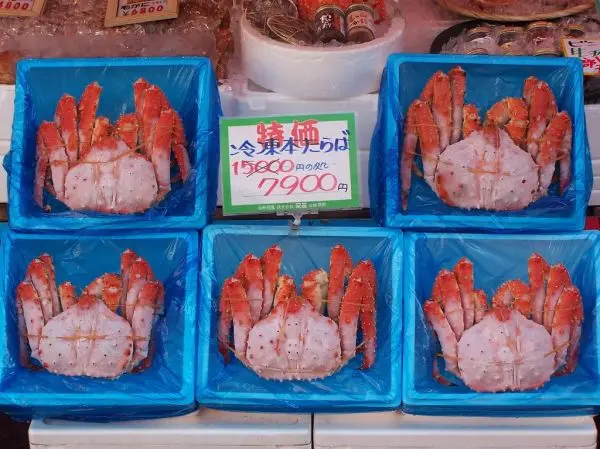
Otaru: a seafood bowl at Sankaku Market. The Otaru Tourism Association puts the market one minute’s walk from JR Otaru Station. It opens 6:00–17:00 every day, its eateries 7:00–17:00, with hours varying by shop.
The salmon and roe bowl at the top of this page is from Takinami Shokudo here. The walk from the wharf is on the Otaru page.
Market stalls often prefer cash. How much yen to carry is in how much cash for a Japan port day.
On the day, in order
Follow this from the cabin to the gangway and back.
- Cabin. Eat breakfast on board. Pack water and a sealed, meat-free snack from home. On Holland America take a refillable bottle, not a plastic one: its page bars plastic water bottles, in port too. Leave buffet fruit, rolls, eggs and sandwiches in the cabin.
- Screenshot before you leave the Wi-Fi. Photograph the all-aboard time in the daily programme. Screenshot the item table on this page.
- First Japanese port, and again after a foreign call: the form. Fill in the paper customs form the ship gives you. Tick “Yes” at question 1, item 2, if you carry meat, fruit or vegetables.
- Gangway. Check every pocket and the day bag once more for fruit or a bread roll.
- Terminal quarantine check. Answer the officer’s questions plainly. If a dog sits by your bag, an inspector will ask what is inside. Found something? Use the disposal box or declare it at the counter.
- Ashore. Eat the meal you came for. Keep tax-free purchases unopened.
- Back by the site’s time rule. Be back at the gangway an hour before all-aboard. All-aboard is usually 30 minutes before departure, and the daily programme prints it.
- Ship security on return. Bags are scanned. Hand over alcohol bought ashore for safekeeping; on Norwegian, soft drinks and water bought locally are thrown away.
If a step fails. You find meat in your bag later. The ministry’s FAQ, written for travellers who find it at home, says to contact the Animal Quarantine Service and keep the packaging. Unsure about an item before you leave the ship: leave it in the cabin.
Special cases: infants, medical diets, kosher and halal meals
Infants. The Animal Quarantine Service exempts dairy in a passenger’s own luggage, so formula goes ashore. Jars or pouches containing meat qualify only if they meet one of its canned and retort standards. One example: factory-made, airtight, containing liquid, and keeping unopened at room temperature for 12 months or more.
Feed meat jars on board and take sealed fruit or vegetable pouches ashore. Princess offers jarred baby food, stages 1 and 2, on request through Manage Booking.
Medical diets. Take sealed, shelf-stable food with no meat, in its original packet. Norwegian allows “shelf-stable, factory sealed, nonperishable snacks”; Princess allows “a limited amount of nutritional supplements in their original packaging”. Medicines follow the separate medications rules.
Kosher and halal meals that contain meat. A sealed tray does not change the rule. The Animal Quarantine Service says vacuum-packed meat products are still prohibited, and the ministry’s FAQ says frozen meat products are too. Holland America says its kosher meals are prepared off the ship, frozen and served sealed.
Eat these meals on board; ashore, choose fish, vegetable or sealed meat-free food.
Every source below was opened on 17 November 2026. Rules change, and the linked official pages have the final word.