~2h — the round trip from the gangway, with the 60-minute margin kept aside.
Tap a photo to see it large. 2 photographs, each credited.
Buy a book of tickets, walk the stalls, and build your own seafood bowl one scallop at a time. Interactive, cheap, and the vendors love a foreign face that points well.
Three saplings, some unemployed samurai, and 60% of Japan's crop
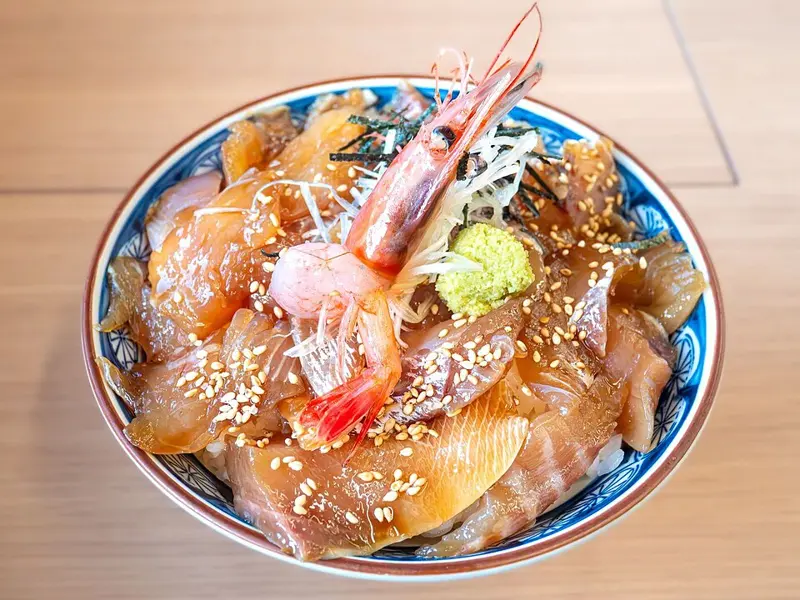
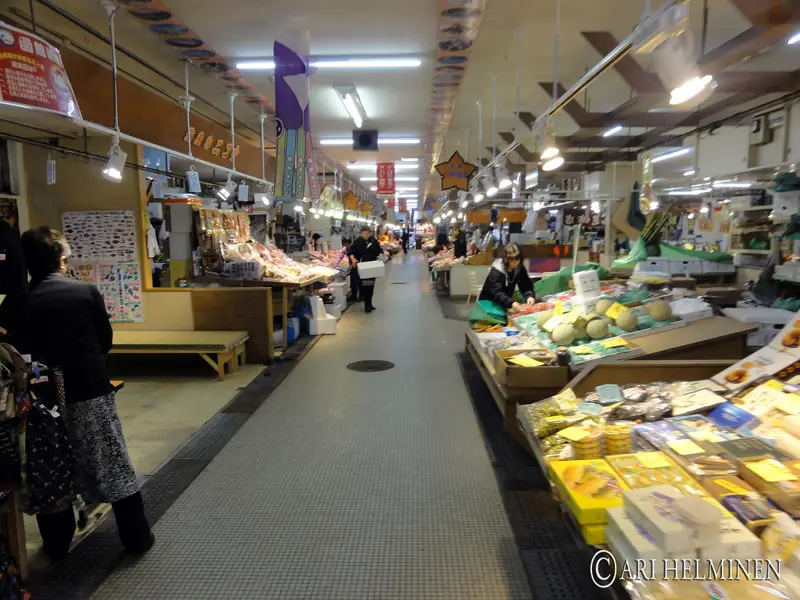
Nokke-don is Aomori's own invention and the rules are unusual: you buy a ticket book, walk the market, and hand over tickets for whatever each stall will lay on your rice. Furukawa market started it in 2010 to keep an ageing fish market alive, and it worked so well that other Japanese ports copied it.
The Fuji apple in your supermarket is not named after the mountain. It is named after a town in Aomori — and the industry that bred it began as a jobs programme for samurai who had just lost their swords.
Most fish markets make you watch. Aomori’s makes you the chef: buy a book of tickets, take a bowl of rice, and walk the aisles trading tickets for whatever the Tsugaru Strait landed that morning — two tickets for scallops the size of golf balls, three for a slab of chu-toro, one for a tangle of squid. The nokke-don (“put-it-on bowl”) you assemble is unrepeatable by design.
For cruise passengers it solves three problems at once: lunch, the market experience, and the language barrier — pointing is the entire transaction. Vendors here have fed a decade of ships and will steer a hesitant bowl-builder kindly.
Distributed by the Meiji government; planted by the former samurai Kikuchi Tate-e
Ralls Janet × Red Delicious, at a research station in Fujisaki, Aomori
Having survived the Second World War in the ground
Named for the town of Fujisaki — not the mountain
A-FACTORY is a one-minute walk from the Shin-Chuo berth and needs no planning at all. The orchards and the pie map need a train and a long call.
The one the queue agrees on, the one people who live here use instead, and the one nearest your ship. Opening days change; check before you build a day around one.
Where nokke-don was invented in 2010. Buy a ticket book, walk the stalls, hand over tickets for each topping.
Open in Google MapsWhere locals goFurukawa Fish Market古川市場The same building under its older name, still a working market first.
Open in Google MapsClosest to the berthA-FactoryA-FACTORYNot a bowl, but the closest food to the berth if the market clock has beaten you.
Open in Google MapsBoth pins on one map, so the distance is a fact rather than a feeling.
Each of these still lands you back aboard with the hour to spare on a 6-hour stop ashore.
Buy a ticket book at the entrance (about ¥2,000 for ten), collect a bowl of rice, then exchange tickets at any stall for toppings — one to three tickets per item. No Japanese needed; pointing works perfectly.
Before noon, ideally before 11. Stalls open around 7am and the best items sell through by early afternoon. It pairs naturally with an early call.
Each one is a finished day we have walked and timed, with this stop in it. Read the route rather than assembling it yourself.
Each of these still lands you back aboard with the hour to spare.
A cider works and market hall under the bay bridge — apple everything, from fresh juice flights to pies.
See the detail →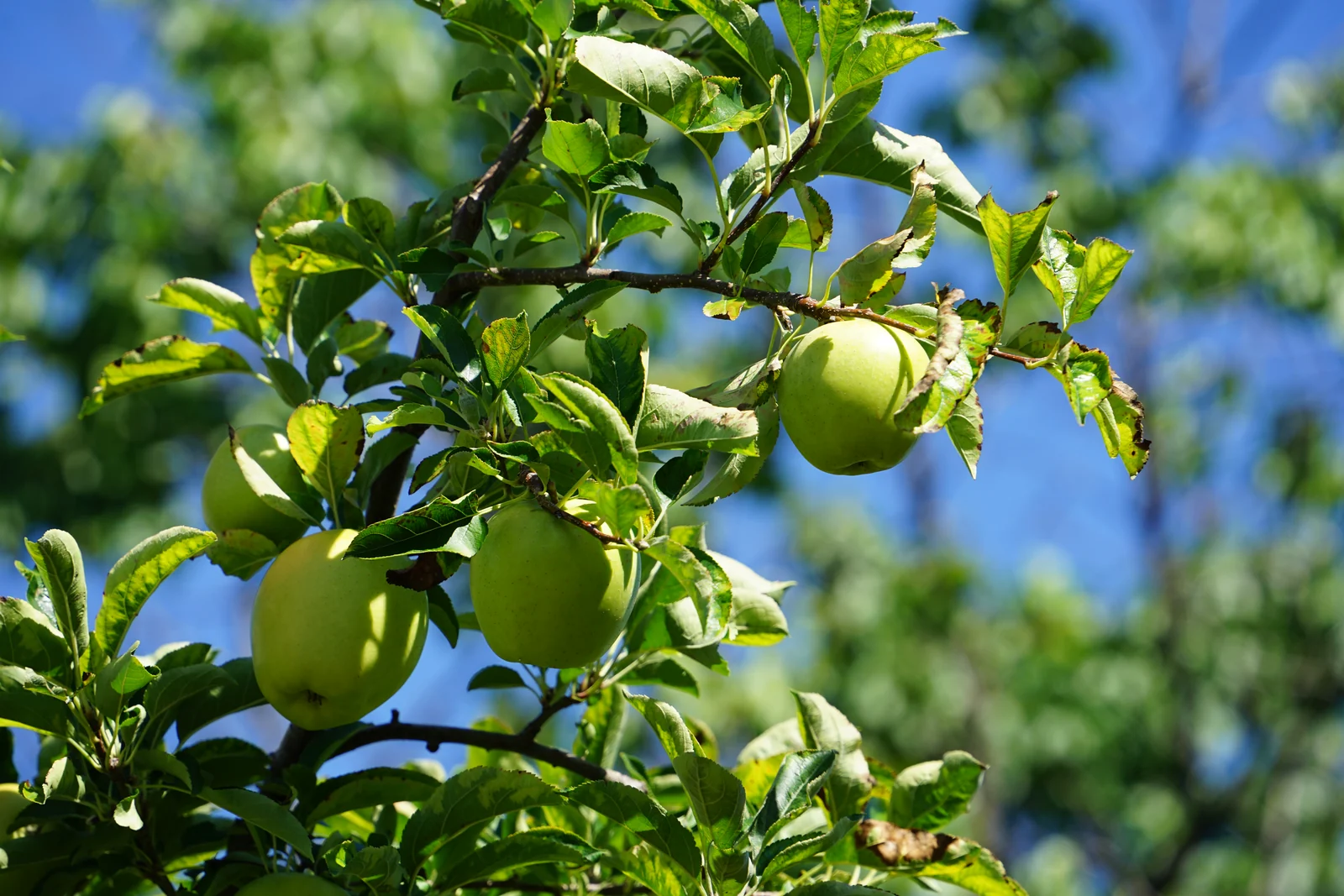 3 hr for both
Ciders, butters, chips, pies and whole Mutsu apples the size of grapefruit.
See the detail →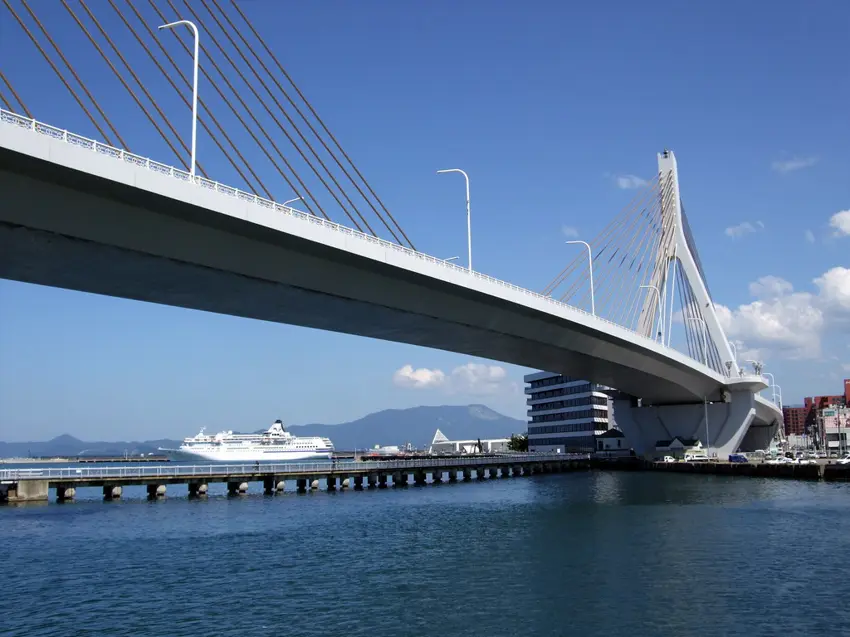 3 hr for both
The triangle walk — ASPAM’s pyramid, the red Nebuta hall, the white bridge over your ship.
See the detail →No typing needed — jump straight in:
Just docked? — the gangway toolStart from your shipThe ride from every berthAsk the editorGlossary