First Japanese port: immigration on the dayAdora Magic City arrives from Shanghai, so Naha is where you enter Japan
Japan checks every foreign passenger in person at the first Japanese port, before anyone goes ashore: a passport check and fingerprints. No official time is published for it, so plan the start of the day around the queue.
Before any tourLeave the first hours freeThe only official figure is from Hakata in 2015: ships of 1,000+ passengers took about 85 minutes once the cruise permit was in use. If you book a guide, say this is your ship’s first Japanese port and agree a start time with margin.
Landing permitCarry it ashore all dayForeign passengers on approved ships usually enter on a Cruise Landing Permission (船舶観光上陸許可) and receive a landing permit. The law requires holders to carry it at all times instead of the passport; passengers landed normally carry their passport.
CustomsLeave fruit and meat on boardMost fruit, vegetables and meat products may not be brought into Japan; the penalty can be up to three years’ imprisonment or a ¥3 million fine. Declaration forms are given out on board: follow your cruise line’s instructions.
Sources: Immigration Services Agency of Japan (Immigration Control Act, Art. 14-2 and 23), Japan Customs, Ministry of Agriculture, Forestry and Fisheries. Checked 25 October 2026. Our guide to the first Japanese port
At the pier, before you set off
The terminalWakasa: immigration hall, toilets, free Wi-Fi, temporary tourist desk and exchange counter on ship days, 10-car taxi rank. Shinko: tents, temporary toilets, nothing else.
Cash and ATMsCarry yen for taxis, market stalls and soba shops. ATMs from Wakasa: post office about 650 m, FamilyMart about 750 m. Shinko: none nearby.
Wi-Fi and dataFree Wi-Fi inside the Wakasa terminal. In town look for SSID "Be.Okinawa_Free_Wi-Fi", registered by email or social login.
Steps and slopesWakasa to Kencho-mae is a flat 1.5 km walk; Kencho-mae has lifts. Shuri Castle is stone slopes and steps, with a barrier-free route.

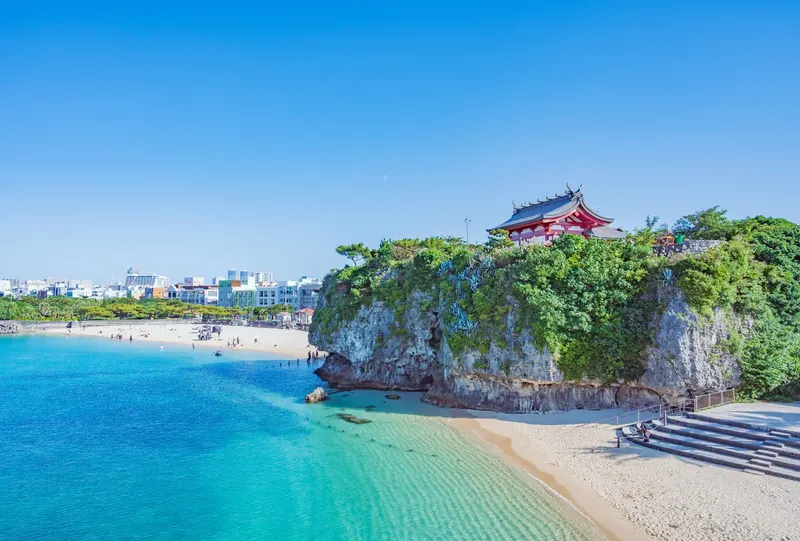
 The guided day for these callsOkinawa Flexible Tour—Driver and Guide Included 1–8 Guests(4-8H)Private car · per group5.0★ · 12US$285 per person for 2 · US$570 per car · fits 14 of 14 full-day calls · open on 11 of the 14 checkedWhy it is here, and the clock