~4h round trip — the round trip from the gangway, with the 60-minute margin kept aside.
Tap a photo to see it large. 3 photographs, each credited.
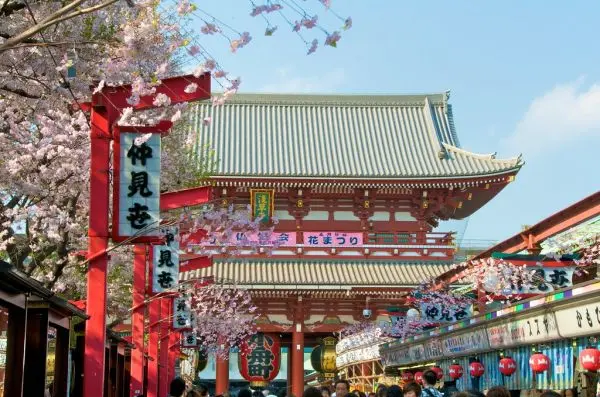
The thunder gate, the incense cauldron, the oldest temple in the city — arrive before nine and Nakamise’s snack street is yours. The classic for a reason.
Founded in 628 for a statue nobody has ever seen
Founded in 628 around a statue two fishermen are said to have pulled from the Sumida, Senso-ji is the oldest temple in Tokyo. The approach, Nakamise, has been a licensed shopping street since the 17th century. Everything you see was rebuilt after 1945; the ginkgo beside the hall survived the firebombing and is still there.
Two fishermen pulled a small figure of Kannon out of the Sumida River in the year 628. It has been enshrined here ever since and has never once been shown to the public. Around that unseen object grew Tokyo's oldest temple and its loudest shopping street.
Founded in 628, when two fishermen are said to have netted a small statue of Kannon from the Sumida River. The statue has never been publicly displayed — not once in fourteen centuries — and everything here was built around an object nobody has seen.
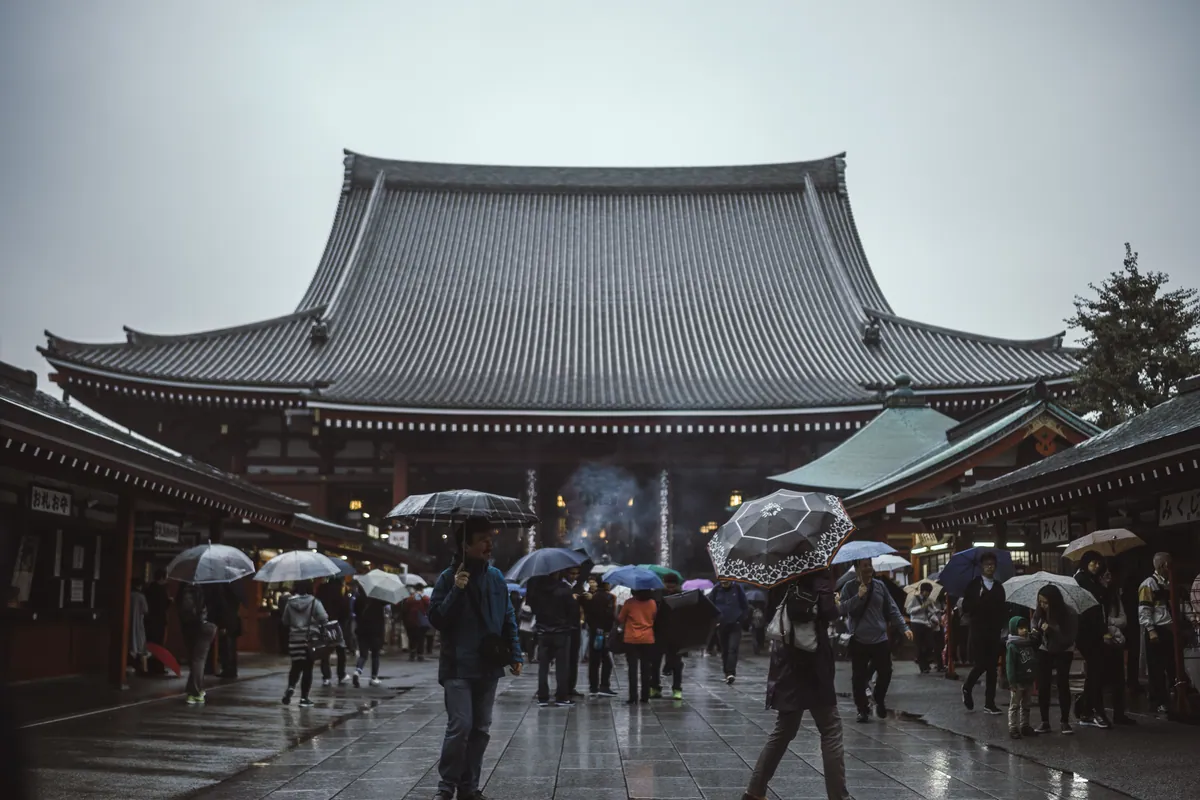
The buildings are not old. The main hall is a 1958 concrete rebuild after the March 1945 firebombing; the Kaminarimon gate was rebuilt in 1960, paid for by the founder of Panasonic in thanks for recovery from illness. What is genuinely old is Nakamise-dori, the 250-metre stall street whose families were granted their pitches in the late 1600s in exchange for cleaning the grounds.
It has never been publicly displayed since
In exchange for cleaning the grounds
And is not rebuilt for ninety-five years
Along with most of Asakusa
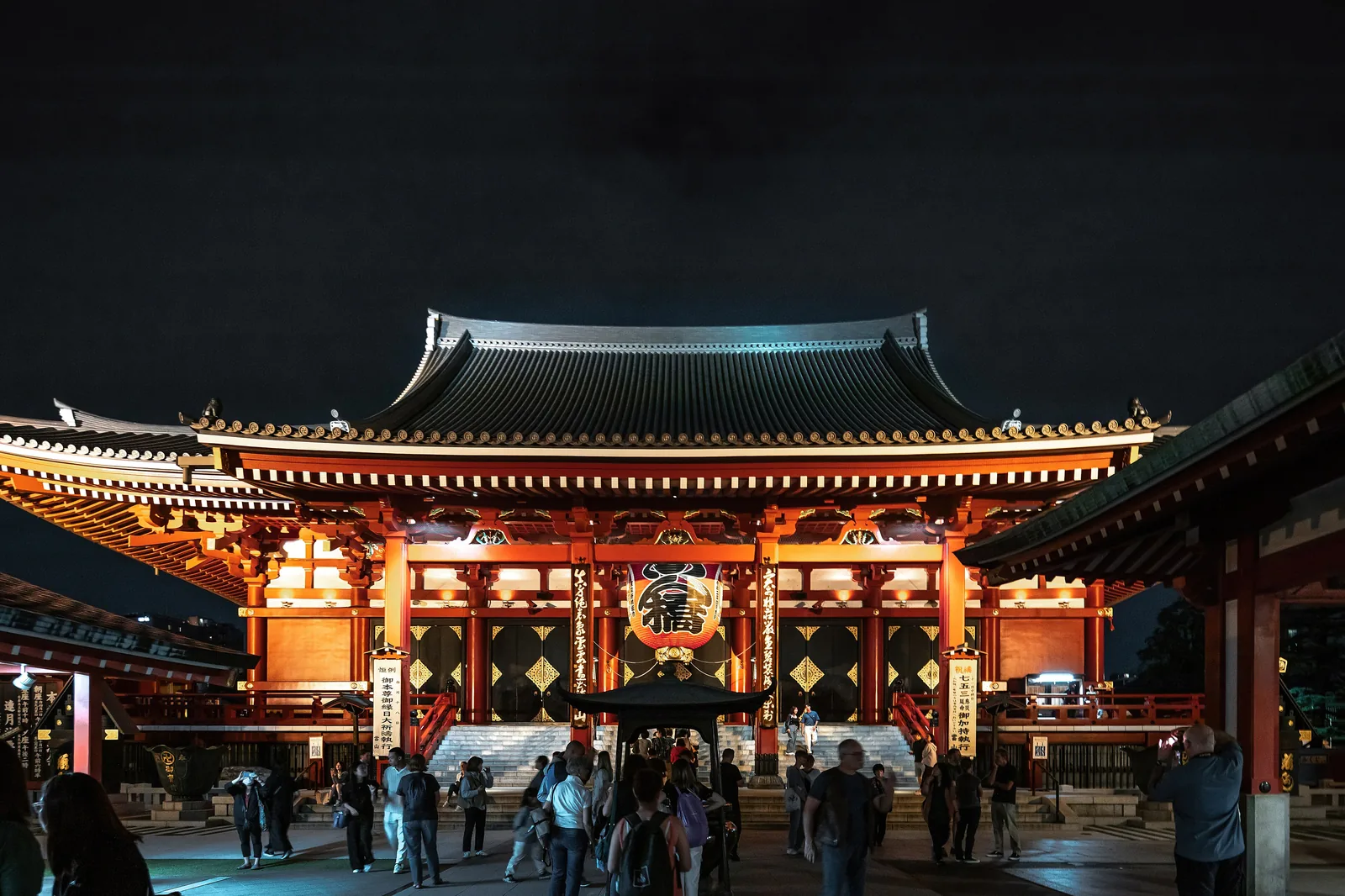
Go before nine or after five. Same temple, same gate, a fifth of the people — and it is floodlit at night.
Both pins on one map, so the distance is a fact rather than a feeling.
Counted from the moment you step off the gangway. The hour before all-aboard is not in this bar; it is already set aside.
40 minutes each way is the honest figure for rail ~40 min, not the optimistic one. If your ship is late, cut the 2 hr 40 min in the middle. Never cut the hour at the end.
By train, roughly forty to fifty-five minutes each way depending on which terminal your ship uses. That round trip is why Asakusa only works on a call of four hours or more, and why it should be the only major target if you have exactly that.
Before nine in the morning and after five in the evening. The temple grounds are open twenty-four hours and the buildings are floodlit at night, so an early or late visit gives you the same gate and hall with a fraction of the people.
Each one is a finished day we have walked and timed, with this stop in it. Read the route rather than assembling it yourself.
Each of these still lands you back aboard with the hour to spare.
 See · ~5h
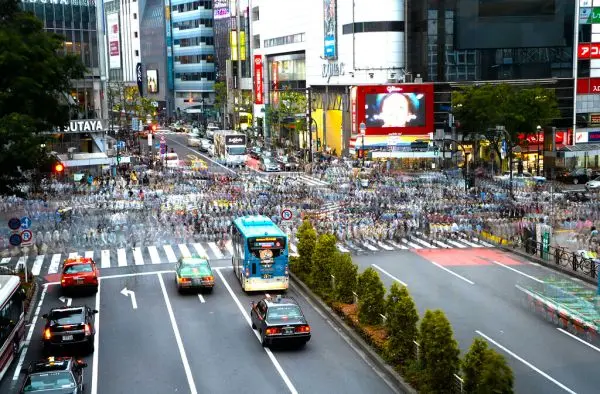
Three thousand people per green light, then a forest shrine ten minutes away where you cannot hear the city at all.
See the detail → Eat · ~4h with transit
The inner auction moved; the good part stayed.
See the detail → Do · ~7h tailoredThe single most-reviewed private tour in Japan (265 five-stars) — tell them your Tokyo and they thread it together with trains, timing and zero stress..
See the detail →No typing needed — jump straight in:
Just docked? — the gangway toolStart from your shipThe ride from every berthAsk the editorGlossary