Updated 1 October 2026 · 35 official and operator sources · Researched from official timetables, operators and the port authority · Takumi Yamada
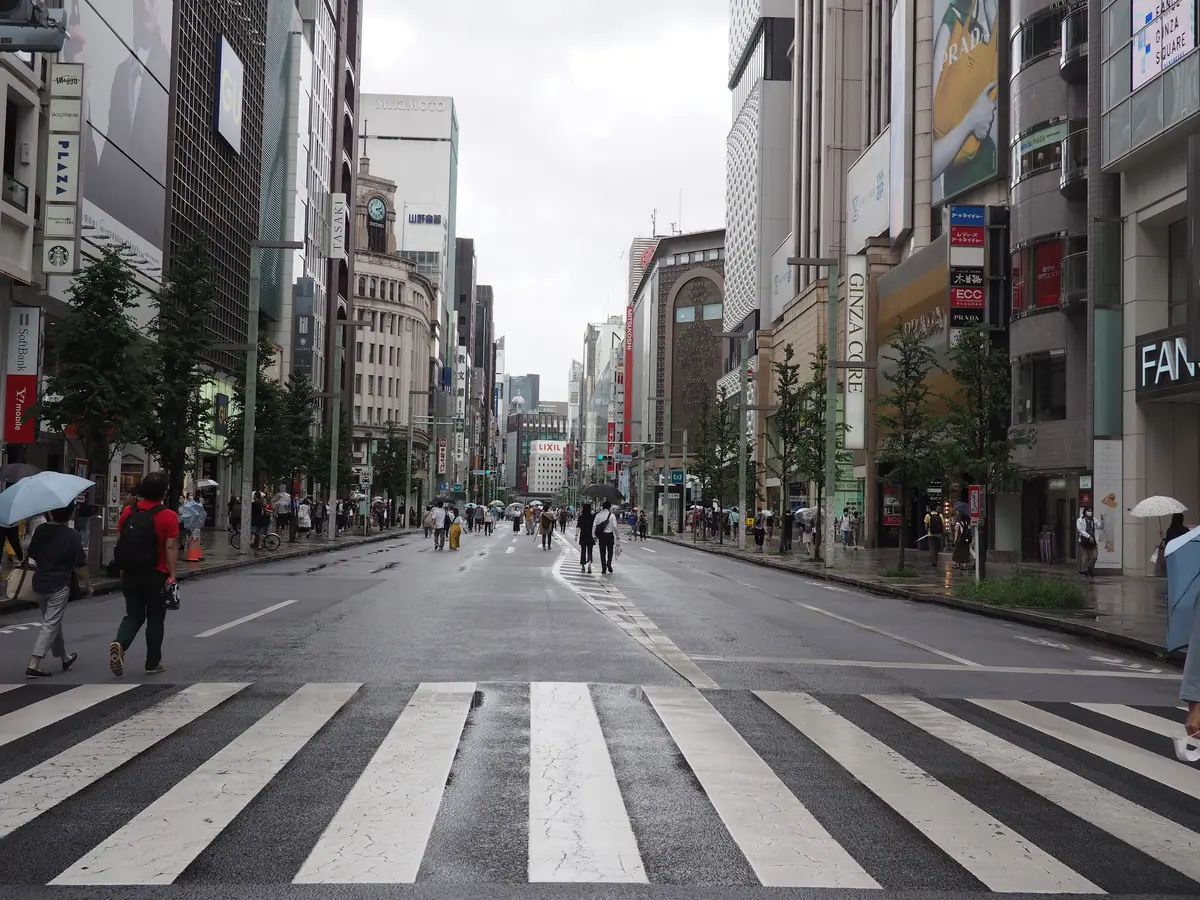
Tokyo has two cruise terminals, and the first job is to know which one is yours: big ships use the Tokyo International Cruise Terminal in Odaiba, and many ships of about 70,000 tons and under use Harumi, but not all of them. From either, Senso-ji in Asakusa is about an hour away by public transport, and on the typical 11-hour call it pairs easily with Ginza or with Shibuya and Meiji Jingu. The one decision is which side of the city you give the day to. Asakusa and Ginza make an easy day from Odaiba. Tsukiji and Ginza are the obvious pair from Harumi, but only on a day the market is open.
Your call, your day
What fits the time your ship gives you?
Pick your ship from the official Tokyo schedule — or just the hours you have — and this page picks the plan and the tours that fit, with the hour before all-aboard already set aside.
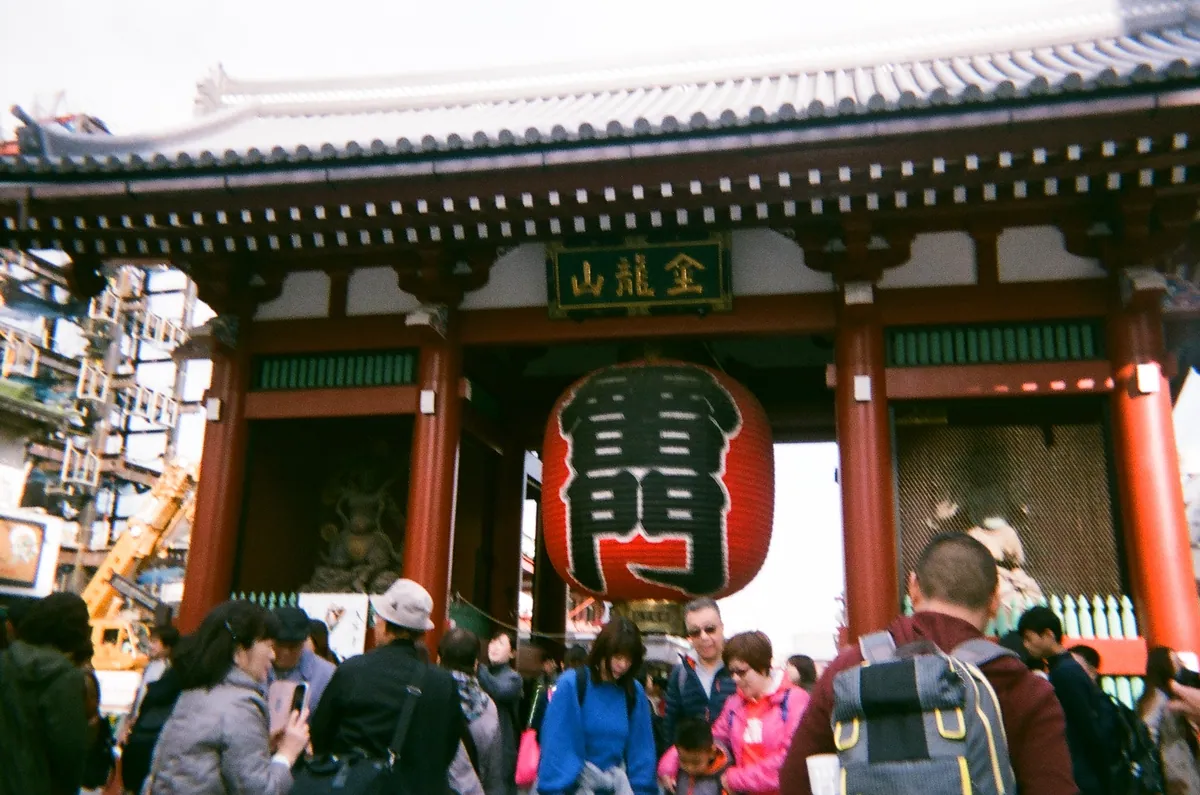
Tokyo's oldest temple, founded in 628 by the temple's own account, behind the Kaminarimon gate and its great red lantern, with the Nakamise shopping street leading up to the main hall. Entry is free, and the main hall opens at 6:30 from October to March.
From the shipFrom the Odaiba terminal: Yurikamome to Shimbashi (about 20 minutes, ¥390) and the Ginza Line to Asakusa (¥210), about 55–60 minutes door to door by our estimate. From Harumi: bus to Ginza 4-chome and the Ginza Line, about 50–60 minutes. Taxi from about ¥5,900 (Odaiba) or ¥4,200 (Harumi) before traffic.
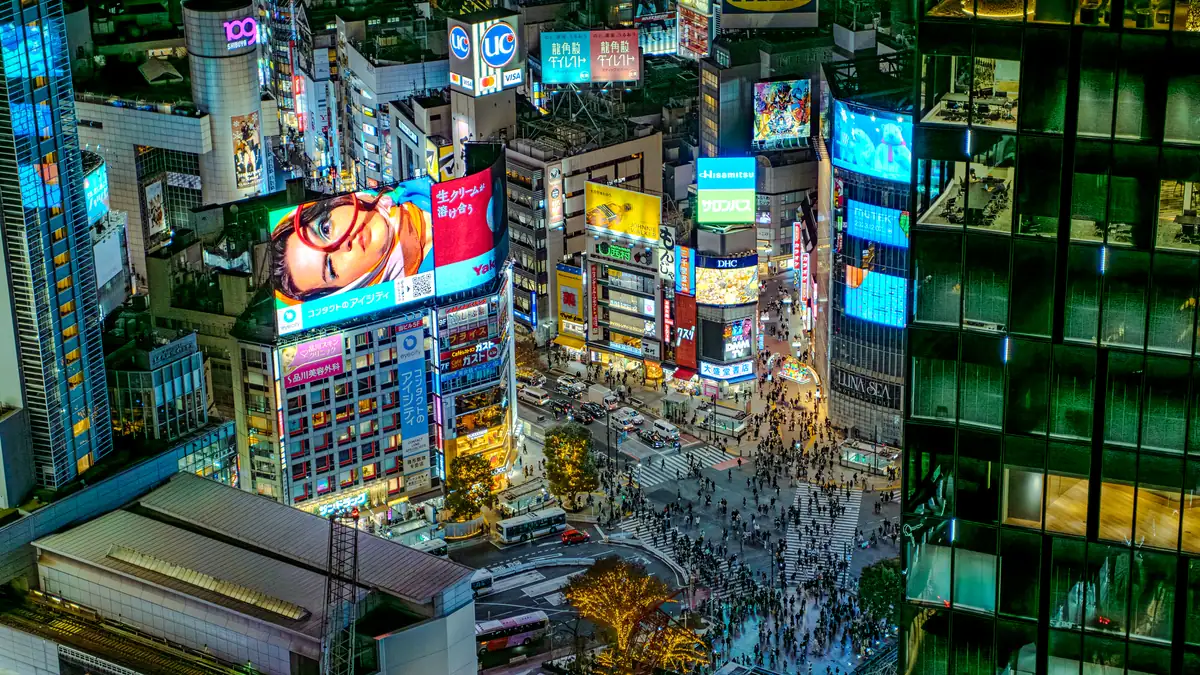
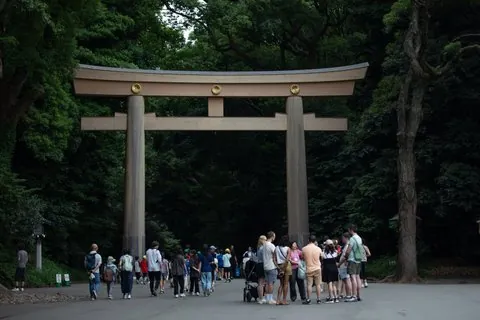
The scramble crossing and a forest shrine a short walk apart: the loudest corner of the city and the quietest. Meiji Jingu is free and its gates close at sunset, at 16:40 in October and 16:10 in November.
From the shipFrom the Odaiba terminal: shuttle or a 15–20 minute walk to Tokyo Teleport, then the Rinkai Line through train to Shibuya, about 18 minutes on the train and 40–50 minutes door to door (estimate). From Harumi, about 50 minutes by bus and the Ginza Line (estimate).
The city's breakfast street of tamagoyaki stands and sushi counters, and next to it Ginza's department-store food halls and wide avenues. The market's public hours are 9:00–14:00, and it is closed on Sundays, national holidays and market-holiday Wednesdays.
From the shipFrom Harumi: taxi about 5 minutes, from about ¥1,400, or bus 都05-1 to Tsukiji. From the Odaiba terminal: Yurikamome to Shiodome or Shimbashi and a 15-minute walk, about 45 minutes in all (estimate).
On a port day Tokyo is not one sight but a choice of cities. Asakusa has Senso-ji, the oldest temple in the capital, behind its red lantern gate. Shibuya and Harajuku have the scramble crossing and, one stop away, the forest around Meiji Jingu. Tsukiji and Ginza have the market stalls where the city eats breakfast and the department-store food halls where it buys presents. Any one of them fills a morning; two of them fill a typical 11-hour call.
The difficulty is distance and choice, not access. Neither cruise terminal is in the old city. Both sit on reclaimed land in the bay, and everything in this guide starts with a train, a bus or a taxi of 20 minutes to an hour. That is why the guide starts with two questions: which terminal are you at, and how many hours do you have? The answers below come from the Tokyo port bureau's own call calendar, the terminal operator's notices and access pages, and the railway, temple, shrine and market operators' published hours and fares, checked on 30 September 2026.
What a Tokyo port day is not: a trip to Mt. Fuji. Fuji day trips need a full day from a city hotel and belong to the nights before or after a cruise. Our pre-cruise hotel playbook covers those. Many Tokyo calls are also embarkation or disembarkation days rather than port days. If yours is, the transport sections below still apply; the model days do not.
First: which berth are you at?
Tokyo has two cruise terminals, about 20 minutes apart by car and more than half an hour by public transport. The terminal operator's own pages carry the warning "Terminal mix-ups are happening frequently". That is the most important sentence in this guide.
Tokyo International Cruise Terminal (Odaiba)
Harumi Passenger Terminal
Where
Aomi, Koto-ku, on the Odaiba waterfront
Harumi 5-chome, Chuo-ku, at the tip of the Harumi peninsula
Address
Aomi 2-chome-jisaki, Koto-ku, Tokyo 135-0064 (東京国際クルーズターミナル)
Harumi 5-7-1, Chuo-ku, Tokyo 104-0053 (晴海客船ターミナル)
Ships
"Mainly large ships", up to the world's largest class; also some small ones
"Small and medium ships of roughly 70,000 GT and under"
Terminal
Four floors, opened 2020, with lifts and escalators: taxi stand, accessible parking, courier counter, deck on 4F
Single storey: immigration, baggage hall, waiting space, vending machines; grounds works until March 2028
On foot
Yurikamome station about 8 minutes; Tokyo Teleport station 15–20 minutes (our estimate)
No station within walking distance; Harumi Futo bus stop 1 minute; Harumirai BRT stop 10 minutes
Free shuttle (some calls)
To Tokyo Teleport station, or a loop bus round Odaiba
To the Kajibashi car park by Tokyo Station, about 30 minutes
Best for
Asakusa and Ginza by Yurikamome; Shibuya by the Rinkai Line
Tsukiji and Ginza, 5 minutes and 20 minutes away
The port bureau's calendar lists 46 calls from October 2026 to February 2027: 29 at the Odaiba terminal and 17 at Harumi. Leave out the Japanese-market ships and the international calls split 24 to 9. Harumi takes the smaller luxury and expedition ships: Seabourn Encore, Luminara, Viking Orion, Azamara Pursuit and Mitsui Ocean Sakura. The Odaiba terminal takes everything big, from MSC Bellissima and Royal Princess to Westerdam and Norwegian Jade, and some small ships as well. Silver Moon uses the Odaiba terminal on 3 and 17 October and Harumi on 31 October, so "small ship means Harumi" is not a rule you can trust. On four days there is a ship at each terminal: 19 and 31 October, and 3 and 8 November.
No March 2027 calls are listed yet; the bureau publishes only confirmed calls, and times can change at short notice. Read the terminal name on your cruise documents and the ship's daily programme, and if you go ashore with a tour or a friend, tell them which one.
Many cruises sold as "Tokyo" in fact sail from Yokohama, a separate city down the bay. If your documents say Yokohama, you need our Yokohama guide; the journal post on which terminal decides your day explains the difference.
Getting from the Odaiba terminal into Tokyo
Two lines serve the Tokyo International Cruise Terminal. The Yurikamome, an automated elevated line, stops 8 minutes' walk from the terminal and runs to Shimbashi in about 20 minutes, every 3–5 minutes through the day; the last train is just before midnight. It takes IC cards and, at every station, contactless credit and debit cards, charged at the paper-ticket fare and capped at ¥820 a day per card (one card per person). The Rinkai Line from Tokyo Teleport station, 15–20 minutes' walk or a short shuttle ride, runs some trains straight through to Shibuya and Shinjuku.
To
How
Time
Cost
Shimbashi
Yurikamome
about 20 min; 30–35 min door to door (estimate)
¥390 (IC ¥388)
Senso-ji, Asakusa
Yurikamome, then Ginza Line from Shimbashi
about 55–60 min door to door (estimate)
¥600 (IC ¥597)
Ginza
Yurikamome to Shimbashi, walk 10 min or Ginza Line 1 stop
about 40 min (estimate)
¥390 (+ ¥180)
Tsukiji Outer Market
Yurikamome to Shiodome or Shimbashi, walk about 15 min
about 45 min (estimate)
¥390
Shibuya
To Tokyo Teleport, Rinkai Line through train
18 min on the train; 40–50 min door to door (estimate)
about ¥500–600 (estimate)
Tokyo Station
Tokyo Teleport, Rinkai Line, JR Keiyo Line (change at Shin-Kiba)
22 min from Teleport; about 40 min door to door (estimate)
about ¥550 (estimate)
teamLab Planets
Yurikamome to Shin-Toyosu, walk 5 min
15–20 min (estimate)
¥330 (IC ¥325)
Shuttles. On many calls the city runs a free bus between the terminal and Tokyo Teleport station, about 10 minutes each way. On embarkation days it can be strict: on MSC Bellissima's calls it ran every 5–10 minutes from 7:30 to 15:30, but "only passengers holding a boarding ticket may ride". On some in-transit days, such as Celebrity Millennium's overnights, a free loop bus ran from the terminal to the Hilton Tokyo Odaiba, Odaiba Marine Park and Tokyo Teleport, every 10 minutes until 10:30 and then every 30 minutes until 16:00, first come first served. Some calls get no shuttle at all; Star Seeker on 16 September 2026 had none. The terminal operator posts every call's notice about a week ahead, so look up your own ship before you plan.
Taxis. There is a taxi stand on the ground floor, and on ship days the operator controls how empty taxis come in; expect a queue on big-ship days. Tokyo's tariff is ¥500 for the first 1.0 km and ¥100 per 232 m after that, plus a time charge in slow traffic, 20% at night and any expressway tolls. By distance alone the terminal to Tokyo Station is from about ¥4,200 and to Senso-ji from about ¥5,900 — our estimates from map routing, and a floor, because daytime traffic adds to both.
The Tokyo Subway Ticket (¥1,000 for 24 hours) covers Tokyo Metro and the Toei subway only, not the Yurikamome or the Rinkai Line. If you will make three or more Metro trips after Shimbashi it can still pay; for the Asakusa-and-Ginza day below it does not.
Getting from Harumi into Tokyo
Harumi has no station within a short walk, but it is closer to the centre than Odaiba, and buses do the work. Bus 都05-1 runs from the Harumi Futo stop, a minute from the terminal, through Tsukiji and Ginza 4-chome to Tokyo Station's Marunouchi South Exit. The Toei flat fare in central Tokyo is about ¥210, payable by IC card; we could not confirm the fare or the frequency at source.
To
How
Time
Cost
Tsukiji Outer Market
Taxi, or bus 都05-1 to Tsukiji
5 min by taxi; 10–15 min by bus (estimate)
from about ¥1,400 by taxi; about ¥210
Ginza 4-chome
Bus 都05-1
about 20 min
about ¥210
Tokyo Station
Bus 都05-1, or free shuttle when it runs
about 30 min
about ¥210, or free
Senso-ji, Asakusa
Bus to Ginza 4-chome, then Ginza Line
about 50–60 min (estimate)
about ¥420
Shibuya and Harajuku
Bus to Ginza, then Ginza Line to Shibuya
about 50 min (estimate)
about ¥420
teamLab Planets
Taxi, or bus 錦13 to Toyosu and Yurikamome 2 stops
about 10 min by taxi
from about ¥1,300 by taxi
The Harumi shuttle, when it runs, goes to the Kajibashi car park, 5 minutes' walk from the Yaesu South Exit of Tokyo Station and 6 minutes from Yurakucho, every 15–30 minutes, about 30 minutes each way. Its hours change call by call: 9:30–13:30 on some, 12:00–20:00 on others, and none at all on several Luminara and expedition-ship calls and on the arrival and departure days of overnights.
Taxis may come into the Harumi grounds to set down and pick up; the general car park is closed for works.
If you are at the wrong terminal: from Harumi to the Odaiba terminal is bus 錦13 to Toyosu (about 15 minutes) and the Yurikamome (about 15 minutes), or a taxi of about 20 minutes.
If your cruise starts or ends in Tokyo
Many Tokyo calls are embarkation or disembarkation days. The terminal operator's access pages give these times; it publishes no fares for them, and taxi fares to the airports are not something we have estimated.
Between
Odaiba terminal
Harumi
Haneda Airport, by car
about 25 min
about 25 min
Narita Airport, by car
about 60 min
about 1 hr 10 min
Haneda, airport limousine bus
about 20 min to the Hilton and Grand Nikko hotels in Daiba, then Yurikamome from Daiba, 2 min
20–35 min to Toyosu, then about 10 min by car
Narita, airport limousine bus
about 90 min to the same Odaiba hotels, then Yurikamome
about 1 hr to Toyosu, then about 10 min by car
By rail
From Tokyo Teleport: Haneda 29 min, Narita 1 hr 41 min (operator's shuttle notice)
Bus 都05-1 to Tokyo Station, about 30 min, then onward
Tokyo Station, by car
20–25 min
about 20 min
With luggage, a taxi or the airport bus is the practical choice; the Yurikamome walk from the station is about 8 minutes. The Odaiba terminal has a courier (takkyubin) counter on 2F for sending bags on, and on embarkation days the free shuttle from Tokyo Teleport may carry only passengers holding a boarding ticket.
Asakusa is the place most first-time visitors want, and it is the furthest of the three big districts from either terminal. The honest options:
By Yurikamome and the Ginza Line from the Odaiba terminal: about 55–60 minutes door to door by our estimate, ¥600 in all. One change, at Shimbashi, onto a line that runs every 5 minutes or so. This is the default.
By bus and the Ginza Line from Harumi: bus 都05-1 to Ginza 4-chome, then the Ginza Line, about 50–60 minutes and about ¥420.
By water bus (Tokyo Cruise Ship Co.) between Asakusa and Odaiba Seaside Park: about 55–70 minutes on the river and the bay, depending on the boat, ¥2,000. Boats from Odaiba leave only from 12:00, so use it on the way back: the 14:10 from Asakusa reaches Odaiba Seaside Park about 15:05, two Yurikamome stops from the terminal. Check the day's operating status; sailings stop in bad weather.
By taxi: about 13.5 km from the Odaiba terminal, from about ¥5,900 by distance alone; from Harumi about 9.5 km, from about ¥4,200.
Senso-ji's main hall opens at 6:30 and closes at 17:00 from October to March (6:00–17:00 the rest of the year), and entry is free. Allow 1½–2 hours for the Kaminarimon gate, the Nakamise shops and the hall, more with lunch. On an MSC Bellissima call (05:30 arrival) you can be at the hall soon after it opens. Umezono, the old sweet-shop tearoom in Asakusa, closes its tearoom on 7 and 21 October 2026, selling only from the front counter.
Asakusa fits any call of 6 hours or more from either terminal. With 8 hours you can add Ginza, which is on the same Ginza Line on the way back.
Tokyo Skytree is the tower you see from the Senso-ji approach, about 5 minutes from Asakusa on the Tobu Skytree Line to Tokyo Skytree station (Oshiage on the Hanzomon Line also serves it). The Tembo Deck at 350 m opens 10:00–22:00, last entry 21:00, from ¥1,800 for adults and ¥3,000 with the higher Tembo Galleria; prices vary by date, and tickets bought at the on-site counters cost ¥500 more than online. It adds 1½–2 hours with the queue by our estimate, so it fits only on a call of 8 hours or more, and the view is lost on a cloudy day.
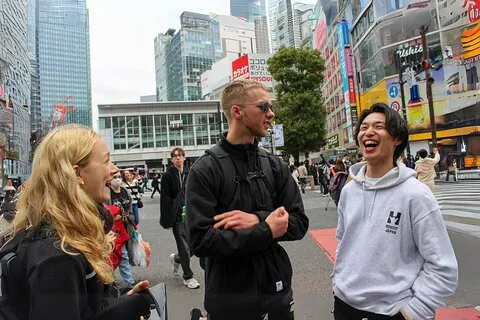
This is the west side of the city, and from the Odaiba terminal it is closer than it looks: the Rinkai Line runs some trains from Tokyo Teleport straight through to Shibuya in about 18 minutes. Only some do; on the others you change at Osaki. Allow 40–50 minutes from the gangway by our estimate.
Shibuya Crossing is free and always on. The Shibuya Sky deck on Shibuya Scramble Square opens 10:00–22:30 (last entry 21:20) if you want the view from above.
Meiji Jingu, one stop on the JR Yamanote Line or about 20 minutes' walk away, is free and opens and closes with the sun:
Month
Gates open
Gates close
October
5:40
16:40
November
6:10
16:10
December
6:40
16:00
January
6:40
16:20
February
6:20
16:50
Allow about an hour for the torii, the forest approach and the main shrine, and another hour for Takeshita-dori and Omotesando. The whole side of town takes 2½–3 hours on the ground, so it fits a call of 8 hours from the Odaiba terminal and, with Asakusa as well, a call of 10 hours or more.
What you visit at Tsukiji is the outer market: streets of tamagoyaki stands, food stalls and sushi counters. Its rules matter more than its reputation:
Hours: 6:00–9:00 is for professional buyers; 9:00–14:00 is public buying time; after 14:00 many shops close.
Closed days: it follows the central wholesale market calendar. All Sundays and national holidays, and market-holiday Wednesdays: in 2026, 7, 21 and 28 October, 11 and 18 November, and 2, 9, 16 and 23 December. Some shops open anyway; many do not. The 2027 calendar is not out yet, but Sundays are closed every year.
Manners: buyers have priority until 9:00. Eat inside or in front of the shop, not while walking. Put large bags in a coin locker. Ask before you photograph. Do not bargain.
Give it 1½–2 hours. From Harumi it is a 5-minute taxi ride, which makes Tsukiji the obvious first stop there; from the Odaiba terminal allow about 45 minutes.
Ginza is a 15-minute walk from the market. Mitsukoshi Ginza's food hall opens 10:00–20:00 (hours vary by floor) and is a good place to put a picnic together. Beyond Ginza, the Imperial Palace East Gardens are free, but closed every Monday and Friday and from 28 December to 3 January; last entry is 16:00 in October and 15:30 from November to February.
From Harumi, Tsukiji and Ginza fit a 6-hour call comfortably, and Tsukiji alone fits 4 hours. From Odaiba they make a 6-hour day.
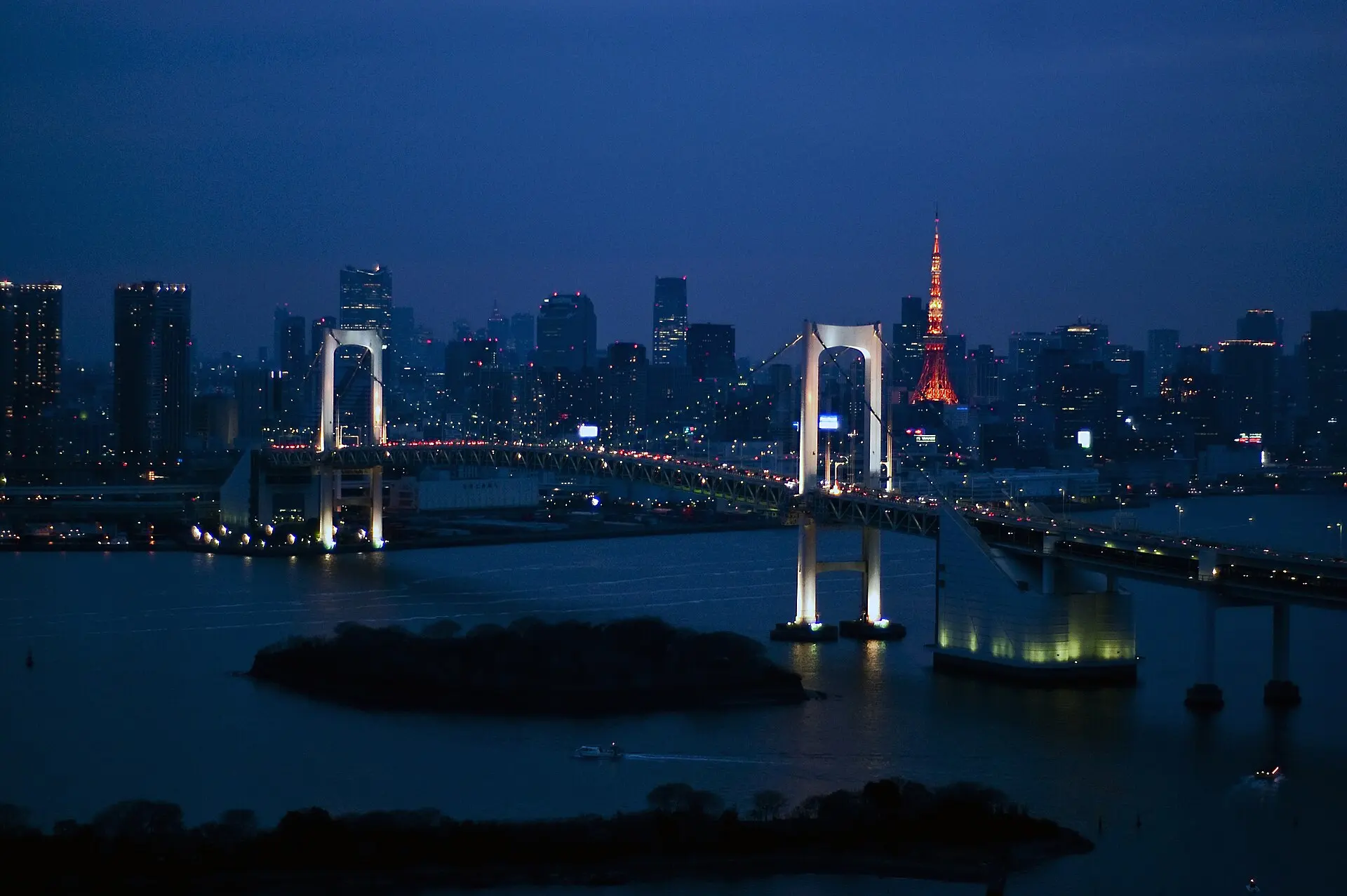
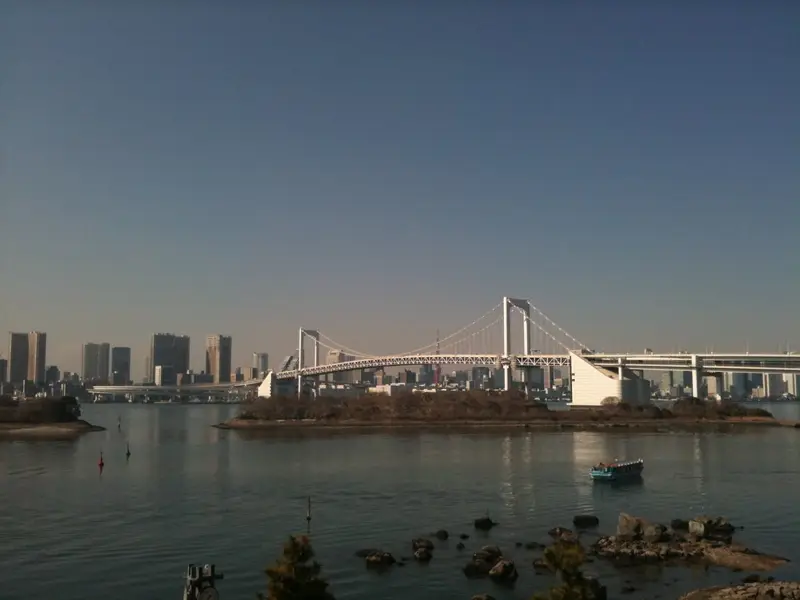
For short calls at the Odaiba terminal, the waterfront is the honest answer. On a day with the loop bus, Odaiba Marine Park, with its view of the Rainbow Bridge, is a 10-minute ride; without it, the Yurikamome to Odaiba-kaihinkoen is two stops.
Our Tokyo plans set these out as ready-made days, and the guided options list every tour we track here.
One day in Tokyo: model days
Asakusa and Ginza: an 11-hour call at the Odaiba terminal
Fits 08:00–19:00 at the Tokyo International Cruise Terminal, the commonest call here (Silver Moon 3 and 17 October, Costa Serena 18 October, Seven Seas Explorer 31 October). Shift every time by your arrival.
The classic first day in Tokyo, and the easiest from Odaiba because one change of train links all three places. Times assume an 08:00 arrival and a 19:00 departure, so all-aboard around 18:30 and our target back at the gangway 17:30. Every call of this shape at the Odaiba terminal in 2026–27 falls on a Saturday or Sunday, and the Yurikamome times below are from the weekday timetable: check the Saturday and holiday timetable for your exact train. Ginza Line ride times are our estimates.
08:30Off the ship. Walk about 8 minutes to Tokyo International Cruise Terminal station on the Yurikamome.
08:43Yurikamome towards Shimbashi (on weekdays trains leave at 08:43 and 08:46, then every 3–4 minutes; weekend times differ). Tap an IC card or a contactless credit card; ¥390.
09:05Shimbashi, about 20 minutes. Change to the Tokyo Metro Ginza Line towards Asakusa (¥210, about 20 minutes; trains every 5 minutes or so).
09:35Kaminarimon gate, then Nakamise street and the Senso-ji main hall (open 6:30–17:00 from October to March). Lunch in Asakusa.
12:25Ginza Line from Asakusa back to Ginza, about 20 minutes and ¥210.
12:45Ginza: the Mitsukoshi food hall in the basement (10:00–20:00), the 4-chome crossing, the side streets.
14:50Walk to Shimbashi, about 10 minutes, or take the Ginza Line one stop (¥180).
15:05Yurikamome from Shimbashi back to Tokyo International Cruise Terminal, every 5 minutes or so, about 20 minutes.
15:35Back at the gangway, about 1 hour 55 minutes ahead of our 17:30 target, so you could stay in Ginza until about 16:30. Transport for the day: about ¥1,200–1,400 each.
Tsukiji, Ginza and the palace gardens: a call at Harumi
Fits 08:00–19:00 at Harumi Passenger Terminal on a day the market and the gardens are both open: Seabourn Encore 10 October (Saturday), Luminara 29 October (Thursday) and Silver Moon 31 October (Saturday). Luminara 19 October (Monday) and 8 November (Sunday) and Seabourn Encore 3 November (a holiday) need the fallbacks in the note.
Harumi sits next to the old market district, which makes Tsukiji the natural first stop, and everything after it is a walk. Times assume 08:00–19:00, all-aboard 18:30, target back at the gangway 17:30. Walking and bus ride times are our estimates; the bus fare is not confirmed at source.
08:30Off the ship. There is no station at Harumi; the Harumi Futo bus stop is a minute's walk, and taxis can come into the terminal for pick-ups.
08:45Taxi to Tsukiji Outer Market, about 3 km and 5 minutes, from about ¥1,400 for the car. Or bus 都05-1 from Harumi Futo to the Tsukiji stop.
09:00Tsukiji Outer Market opens to the public at 9:00. Eat at the stall or in front of it, not while walking; ask before you photograph; no bargaining.
10:45Walk to Ginza 4-chome, about 1 km and 15 minutes.
11:00Ginza: lunch, or a picnic from a department-store food hall (open from 10:00).
12:40Walk about 20 minutes, or two subway stops, to the Otemon gate of the Imperial Palace.
13:00Imperial Palace East Gardens, free. Last entry 16:00 in October and 15:30 from November to February.
14:45Walk 10–15 minutes to the Tokyo Station Marunouchi South Exit.
15:00Bus 都05-1 to Harumi Futo, about 30 minutes, or the free shuttle from the Kajibashi car park (5 minutes from the Yaesu South Exit) if your call's notice lists one.
15:40Back at the gangway, about 1 hour 50 minutes ahead of target. Transport: about ¥1,400 for the taxi (shared) plus ¥210 for the bus.
Shibuya, Meiji Jingu and Harajuku: an 8-hour call at Odaiba
Fits the short calls at the Tokyo International Cruise Terminal: Star Seeker 08:00–16:00 on Monday 26 October, Asuka II and Asuka III 08:30–16:30. On an 11-hour call, add Asakusa after lunch.
The modern city and a forest shrine on one train line. It works on 8 hours because the Rinkai Line runs some trains straight from Tokyo Teleport to Shibuya. Times assume 08:00–16:00, all-aboard 15:30, target back at the gangway 14:30. It is tight: every ride time except the operator's 18 minutes to Shibuya is our estimate.
08:30Off the ship. Take the free shuttle or loop bus to Tokyo Teleport if your call has one; otherwise walk, about 15–20 minutes.
08:55Rinkai Line through train towards Shibuya, about 18 minutes. Only some trains run through; on the others change at Osaki.
09:20Shibuya Crossing and the Hachiko statue. Watch one cycle from above, then cross.
10:00JR one stop, or a walk of about 20 minutes, to Harajuku.
10:20Meiji Jingu: the torii, the forest approach and the main shrine. Free; open from 5:40 in October.
11:45Takeshita-dori and Omotesando, and lunch.
12:50JR from Harajuku to Shibuya and the Rinkai Line back to Tokyo Teleport, about 35–45 minutes.
14:05Back at the gangway by shuttle or on foot, about 25 minutes ahead of our 14:30 target.
How to think about your hours
Work backwards from the ship. All-aboard is usually 30 minutes before departure (check the daily programme), you want to be back at the gangway an hour before that, and the first half hour after arrival goes on getting off. So the time you can actually use is the call length minus about two hours.
Call
Usable
From the Odaiba terminal
From Harumi
4 hours
about 2
Stay in Odaiba: the waterfront and the Rainbow Bridge view, or teamLab Planets by taxi with a timed ticket and nothing else
Tsukiji Outer Market by taxi, about 1 hour 20 on the ground, on an open day only
6 hours
about 4
One district: Asakusa (about 2 hours there) or Tsukiji and Ginza (about 2½)
Tsukiji and Ginza comfortably, or Asakusa with about 2 hours there
8 hours
about 6
Asakusa and Ginza, or Shibuya, Meiji Jingu and Harajuku
Tsukiji, Ginza and the East Gardens (not Monday or Friday), or Asakusa and Ginza
10–11 hours
about 8–9
Two sides of town: Asakusa, then Shibuya and Harajuku, or Asakusa with the water bus back
Tsukiji at 9:00, then Asakusa and Ginza; or a guided day
13½ hours
about 11½
All of the above, starting at Senso-ji soon after the main hall opens
—
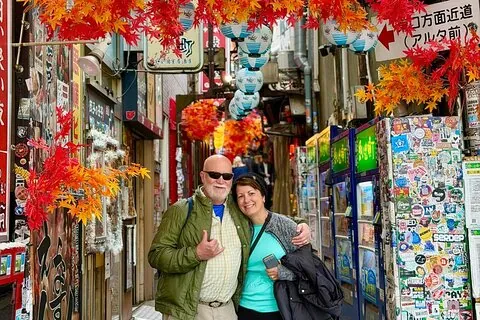
The commonest call at Tokyo's terminals is 08:00–19:00, 11 hours: 12 of the 33 international calls from October 2026 to February 2027. Next come seven 05:30–19:00 calls, six of them MSC Bellissima's (probably embarkation days) and one Royal Princess, then 10–10½ hours for Westerdam, Sapphire Princess and one Bellissima call. The shortest international call is Star Seeker, 08:00–16:00 on 26 October. Five are overnights: Azamara Pursuit (1–3 October, Harumi), Viking Orion (15–17 October, Harumi), Seven Seas Explorer (19–20 October), Norwegian Jade (28–29 October, arriving 16:00) and Costa Deliziosa (13–14 February 2027). An overnight is the one time an evening in Shinjuku's lantern alleys fits.
Tours worth booking, by how many hours you have
Every pick opens our own page first — what the operator actually includes, who should skip it, and which upcoming Tokyo calls it fits. Prices are the operator's "from" price as of 26 Sep 2026.
6h+One neighbourhood with a guide, then your own way back
None of Tokyo's catalogue tours meets at either cruise terminal. Each one starts at a station, so add the ride there and back — about 50–60 minutes each way to Harajuku from Odaiba — to the tour's length.
Tours are booked through Viator (a Tripadvisor company). If you book, we may earn a small commission at no extra cost to you. It never decides what we recommend — which is why each tour page has a "think twice" note.
About the return to the ship. None of the eight Tokyo tours in our catalogue meets at either cruise terminal, none mentions cruise passengers, and none puts an on-time-return promise in writing. All of them start in the city, most at a station, and you travel there and back by public transport. Three habits protect you: choose a start time that leaves the ride back plus an hour before all-aboard, tell the guide your all-aboard time when you meet, and know your own way back to the terminal before you set off. All eight offer a full refund if you cancel at least 24 hours ahead, which helps if your ship's times change.
Money, cards and the practical stuff
Tokyo is easy with a card on the trains and in the shops, and still runs on cash at market stalls. Where you will need what:
Place
Pay with
Yurikamome
IC card, contactless credit or debit card (capped at ¥820 a day), or a cash ticket
Rinkai Line
IC card or ticket
Tokyo Metro
IC card or ticket
Toei buses
IC card or cash
Water bus
Online booking or the ticket counter
teamLab Planets
Timed tickets online, by card
Senso-ji, Meiji Jingu, East Gardens
Free entry
Tsukiji stalls
Mixed; carry cash
Taxis
Varies by cab; carry cash as a back-up
ATMs. Neither cruise terminal lists an ATM or an exchange counter, and Harumi has only vending machines. Bring yen from the ship or use a cash machine in Shimbashi, Ginza or Asakusa; 7-Eleven (Seven Bank) and Japan Post machines generally accept foreign cards. Our money, Wi-Fi and eSIM guide covers the setup.
Food near the ship. Neither terminal lists a restaurant. At Odaiba, the waterfront malls are on the loop-bus route; at Harumi, eat in town.
Closed days to check against your date. These hit the 2026–27 calls:
Tsukiji Outer Market (Sundays, holidays, market Wednesdays): 4, 7, 11, 18, 25 and 28 October; 3, 8, 11 and 23 November; 3 and 17 January, and 14 and 28 February 2027.
Imperial Palace East Gardens (Mondays and Fridays, 28 December–3 January): 9, 16, 19 and 26 October; 13 November; 3 January and 1 February 2027. Open on Monday 23 November, a holiday.
teamLab Planets: closed 1 October (Azamara Pursuit's arrival) and 5 November 2026 (Mitsui Ocean Sakura).
Meiji Jingu closes at 16:10 in November and 16:00 in December.
Umezono tearoom, Asakusa: closed 7 and 21 October 2026; 7 October is an MSC Bellissima call.
When to go: seasons and crowds
Autumn (October–November) is the busy cruise season: 20 calls in October 2026 alone. Average highs are 22 °C in October and 16.7 °C in November. But October is Tokyo's wettest month, with 234.8 mm of rain on average, so pack a rain plan.
Typhoons approach the Kanto region about three times a year, most often in September (1.2 a year) and still in October (0.7). The water bus is the first thing cancelled.
Autumn leaves turn late on the Kanto plain: the weather agency's maple map puts it around 30 November to 10 December.
Winter (December–February): highs of 10–12 °C, the driest months, and early dark — Meiji Jingu closes at 16:00 in December. Many shops and the East Gardens close from 28 December to 3 January.
Spring: cherry blossom opens on about 24 March in a normal year (19 March in 2026), with full bloom about a week later. No March 2027 calls are listed yet.
Rain plan: the department-store food halls in Ginza and Shinjuku, the underground walkways and Marunouchi buildings around Tokyo Station, and teamLab Planets, which is indoors apart from its garden works (closed in heavy rain).
Things you will read about Tokyo elsewhere — in older port guides, forum posts and some cruise-line pages — set against what the official source says today.
You may read
What the official source says
Source
Tokyo has no cruise port of its own: ships for Tokyo dock in Yokohama.
Tokyo has two cruise terminals of its own, the Tokyo International Cruise Terminal in Odaiba and Harumi, and recorded 83 calls in 2025. Some cruises sold as Tokyo do use Yokohama, so go by the port named on your ticket.
Cruise ships in Tokyo dock at the Tokyo International Cruise Terminal.
Only the big ones do. Harumi Passenger Terminal has taken ships again since June 2025, mostly those of about 70,000 tons and under, and the operator warns that passengers mixing up the two terminals is frequent. Check the terminal name, not just 'Tokyo'.
Only the smaller ones. Harumi Passenger Terminal (Harumi 5-chome, Chuo-ku) takes ships of about 70,000 tons and under; the big ships use the Tokyo International Cruise Terminal in Aomi, Odaiba, which has 24 of the 33 international calls from October 2026 to February 2027. The two are about 20 minutes apart by car.
Going to the wrong terminal.The terminal operator says mix-ups 'are happening frequently'. Harumi and the Odaiba terminal are about 20 minutes apart by car and more than 30 minutes by public transport, and Silver Moon uses both in October 2026. Check the terminal name on your documents and the port schedule.
Assuming a 'Tokyo' cruise docks in Tokyo.Many cruises sold as Tokyo use Yokohama, a separate city with its own terminals. Your ticket names the port; read our Yokohama guide if it says Yokohama.
Planning the day around a shuttle you have not seen confirmed.The free shuttles run on many calls but not all, the times change from call to call, and some on embarkation days take only passengers with a boarding ticket. Read your call's notice on the terminal operator's site, posted about a week ahead.
Planning Tsukiji on a Sunday, a holiday or a market Wednesday.Many outer-market shops close on those days. In the 2026–27 schedule that catches 15 of the 46 calls, including 4, 11, 18 and 25 October, 3, 8 and 23 November, and the Wednesdays 7 and 28 October and 11 November.
Planning the Imperial Palace East Gardens on a Monday or Friday.They are closed on both, and from 28 December to 3 January. That rules out 9, 16, 19 and 26 October and 13 November.
Buying a Tokyo Subway Ticket for the terminal run.It covers Tokyo Metro and the Toei subway only, not the Yurikamome or the Rinkai Line. Older guides also quote ¥800; it is now ¥1,000 for 24 hours.
Reaching Meiji Jingu late on an autumn afternoon.The gates close at sunset: 16:40 in October, 16:10 in November and 16:00 in December.
Walking up to teamLab Planets without a timed ticket.Tickets are timed and priced by demand, from ¥4,200 for adults, with no refunds. It is in Toyosu, not next to the Odaiba terminal, and closed on 1 October and 5 November 2026.
Researched from official timetables, operators and the port authority. Every time and fare in this guide was checked against the sources listed above on 1 October 2026; where we had to estimate (a walk, a taxi in traffic), the text says so. Timetables change — if you find one that has, tell us and we will fix it.
Quick answers
Tokyo cruise port questions
Where do cruise ships dock in Tokyo?
At one of two terminals. The Tokyo International Cruise Terminal in Aomi, Odaiba, takes the big ships and most international calls (24 of 33 international calls from October 2026 to February 2027). Harumi Passenger Terminal in Chuo-ku, which reopened to cruise ships in June 2025, takes ships of about 70,000 tons and under — Seabourn Encore, Luminara, Viking Orion, Azamara Pursuit and some Silver Moon calls. Smaller ships sometimes use the Odaiba terminal too, so check the terminal name on your documents.
Which Tokyo cruise terminal does my ship use — Princess, Celebrity, Holland America, Silversea, Azamara or Viking?
On the Tokyo port bureau's October 2026–February 2027 calendar, Royal Princess and Sapphire Princess (12 December and 23 January), MSC Bellissima, Westerdam, Norwegian Jade, Costa, Carnival Luminosa, Navigator of the Seas, Seven Seas Explorer and Star Seeker all use the Tokyo International Cruise Terminal in Odaiba, as Celebrity Millennium did in September 2026. Azamara Pursuit, Viking Orion, Seabourn Encore and Luminara use Harumi. Silversea's Silver Moon uses both: Odaiba on 3 and 17 October, Harumi on 31 October.
What is the address of the Tokyo cruise terminals?
The Tokyo International Cruise Terminal (東京国際クルーズターミナル) is at Aomi 2-chome-jisaki, Koto-ku, Tokyo 135-0064, 8 minutes' walk from Tokyo International Cruise Terminal station on the Yurikamome. Harumi Passenger Terminal (晴海客船ターミナル) is at Harumi 5-7-1, Chuo-ku, Tokyo 104-0053, a minute from the Harumi Futo bus stop. Show a taxi driver the Japanese name: the two are about 20 minutes apart by car and often confused.
Is there a Tokyo cruise ship schedule for 2026–27?
Yes. The Tokyo Metropolitan Government's Bureau of Port and Harbor publishes a Cruise Call Calendar, linked from its cruise page, with the ship, date, times and terminal. It lists 46 calls from October 2026 to February 2027, 29 at the Odaiba terminal and 17 at Harumi, with 20 in October alone; no March 2027 calls were listed on 30 September 2026. It shows only confirmed calls, and times can change at short notice.
Does a cruise sold as Tokyo dock in Tokyo or in Yokohama?
Either, so read the port name on your ticket. Tokyo's own berths are the Tokyo International Cruise Terminal in Odaiba and Harumi Passenger Terminal; Yokohama is a separate city down the bay with its own terminals, and many cruises sold as Tokyo use it. If your documents say Yokohama, use our Yokohama guide at /yokohama/complete-guide/ instead: the trains, times and shuttles in this guide do not apply.
How do I get from the Tokyo cruise terminal to the city centre?
From the Odaiba terminal, walk about 8 minutes to the Yurikamome station and ride to Shimbashi, about 20 minutes and ¥390 (IC ¥388), with trains every 3–5 minutes; Ginza is a 10-minute walk or one Ginza Line stop from there, and Tokyo Station 3 minutes on the JR line. From Harumi, take bus 都05-1 from Harumi Futo to Ginza 4-chome (about 20 minutes) or Tokyo Station (about 30 minutes), or the free shuttle to Tokyo Station when your call has one.
How do I get from the Tokyo cruise port to Senso-ji in Asakusa and Tokyo Skytree?
About 55–60 minutes and ¥600 from the Odaiba terminal: Yurikamome to Shimbashi, then the Ginza Line to Asakusa (the door-to-door time is our estimate). From Harumi, bus 都05-1 to Ginza 4-chome and the Ginza Line, about 50–60 minutes. Tokyo Skytree is about 5 minutes on from Asakusa by the Tobu Skytree Line; its Tembo Deck opens 10:00–22:00 (last entry 21:00), from ¥1,800 for adults, priced by date. A taxi to Senso-ji is from about ¥5,900 from Odaiba and ¥4,200 from Harumi before traffic. The 14:10 water bus back to Odaiba (¥2,000) is the scenic return.
How do I get from the Tokyo cruise terminal to Shibuya and Meiji Jingu?
From the Odaiba terminal, go to Tokyo Teleport station by shuttle or on foot (15–20 minutes) and take a Rinkai Line train that runs through to Shibuya, about 18 minutes; allow 40–50 minutes door to door. Meiji Jingu is one JR stop on, at Harajuku, and closes its gates at sunset: 16:40 in October, 16:10 in November. From Harumi, bus to Ginza and the Ginza Line to Shibuya, about 50 minutes.
How do I get to Tsukiji Outer Market from the Tokyo cruise port, and is it open on my cruise day?
From Harumi it is about 5 minutes by taxi (from about ¥1,400) or bus 都05-1; from the Odaiba terminal, about 45 minutes by Yurikamome to Shiodome or Shimbashi and a 15-minute walk. Public hours are 9:00–14:00. It closes on Sundays, national holidays and market-holiday Wednesdays — 7, 21 and 28 October, 11 and 18 November and four in December 2026. Some shops open on those days, but many do not.
Is there a free shuttle bus from the Tokyo cruise terminals?
On many calls, yes, run free by the Tokyo Metropolitan Government, but not on every call. From the Odaiba terminal it goes to Tokyo Teleport station (about 10 minutes), or on some in-transit days loops via the Hilton and Odaiba Marine Park; from Harumi it goes to the Kajibashi car park near Tokyo Station (about 30 minutes, every 15–30 minutes). Times are set call by call; the terminal operator posts them about a week ahead.
How much of Tokyo can I see on one cruise port day?
Take the call length minus about 2 hours. On 6 hours, one district: Asakusa or Tsukiji and Ginza. On 8 hours, two that share a line: Asakusa and Ginza, or Shibuya, Meiji Jingu and Harajuku. On the common 11-hour call (08:00–19:00), two sides of town: Asakusa in the morning, the Ginza Line to Shibuya after lunch (about 30 minutes, ¥260), and the Rinkai Line back to Tokyo Teleport. Mt. Fuji does not fit.
What can I do near the Tokyo cruise terminal on a short call — is teamLab Planets close?
From the Odaiba terminal, the waterfront: Odaiba Marine Park and its Rainbow Bridge view are two Yurikamome stops away, or about 10 minutes on the free loop bus on calls that have one. teamLab Planets is not next door but in Toyosu, about 15–20 minutes by Yurikamome to Shin-Toyosu (¥330) or a taxi from about ¥2,100, with timed tickets from ¥4,200. From Harumi, nothing sight-worthy is walkable, but Tsukiji Outer Market is 5 minutes by taxi, about 1 hour 20 on the ground on a 4-hour call.
Can I visit Mt. Fuji from the Tokyo cruise port?
Not sensibly on a port day. A Fuji day trip takes a full day from a city hotel, while the commonest Tokyo call is 11 hours with about 9 usable, and none of the eight Tokyo tours in our catalogue goes to Fuji from either terminal or promises a return to the ship. Save Fuji for a night before or after the cruise; on the day, Senso-ji, Shibuya or Tsukiji are 20 minutes to an hour away.
Does the Tokyo Subway Ticket cover the cruise terminal?
No. The Tokyo Subway Ticket (¥1,000 for 24 hours, ¥1,500 for 48, ¥2,000 for 72) covers only Tokyo Metro and the Toei subway. The Yurikamome and the Rinkai Line, the two lines that serve the Odaiba terminal, are extra; the Yurikamome has its own one-day pass at ¥820, and contactless credit cards on it are capped at ¥820 a day. For the Asakusa-and-Ginza day, single fares of about ¥1,200–1,400 beat the pass.
How much is a taxi from the Tokyo cruise terminal?
Tokyo taxis charge ¥500 for the first 1.0 km and ¥100 for every 232 m after that, plus time in slow traffic and any expressway tolls. By distance alone, the Odaiba terminal to Tokyo Station is from about ¥4,200 and to Senso-ji from about ¥5,900; Harumi to Tsukiji is from about ¥1,400. Daytime traffic makes the real fare higher.
Can I pay by card in Tokyo, or do I need cash and an ATM?
The Yurikamome takes contactless Visa, Mastercard, JCB, Amex, Diners, Discover and UnionPay cards at every station, capped at ¥820 a day; IC cards work on all trains and buses. Senso-ji, Meiji Jingu and the East Gardens are free. Carry cash for Tsukiji stalls and small shops. Neither cruise terminal lists an ATM or exchange counter, so bring yen from the ship or use a 7-Eleven or Japan Post machine in Shimbashi, Ginza or Asakusa.
Which Tokyo sights are closed on my cruise day?
Check four things against your date. Tsukiji Outer Market: Sundays, national holidays and market Wednesdays, 15 of the 46 calls from October 2026 to February 2027. The Imperial Palace East Gardens: every Monday and Friday and 28 December–3 January, with last entry 16:00 in October and 15:30 from November. teamLab Planets: 1 October and 5 November 2026. Meiji Jingu: gates shut at sunset, 16:10 in November and 16:00 in December.
Can I take the Tokyo Cruise water bus between Asakusa and the cruise terminal?
Yes, one way. Tokyo Cruise Ship Co. runs boats from Asakusa to Odaiba Seaside Park at 10:00, 11:00, 13:10, 14:10, 15:30 and 16:10, ¥2,000 and 55–70 minutes; Odaiba Seaside Park is two Yurikamome stops from the Odaiba terminal. Boats from Odaiba leave only from 12:00, so use it for the way back: the 14:10 reaches Odaiba about 15:05. Sailings stop in bad weather, so check the day's status.
What facilities are at the Tokyo cruise terminals, and are they wheelchair accessible?
The Odaiba terminal has four floors with lifts and escalators throughout, multipurpose toilets, accessible parking and a taxi stand on 1F, and a courier (takkyubin) counter on 2F. Harumi is a single storey with multipurpose toilets, waiting space and vending machines. Neither lists an ATM, exchange counter, restaurant or Wi-Fi. For a guided outing, the two-hour Meiji Jingu walk (175777P34) is the only Tokyo tour flagged accessible in all areas.
How do I get between Haneda or Narita airport and the Tokyo cruise terminals?
By car, the terminal operator gives about 25 minutes from Haneda to either terminal, and about 60 minutes (Odaiba) or 1 hour 10 (Harumi) from Narita. By airport limousine bus, Haneda is about 20 minutes and Narita about 90 minutes to the Odaiba hotels, then 2 minutes by Yurikamome from Daiba; for Harumi the buses run to Toyosu, 10 minutes by car from the terminal. By rail from Tokyo Teleport: Haneda 29 minutes, Narita 1 hour 41.
What is the weather like for a Tokyo cruise in autumn and winter?
October averages a high of 22 °C but is Tokyo's wettest month, with 234.8 mm of rain, and typhoons still approach about 0.7 times in an average October. November cools to a 16.7 °C high; December to February highs are 10–12 °C, dry, and dark early — Meiji Jingu closes at 16:00 in December. On a wet day, the Ginza and Shinjuku department-store food halls, the Tokyo Station underground and teamLab Planets are the indoor plan.
What is the best tour from the Tokyo cruise port?
For a couple on the typical 11-hour call, the private Tokyo Discovery Tour (445856P1) in a 4–6-hour version from Harajuku. For a group of six, the private tour with local guides (460223P2), about US$620 for the group. For the shortest calls or limited mobility, the two-hour Meiji Jingu and Harajuku walk (175777P34, US$25). None meets at either terminal and none promises in writing to get you back to the ship, so keep an hour's margin.