Fifteen days, three times a year, in one building — and the bouts last seconds
Six tournaments a year, fifteen days each, and Tokyo hosts three of them. If your call falls inside one, you can watch the highest-ranked athletes in a fifteen-hundred-year-old sport for less than a theatre ticket. If it does not, the sport is still visible — you just have to know where.
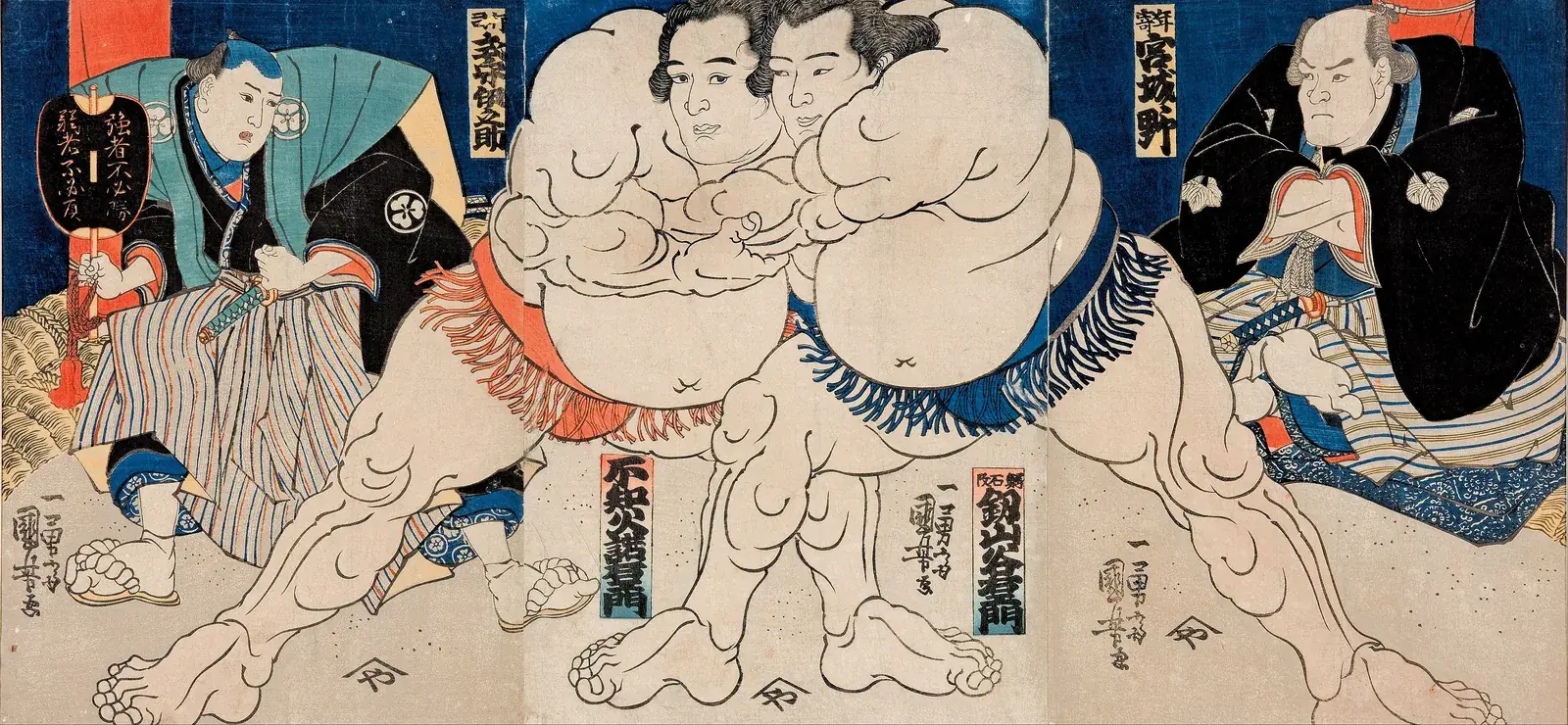
Sumo began as Shinto ritual — bouts offered to the gods for a good harvest — and the ritual never left. The canopy over the ring is a shrine roof. The salt the wrestlers throw is purification. The referee wears court dress from a thousand years ago and carries a war fan.
There are exactly six grand tournaments a year, each fifteen days: January, May and September in Tokyo at the Ryogoku Kokugikan, March in Osaka, July in Nagoya, November in Fukuoka. They begin and end on a Sunday.
This matters for a cruise because the Tokyo tournaments are the ones you can reach, and because outside those forty-five days there is no professional sumo in this city at all.
The building opens in the morning with the lowest divisions and works upward. Almost nobody arrives then, and that is a mistake — the lower divisions are where you can see the whole hall, sit anywhere, and watch young wrestlers who have everything to lose.
The top division, makuuchi, appears in the late afternoon. Its wrestlers enter in ceremonial aprons, the ring is swept, and the crowd arrives all at once. The final bout is around six.
Each bout lasts a few seconds. The staring, the salt and the crouching that precede it can run four minutes. That ratio is the sport: the tension is the event, and the collision resolves it.
The ring is 4.55 metres across, made of clay, edged with rice-straw bales, and rebuilt by hand for every tournament. Step out or touch down with anything but your feet, and you have lost.
Masu-seki are the boxes on the floor — four cushions inside a low frame, shoes off, knees folded. They are the classic experience and they are hard on Western knees for four hours. Arena chairs upstairs are ordinary seats with a full view and are the sensible choice for most visitors over fifty.
A limited number of same-day general admission seats go on sale at the box office in the morning, one per person, and they sell out on popular days. Advance tickets go on sale roughly a month before each tournament and the best days go quickly.
Ryogoku is still a sumo town. The Sumo Museum inside the Kokugikan is free. Several restaurants around the station are run by retired wrestlers and serve chanko-nabe, the enormous protein-dense hotpot the stables eat daily — it is genuinely good food, not a novelty.
Morning practice at a stable can sometimes be observed, but only by arrangement, with a Japanese-speaking intermediary, and under strict rules of silence and stillness. Do not turn up at a door.
The canopy, the salt and the fan all survive from this
Fundraising tournaments at temples, then a paid sport
Sumo moves indoors and gets a national stadium
About 11,000 seats, and the ring rebuilt for each basho
January, May and September — fifteen days each
If your call falls inside a January, May or September tournament, book an arena chair a month out and arrive by two.
Only during the January, May and September tournaments, each fifteen days long, at the Ryogoku Kokugikan. The other three of the six annual tournaments are held in Osaka (March), Nagoya (July) and Fukuoka (November). Outside those forty-five days there is no professional sumo in Tokyo.
Arena chairs upstairs, unless you are certain about four hours of kneeling. The floor boxes — masu-seki — are the classic experience but seat four on cushions inside a low frame with shoes off, which most visitors over fifty find punishing. A limited number of same-day general admission seats are sold at the box office each morning.
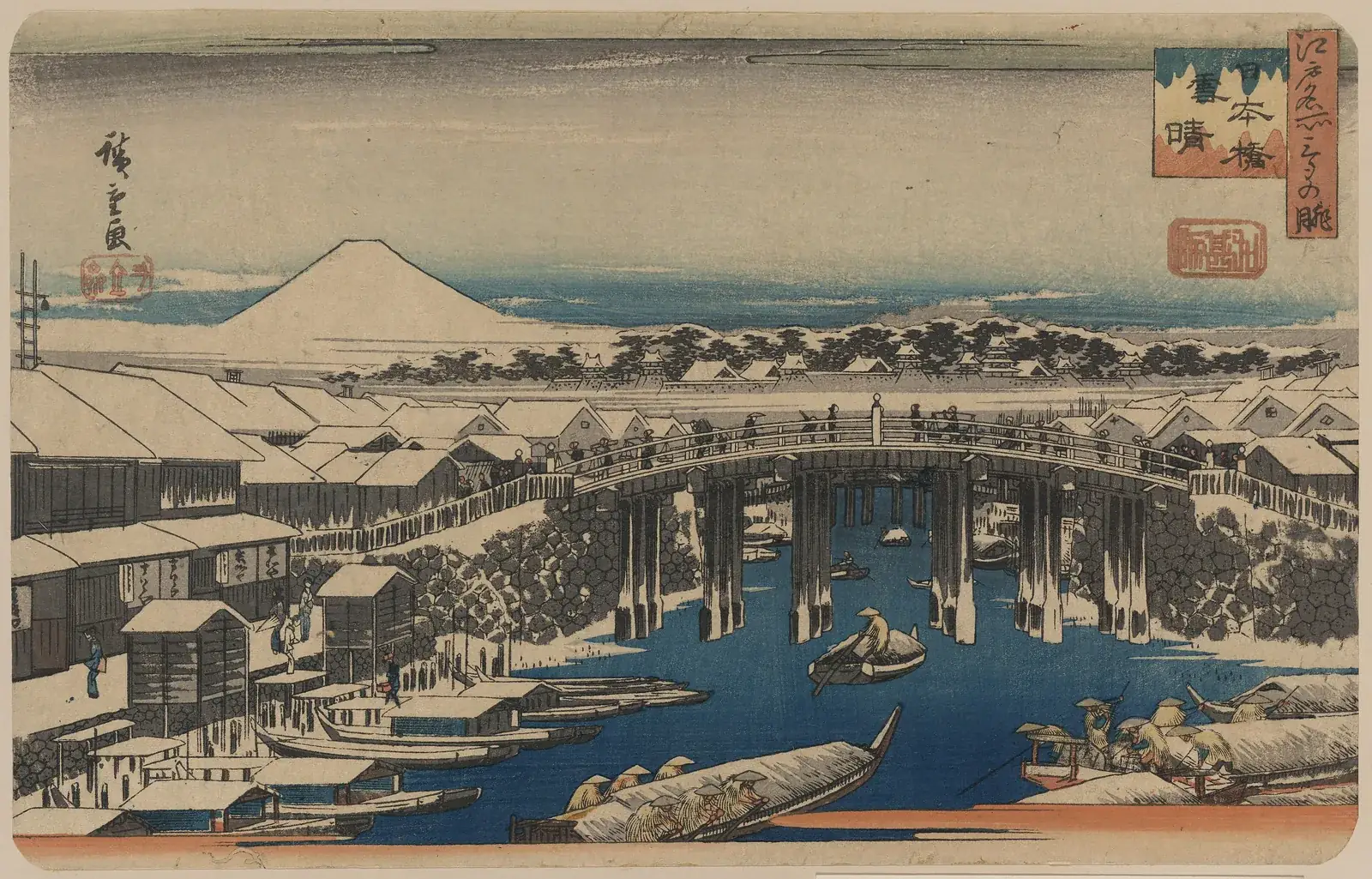
How a marsh became the largest city on earth, burned down repeatedly, and kept its shape
Read →
Sushi was street food, the pieces were twice this size, and none of it was raw
Read →
Founded in 628 for a statue nobody has ever seen
Read →
Started by a woman, banned for women, and you can see one act for the price of lunch
Read →No typing needed — jump straight in:
Just docked? — the gangway toolStart from your shipThe ride from every berthAsk the editorGlossary