How a marsh became the largest city on earth, burned down repeatedly, and kept its shape
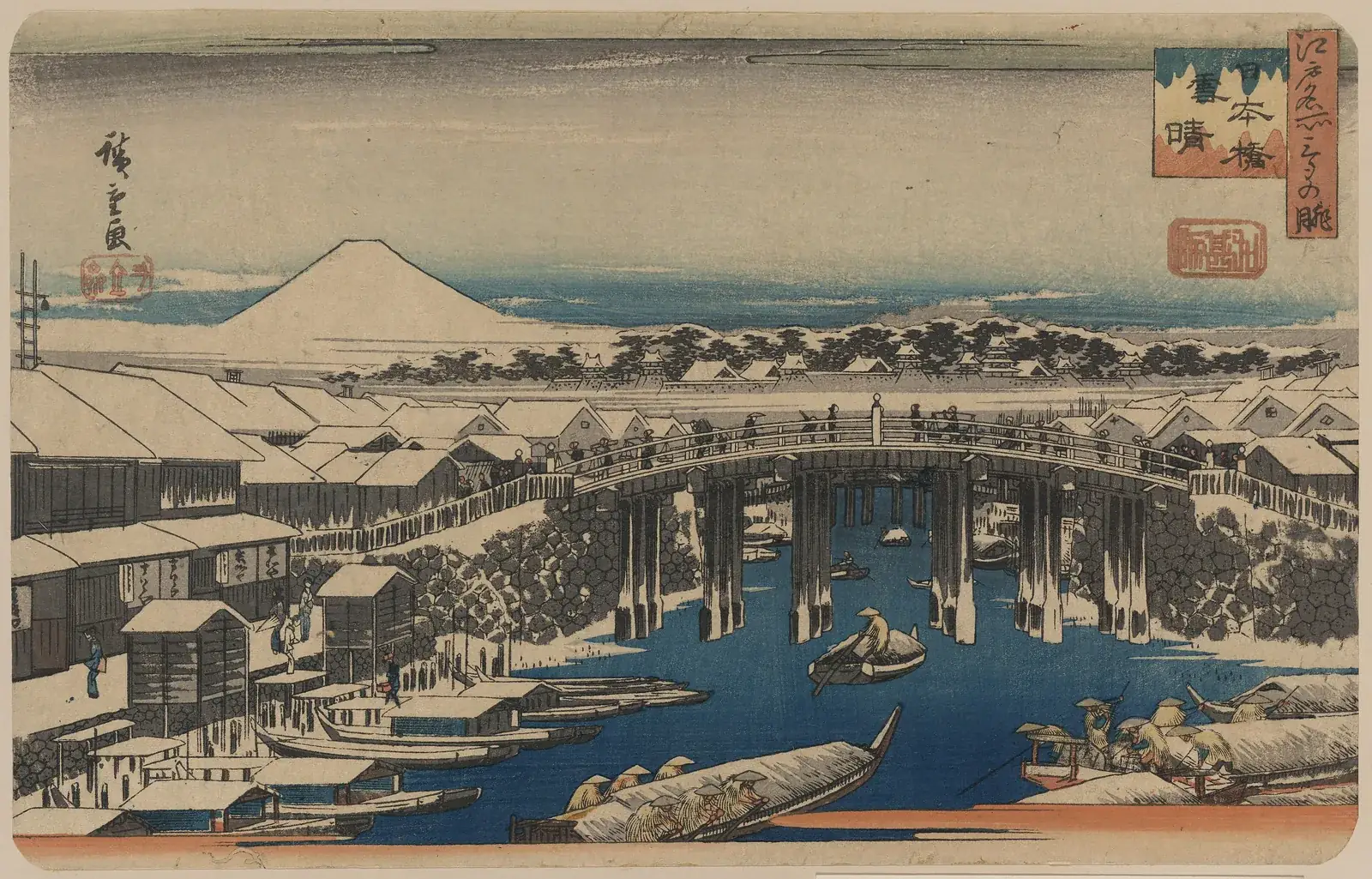
By 1721 roughly a million people lived here — probably more than in any other city in the world. Almost none of what they built survives. What survives is the plan: the high ground, the low ground, and a bridge that is still the point from which every road in Japan is measured.
Tokugawa Ieyasu arrived in 1590 at a minor castle on a bay full of reed beds. In 1603 he made it the seat of the shogunate, and for the next two and a half centuries Japan was governed from here while the emperor remained in Kyoto.
From 1635 the shogunate required every regional lord to spend alternate years in Edo and to leave his wife and heir here permanently. Sankin-kotai was designed as a control mechanism — a hostage system with a travel schedule — and its side effect was a city.
Hundreds of lords maintained Edo mansions with retinues. Feeding, clothing, housing and entertaining them required an enormous population of merchants and artisans. By around 1721 Edo held roughly a million people, likely the largest city on earth at the time.
The land split was brutal. Samurai households held the great majority of the ground; the townspeople — the chonin — were packed into a small fraction of it, at densities that made the fires inevitable.
Fires were so frequent that Edo called them "the flowers of Edo." The 1657 Meireki fire killed on the order of a hundred thousand people. The castle keep burned with them and was never rebuilt.
The geography split the culture. Yamanote — the "hand of the mountain," the western bluffs — held the samurai estates. Shitamachi — the "low town," the flats east toward the river — held the merchants, the craftsmen, the theatres and the fish.
That division is still legible. Shitamachi speech, Shitamachi humour and Shitamachi food are recognised categories in Japanese; Asakusa and Ryogoku are Shitamachi and feel it. The Yamanote Line, the loop you will ride, is named for the high ground it traces.
In 1868 Edo was renamed Tokyo, the eastern capital, and the emperor moved into the shogun's castle. The 1923 earthquake destroyed much of the low city, and the firebombing of 10 March 1945 killed something on the order of a hundred thousand people in a single night and flattened most of what was left.
So Tokyo has almost no old buildings. What it has instead is old shape: the spiral of moats around the palace, the position of the bridges, the boundary between high and low. Nihonbashi — the bridge of 1603, rebuilt in stone in 1911 — is still kilometre zero: every highway distance in Japan is measured from a marker at its centre. An expressway was built directly over it in 1964, and the city is now, slowly and at great expense, taking that expressway back down.
A minor castle beside a bay of reed beds
The emperor stays in Kyoto for 265 more years
A hostage system that accidentally builds a metropolis
~100,000 dead; the castle keep is never rebuilt
Probably the largest city in the world
The emperor moves into the shogun's castle
The low city is destroyed twice in twenty-two years
Stand on Nihonbashi and find the kilometre-zero marker in the road surface. Every distance in Japan starts under your feet.
Because the city burned repeatedly. Fires were so routine that Edo nicknamed them "the flowers of Edo," the 1657 Meireki fire killed around a hundred thousand people, and the 1923 earthquake and the March 1945 firebombing each destroyed most of what remained. What survives is the street plan and the geography, not the timber.
Yamanote is the high western ground where samurai estates stood; Shitamachi is the low eastern flats by the river where merchants, craftsmen and theatres were packed in. The split still shapes speech, humour and food — Asakusa and Ryogoku are Shitamachi, and behave like it.
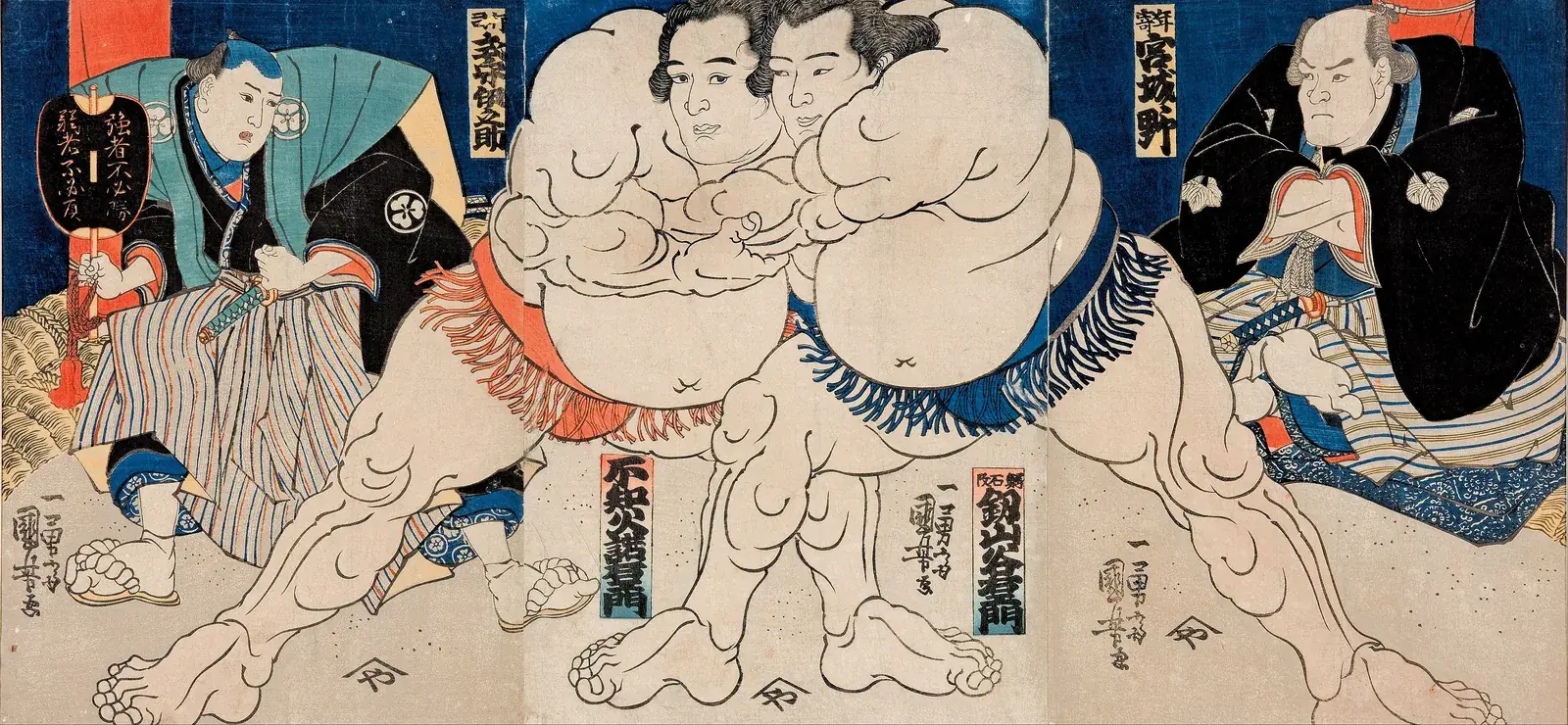
Fifteen days, three times a year, in one building — and the bouts last seconds
Read →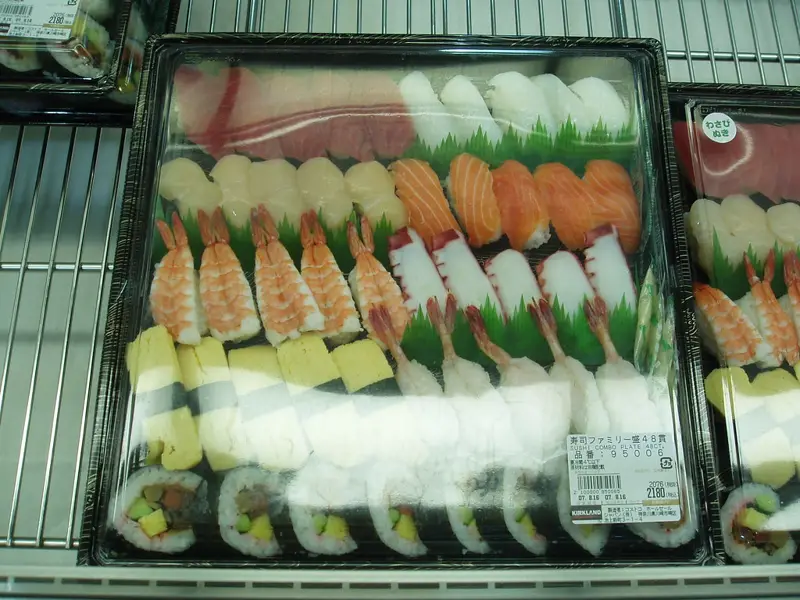
Sushi was street food, the pieces were twice this size, and none of it was raw
Read →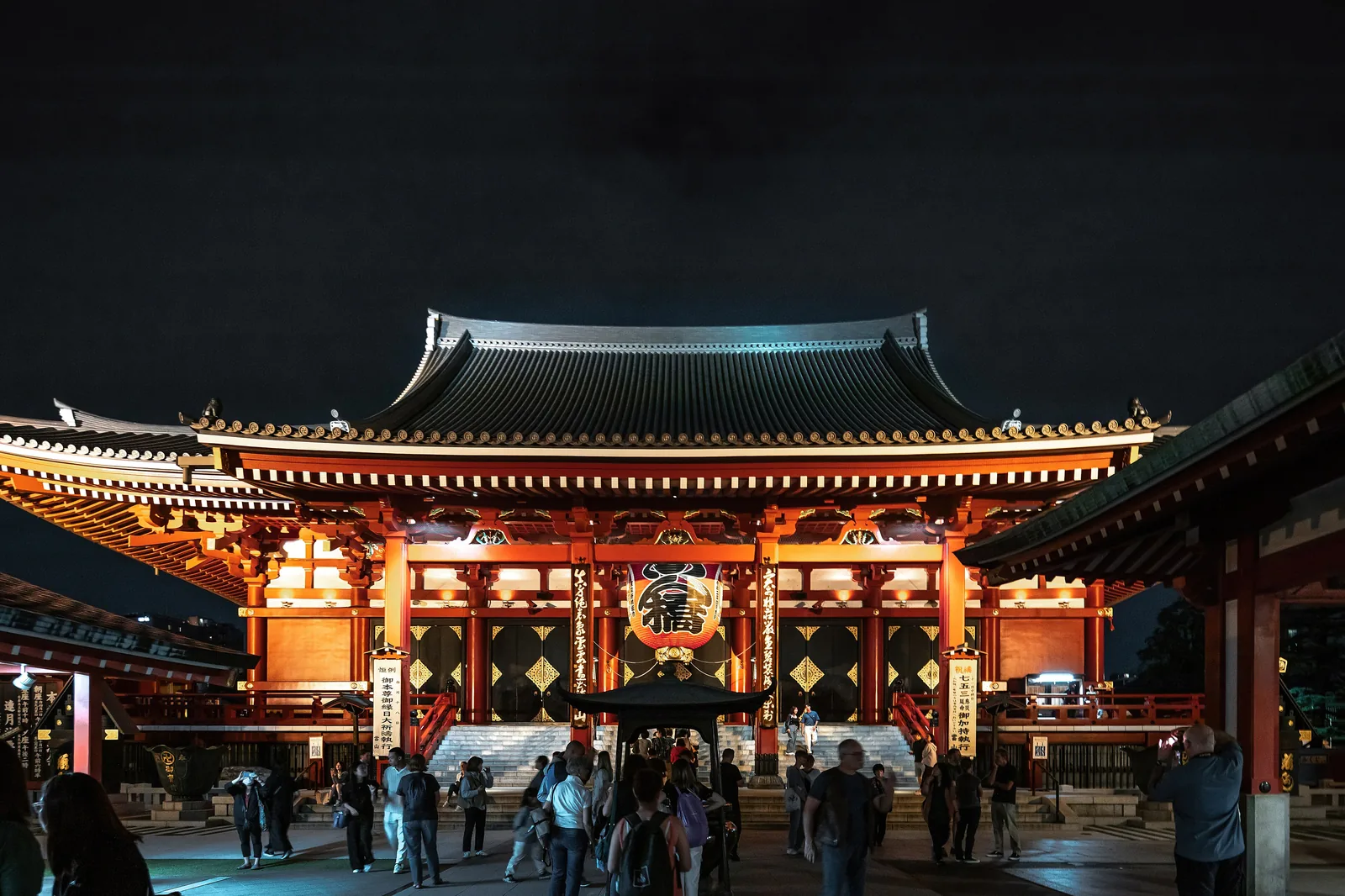
Founded in 628 for a statue nobody has ever seen
Read →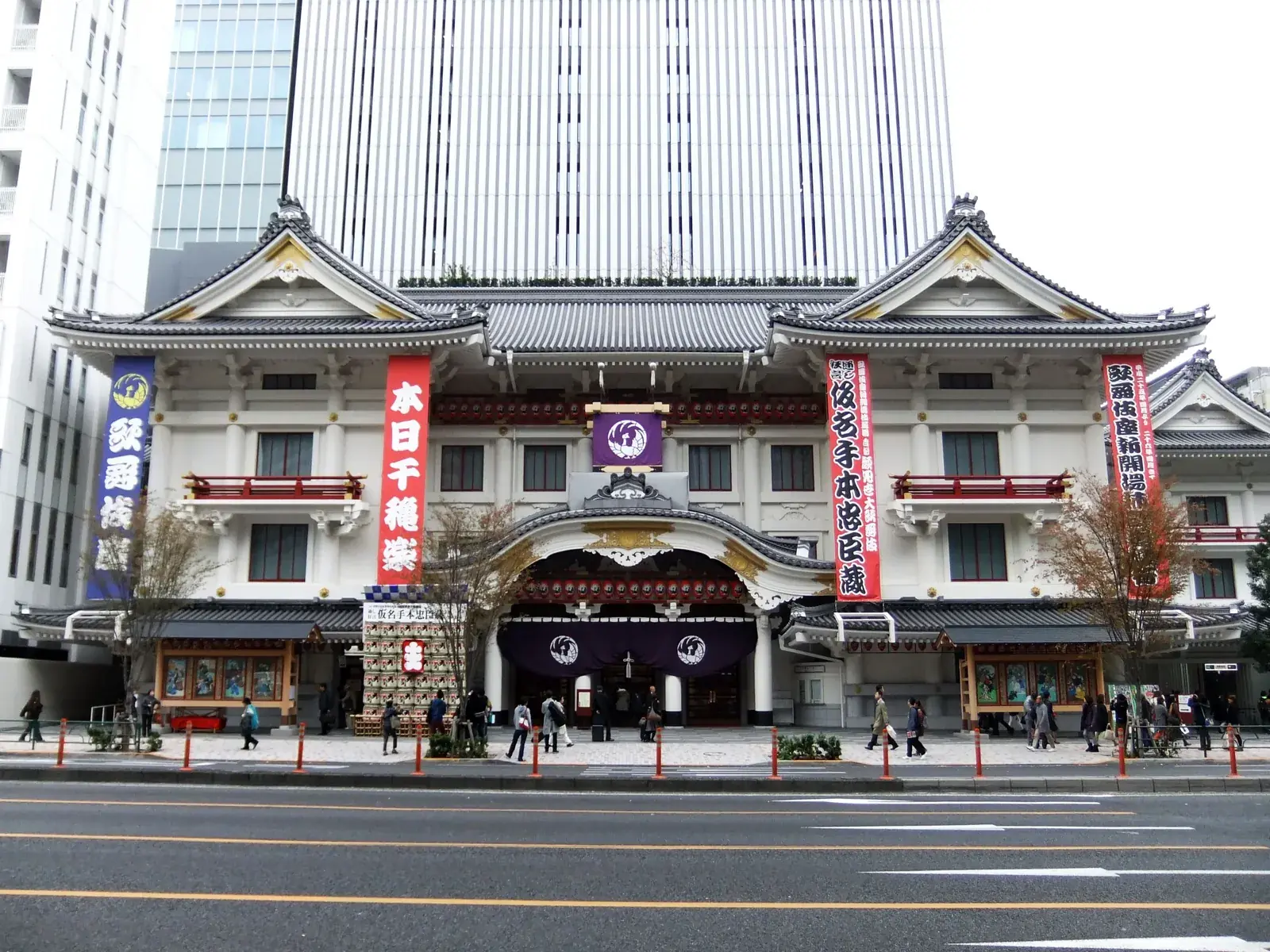
Started by a woman, banned for women, and you can see one act for the price of lunch
Read →No typing needed — jump straight in:
Just docked? — the gangway toolStart from your shipThe ride from every berthAsk the editorGlossary