Started by a woman, banned for women, and you can see one act for the price of lunch
Four hundred years old, invented by a female dancer, performed entirely by men since 1652, and still running two full programmes a day in Ginza. The barrier is that a programme runs four hours — which is why the theatre sells single acts, same day, from a separate window.
Around 1603 a performer called Izumo no Okuni danced on a temporary stage by a Kyoto riverbed, in men's clothing, doing something irreverent enough that the word used for it — kabuku, to tilt or lean askew — became the name of the form.
It was an immediate sensation, and immediately a problem. The all-female troupes were banned in 1629; the all-young-men troupes that replaced them were banned in 1652, for the same reasons. What survived was yaro-kabuki — adult men only.
That restriction produced the art form's most distinctive role: the onnagata, the male specialist in female roles, trained from childhood and often for life. The best onnagata are not impersonating women. They are performing a stylised idea of femininity that has been refined for three centuries and looks like nothing else on any stage.
Kabuki invented stage technology that the rest of the world adopted much later. The hanamichi is a raised walkway running through the audience to the stage — entrances and exits happen among the spectators, at arm's length. The revolving stage was in use here from 1758, well before it appeared in Europe. Trapdoors lift actors up through the floor; kuroko in black work in full view and are understood to be invisible.
And the audience shouts. At precise moments, from the upper gallery, regulars call the actor's house name — kakegoe. It is not heckling; it is timed, and getting the timing wrong is a serious embarrassment.
A full programme runs about four hours. A single act runs sixty to ninety minutes and costs roughly a tenth as much. For a port day, the single act is not the compromise — it is the correct choice.
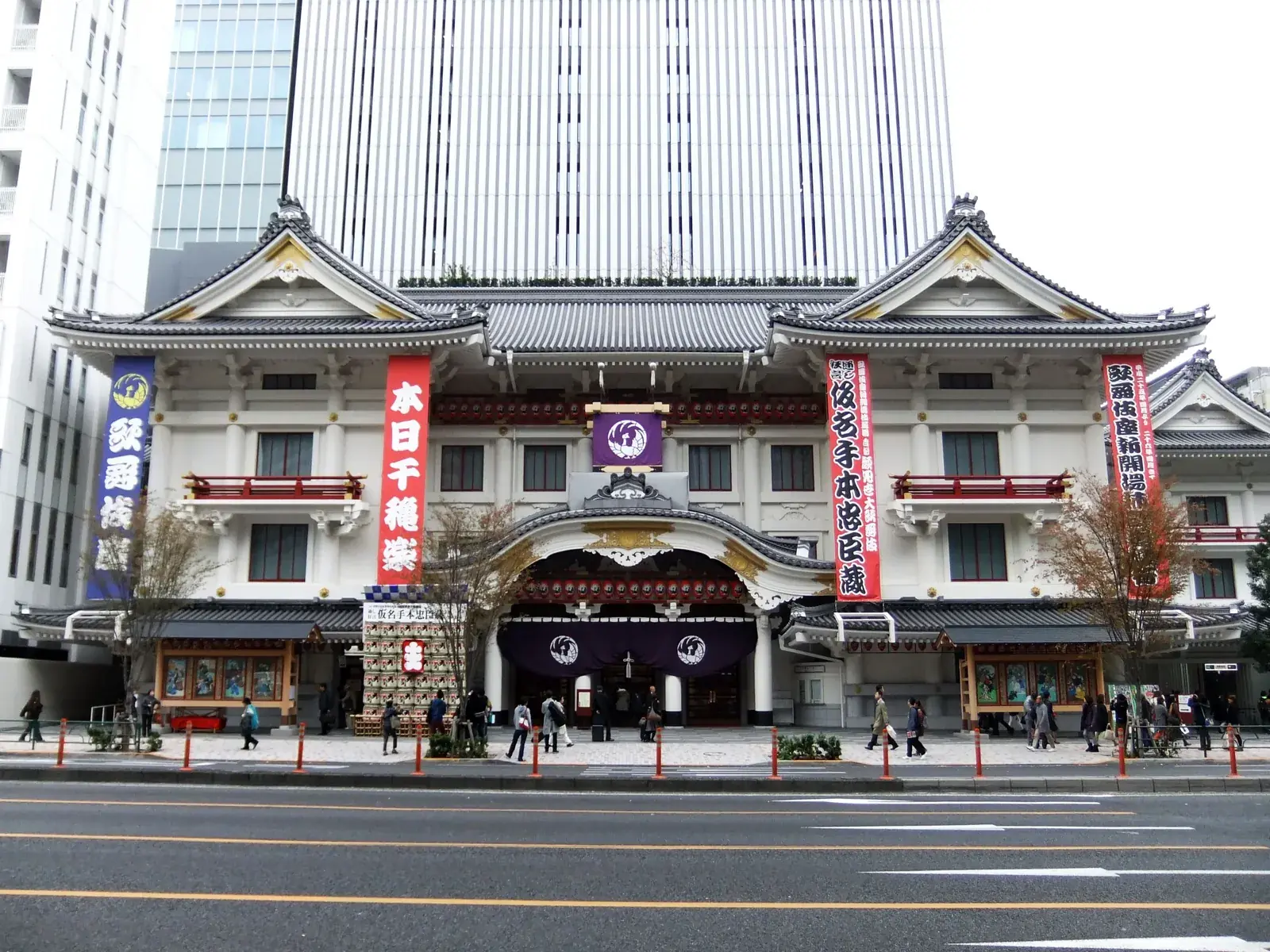
The Kabuki-za in Ginza opened in 1889 and has been destroyed and rebuilt repeatedly; the current building, completed in 2013, is by Kengo Kuma and keeps the traditional façade with an office tower behind it.
Two programmes run most days, typically a matinee around eleven and an evening around four thirty. Each contains several acts from different plays.
Hitomaku-mi — single-act viewing — is sold on the day, at a separate window on the left of the building, for the top gallery. It is cheap, unreserved, and there is no re-entry once you go up. Ask about the English guide at the window; it makes the difference between a beautiful blur and a story.
A woman, in men's clothes, doing something new
And have not returned to kabuki since
Adult-male kabuki, and the birth of the onnagata
Decades before it appears in Europe
Destroyed and rebuilt several times since
Kengo Kuma; traditional façade, tower behind
Buy a same-day single-act ticket at the left-hand window of the Kabuki-za, rent the English guide, and go up to the gallery.
Yes. The Kabuki-za in Ginza sells single-act tickets — hitomaku-mi — on the day from a separate window on the left of the building, for the top gallery. An act runs sixty to ninety minutes against about four hours for a full programme, at roughly a tenth of the price, which is why it suits a port day.
Kabuki was created around 1603 by a female performer, Izumo no Okuni, but all-female troupes were banned in 1629 and all-young-men troupes in 1652. What survived was adult-male kabuki, and the restriction produced the onnagata — the male specialist in female roles, trained from childhood in a stylised form refined over three centuries.
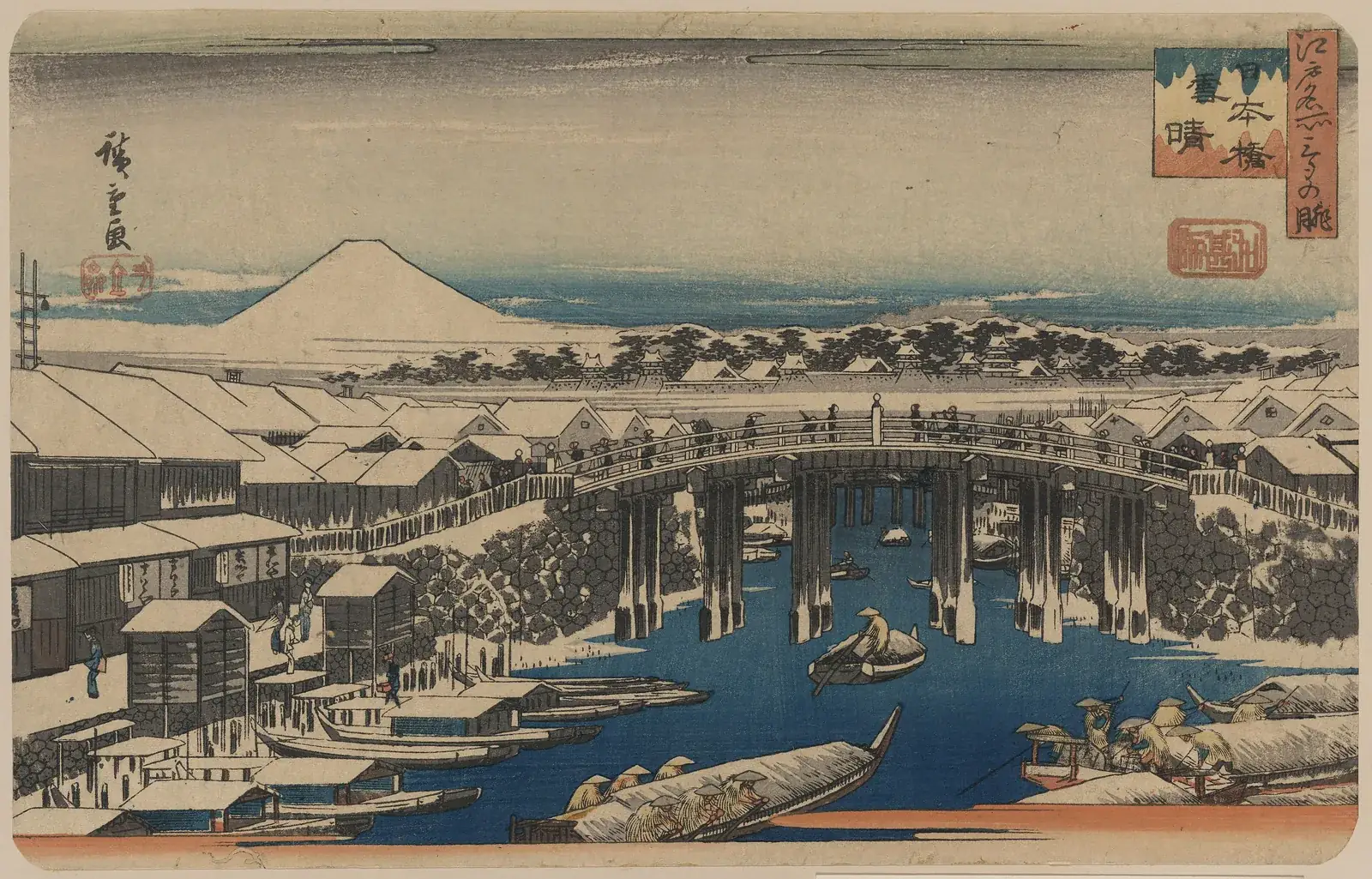
How a marsh became the largest city on earth, burned down repeatedly, and kept its shape
Read →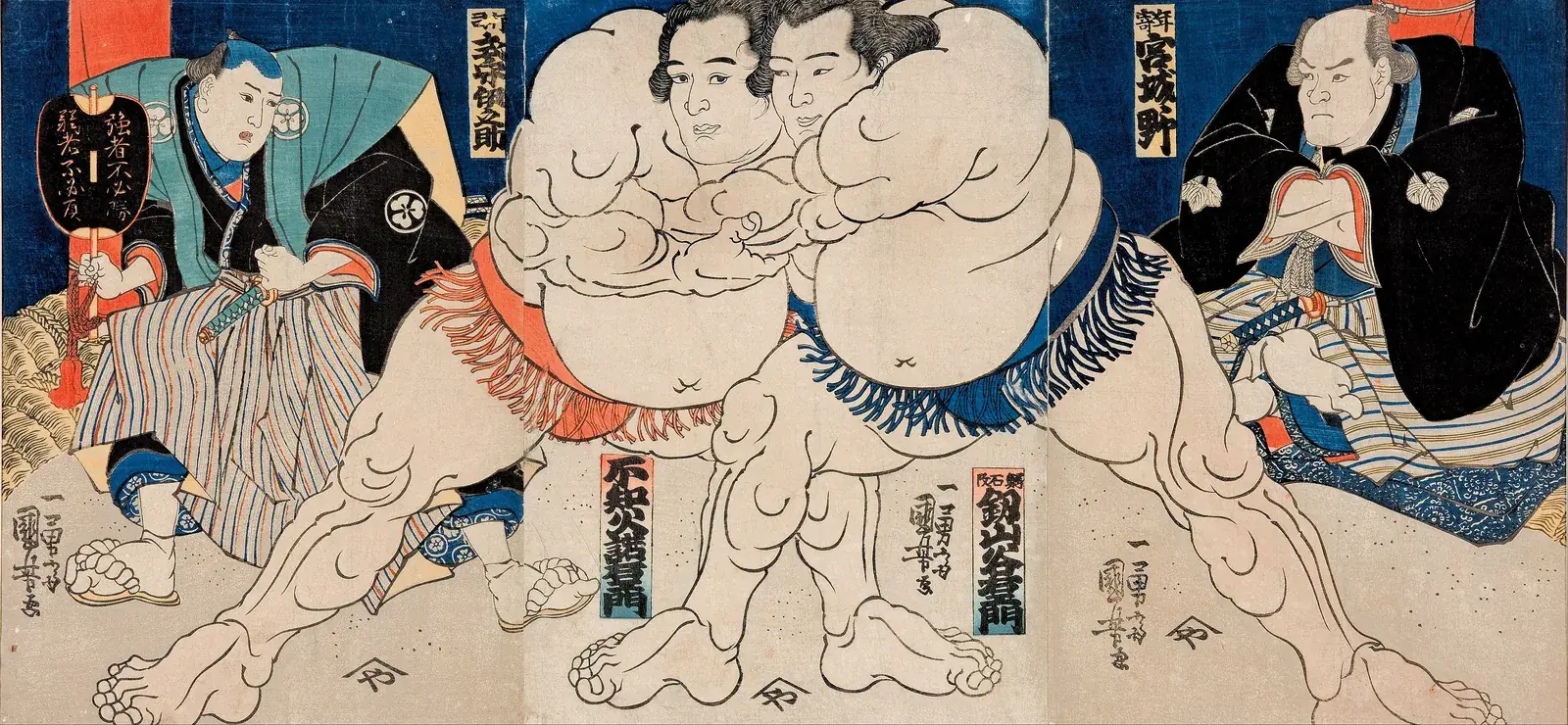
Fifteen days, three times a year, in one building — and the bouts last seconds
Read →
Sushi was street food, the pieces were twice this size, and none of it was raw
Read →
Founded in 628 for a statue nobody has ever seen
Read →No typing needed — jump straight in:
Just docked? — the gangway toolStart from your shipThe ride from every berthAsk the editorGlossary