~4h with the hells — the round trip from the gangway, with the 60-minute margin kept aside.
Tap a photo to see it large. 2 photographs, each credited.
Rent a steam vent, lower your basket of seafood and vegetables into the earth, eat what the volcano cooked. Interactive, cheap, unforgettable — the Kannawa kobo runs it all day.
More hot water comes out of this town than anywhere in Japan, and second place is not close
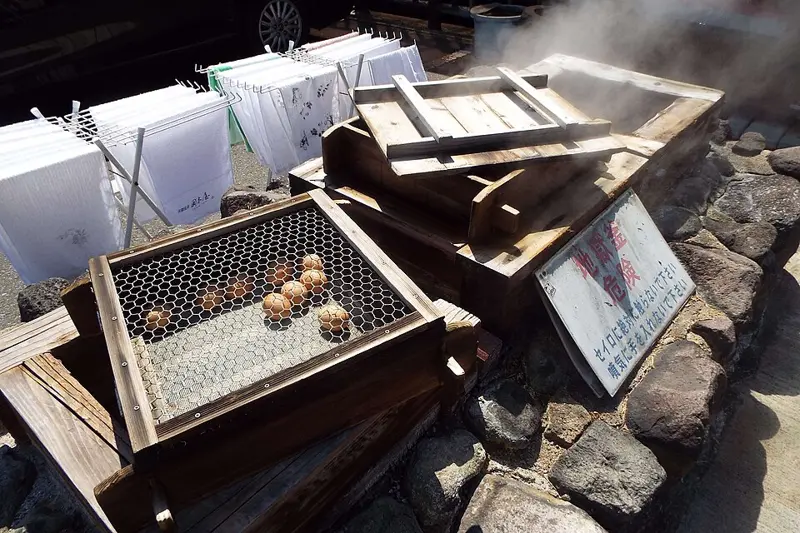
Jigoku-mushi is cooking with steam straight from the ground, a Kannawa habit that predates gas. You buy a basket of seafood, eggs and vegetables, put it in a stone box over a vent, and wait the posted number of minutes. The salt and minerals in the steam season the food.
Beppu has around 2,200 hot spring vents and discharges more hot water than any other town in Japan — a volume second in the world only to Yellowstone. Steam comes out of drains, gardens and the gaps between houses, and the local word for the seven most violent springs is "hells."
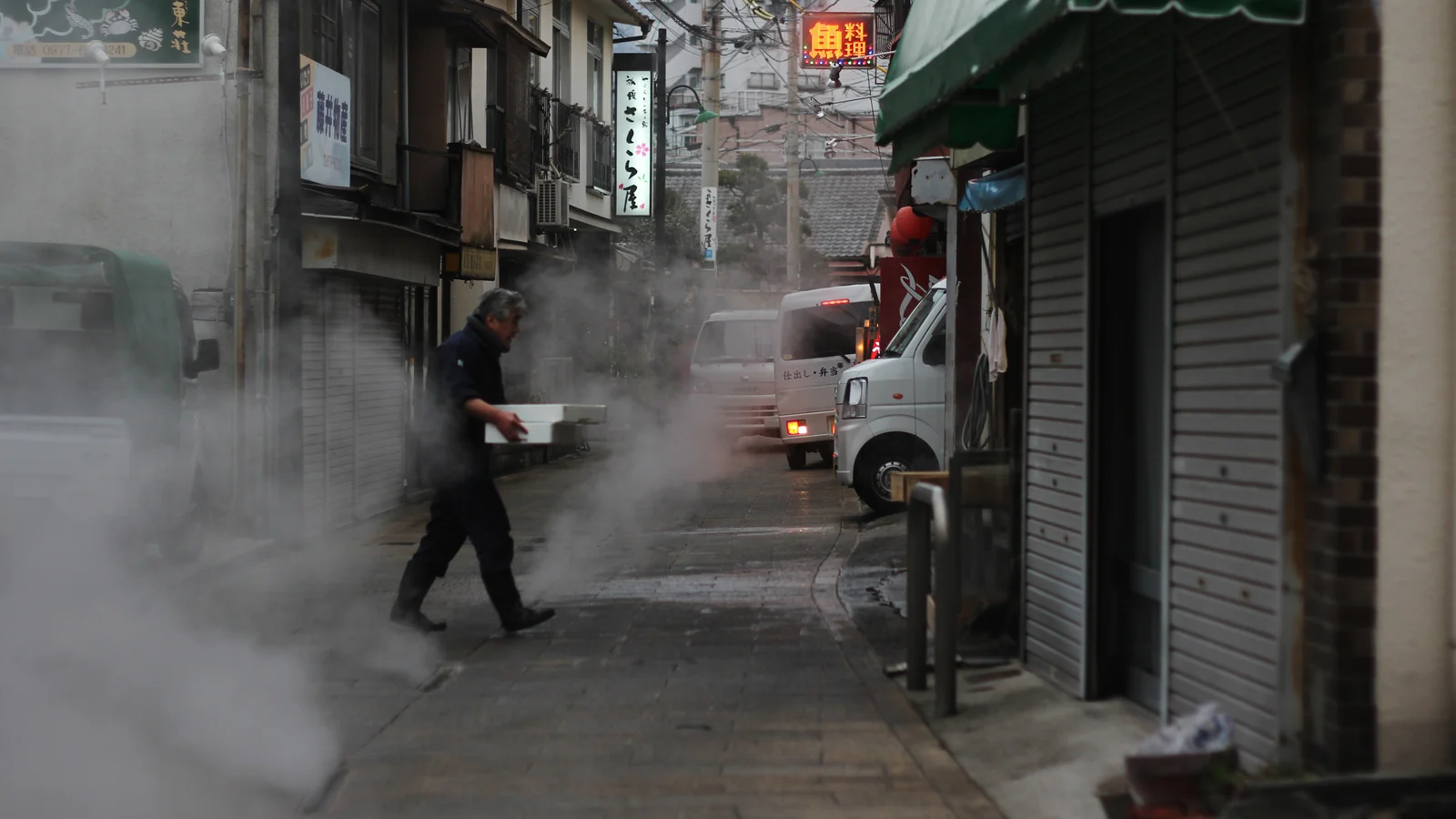
Kannawa is the district where Beppu's steam is thickest — it comes out of drains, gardens and the gaps between houses, and on a cold morning the whole neighbourhood disappears into it. This is the yukemuri view that is a designated national scenic asset.
At the Jigoku Mushi Kobo you buy raw ingredients, load a woven basket, and lower it into a stone steam chamber. Ten to twenty minutes depending on what you chose. The steam is around 100°C and slightly salty, so it seasons as it cooks — households here have done this for centuries and some kitchens still have their own steam box.
As a hazard to be avoided, not a sight
Straw beds under thatched huts, still done that way
The sand bath, in a wooden building rebuilt 1938
Beppu becomes a national tourist town
Steam-cook your own lunch at Kannawa, then a sand bath at Takegawara. The hells are optional; these are not.
The one the queue agrees on, the one people who live here use instead, and the one nearest your ship. Opening days change; check before you build a day around one.
Buy a basket, put it in a stone box over a steam vent, wait the posted minutes. The minerals in the steam do the seasoning.
Open in Google MapsClosest to the berthKannawa steam lanes鉄輪温泉Steam comes out of the drains all over this district; several inns will let you cook in theirs.
Open in Google MapsBoth pins on one map, so the distance is a fact rather than a feeling.
You buy raw ingredients — prawns, eggs, corn, sweet potato, vegetables — load them into a woven basket and lower it into a stone geothermal chamber for ten to twenty minutes. The steam runs at around 100°C and is slightly salty, so it seasons the food as it cooks and very little needs adding.
For most short calls, yes. The hells circuit costs around ¥2,200 and takes two and a half hours to look at water you cannot touch. Kannawa is free to walk, has scattered foot baths, and lets you cook your own lunch in the ground — it is closer to how the town actually works.
Each one is a finished day we have walked and timed, with this stop in it. Read the route rather than assembling it yourself.
Each of these still lands you back aboard with the hour to spare.
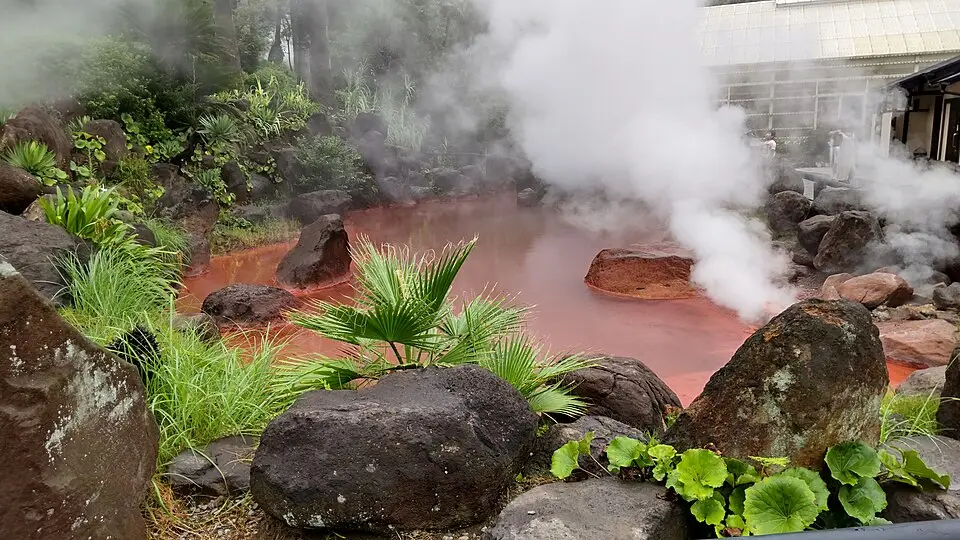 See · ~4h circuit
Cobalt ponds, blood-red pools, a geyser on a timer — seven volcanic "hells" you view, not bathe in.
See the detail →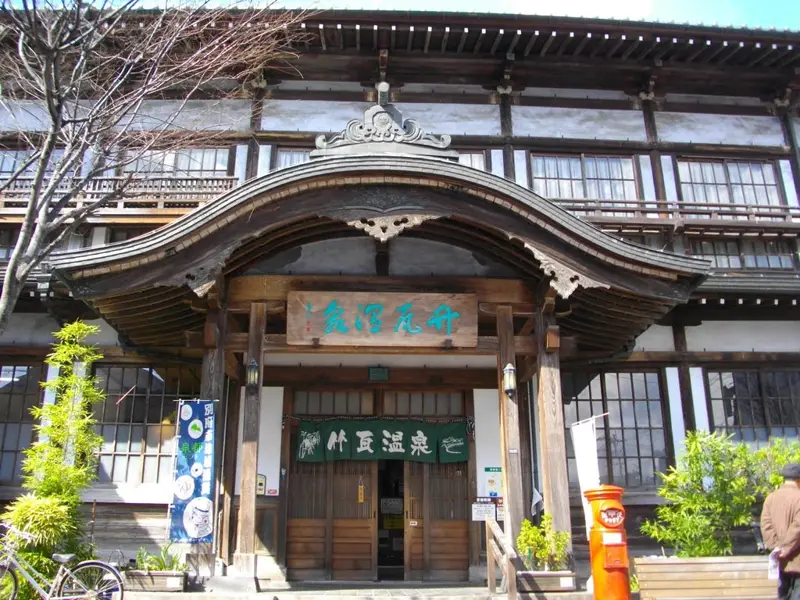 Do · ~3h
Attendants shovel volcanically heated sand over you until only your face is left thinking.
See the detail →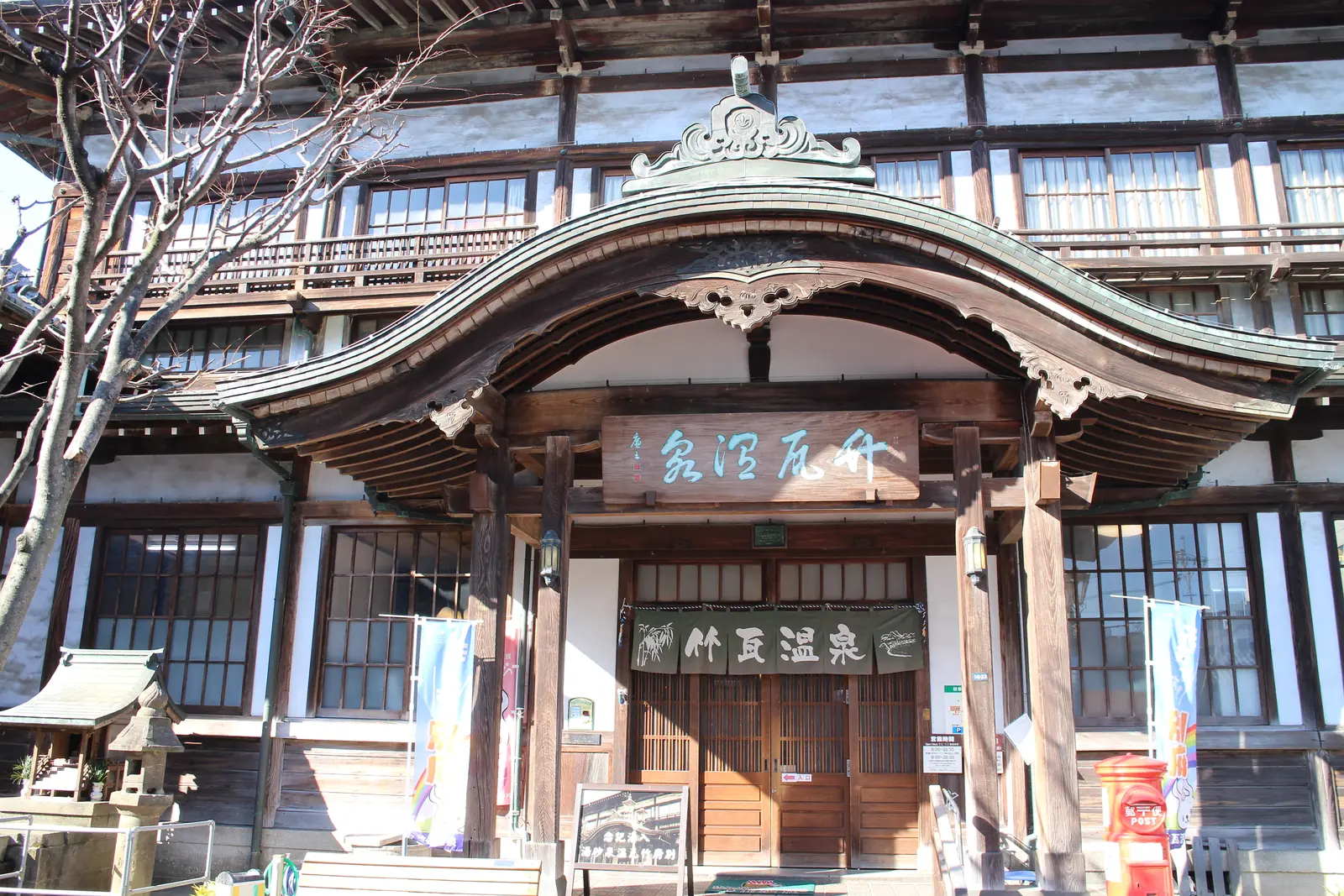 See · ~2.5h with downtown
The 1879 grand dame of public baths under a temple-grade roof — entry costs pocket change and the wooden lobby alone is worth the trip.
See the detail →No typing needed — jump straight in:
Just docked? — the gangway toolStart from your shipThe ride from every berthAsk the editorGlossary