More hot water comes out of this town than anywhere in Japan, and second place is not close
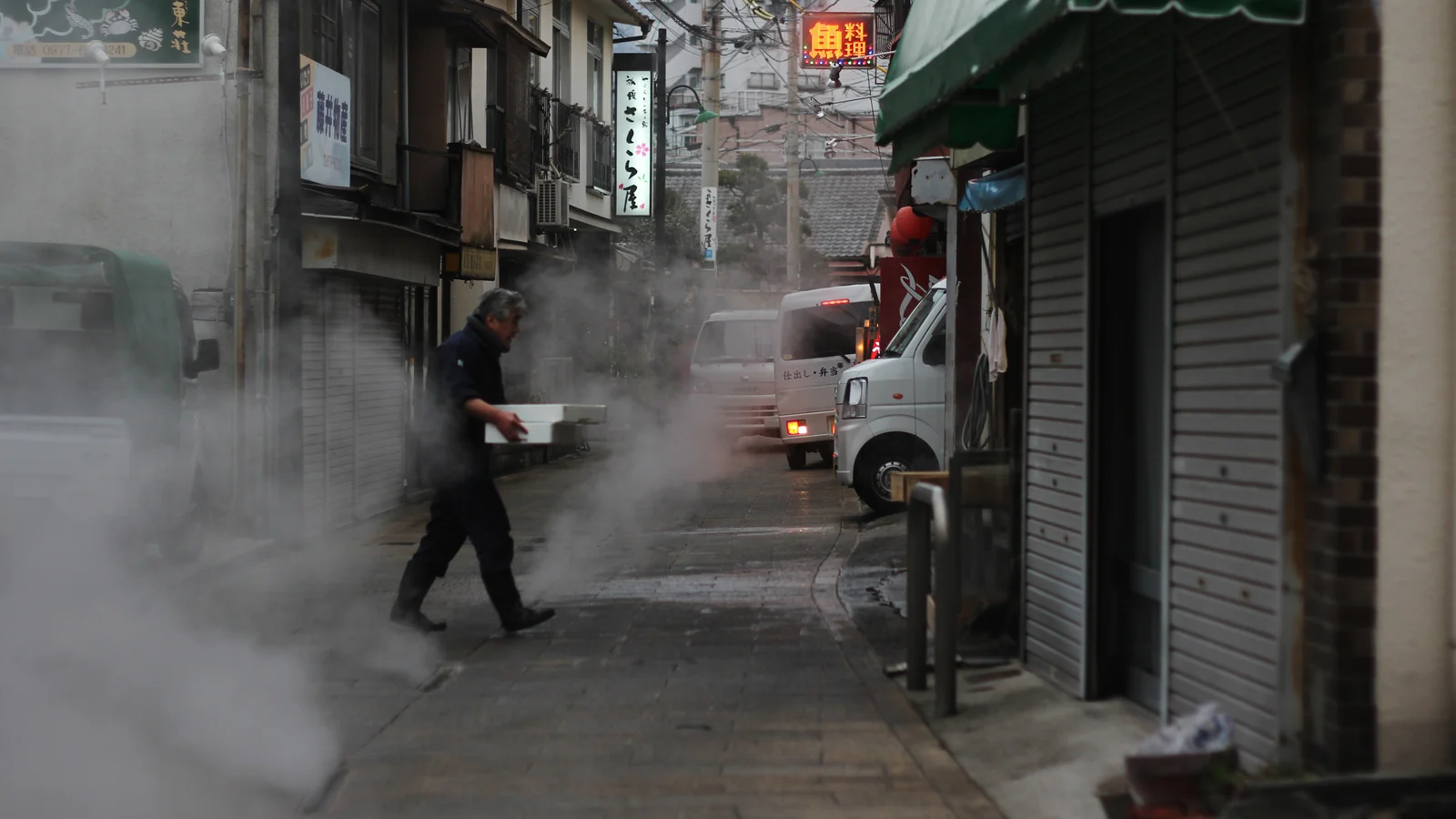
Beppu has around 2,200 hot spring vents and discharges more hot water than any other town in Japan — a volume second in the world only to Yellowstone. Steam comes out of drains, gardens and the gaps between houses, and the local word for the seven most violent springs is "hells."
The town sits on the flank of a volcanic caldera on the north-east coast of Kyushu. Rainwater sinks, meets heat, and comes back up — everywhere, continuously, in more chemical varieties than almost anywhere on earth. Beppu has springs of seven of the nine recognised categories of Japanese hot spring water.
Some vents are far too hot and too chemically aggressive to bathe in. For most of history these were places to avoid, and people called them jigoku — hells. Around a thousand years ago they appear in records as a hazard, not an attraction.
Seven of them are now a paid circuit, and they are genuinely different from each other:
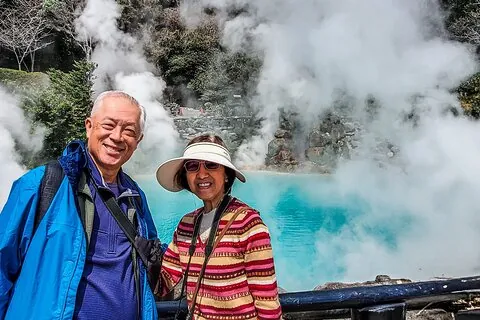
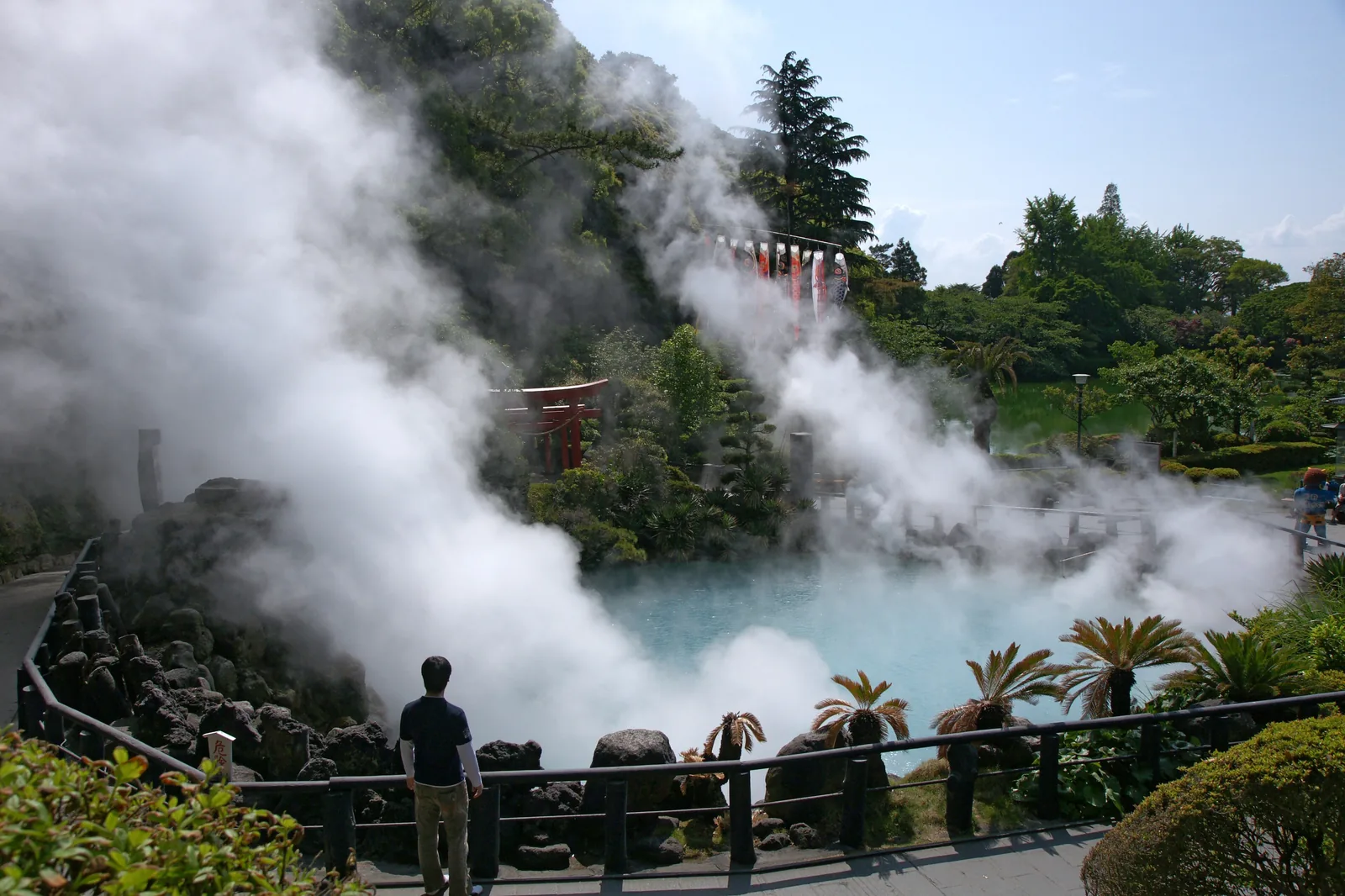
Umi Jigoku — "sea hell" — is cobalt turquoise, and the colour is dissolved iron sulphate, not a dye. It is around 98°C. Chinoike Jigoku — "blood pond hell" — is deep red from iron-rich clay and is documented as the oldest natural hell in Japan. Tatsumaki Jigoku is a geyser that erupts on a roughly half-hourly cycle, with a stone slab placed over it to keep the jet down for safety.
Two of the hells are designated National Places of Scenic Beauty. This is a town where the geology is legally a landscape.
The hells are for looking at. The bathing happens elsewhere and is the better half of Beppu.
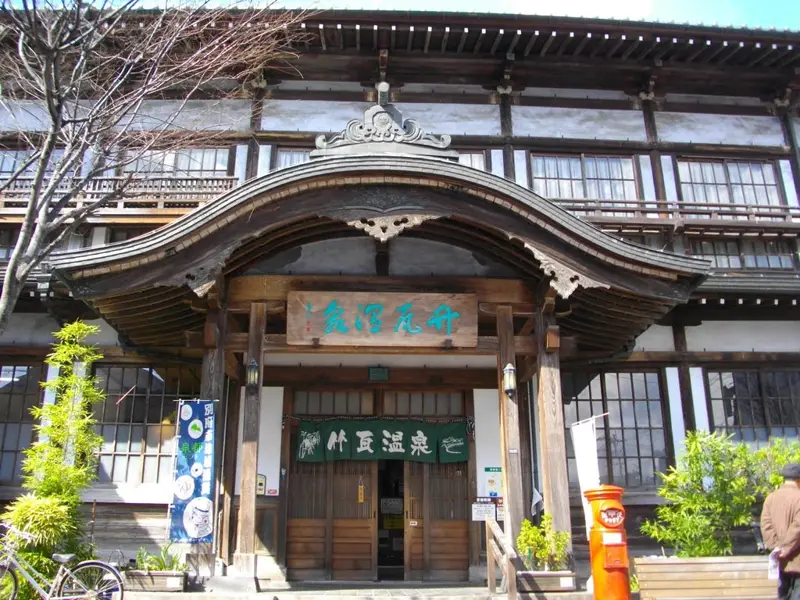
Takegawara Onsen, in a wooden building from 1879 rebuilt in 1938, offers the sand bath: you lie in a shallow trench in a yukata and attendants shovel geothermally heated sand over you until only your head shows. Ten minutes is the recommended limit. It is heavier than you expect and the sensation of the weight is the point.
At Myoban, up the hill, thatched huts sit over vents where mineral crystals — yunohana — are grown on straw beds over months and scraped off. The technique dates to the eighteenth century and is a designated Important Intangible Folk Cultural Property. You can buy a bag and turn a bathtub anywhere into this.
At Kannawa, the district where the steam is thickest, the Jigoku Mushi Kobo lets you buy raw ingredients, put them in a basket, and lower them into a stone steam vent. Vegetables take ten minutes, seafood a little more. The steam is around 100°C and slightly salty, and it seasons the food as it cooks.
Local families have cooked this way for centuries, and some houses in Kannawa still have a steam box in the kitchen.
As a hazard to be avoided, not a sight
Straw beds under thatched huts, still done that way
The sand bath, in a wooden building rebuilt 1938
Beppu becomes a national tourist town
Second in the world only to Yellowstone
Steam-cook your own lunch at Kannawa, then a sand bath at Takegawara. The hells are optional; these are not.
Seven hot springs too hot and chemically aggressive to bathe in, presented as a paid viewing circuit. Umi Jigoku is cobalt turquoise from dissolved iron sulphate at around 98°C; Chinoike Jigoku is deep red from iron-rich clay and is the oldest documented natural hell in Japan; Tatsumaki is a geyser on a roughly half-hourly cycle.
If your call is short, skip the hells. The combined ticket is around ¥2,200 and takes two and a half hours. Kannawa — where you steam-cook your own lunch in a stone vent, walk the steaming lanes and use a foot bath — is cheaper, faster and closer to how the town actually works.
Eight distinct spring towns, one of which is a shed with a locked door and an honesty box
Read →
The showman who invented Japanese tourism, and got a hell painted for it
Read →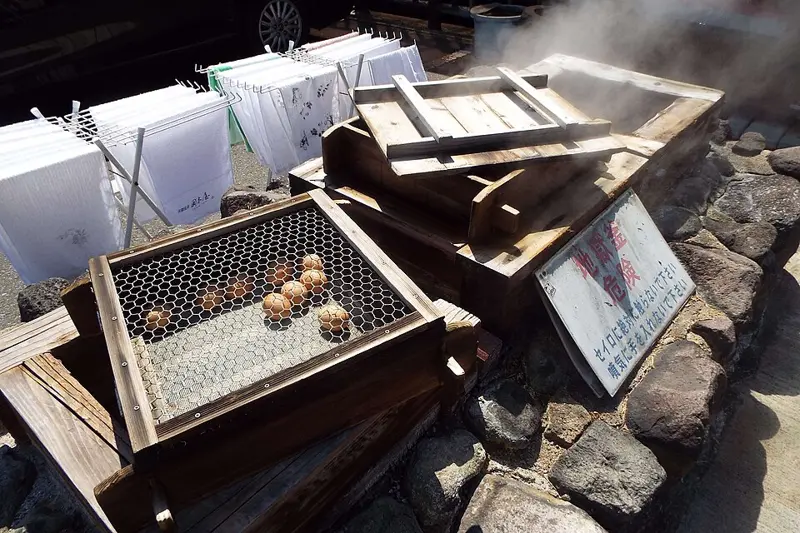
Steam, chicken tempura, and cold noodles in a hot bowl
Read →
The two towns are an hour apart and they are opposites
Read →No typing needed — jump straight in:
Just docked? — the gangway toolStart from your shipThe ride from every berthAsk the editorGlossary