Steam, chicken tempura, and cold noodles in a hot bowl
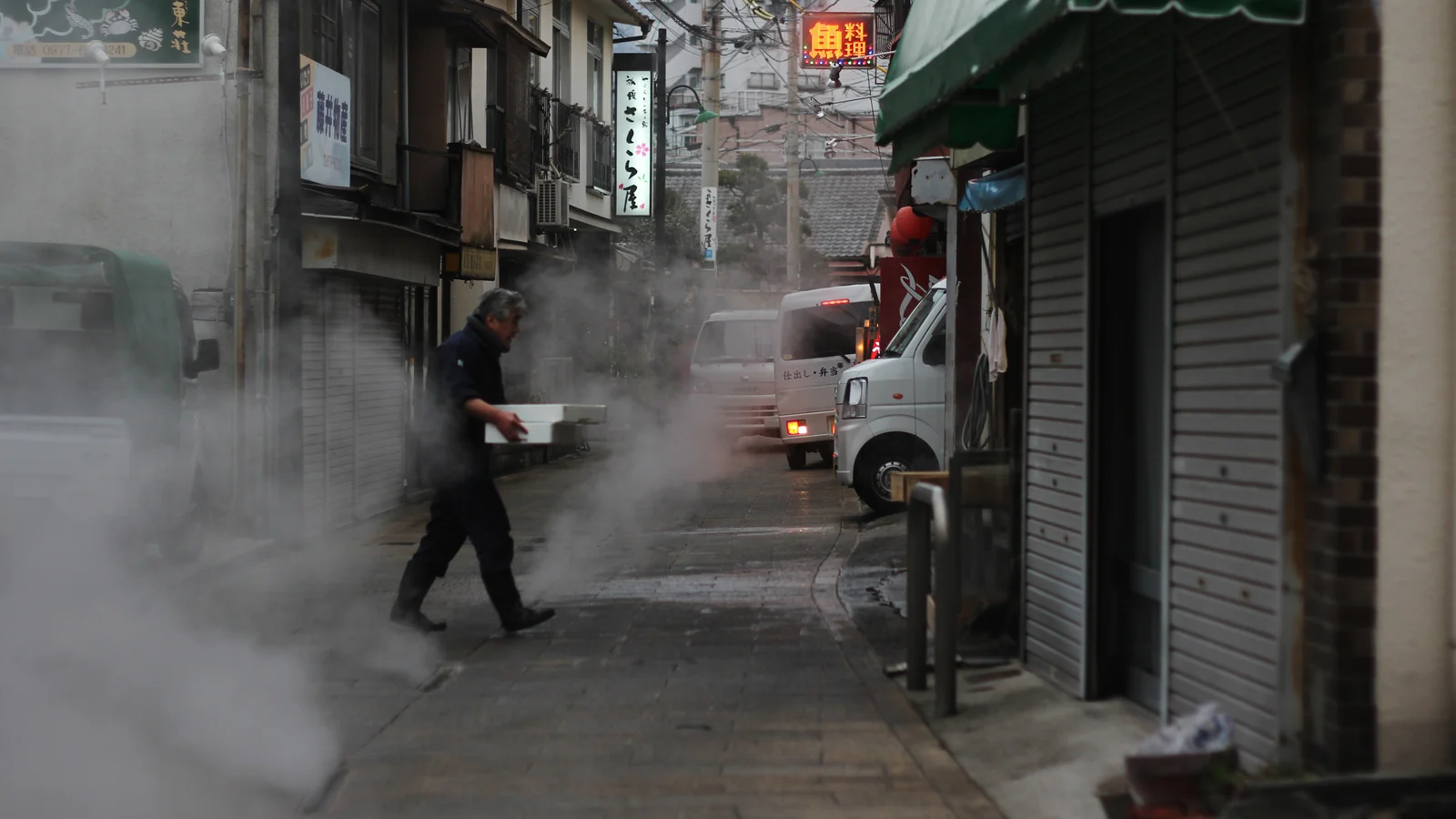
Oita eats things the rest of Japan does not: chicken as tempura, cold noodles served in hot soup, and vegetables cooked in a hole in the ground by steam that comes out at a hundred degrees and tastes faintly of salt.
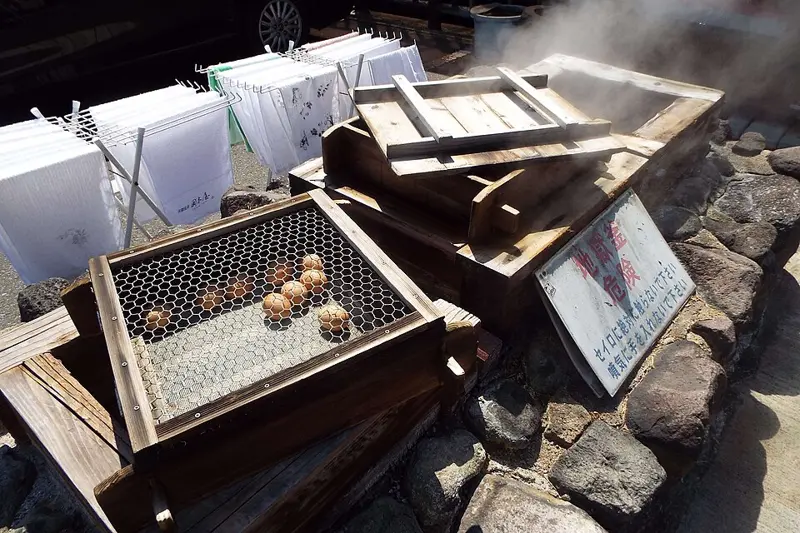
Jigoku-mushi is steaming food directly in a geothermal vent. At Kannawa's public steam kitchen you buy raw ingredients — prawns, corn, sweet potato, eggs, whole vegetables, sometimes chicken — put them in a woven basket, and lower them into a stone chamber.
Ten to twenty minutes depending on what you chose. The steam is slightly salty and mineral, so it seasons as it cooks and the food needs almost nothing added. Local households have cooked this way for centuries and some Kannawa kitchens still have their own steam box.
A steamed egg out of a Beppu vent tastes different from a boiled egg. That is not romance — it is dissolved minerals in the steam.
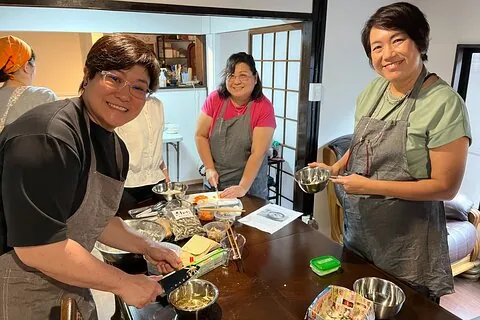
Toriten is chicken marinated in soy, ginger and garlic, then fried in a tempura batter and served with ponzu and mustard. It is not karaage — the batter is light and the marinade is the point — and it belongs to Oita specifically.
It is on every ordinary menu in the prefecture, it costs very little, and it is the single most reliable thing to order if you want to eat what people here actually eat.
Beppu reimen was created by a Manchurian-trained cook after the war and is a genuine local oddity: chewy, thick, cold-served wheat noodles in a broth that is hot, made from beef and chicken, topped with kimchi and a slice of apple or pear.
The temperature contradiction is deliberate and it works. Ask for it and watch a Beppu person approve of you.
The straits north of here produce seki-aji and seki-saba — horse mackerel and mackerel caught in fierce tidal currents off Saganoseki, line-caught one at a time and handled so carefully that they are among the most expensive fish of their kind in Japan.
Mackerel is normally cooked, because it spoils fast. Seki-saba is served raw, and that is the entire point of it.
Kannawa kitchens with their own steam boxes
Cold noodles, hot broth, kimchi and apple
Chicken, marinated, in tempura batter
Line-caught in the straits; mackerel served raw
Buy raw ingredients at Kannawa's steam kitchen and cook them yourself. Then toriten with mustard and ponzu.
Cooking food directly in geothermal steam. At Kannawa's public steam kitchen you buy raw ingredients, put them in a basket and lower them into a stone chamber for ten to twenty minutes. The steam is around 100°C and slightly salty, so it seasons the food as it cooks — a steamed egg from a Beppu vent tastes measurably different from a boiled one.
Jigoku-mushi steam cooking, toriten (marinated chicken in tempura batter, an Oita speciality served with ponzu and mustard), and Beppu reimen — chewy cold noodles served in hot beef-and-chicken broth with kimchi and a slice of apple. The straits nearby also produce seki-saba, line-caught mackerel good enough to serve raw.
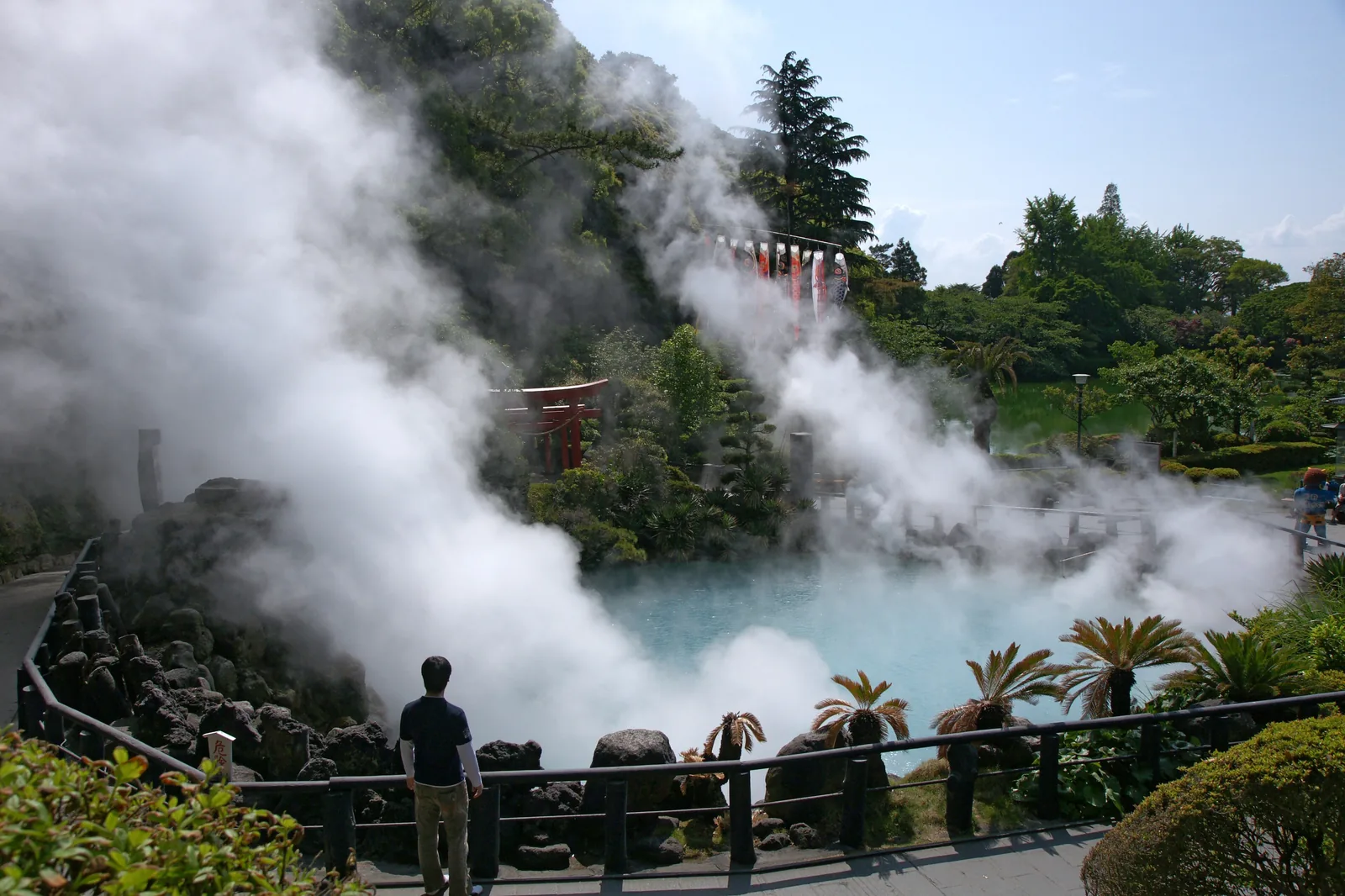
More hot water comes out of this town than anywhere in Japan, and second place is not close
Read →
Eight distinct spring towns, one of which is a shed with a locked door and an honesty box
Read →
The showman who invented Japanese tourism, and got a hell painted for it
Read →
The two towns are an hour apart and they are opposites
Read →No typing needed — jump straight in:
Just docked? — the gangway toolStart from your shipThe ride from every berthAsk the editorGlossary