Eight distinct spring towns, one of which is a shed with a locked door and an honesty box
Beppu is not one hot spring resort. It is eight — each with different water chemistry, a different character and a different price, ranging from a marble-floored hotel spa to a tin-roofed neighbourhood shed that costs a hundred yen and has no attendant.
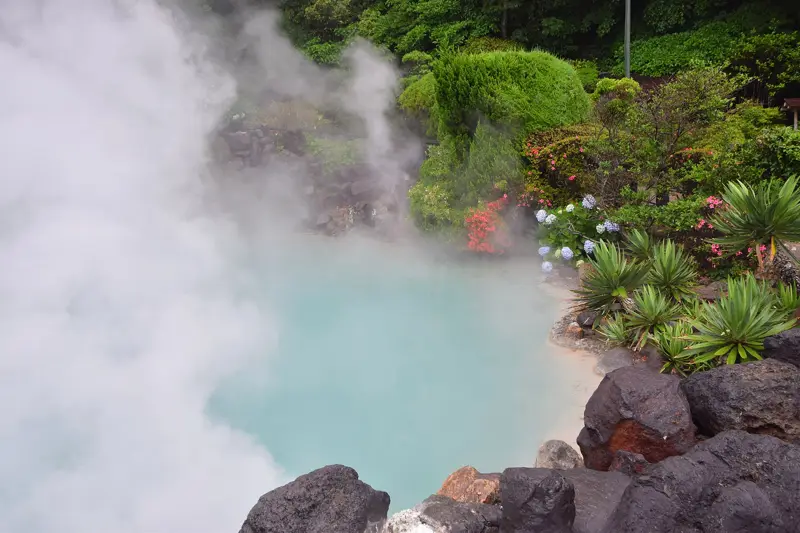
The Beppu Hatto — the eight springs of Beppu — are Beppu, Kannawa, Myoban, Kankaiji, Kamegawa, Hamawaki, Horita and Shibaseki. They are spread across the hillside and the shore, and the water genuinely differs between them: sulphur at Myoban, iron at Kannawa, simple alkaline near the shore.
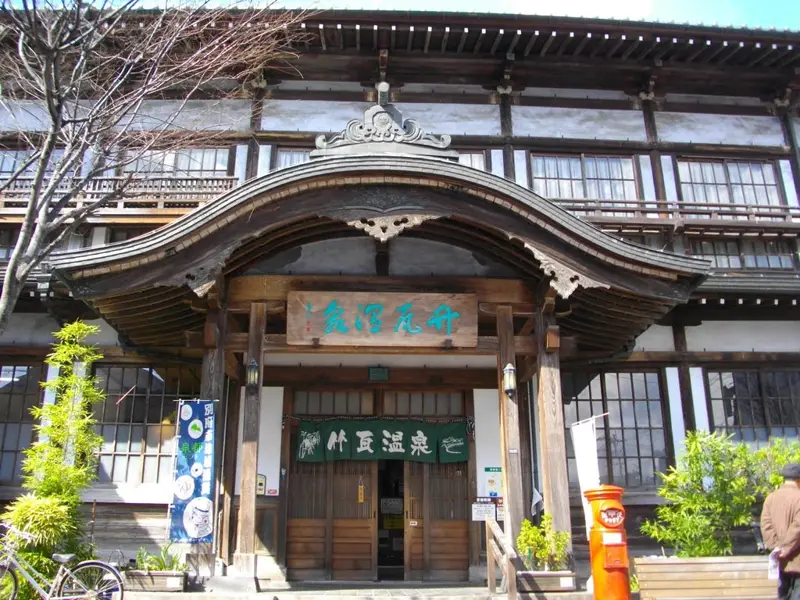
Beyond the famous baths, Beppu has a network of small municipal and neighbourhood-association bathhouses — plain concrete or wooden buildings, run collectively by the streets around them, often with no staff at all.
You put a coin in a box, you wash outside the tub, you get in. Entry is frequently ¥100 to ¥300. There is no shampoo, no towel, no English and usually no changing room worth the name. These are where Beppu bathes daily, and there are around a hundred of them.
Most visitors pay ¥1,500 for a hotel spa with a view. The town itself pays ¥100 for a shed with a good tub. The shed is the better experience.
Wash before you get in, sitting on the stool at the tap, and rinse the soap off completely. The tub is for soaking in clean, not for cleaning. Do not put your towel in the water — fold it on your head, which is what everyone else is doing.
Bathing is naked and separated by sex; the noren curtains are red for women and blue for men. Nobody looks at anybody. Tattoos are still refused at some facilities, though Beppu is more relaxed than most of Japan — the smaller neighbourhood baths generally do not care, and larger hotel spas sometimes do.
The Spa Passport scheme gives you a booklet stamped at participating baths across the eight districts. Collect eight stamps and you get a certificate; collect eighty-eight and you get a small ceremony and your name on a board. People do this over years.
On a port day you will manage two or three. That is enough to understand that the water is genuinely different in each.
Eight districts, eight water chemistries
The sand bath, and the town's emblem
~100 of them, at ¥100–300 and no staff
Eight stamps for a certificate; eighty-eight for a ceremony
Skip the hotel spa. Find a neighbourhood bath, pay the ¥100 into the box, and fold your towel on your head.
Beppu Hatto: Beppu, Kannawa, Myoban, Kankaiji, Kamegawa, Hamawaki, Horita and Shibaseki. They are separate districts spread across hillside and shore, and the water chemistry genuinely differs — sulphur at Myoban, iron at Kannawa, simple alkaline near the coast.
Wash and rinse completely before entering the tub, sitting on the stool at the tap. Do not put your towel in the water — fold it on your head. Bathing is naked and separated by sex, with red curtains for women and blue for men. Beppu is more relaxed about tattoos than most of Japan, especially at the small neighbourhood baths.
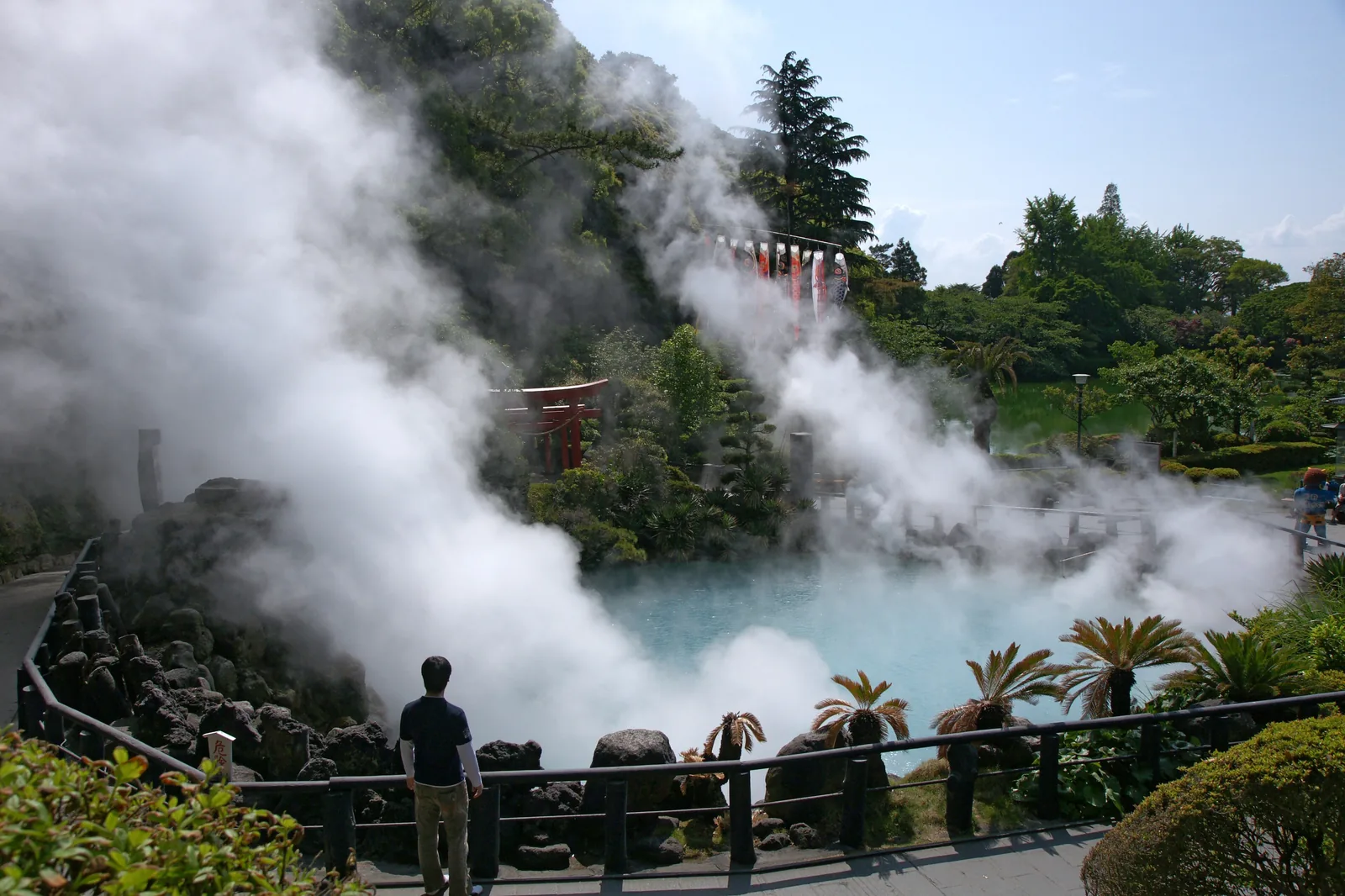
More hot water comes out of this town than anywhere in Japan, and second place is not close
Read →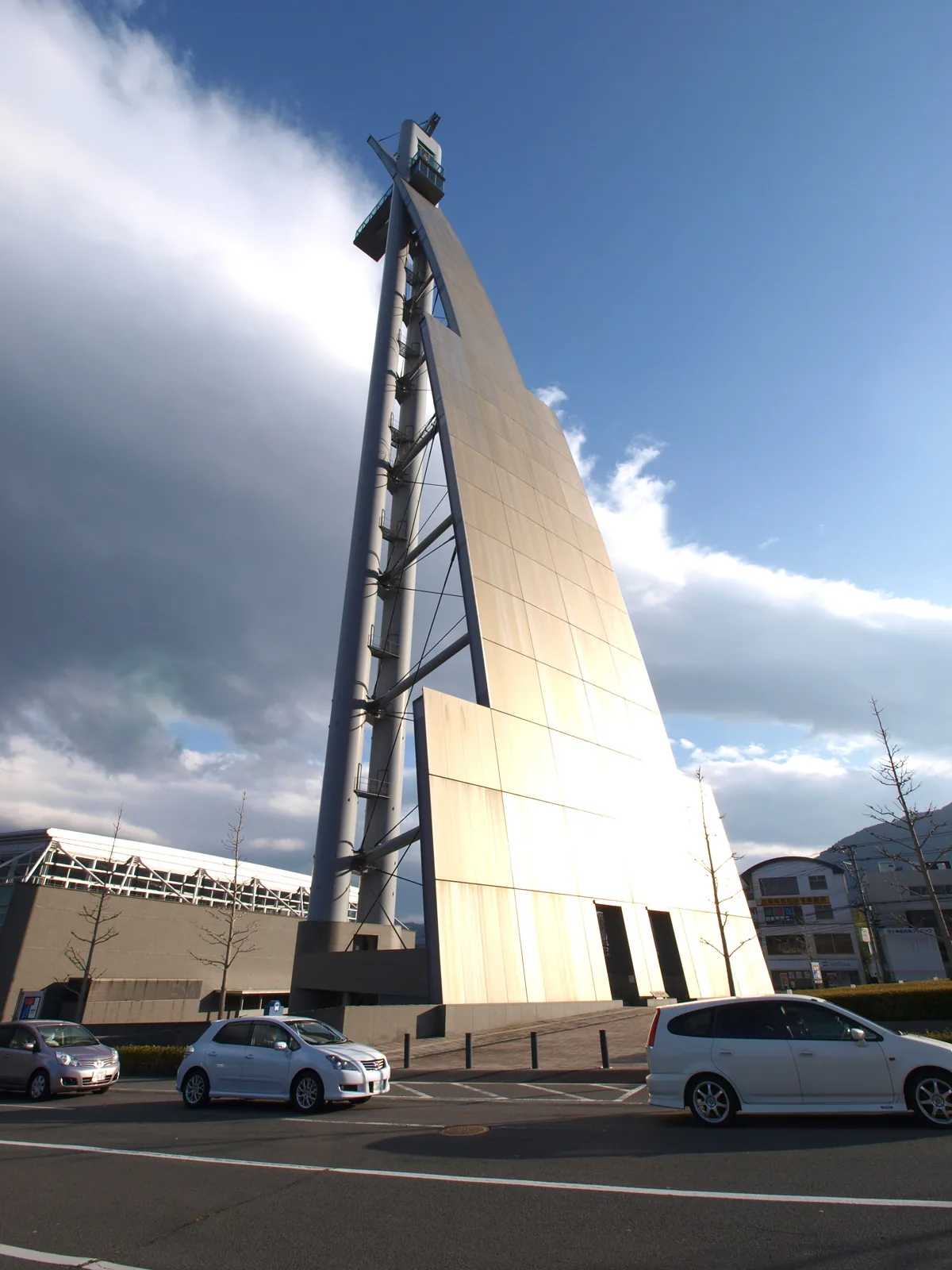
The showman who invented Japanese tourism, and got a hell painted for it
Read →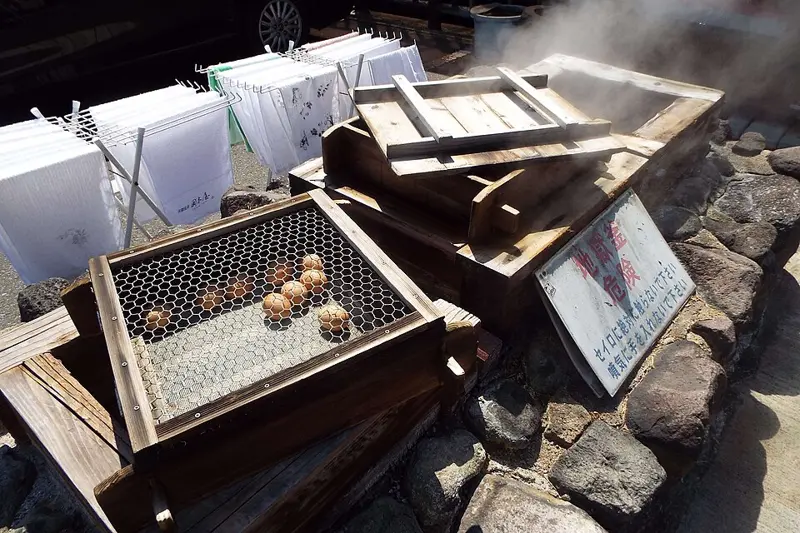
Steam, chicken tempura, and cold noodles in a hot bowl
Read →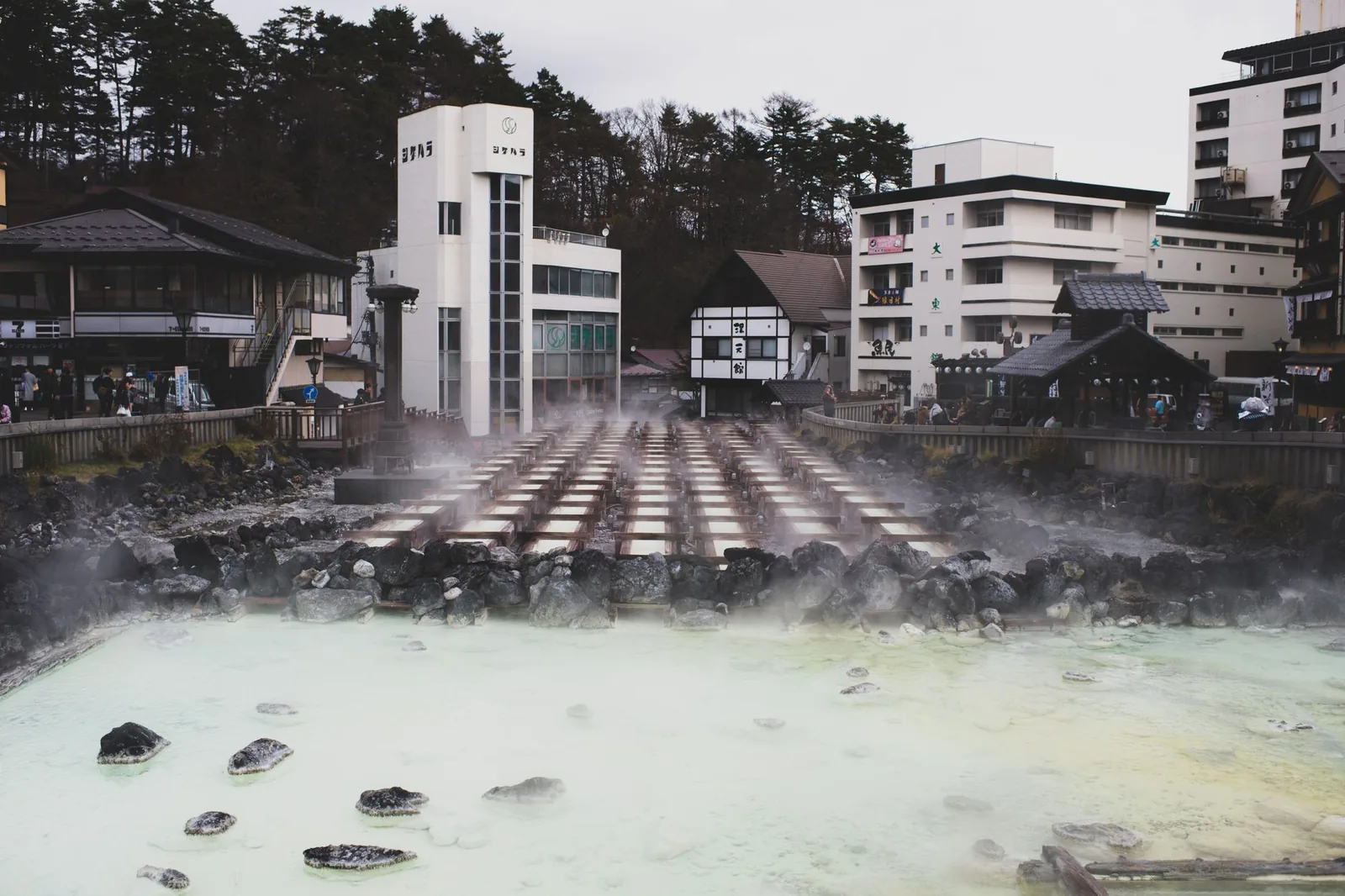
The two towns are an hour apart and they are opposites
Read →No typing needed — jump straight in:
Just docked? — the gangway toolStart from your shipThe ride from every berthAsk the editorGlossary