
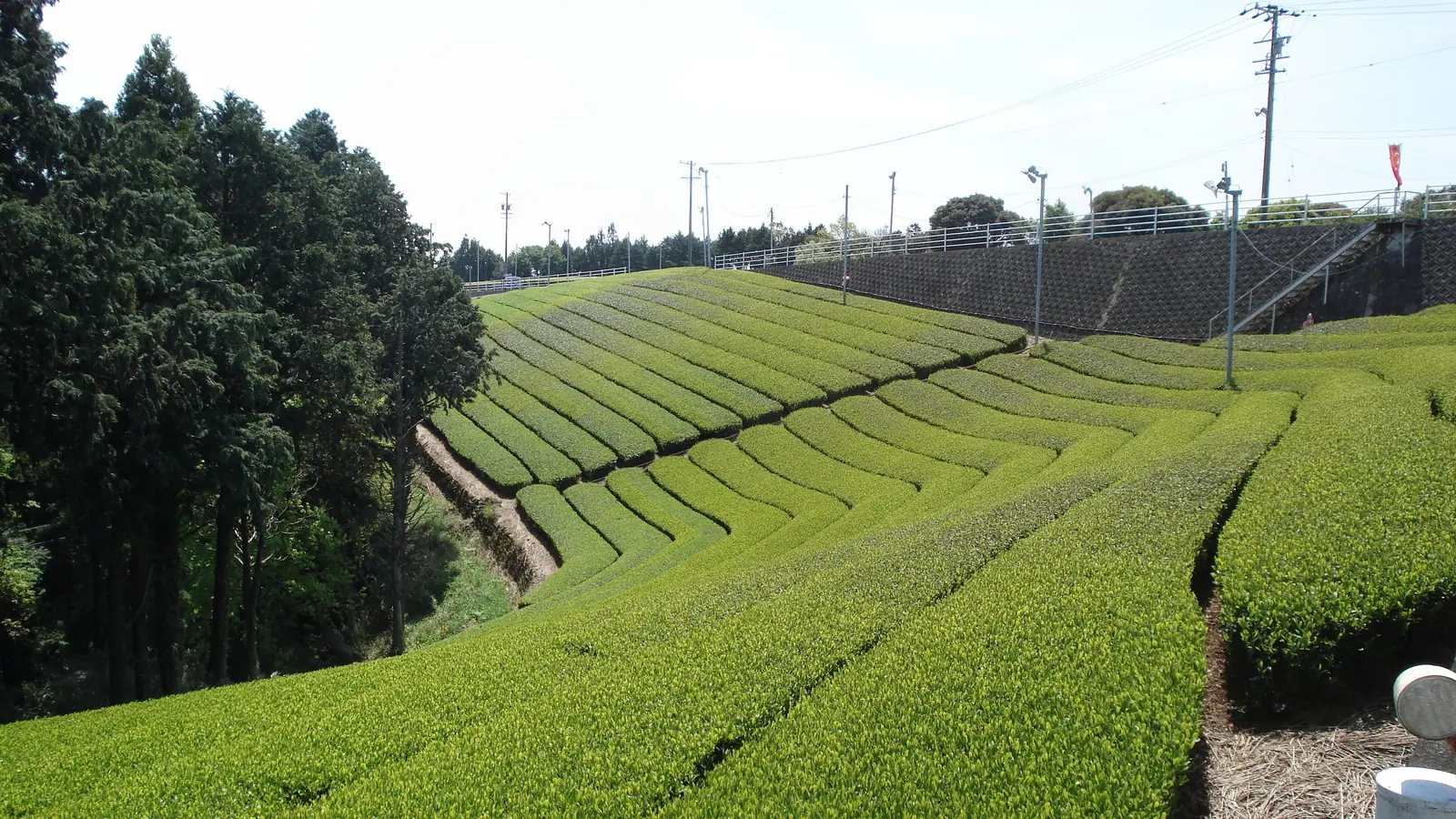
The Makinohara plateau
Samurai with hoes, river porters without a river, and the tea that came of it
In 1869 the shogun's bodyguards lost their job. The next year the porters who carried travellers across the Oi River lost theirs. Both groups were sent up the same empty hill to plant tea.
The Makinohara plateau rises on the right bank of the lower Oi River, in the middle of Shizuoka Prefecture. It is a gentle hill, 50 to 200 metres high, with a dry loam soil. Before 1869 it was wasteland. The prefecture's tea research centre has stood on it since 1908. It now counts about 5,000 hectares of tea gardens there and calls it Japan's largest single tea-growing area.
Swords into hoes
When the shogunate fell, the last shogun, Tokugawa Yoshinobu, was moved to Shizuoka in 1867. His elite guard followed him. In 1869 they were released from duty. Katsu Kaishū, the statesman who had surrendered Edo, suggested they clear Makinohara. Their leader was Nakajō Kinnosuke Kageaki. The prefecture's account says the work meant turning swords into hoes. His statue still stands on the plateau.
In 1870 the government abolished the Oi River crossing system. For two centuries the river had no bridge, and travellers on the Tokaido were carried across on porters' shoulders. The porters were now out of work, and they joined the samurai on the hill.
Tea production began around 1873. In 1879 a tea entered at a Yokohama competition under the name "tea from the river porters' clearing" won an award. By the middle of the Meiji era most of the samurai and porters had drifted away, and local farmers carried the work on. By the early Taisho period, around 1915, most of the plateau was cleared.
Tea from the river porters' clearing: the prize label of 1879 says who did the digging.
The water problem
The plateau had no water. The Ministry of Agriculture's history records spring frosts and long dry spells killing young bushes and cutting the crop. Growers caught rain in tanks and carried water up from below in repeated trips. The lobbying that followed became a national irrigation project, begun in 1978 and finished in 1997. The pipes now water, feed, spray and frost-protect the gardens.
Yabukita
In 1908 the prefecture opened a tea division of its agricultural experiment station on the plateau. That year Sugiyama Hikosaburō selected the cultivar Yabukita, which went on to dominate Japanese tea. The national tea research station followed in 1919, and the Emperor inspected the gardens in 1930.
How much of Japan's tea is this?
In 2023 Shizuoka produced 27,200 tonnes of crude tea, 36 per cent of the national total, from 13,300 hectares. For sencha, the ordinary green tea, its share was about 41 per cent. Shizuoka and Kagoshima together make 71 per cent of Japan's tea. In 2024 Kagoshima overtook Shizuoka for the first time; the 2025 figure for Shizuoka was 24,100 tonnes, second in Japan. The prefecture counts more than twenty named tea districts.
The first auction
The year turns on one morning. The Shizuoka tea market's first new-tea auction was held on 18 April in both 2022 and 2025. The best lots sell for headline prices. In 2026 a tea called Takane no Kaori topped the trade at ¥1,180,000 a kilogram, the first year of electronic bidding. Tea merchants mark the day with an offering at the tea-ancestor hall of Rinzaiji temple in Shizuoka; in 2026 that was 28 April.
A cruise call in the second week of April lands at the edge of all this. The bushes are at their brightest green and picking has just begun on the plateau. The first-flush tea is a week or two from the shops.
Fukamushi: the mid-grade tea that won
The Makinohara district is warmer and sunnier than other tea areas. The government's geographical-indication file states the result: thicker leaves, more catechin, more astringency, and a reputation as a mid-grade tea. Around 1952 farmers in Rokugō village, now Kikugawa City, began experimenting. They found that steaming the leaf for far longer than usual took the bitterness out.
The long steam raises the soluble pectin that softens astringency. It also alters the chlorophyll, so leaf and liquor shift from green towards yellow-green. The tea is cloudy and thick in the cup. This is fukamushi, deep-steamed tea. It spread beyond Shizuoka in the 1960s and across Japan's tea districts in the 1970s. In 1979 the national tea competition created a separate class for it. Fukamushi Kikugawa-cha was registered as a geographical indication in March 2023.
Kakegawa, next door, dates its tea to the 1570s and has taken the national competition's area prize 25 times, a record. The whole district farms with chagusaba: silver grass and bamboo grass cut from meadows in autumn and laid between the rows as mulch. More than 300 plant species, nine of them endangered, survive in those meadows. The UN Food and Agriculture Organization listed the method as a Globally Important Agricultural Heritage System in May 2013.
How to taste it
The prefecture's own advice for new tea is simple. Water at 70 °C or below brings out the sweetness; about 80 °C gives a brisker, more fragrant cup. For a cold brew, put leaves in chilled water and leave it in the fridge for 20 to 30 minutes. Fukamushi leaf is already broken fine by the steaming, so it colours the water fast and needs only a short steep. Pour every drop, or the second cup turns bitter.
How it happened
- 1869The shogun's guard starts clearing
Nakajō Kageaki's men take up hoes on Katsu Kaishū's advice
- 1870The river porters join them
The Oi River crossing system is abolished
- 1879A prize in Yokohama
"Tea from the river porters' clearing" wins at a tea competition
- 1908Yabukita is selected
Sugiyama Hikosaburō's cultivar; the prefecture's tea station opens on the plateau
- c. 1952Deep steaming is worked out
Farmers in Rokugō village tame the astringent leaf
- 1978–1997Water reaches the plateau
The national Makinohara irrigation project
- 2013Chagusaba becomes world agricultural heritage
FAO listing in May; four cities and a town
- 2023Fukamushi Kikugawa-cha gets its GI
Registered in March
Where this becomes real on your port day
Grinpia's factory is a 25–30 minute taxi from the berth and the Tea Museum is about the same. On an eight-hour call both fit with Kakegawa Castle in an hourly-hire taxi.
The vocabulary of Shizuoka tea
- Shincha 新茶
- New tea: the first flush of spring. The Shizuoka market's first auction fell on 18 April in 2022 and 2025.
- Fukamushi 深蒸し
- Deep-steamed. The leaf is steamed far longer than usual, giving a thick, cloudy, mild cup; devised around 1952.
- Yabukita やぶきた
- The cultivar selected on the plateau in 1908, now the backbone of Japanese green tea.
- Chagusaba 茶草場
- Grass meadows cut for mulch between the tea rows; a world agricultural heritage since 2013.
- Kawagoshi ninsoku 川越人足
- The porters who carried Tokaido travellers across the bridgeless Oi River until 1870.
FAQ
Why is Makinohara famous for tea?
It is the largest single tea-growing area in Japan, about 5,000 hectares, cleared from 1869 by unemployed Tokugawa samurai and Oi River porters. The prefecture's tea research centre has stood on it since 1908, the year the Yabukita cultivar was selected there.
How much of Japan's tea comes from Shizuoka?
In 2023 Shizuoka made 27,200 tonnes of crude tea, 36 per cent of Japan's total, and about 41 per cent of its sencha. Kagoshima overtook it in 2024, and in 2025 Shizuoka's 24,100 tonnes ranked second. The two prefectures together produce 71 per cent.
What is fukamushi tea?
Deep-steamed green tea. The leaf is steamed much longer than for ordinary sencha, which cuts astringency and gives a thick yellow-green cup. Farmers in what is now Kikugawa, on the plateau, worked it out around 1952. Brew it with water at about 70 °C and a short steep.
Is a mid-April call good timing for tea?
Yes. The first new-tea auction in Shizuoka was held on 18 April in 2022 and 2025. Picking on the plateau began on 11 April in 2026. The gardens are at their greenest, though the new tea itself may not yet be in the shops.
More from Omaezaki
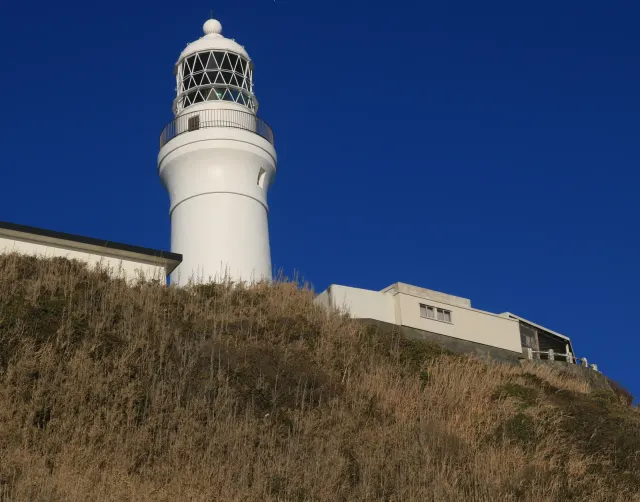
A Scotsman's brick tower on the reef coast where the Kuroshio meets the bay
Read →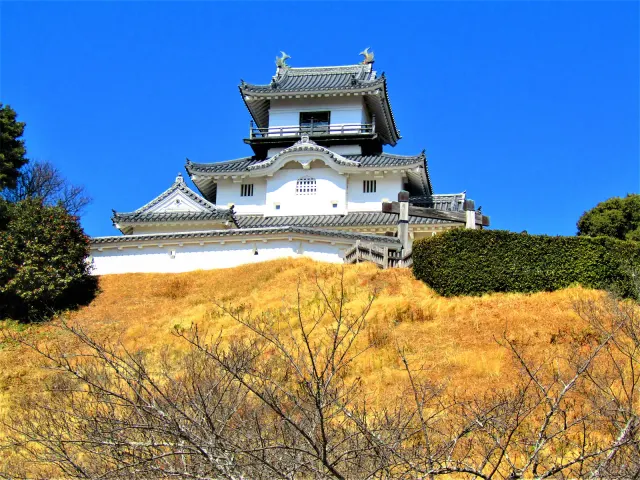
The keep that went to Kochi and came back in wood
Read →
Japan's deepest bay, its pink shrimp, its whitebait and the eels next door
Read →