Suruga Bay
Japan's deepest bay, its pink shrimp, its whitebait and the eels next door
The sea floor off this coast drops to 2,500 metres. That depth feeds a shrimp caught commercially nowhere else in Japan, and a fishery that shut itself down in 2018 to save it.
Suruga Bay opens between Cape Irōzaki on the Izu peninsula and Cape Omaezaki, a mouth about 56 kilometres wide. It runs about 60 kilometres inland and covers 2,300 square kilometres. Its deepest point is about 2,500 metres, which makes it Japan's deepest bay. Near the head, the bottom is already 500 metres down two kilometres from shore. Set against Fuji's 3,776-metre summit, the drop from peak to floor is more than 6,000 metres.
The prefecture's port office dates the bay to about 600,000 years ago, formed by the northward push of the Philippine Sea Plate. Three kinds of deep water sit in it: Kuroshio-derived, subarctic and Pacific deep water. Fuji adds the rest. The mountain takes about 2.5 billion tonnes of rain and snow a year, and its springs drain into the bay.
Sakura-ebi: the shrimp of one bay
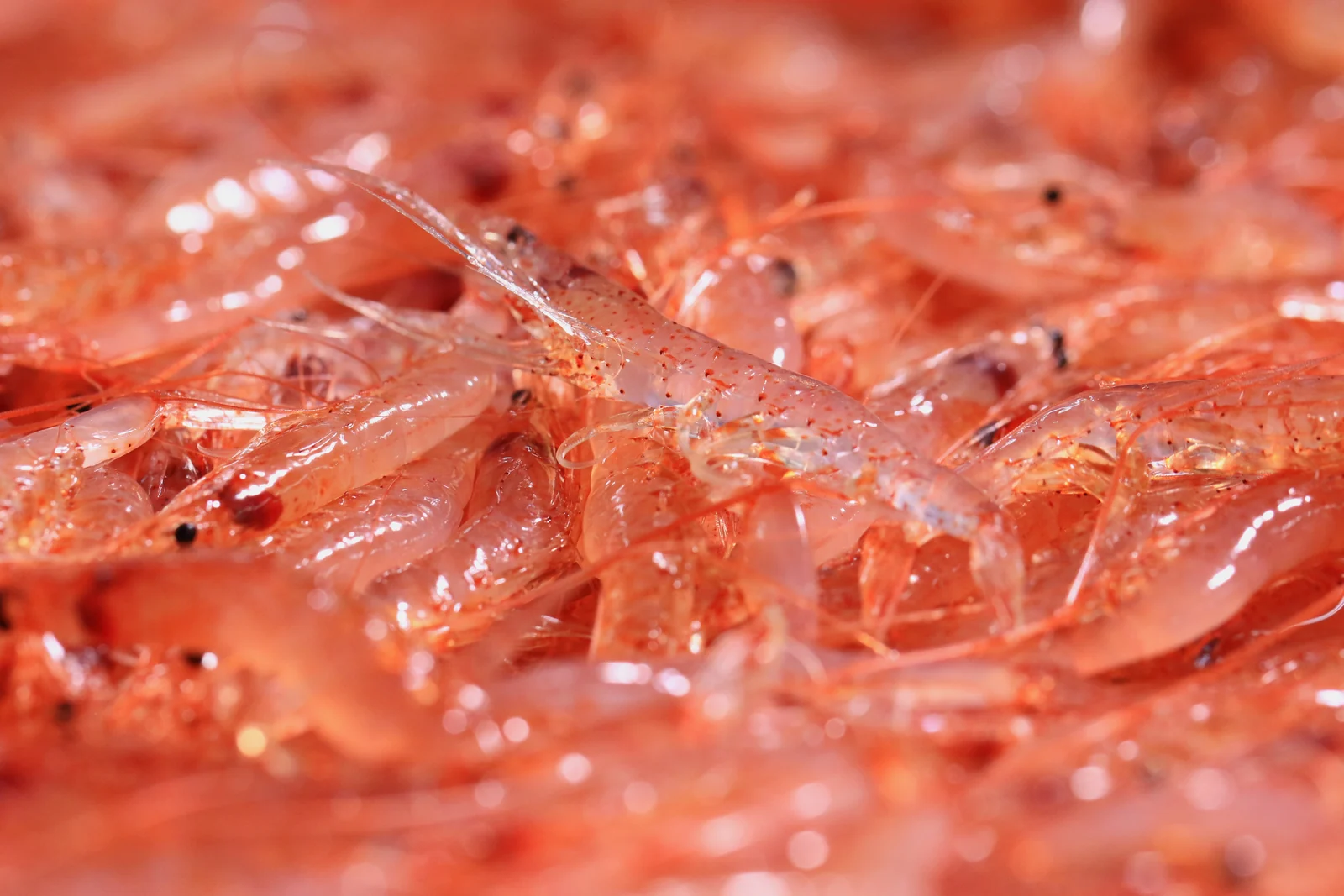
Sakura-ebi is a translucent pink shrimp four to five centimetres long with 155 light organs along its body. By day it lives at 200 to 300 metres; at night it rises to 20 or 30 metres below the surface. Shizuoka City states the central fact without hedging: Suruga Bay is the only place in Japan where it is fished commercially. The grounds are off the mouths of the Fuji and Oi rivers, and the catch lands at Yui and at Oigawa port.
The boats go out at night and work in pairs, towing one net between them. The prefecture licenses 120 boats, 60 pairs. They fish as a single co-operative: departures and daily catch limits are set jointly. Fishing is banned from 11 June to 30 September for spawning, and the fleet stays in voluntarily from January to March. That leaves two seasons, spring from late March to early June and autumn from late October to late December.
One bay, 120 boats, two short seasons, and a fleet that sets its own daily limit.
2018: the collapse
A 2022 paper in the Bulletin of the Plankton Society of Japan opens with the plain record. The catch fell sharply in 2018 and has not recovered. The spring catch of 2021 was about 140 tonnes. Shizuoka City cancelled the autumn 2018 season outright, the first closure in the fishery's history.
For spring 2019 the co-operative rewrote its rules. Part of the bay, including the main spawning ground, became a no-fishing zone. A guideline cap of 250 tonnes was set. The working fleet was cut from 120 boats to 40 or fewer. Each boat made one cast a day, with the net in the water for ten minutes. The paper's author argues the cause was spring overfishing, which pushed spawning later into the year. Late-spawned eggs drift out of the bay instead of staying in it.
The 2026 spring season shows where things stand. The first catch came on 4 April, five days after the opening. It landed about 14 tonnes, more than three times the first day of 2025. At Yui the average price was ¥66,654 per 15 kilograms, lower than the year before. The season was set to run to 5 June under voluntary limits. The co-operative's chief called conditions very tough.
Eat it raw, boiled as kamaage, or dried. The dish to ask for is kakiage, a loose fritter of whole shrimp fried in a thin batter. Yui holds a sakura-ebi festival at the port every 3 May.
Shirasu: three fish in one bowl
Shirasu is whitebait, the fry of sardines. In Suruga Bay three species come up mixed: anchovy, Japanese sardine and round herring. They gather off the mouths of the Abe, Okitsu and Fuji rivers and are netted by day, when they school. Mochimune fishes with two boats to a net, Shimizu and Yui with one. The prefecture's fisheries regulation closes the fishery from 15 January to 20 March; the rest of the year it runs.
The prefecture ranks third in Japan by value for shirasu and seventh by weight. The ports are close enough to the markets to sell it raw. Fresh nama-shirasu over rice is the local lunch; it is also sold boiled and sun-dried. The Tagonoura product, from the Fuji river mouth, holds geographical indications for both raw and boiled forms.
Unagi: the eel farms of Lake Hamana
West of the bay, past Cape Omaezaki, is Lake Hamana, a brackish lagoon by Hamamatsu. Eel farming in Japan began there. The city credits Hattori Kurajirō with starting it in the Meiji era, more than 120 years ago. The Ministry of Agriculture dates the first success to the Meiji 30s, 1897 to 1906. The lake had the ingredients: glass eels running in from the sea, a mild climate, flat land for ponds and deep groundwater. Feed came from lake fish and the silkworms of the then-booming silk trade.
The eels spawn in the Pacific near the Mariana Islands and the larvae drift to Japan. Glass eels are taken at the lake and the Tenryū river mouth from December to April. One farm the city describes keeps 25 ponds at 30 °C with about 30,000 eels each. A 0.2-gram glass eel grows to 200 or 300 grams in a little over a year. Heated culture, adopted in 1971, sped growth and cut disease. Hamanako unagi is a registered geographical indication.
Hamamatsu sits between Tokyo and Osaka and serves both styles of kabayaki. Kanto style splits the eel along the back, grills it, steams it, then glazes it. Kansai style splits it along the belly and grills it without steaming. Shirayaki is grilled plain, for wasabi and soy. The city is 48 kilometres from the Omaezaki berth, so the eel is a hired-car lunch, not a stroll.
What a spring call gets
A mid-April call lands in both open seasons. Sakura-ebi is in its spring run, and shirasu has been back for three weeks since the 20 March reopening. At the port itself the Nabura market trades on bonito; nabura is the fishermen's word for a school of them. The prefecture lands more bonito than any other. Shirasu gelato is the market's odd signature. Whether sakura-ebi is on its counter on a given day is not published; Yui, where it lands, is 60 kilometres east.
How it happened
- c. 600,000 years agoThe bay forms
The Philippine Sea Plate pushes north; the floor drops to 2,500 m
- Meiji 30s (1897–1906)Eel farming succeeds at Lake Hamana
Hattori Kurajirō's ponds; the birthplace of Japanese eel culture
- 1971Heated eel ponds
Faster growth, less disease; the method spreads from Hamana
- 2018The sakura-ebi catch collapses
Autumn season cancelled, the first closure in the fishery's history
- 2019The fleet cuts itself to 40 boats
No-fishing zone, 250-tonne guideline, one ten-minute cast a day
- 2021Spring catch about 140 tonnes
The figure the Plankton Society paper uses for 'not yet recovered'
- 2026First spring catch on 4 April
About 14 tonnes, three times the 2025 opening day
Where this becomes real on your port day
Bonito and shirasu are at the Nabura market beside the berth. Sakura-ebi lands at Yui and eel is in Hamamatsu, each about an hour's drive in opposite directions.
The vocabulary of the bay
- Sakura-ebi 桜えび
- The pink 'cherry shrimp' of Suruga Bay, the only commercial fishery for it in Japan; spring and autumn seasons.
- Kakiage かき揚げ
- A fritter of whole sakura-ebi in thin batter, the dish of Yui.
- Shirasu しらす
- Whitebait: sardine, anchovy and round-herring fry, eaten raw, boiled or dried. Closed 15 January to 20 March.
- Nabura なぶら
- Fishermen's word for a school of bonito; the name of the market beside the berth.
- Kabayaki 蒲焼
- Eel split, grilled and glazed. Hamamatsu serves both the steamed Kanto and unsteamed Kansai versions.
FAQ
What is sakura-ebi and where can I eat it?
A small pink shrimp fished commercially only in Suruga Bay, at night, by a co-operative fleet. It lands at Yui, about 60 kilometres from the Omaezaki berth, and is sold raw, boiled, dried or fried as kakiage. The spring season runs from late March to early June.
Why did the sakura-ebi fishery collapse?
Catches fell sharply in 2018 and the autumn season was cancelled, a first. A 2022 study blames spring overfishing that pushed spawning later, so eggs drifted out of the bay. Since 2019 the fleet has fished with a no-take zone, a 250-tonne guideline and 40 or fewer boats.
Is Lake Hamana eel worth the trip from Omaezaki?
Only with a hired car and a long call: Hamamatsu is 48 kilometres west. Eel farming in Japan began on the lake in the Meiji 30s, and the city serves both Kanto and Kansai grilling styles. On a short call, eat bonito at the Nabura market instead.
What seafood is in season for an April call?
Sakura-ebi is in its spring run, shirasu reopened on 20 March, and bonito is the Omaezaki market's own fish. The prefecture lands more bonito than any other in Japan. Ask at the counter which came in that morning.
More from Omaezaki
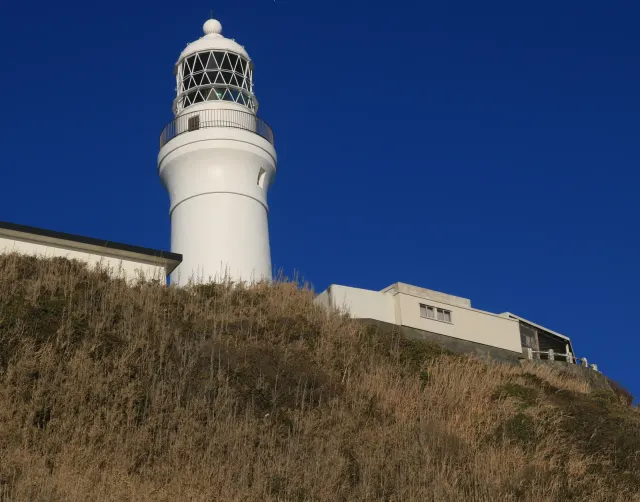
A Scotsman's brick tower on the reef coast where the Kuroshio meets the bay
Read →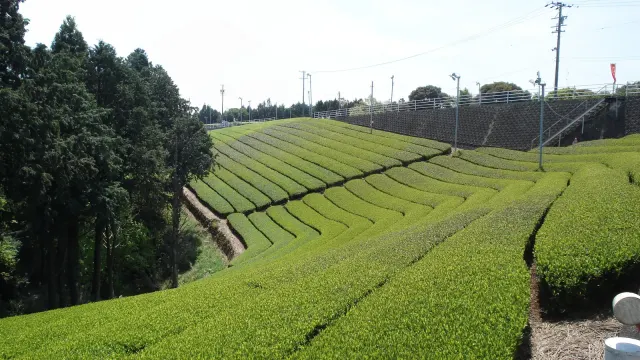
Samurai with hoes, river porters without a river, and the tea that came of it
Read →
The keep that went to Kochi and came back in wood
Read →