~3h — the round trip from the gangway, with the 60-minute margin kept aside.
Tap a photo to see it large. 5 photographs, each credited.
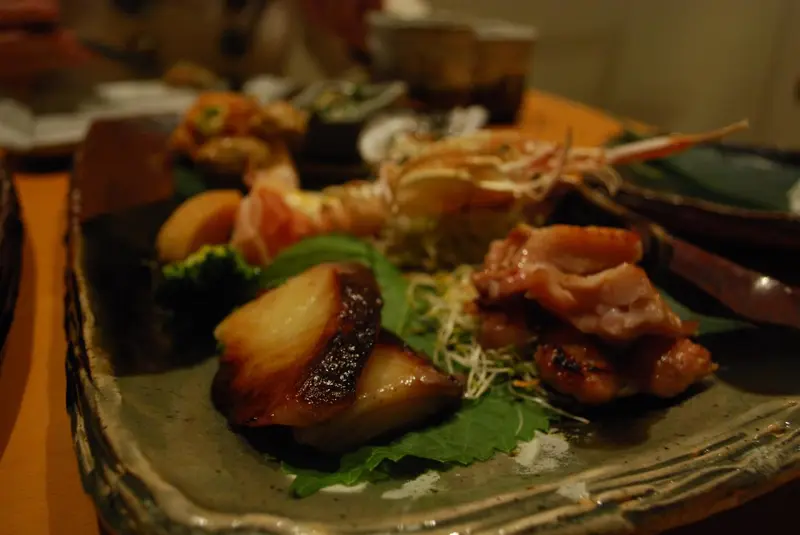
Grown in the sheltered water between the islands and eaten from about November in kaki-goya — shore huts where you grill them yourself over charcoal by the bucket. Cheap, filthy, and the best meal in this port in winter.
A coastline that drowned, and a name that gave up counting
Kaki-goya are plain sheds on the water where you buy oysters by the kilo and grill them yourself over charcoal. Kujukushima oysters are farmed in the sheltered water between the islands. The season is winter, the seating is plastic, and the smoke is unavoidable, which is the whole appeal.
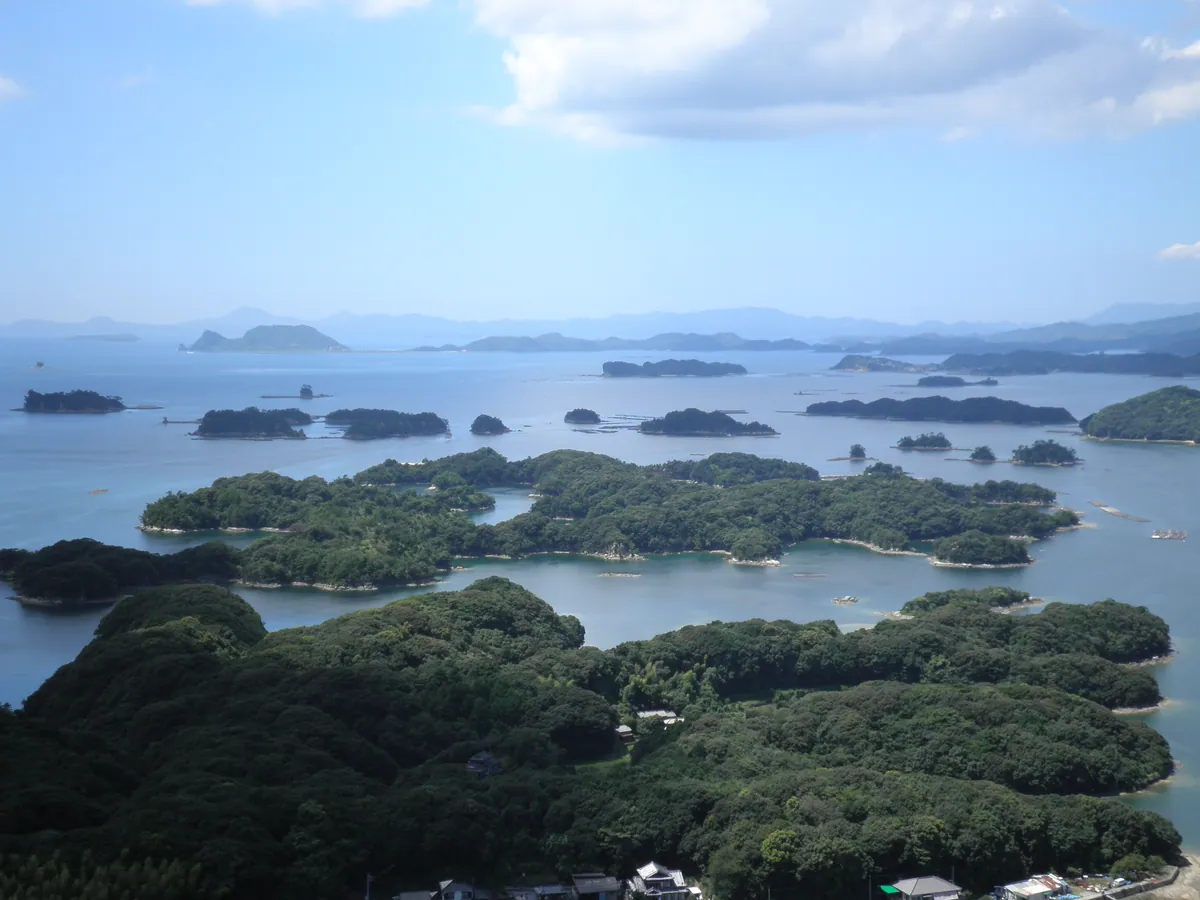
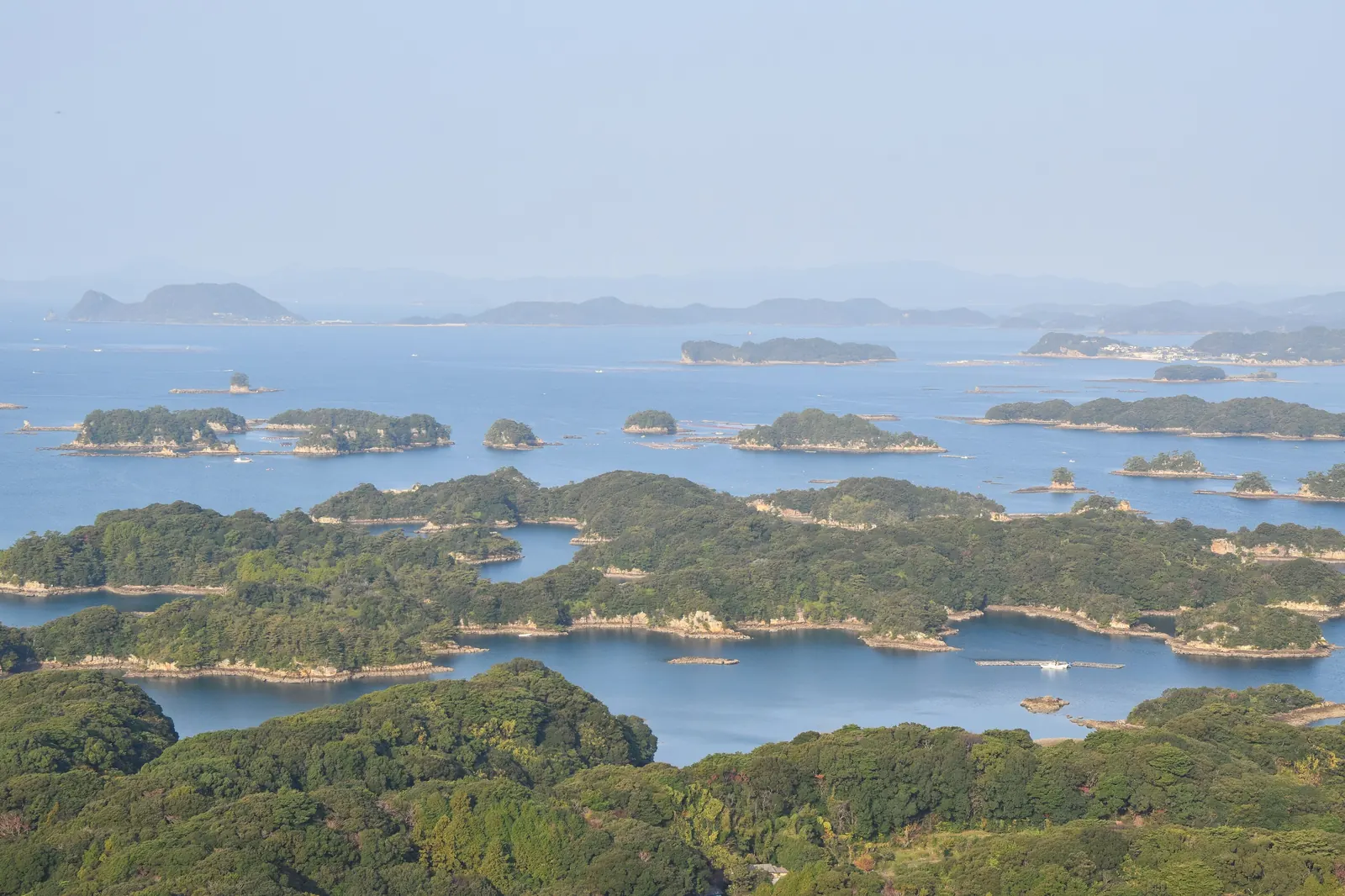
Kujukushima means "ninety-nine islands," which in older Japanese was a way of saying "too many to count." The actual figure is 208 — the densest cluster of islands anywhere in Japan, in about twenty-five kilometres of water, and only four of them have anyone living on them.
A drowned coastline: hills that became islands when the sea rose, leaving 208 wooded islets in about twenty-five kilometres of water. It is the densest island cluster in Japan, and only four of them are inhabited. Kujukushima means "ninety-nine islands," which is an old way of saying "too many to count" — and it undercounts by half.
The whole area is inside Saikai National Park. The fifty-minute sightseeing boat threads between the islets close enough to see the pines, and it is a scheduled public service at a fixed fare — no booking, no tour operator, no markup.
Hilltops become islands; valleys become channels
Which is why they are still empty
The densest cluster in Japan
Buy by the bucket, grill it yourself
Take the public boat, then eat oysters in a hut if it is winter. Neither needs booking and both are cheap.
The one the queue agrees on, the one people who live here use instead, and the one nearest your ship. Opening days change; check before you build a day around one.
Counted from the moment you step off the gangway. The hour before all-aboard is not in this bar; it is already set aside.
25 minutes each way is the honest figure for bus ~25 min, not the optimistic one. If your ship is late, cut the 2 hr 10 min in the middle. Never cut the hour at the end.
Each of these still lands you back aboard with the hour to spare on a 6-hour stop ashore.
Two hundred and eight. The name means "ninety-nine islands," which in older Japanese usage meant simply "too many to count" — so it undercounts by half. Only four are inhabited, and the whole area lies within Saikai National Park.
No. It is a scheduled public sailing at a fixed fare of around ¥1,800, roughly hourly, with no tour operator and no markup. Check the sailing board when you arrive at Pearl Sea Resort and build the rest of your day around it — it is the only fixed timetable in this port.
Each one is a finished day we have walked and timed, with this stop in it. Read the route rather than assembling it yourself.
Each of these still lands you back aboard with the hour to spare.
 4 hr 15 min for both
Not a recipe — a rule.
See the detail →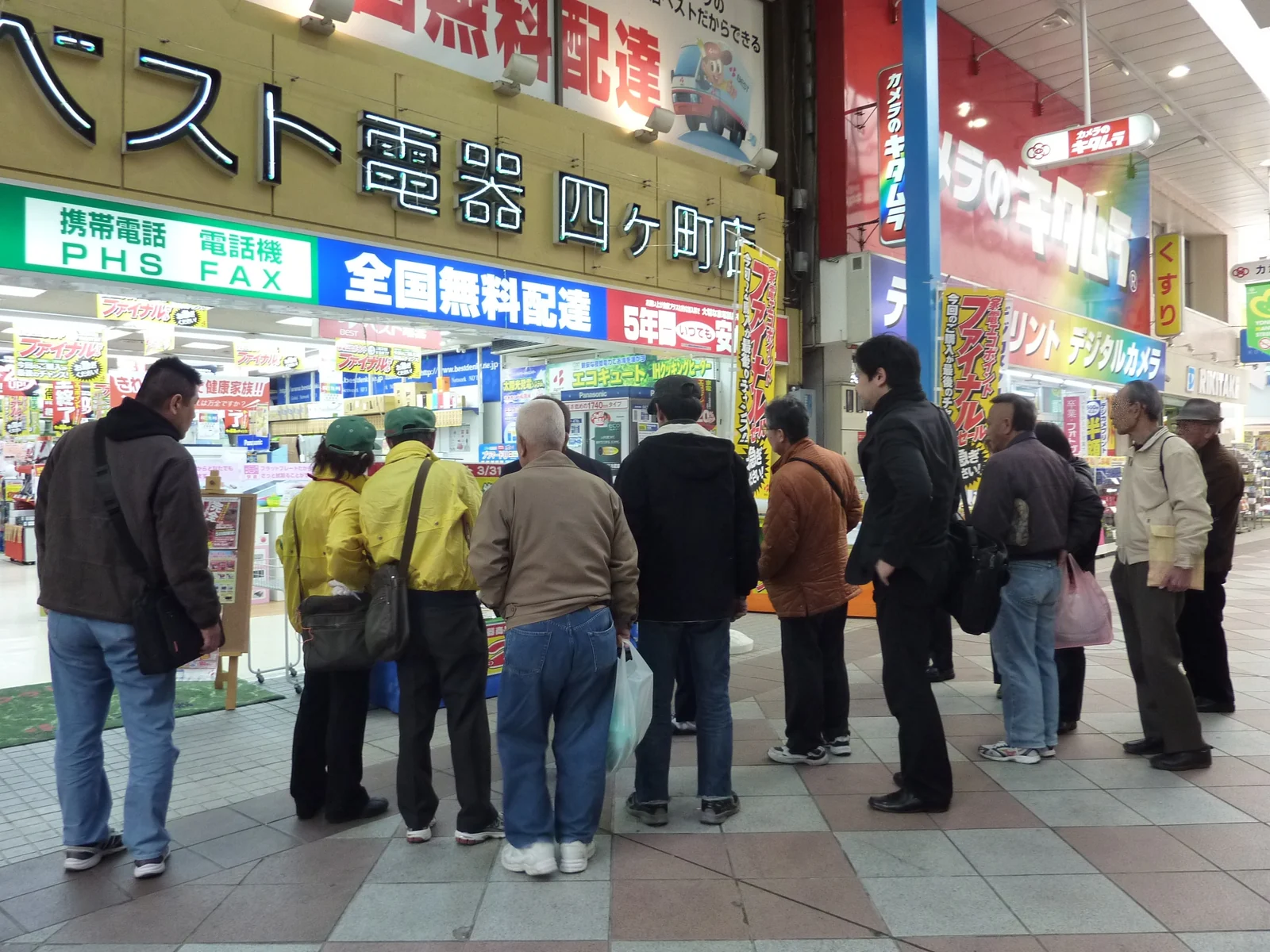 4 hr 15 min for both
About a kilometre of covered shopping in a straight line, among the longest of its kind in Japan, five minutes from the gangway.
See the detail → 5 hr for both
Thin beef seared on a hot plate and finished with a lemon and soy sauce, then rice tipped into the remaining sauce at the end.
See the detail →No typing needed — jump straight in:
Just docked? — the gangway toolStart from your shipThe ride from every berthAsk the editorGlossary