Abai Village
A sandbar settled in 1951 by people who expected to go home by spring
Nine minutes' walk from the gangway is a village founded by refugees who stopped at the first safe harbour south of home. Seventy-five years on, they are still waiting.
Before the Korean War, Sokcho was a small fishing port that few Koreans could place. After the war, it was a city of refugees. The village on the sandbar beside the cruise terminal is where that began.
A town that was in the North
When Korea was divided along the 38th parallel in 1945, Sokcho fell on the northern side. The Encyclopedia of Korean Culture records that it stayed under North Korean rule until 1951, when ROK forces took it back. A military government ran it until civilian rule returned in 1954. A law of 21 October that year covered seven counties recovered north of the old line. On 1 January 1963 the town became Sokcho City.
That history makes Sokcho unusual among the Korean ports on a cruise itinerary. Busan and Incheon received refugees; Sokcho was itself retaken. Most of its old families were living in North Korea six years before the city existed.
The sandbar
The Korea Tourism Organization dates the village to 1951, when displaced people from Hamgyeong province came south with the Korean army. Their home coast lay just over the line. A 2004 column by the historian Ju Gang-hyeon reckons about 50,000 people reached Sokcho by sea and land, most from South Hamgyeong. He names their towns: Dancheon, Sinpo, Jeongpyeong, Iwon, Yeongheung.
They moored their boats on the spit between Cheongcho Lake and the sea, a strip about a kilometre long and eighty metres wide. It was state-owned shore, so nobody could evict them. They built from ration boxes, broken boats and flattened oil drums. The men fished, the only trade they had; the women picked fish from the nets. They expected to go home when the fighting stopped.
They built from ration boxes, broken boats and flattened oil drums, and expected to go home when the fighting stopped.
The armistice of 1953 fixed the line, and the village became permanent. Abai is Hamgyeong dialect for an older man, a grandfather. Its first generation has almost all died without returning. The column notes that descendants scatter ashes at sea, hoping the current carries them north.
The Gaetbae
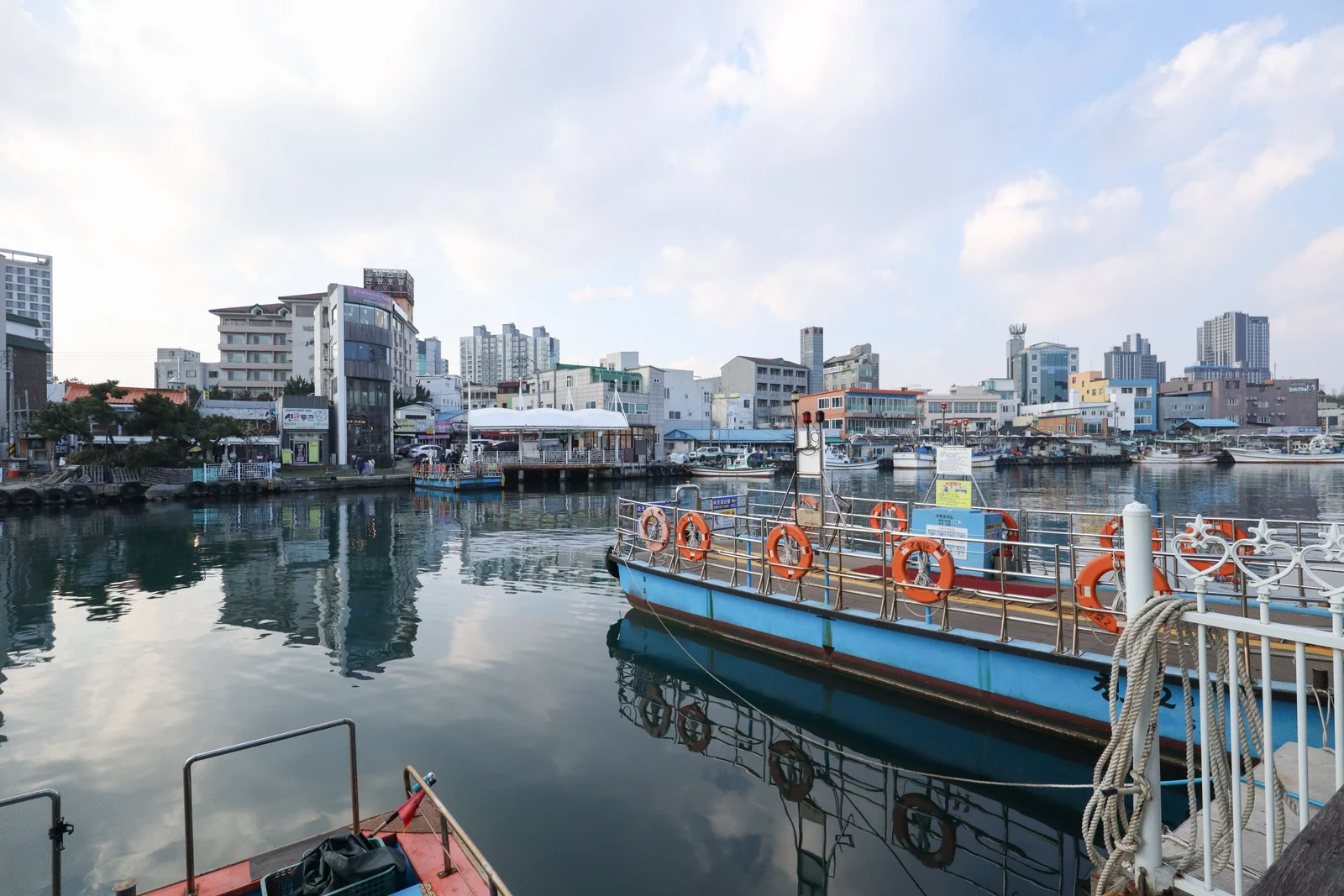
The channel that cuts the village off from the town centre was dug for port works late in the Japanese colonial period. For years the refugees crossed it by rowing boat. The tourism organization's history says Sokcho township built the first Gaetbae around 1955. A second boat and a formal ferry licence followed in 1961, with a veterans' association as operator. In 1988 the city handed it to the Cheongho-dong Development Committee, which still runs it. The present boat is a 1998 refit.
There is no engine and no captain. Two steel cables cross the channel, one boat on each. Passengers pick up an iron hook, catch the cable and pull. The crossing is one or two minutes; by road around the lake it is half an hour. Residents have always ridden free. The city lists the fare at ₩500, and the ferry carries 150,000 to 200,000 paying passengers a year.
Autumn in My Heart
The village was known for its ferry and its food, and then it was known everywhere. Autumn in My Heart aired on KBS2 from 18 September to 7 November 2000, sixteen episodes on Monday and Tuesday nights. It averaged 38.6 per cent of the national audience and peaked at 46.1. The heroine, Eun-seo, lives in Abai Village and crosses by the Gaetbae; the beach beside the terminal is where Tae-seok prays for her recovery.
The series is counted among the first exports of the Korean Wave, and tours of its locations followed. The shop that stood in for Eun-seo's house still hangs a banner. A replica of the house is in the city museum, where it serves as the kiosk.
Sundae, two ways
The village's dish is Abai sundae, a large pork intestine stuffed with glutinous rice, blood, cabbage and bean sprouts, then steamed. The city's food page says the Hamgyeong version is bigger and fuller than the southern sausages, which skip the rice. When intestine ran short, the refugees stuffed a whole squid instead: rice, radish leaves, carrot, onion and perilla, steamed and sliced. Ojingeo sundae is a Sokcho invention born of shortage. The alleys also sell Hamheung cold noodles and gajami sikhae, fermented flounder with rice.
A city of divided families
In 1983 KBS ran a live programme to reunite families separated by the war. It was meant to last a night and ran from 30 June to 14 November, 453 hours over 138 days. More than 100,000 people applied and 10,189 families were reunited. UNESCO added the tapes to its Memory of the World register in 2015. Sokcho's families were the kind it was made for: separated not by the front line but by a single harbour crossing that never reopened.
The city keeps the memory formally. The Displaced Civilians Folk Village beside the City Museum reconstructs houses from Gaeseong, Pyongyang, Pyeongan, Hamgyeong and Hwanghae. It adds a Cheongho-dong alley of shacks and the old Sokcho railway station. The Displaced Civilians Culture Festival is held each June at the Expo lawn and in Abai Village. The eleventh, on 12 and 13 June 2026, drew about 58,000 people. It includes a joint memorial rite for parents left behind.
The city's own page on the village is frank about what is left. New waterworks have removed most of the old shacks and lanes. A few houses survive, each with pots of chilli and flowers in tins and fish boxes by the door. The murals on Cheongho-ro paint the journey south. Walk it quietly; it is still somebody's street.
How it happened
- 1945Sokcho falls north of the 38th parallel
Under North Korean administration until the war
- 1951ROK forces retake Sokcho; the refugees arrive
Hamgyeong families moor on the sandbar expecting to return home
- 1954Civilian rule returns
Law of 21 October transfers seven recovered counties to the South Korean government
- c. 1955The first Gaetbae
Sokcho township builds a cable ferry for Cheongho-dong; licence and second boat in 1961
- 1963Sokcho becomes a city
1 January; separated from Yangyang County
- 1983KBS reunites divided families
138 days of live television, 10,189 reunions
- 2000Autumn in My Heart
KBS2, 18 Sep–7 Nov; average audience 38.6 per cent; the village becomes a destination
- 202611th Displaced Civilians Culture Festival
12–13 June; about 58,000 attend
Where this becomes real on your port day
The village is a 9-minute walk from the terminal on the city's own map, and the Gaetbae leads on to the market in another ten. Eat sundae early; the best-known kitchen closes at 19:00.
The vocabulary of Abai Village
- Abai 아바이
- Hamgyeong dialect for an older man, a grandfather; the village is named for its first generation.
- Gaetbae 갯배
- The engineless cable ferry across the harbour channel; passengers pull it with iron hooks. ₩500.
- Silhyangmin 실향민
- "People who lost their home": the displaced of the Korean War, and the word on every festival banner in Sokcho.
- Abai sundae 아바이순대
- Pork intestine stuffed with glutinous rice, blood and vegetables, Hamgyeong style, steamed.
- Ojingeo sundae 오징어순대
- A whole squid stuffed with rice and vegetables; the refugees' substitute when intestine ran short.
FAQ
Why is there a North Korean village in Sokcho?
Because Sokcho was the first safe harbour south of Hamgyeong. In 1951 refugees who came south with the Korean army moored on a state-owned sandbar by the lake mouth. They waited for the war to end. The armistice of 1953 fixed the border, and the camp became a village.
How does the Gaetbae ferry work?
Two steel cables cross the channel with a boat fixed to each. Passengers hook the cable and pull; the crossing takes a minute or two. The city lists the fare at ₩500, residents ride free, and the elderly are excused from pulling.
Was Autumn in My Heart filmed in Abai Village?
Yes. The KBS2 series of September to November 2000 placed its heroine's home in the village. The Gaetbae and the beach beside the cruise terminal appear in key scenes. It averaged 38.6 per cent of the national audience and brought the first tour groups.
Was Sokcho part of North Korea?
From 1945 to 1951, yes. The 38th parallel put the town on the northern side. South Korean forces retook it in 1951, military government ran it until 1954, and it became a city in 1963.
More from Sokcho
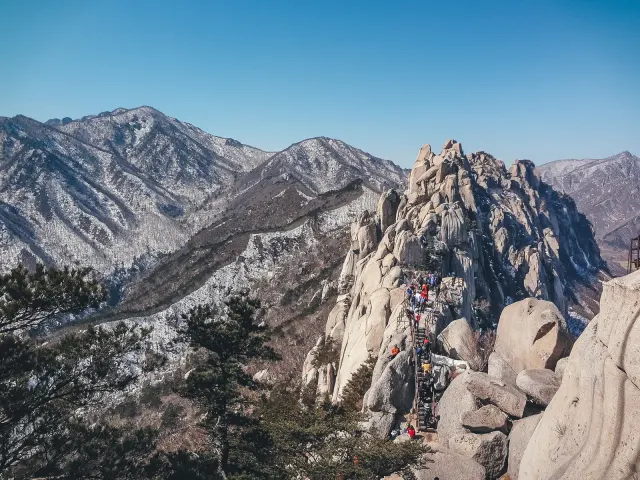
Granite, a 1,300-year-old temple and the queue for a five-minute cable car
Read →
A seventh-century temple on a sea cliff, burned to the ground in 2005 and rebuilt from a painting
Read →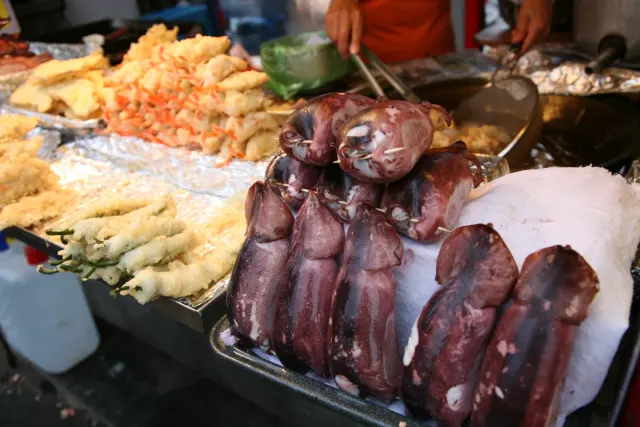
Squid that is vanishing, pollack that already has, and a chicken alley that queues for an hour
Read →