Hyangiram
A cliff, a sunrise and seven gaps in the rock
A monk is said to have seen the goddess of mercy here in 644. Thirteen centuries later a fire took the main hall in a night. The sunrise, which is the reason people come, was not affected.
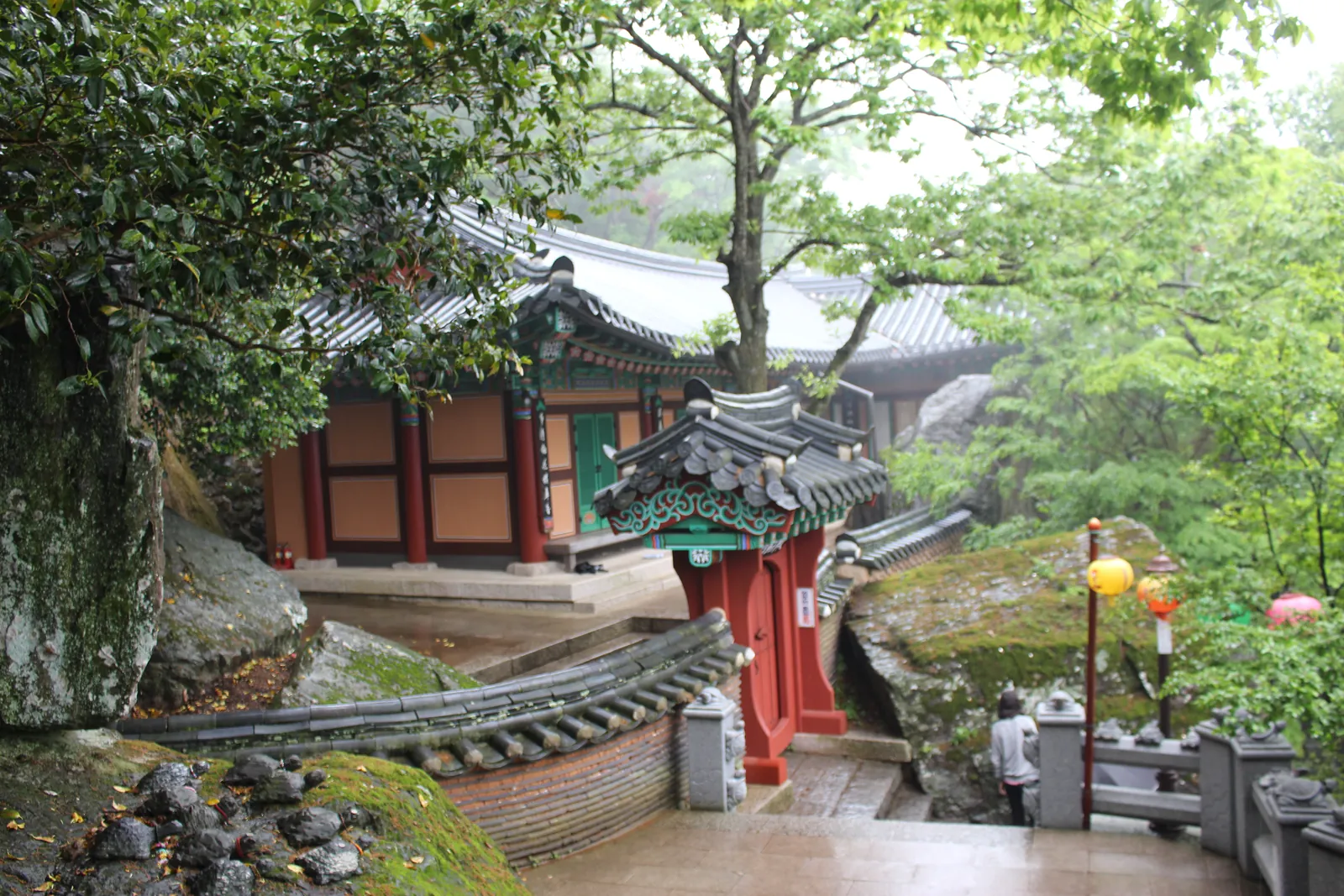
Hyangiram hangs on the cliffs of Geumosan at the southern tip of Dolsan island, 27 kilometres by road from the cruise berth. The name means the hermitage that faces the sun. It is small, a cluster of halls fitted into the rock, and it draws more than a million visitors a year. Most come for the dawn.
Four places to ask for mercy
Korean Buddhism counts four great sanctuaries of Gwaneum, the bodhisattva of compassion known in Sanskrit as Avalokiteshvara. All four stand on the sea: Hongryeonam at Naksansa on the east coast, Bomunam on Ganghwa island near Incheon, Boriam at Namhae, and Hyangiram. The tradition at each is the same. Pilgrims climb, bow before the Gwaneum image and ask for a specific thing: a child's exam, a parent's health, a marriage.
VisitKorea gives the founding as 644, the fourth year of King Uija of Baekje. The founder was the monk Wonhyo, who is said to have seen Gwaneum here. He called it Wontongam. In 958 the monk Yunpil renamed it Geumoam, after the mountain, and in 1715 the monk Inmuk gave it the present name. The city's page puts the founding under Queen Seondeok of Silla instead. Both agree on Wonhyo and on the seventh century.
The turtle under the temple
Geumosan means iron-turtle mountain. From the sea the ridge is supposed to look like a great turtle carrying a sacred book into the water. The rocks around the halls are split in a pattern like a shell. The hermitage is also called Yeongguam, the spirit-turtle hermitage. During the Japanese invasion of 1592 the monks here fought under Yi Sun-sin. The cliff served as a lookout over the approach to the naval base.
Seven gaps
The climb from the car park is the price of admission. The stone steps rise at a slope the Korean press puts near 40 degrees. The city describes them as steep stairs climbed again and again. Then come the rocks. The path passes through seven crevices in the cliff, some of them wide enough for one person at a time. The first is a gate so low that everyone bends. The city says that is the point: humility on the way to the Buddha. Local belief says that passing through all seven earns one wish.
The steps are steep, the gaps are narrow, and the sea is below the whole way.
At the top the halls look east over open water. The Gwaneum hall has the sunrise view. A stone Gwaneum about three metres tall stands beside it. A rock called Jwaseondae is where Wonhyo is said to have sat in meditation. Visitors throw coins at it and make a wish if the coin stays on. Camellias and other subtropical plants grow around the cliff.
The fire
At 00:24 on 20 December 2009 a fire started in the main hall. By morning the main hall, the bell pavilion and the temple office were gone. Police investigated arson and found no cause. The timing was cruel. The hermitage's New Year sunrise festival was eleven days away, and the bell that rings in the year had burned with its pavilion.
Rebuilding began in December 2010 and cost ₩1.2 billion, shared by the state, the province, the city and the temple. The work was 90 per cent done by November 2011. The restored main hall, now called Wontongbojeon after the hermitage's first name, and the bell pavilion were dedicated in 2012.
The sunrise festival
Each year from 31 December to 1 January the city runs the Hyangiram Sunrise Festival on the slopes below the hermitage. The 14th edition was the one the 2009 fire nearly cancelled. The 28th, over New Year 2024, opened at 23:00 on the 31st. There were wish candles, the ringing of the New Year bell and fireworks sponsored by the Hanwha plant in town. The city laid on 1,500 parking spaces and twelve shuttle buses. The 30th was held over New Year 2026. Organisers have spoken of 50,000 to 80,000 people over the two days.
No cruise call lands on New Year. On an ordinary morning the halls open at sunrise and close at sunset, and there is no admission charge. Older guides quote ₩2,000 and 09:00 to 18:00; VisitKorea and the city now say free.
How it happened
- 644Wonhyo founds Wontongam
Tradition says he saw Gwaneum here; the city dates it to Queen Seondeok of Silla instead
- 958Renamed Geumoam
By the monk Yunpil, after the iron-turtle mountain
- 1592Monk soldiers under Yi Sun-sin
The cliff serves as a lookout during the Japanese invasion
- 1715Renamed Hyangiram
The monk Inmuk names it for the sunrise
- 2009Fire
20 December; the main hall, bell pavilion and office burn; cause never found
- 2012Rebuilt
Wontongbojeon and the bell pavilion dedicated; ₩1.2 billion
- 202630th Sunrise Festival
Held 31 December 2025 to 1 January 2026
Where this becomes real on your port day
Hyangiram is about 42 minutes each way by taxi from the berth and needs three hours door to door. It is free and open every day from sunrise, but the steps and rock gaps rule it out for anyone unsteady.
The vocabulary of Hyangiram
- Hyangiram 향일암
- "The hermitage facing the sun": the name given in 1715 by the monk Inmuk.
- Gwaneum 관음
- Avalokiteshvara, the bodhisattva of compassion; Hyangiram is one of Korea's four great seaside Gwaneum sanctuaries.
- Geumosan 금오산
- "Iron-turtle mountain", the ridge whose split rocks give the hermitage its turtle legend.
- Wontongbojeon 원통보전
- The main hall rebuilt in 2012 after the 2009 fire, named after the hermitage's original name.
- Haemaji 해맞이
- Greeting the sunrise; the New Year custom behind the 31 December–1 January festival.
FAQ
How hard is the climb to Hyangiram?
Hard enough to matter. The stone steps from the car park are steep, and the Korean press puts the slope near 40 degrees. The path squeezes through seven rock crevices, some one person wide. Holland America rates its tour strenuous. Allow 15 minutes up and take the gentler path down if your knees are the issue.
Is there an entry fee?
No. VisitKorea and the city both list admission as free, with the hermitage open from sunrise to sunset every day. Older pages quoting ₩2,000 are out of date.
What burned in 2009?
The main hall, the bell pavilion and the temple office, in a fire that started at 00:24 on 20 December 2009. The cause was never found. The halls were rebuilt for ₩1.2 billion and dedicated in 2012.
Can I see the sunrise on a cruise call?
Not from the hermitage. Ships arrive at 08:00 and the taxi ride is about 42 minutes, so the earliest you can be at the top is mid-morning. The view east over open water is the same; only the light is different.
More from Yeosu
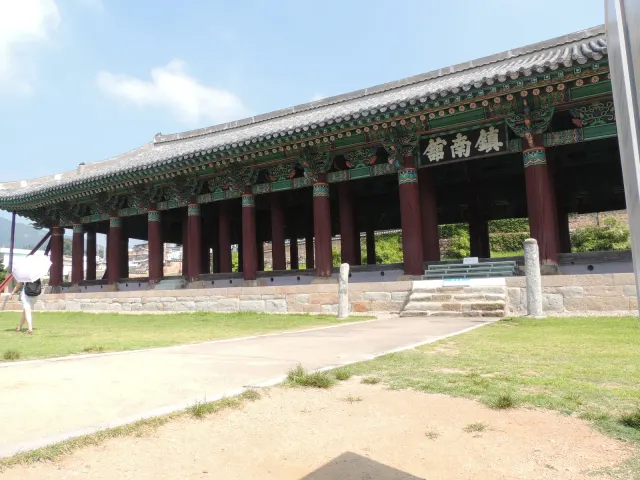
The naval base, the turtle ship and the hall that took ten years to put back
Read →
Eight million visitors, two cement silos and the reason your ship docks where it does
Read →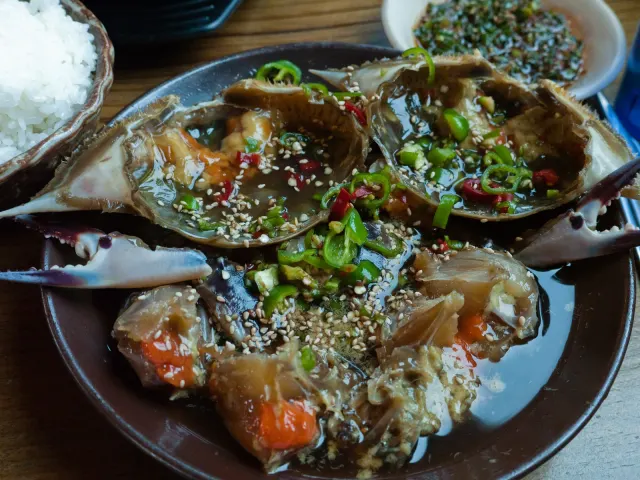
Crab that steals rice, sole in vinegar, and a street of carts that opens after you sail
Read →