Three saplings, some unemployed samurai, and 60% of Japan's crop
The Fuji apple in your supermarket is not named after the mountain. It is named after a town in Aomori — and the industry that bred it began as a jobs programme for samurai who had just lost their swords.
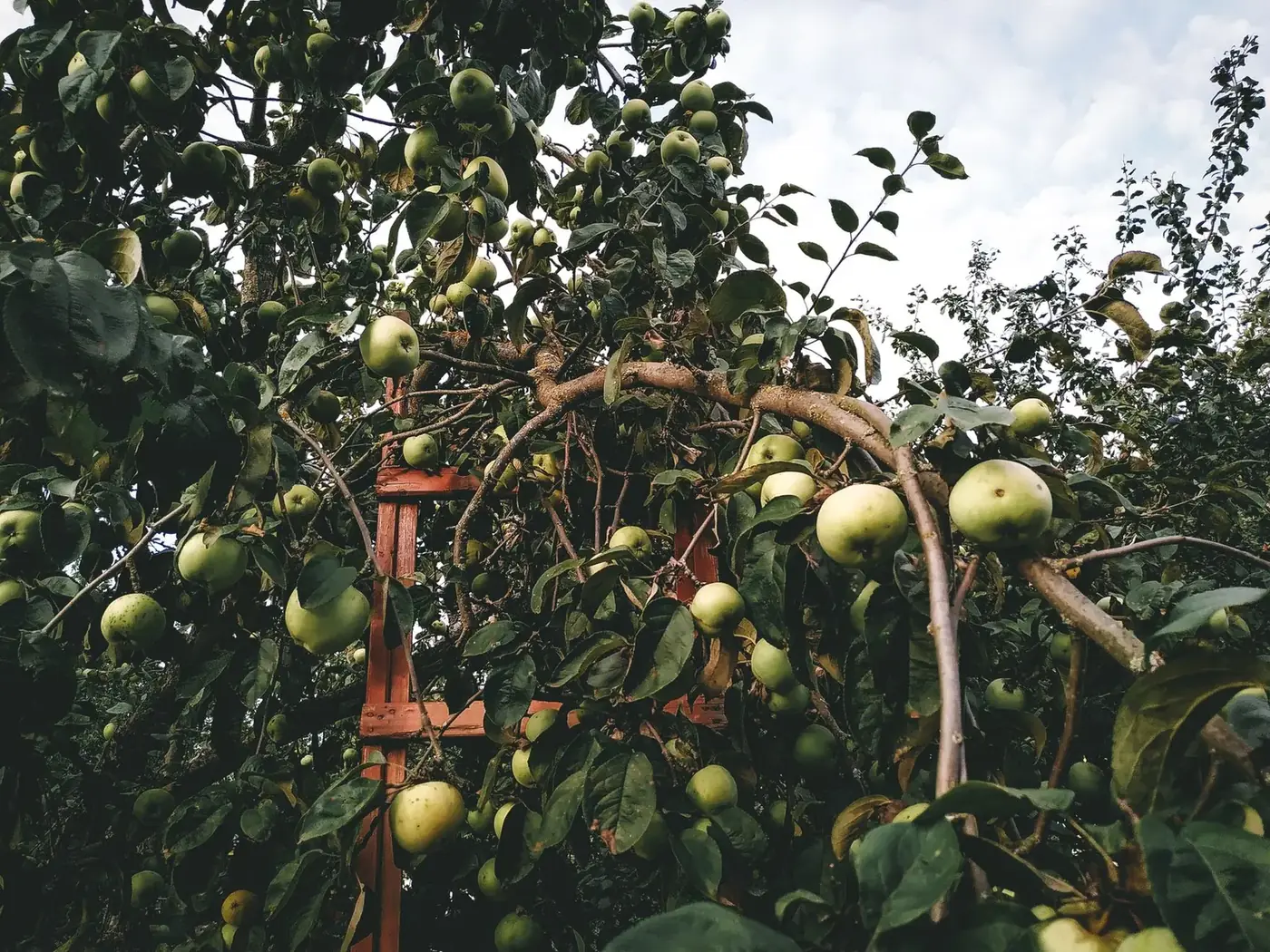
In 1875, the Meiji government distributed Western apple saplings to the prefectures. Three reached the Aomori prefectural office. A former samurai named Kikuchi Tate-e planted them on the office grounds, and is remembered as the father of apple cultivation here.
The motive is the part usually left out. Early-Meiji fruit programmes were, substantially, employment schemes for a warrior class that had just been abolished. The domains were gone, the stipends were going, and a great many trained, proud, suddenly purposeless men needed something to do. Aomori's orchards are what some of them did.
Japan's apple capital exists because the samurai needed a second career.
Aomori now grows around 60% of Japan's apples — a 2023 harvest of some 374,400 tonnes. The runner-up prefecture, Nagano, managed 106,900. That ratio, not the percentage, is what conveys it: Aomori grows roughly three and a half times as many apples as the second-place region in the country. Hirosaki City alone is Japan's largest apple-producing municipality.
This is the correction worth carrying home. In 1939, breeders at a research station in the Aomori town of Fujisaki crossed the old American variety Ralls Janet with pollen from Red Delicious. The seedlings went into the ground in 1940 and survived the war. One of them, coded Ro-628, first bore fruit in 1951. It was selected as "Tōhoku #7" in 1958 and released in 1962 under the name Fuji — after Fujisaki, the town where it was bred.
It went on to become the most widely grown apple on Earth. Every Fuji apple in every supermarket in the world descends from a seedling that spent the Second World War quietly growing in northern Japan.
The earliest varieties arrive in June and July, but the main harvest runs September to November. Tsugaru variety peaks in September; Fuji is the late one, hanging on the branch into November while growers work in the cold to let the flavour build. Late October is the best single window — peak Fuji, peak foliage, still comfortable outdoors.
At the port itself, A-FACTORY — the name is a contraction of "apple cider factory" — sits beside the cruise berth with a glass-walled working cidery in the middle of the building. You watch cider and apple brandy being made through the glass. The tasting system is self-serve and slightly baffling on first contact: you charge a card (from about ¥900), take a glass, and dispense samples from the machines yourself. No Japanese required, and nobody explains it, so now you know.
Forty minutes inland, Hirosaki's tourism office produced something I think is quietly perfect. Their concierges personally researched and tasted every apple pie in the city and published a guide map that rates each one from 1 to 5 on three axes: sweetness, tartness, and cinnamon intensity. More than forty shops appear — Western patisseries, bakeries, cafés, and Japanese-sweets makers who decided to have a go at apple pie.
It is free, it exists in English, and it is a municipal government rating pastry on a cinnamon scale. If you have a long call and a rail ticket, it is a genuinely lovely way to spend an afternoon.
Distributed by the Meiji government; planted by the former samurai Kikuchi Tate-e
Ralls Janet × Red Delicious, at a research station in Fujisaki, Aomori
Having survived the Second World War in the ground
Named for the town of Fujisaki — not the mountain
A working cidery behind glass, beside the cruise berth
Around 60% of Japan's apples; Nagano, in second place, grew 106,900
A-FACTORY is a one-minute walk from the Shin-Chuo berth and needs no planning at all. The orchards and the pie map need a train and a long call.
No. It was bred at a research station in the town of Fujisaki in Aomori Prefecture — a cross of Ralls Janet and Red Delicious made in 1939 — and registered in 1962 under the name Fuji, after the town. The mountain is four hundred miles away and had nothing to do with it.
The climate suits them, and the industry was deliberately seeded: three Western saplings distributed by the Meiji government in 1875 were planted by a former samurai, as part of a wider programme that doubled as employment for a warrior class the government had just abolished. Aomori now grows around 60% of Japan's apples.
The main harvest runs September to November. The Tsugaru variety peaks in September; Fuji is late, picked from late October into November. Late October is the best single window — peak Fuji and peak autumn colour together.
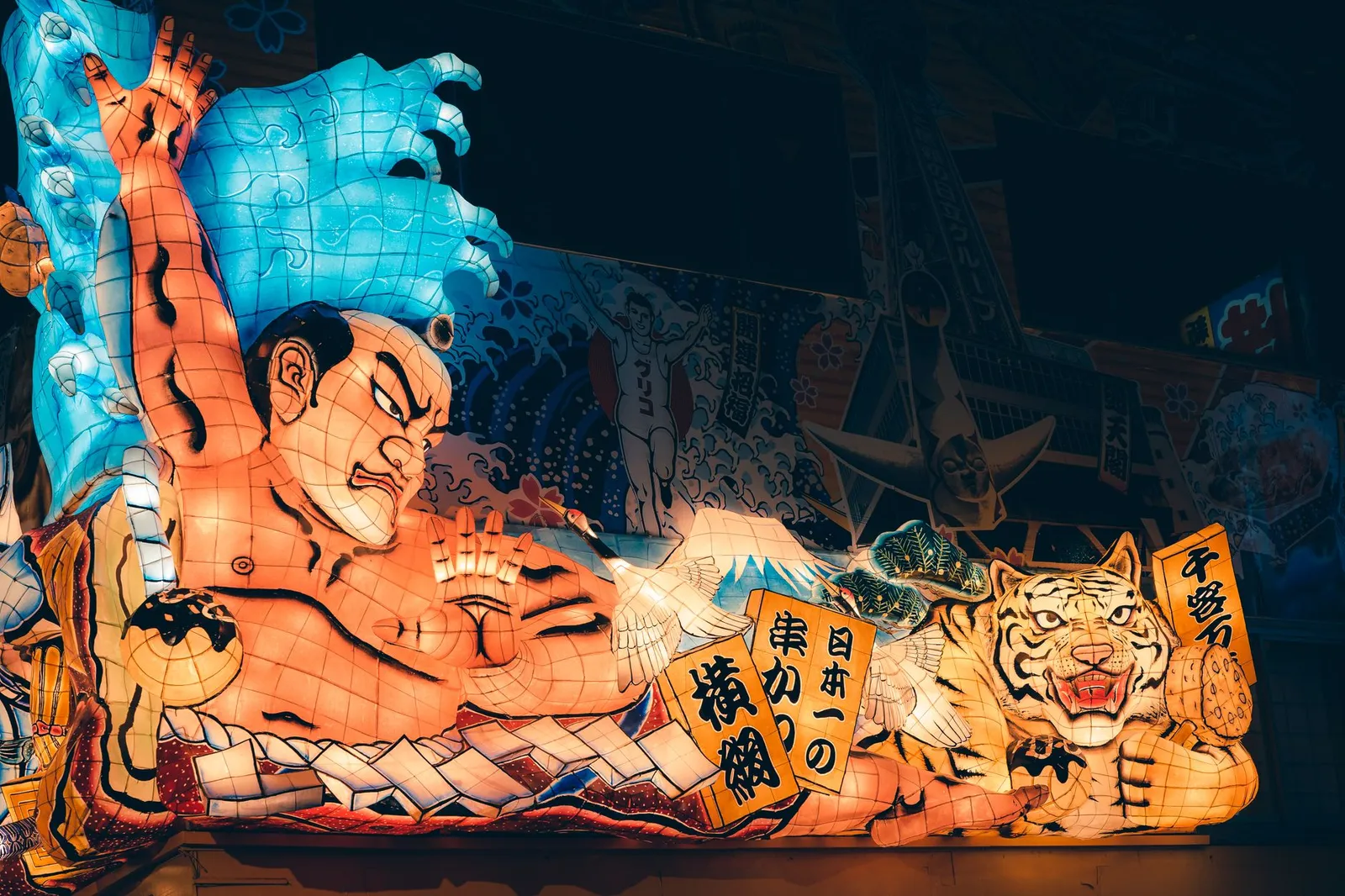
The six nights Aomori builds all year for
Read →
The three-string instrument that learned to shout
Read →
The town that stood here for 1,700 years, without farming
Read →
A lacquer they call idiotic, embroidery that dodged a law, and glass born from fishing floats
Read →No typing needed — jump straight in:
Just docked? — the gangway toolStart from your shipThe ride from every berthAsk the editorGlossary