The six nights Aomori builds all year for
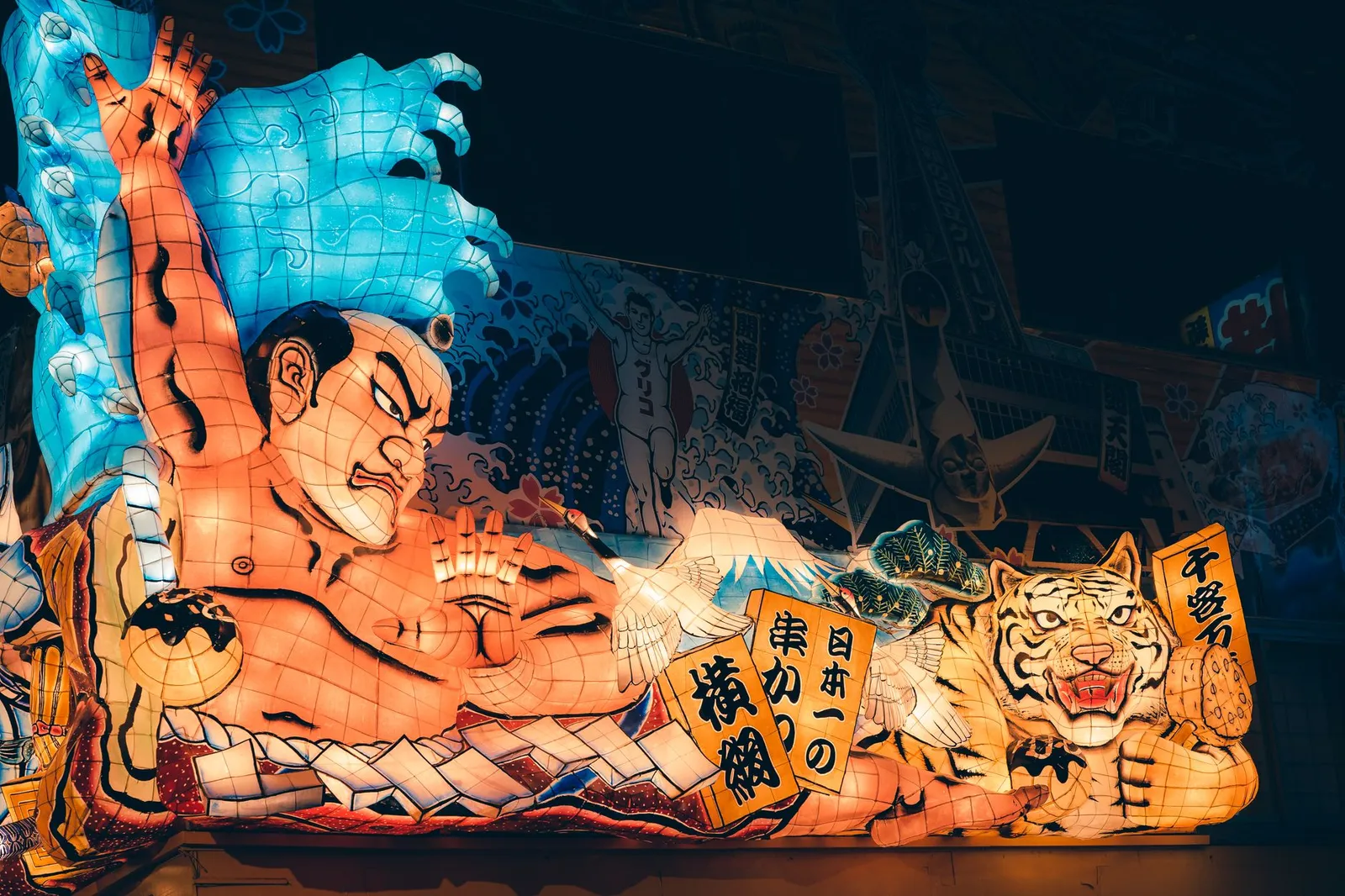
Two-storey warriors of paper and light, four tonnes each, hauled through the streets by a city that spends eleven months making them and six nights setting them free.
Every year on the second of August, a northern city of roughly a quarter of a million people turns off its ordinary life. Until the seventh, Aomori belongs to nebuta — vast three-dimensional figures of warriors, demons and gods, built from wire and washi paper, lit from within, and pushed through the streets while thousands of costumed dancers hurl themselves into the air alongside them.
The dates never move. Not the first weekend, not a floating holiday: August 2 to 7, every year, whatever day of the week they land on. You can book a cruise around them a year in advance, which is exactly what people do.
The largest floats measure roughly nine metres wide, seven deep and five tall, and weigh about four tonnes. Width is the binding constraint — footbridges and power lines cap how wide a nebuta can grow, so the art evolved to explode outward within that ceiling. Around twenty of these giants appear each year, each hauled by its own neighbourhood association or corporate team.
Construction begins with a wooden skeleton, then a hand-bent wire frame, then sheet after sheet of washi pasted on and painted — ink linework first, colour after. Frames were bamboo once; the switch to wire cut the fire risk and unlocked the sculptural, mid-explosion poses you see today. Inside, roughly a thousand bulbs (candles once, LEDs now) run off generators riding on the cart.
A single float costs ¥20–25 million and takes about four months of concentrated work. It is displayed for six nights.
The people who make them are called nebuta-shi, and in this city they are celebrities. The title of Nebuta Master has been granted to only seven people since 1959. The seventh, Takenami Hiroo, received it in 2023 — the first new master in eleven years. He saw his first nebuta at three or four, decided on his life at eleven after seeing a prize-winning float, apprenticed at twenty, and turned professional at thirty while still working as a pharmacist.
Fewer than twenty certified nebuta-shi are actively producing large floats today. Their average income is around ¥4 million a year, of which roughly half survives materials and labour. The most famous artists in the prefecture are not rich men, and three of Takenami's four current apprentices came from outside Aomori entirely.
The festival's origins are genuinely contested, and Aomori seems comfortable with that. The popular story credits the early-9th-century general Sakanoue no Tamuramaro, who supposedly used enormous illuminated lanterns to lure Emishi warriors out of their strongholds. Historians reject it — he almost certainly never campaigned this far north. Folklorists prefer nemuri-nagashi, a Tōhoku rite for sweeping away summer drowsiness before harvest, later fused with Buddhist lantern-floating and the Tanabata star festival.
Here is the part that deserves more attention than it gets in English. The festival's top prize was created in 1962 as the Tamuramaro Award — named for that same general. In 1995 it was renamed the Nebuta Taishō, after growing public discomfort at honouring the man who conquered the region's indigenous Emishi. A festival looked at its own trophy, understood what it was celebrating, and changed it.
This is the thing visitors do not believe until someone tells them twice: anyone can dance in the Nebuta parade. No registration, no reservation, no Japanese, no age or nationality requirement. You walk up to a float group before it departs and you join it.
There is exactly one rule, and it is absolute: you must wear the full haneto costume. Street clothes get you politely turned away, every time. The kit — hanagasa flower hat, tasuki sash, yukata, shigoki waistband, white tabi, zōri — rents for about ¥4,000–5,000 including help getting into it, and sells for ¥8,000–15,000 in the city's department stores. Be dressed by 17:00.
The dance itself is two hops on one foot, two on the other, while shouting "Rassera! Rassera!" — a contraction of irasshai, "come on in." That is the entire technique. The prohibitions are equally simple: never move backwards against the flow, no whistles or firecrackers, and do not join drunk.
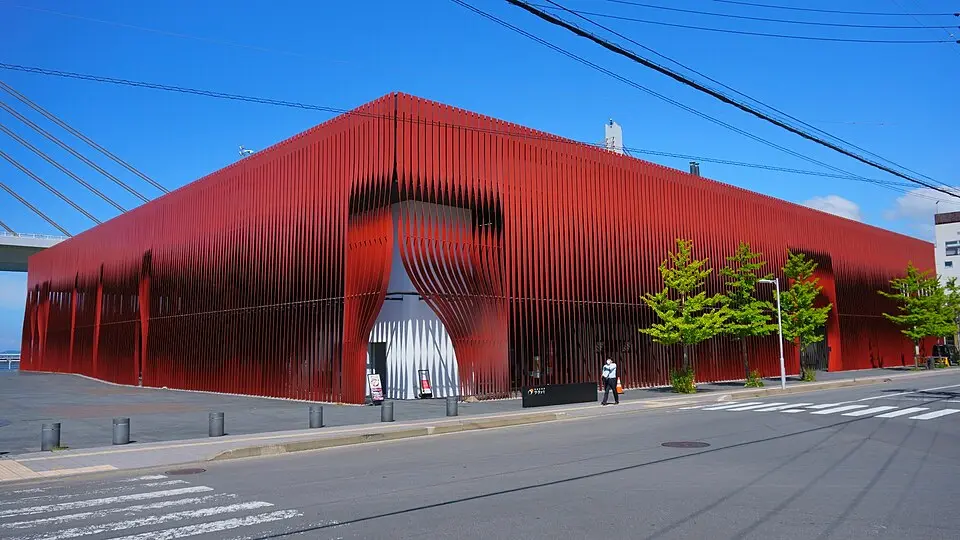
Four full-size floats from that year's festival retire, still lit, into the Nebuta Museum Wa Rasse beside the station — swapped for new ones every year. Live haneto sessions run four times daily and drummers play the festival rhythm in the hall. It is a one-minute walk from Aomori Station and roughly five from a cruise berth at Shin-Chuo Pier, and it is the single best indoor hour in northern Japan.
Forty minutes inland, Hirosaki holds its own festival — Neputa, August 1–7 — with roughly eighty fan-shaped floats painted on flat surfaces, processing to a chant of "Yā-yā-dō." Aomori's are three-dimensional, wild, and shouted through. Hirosaki's are elegant and restrained.
The two names are the same word. The coastal fishing dialect of Aomori City hardened it to Nebuta; the softer inland Tsugaru intonation around Hirosaki produced Neputa. One word, two mouths, two entirely different festivals.
Tanabata lantern-floating fuses with local Tsugaru summer customs and the nemuri-nagashi drowsiness rite
The festival's top prize is named for the general of the conquest legend
National designation, alongside Hirosaki's Neputa
Public discomfort at honouring the conqueror of the Emishi ends the old name
The Ministry of Environment lists the festival's drums and flutes
Four floats a year now retire into a museum beside the station
Takenami Hiroo becomes the first new Nebuta Master in eleven years
The museum runs year-round, a minute from the station. In early August the festival itself is the reason to be here — and the one night you should plan a cruise around.
August 2–7 every year, on fixed calendar dates rather than a floating weekend. Evening parades run roughly 19:00–21:10 on August 2–3 and 18:45–21:10 on August 4–6; August 7 has a daytime parade and then the sea parade with fireworks in the evening.
Yes. Anyone may dance as a haneto with no registration, reservation or Japanese ability — on one condition: you must wear the full haneto costume. Rentals run about ¥4,000–5,000 including help dressing, and you should be in costume by 17:00.
They are the same word in two dialects. Aomori City's Nebuta floats are three-dimensional warrior figures paraded by leaping dancers chanting "Rassera"; Hirosaki's Neputa floats are fan-shaped and painted, processing to "Yā-yā-dō." Aomori is wild; Hirosaki is elegant.
Yes — the Nebuta Museum Wa Rasse beside Aomori Station displays four full-size floats from that year's festival, changed annually, with live drum performances and haneto demonstrations. It is a five-minute walk from the Shin-Chuo cruise pier.
The three-string instrument that learned to shout
Read →
The town that stood here for 1,700 years, without farming
Read →
Three saplings, some unemployed samurai, and 60% of Japan's crop
Read →
A lacquer they call idiotic, embroidery that dodged a law, and glass born from fishing floats
Read →No typing needed — jump straight in:
Just docked? — the gangway toolStart from your shipThe ride from every berthAsk the editorGlossary