The town that stood here for 1,700 years, without farming
Before Egypt raised a pyramid, people at the edge of this bay were living in a permanent town of several hundred, trading jade across 500 kilometres — and they never took up agriculture.
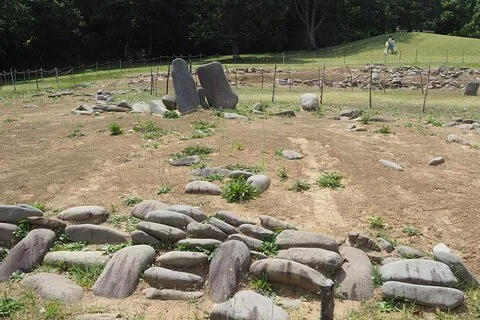
Twenty minutes from your berth, a hillside holds the remains of a settlement occupied continuously from roughly 3900 to 2200 BCE. Seventeen hundred years — longer than the span between the Roman Empire and now. Six hundred and forty-eight pit dwellings have been identified across some forty hectares, along with more than five hundred adult burial pits and around two thousand clay figurines.
And the people who lived here were hunter-gatherers.
The story Western education tells about civilisation runs: farming, then surplus, then settlement, then everything else. The Jōmon refused that order. UNESCO inscribed seventeen sites across four prefectures in 2021 precisely because they evidence people who "led sedentary lifeways based on hunting, fishing and gathering" — permanence without agriculture, sustained for over ten thousand years.
Sannai-Maruyama makes the case physically. There is jade here from Niigata and obsidian from Hokkaido, materials that travelled up to five hundred kilometres. There is lacquerware, amber, basketry. And there are chestnuts — DNA testing showed the chestnuts were cultivated, a managed grove. These were hunter-gatherers who were also orchardists, and who then built with the same tree they ate from.
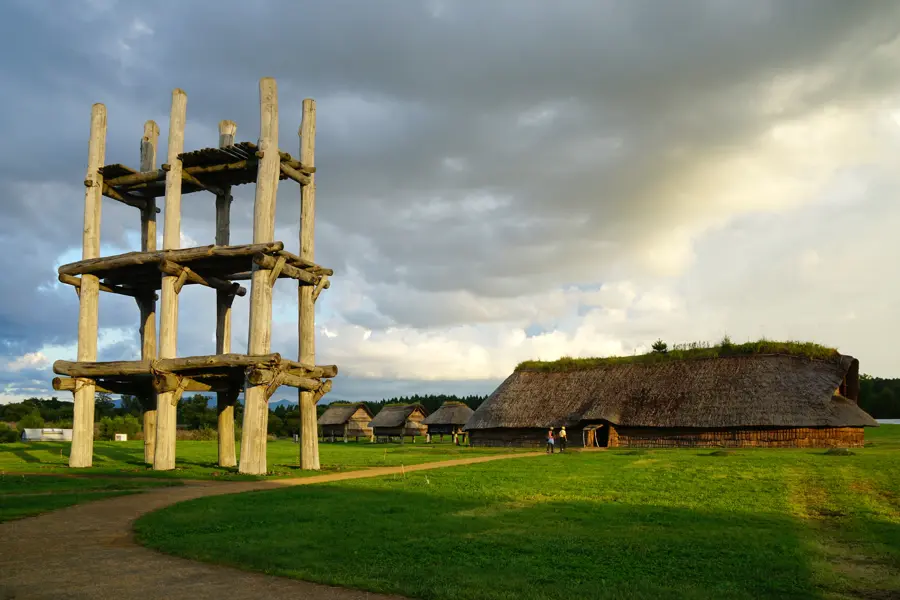
The site's signature is a structure raised around 2600 BCE: six chestnut pillars, each about a metre thick, set in two rows of three, spaced exactly 4.2 metres apart, in post holes uniformly two metres deep and two metres wide. The bases were deliberately scorched to resist rot.
What stood on them is genuinely unknown. The reconstruction you will see rises about twenty metres, and that height — along with the building's purpose — is inference, not excavation. Only the holes and the charred stumps survive. English pages tend to assert the tower as fact; the honest version is better anyway. Six holes, a repeated unit of measure, and thirty years of argument about what it held up.
Whatever it was, they measured it. That is the astonishing part — not the height, but the 4.2 metres, repeated exactly.
Travellers had been picking pottery off this hillside since the Edo period, and surveys ran on and off from the 1950s. Then in 1992 the prefecture began building a baseball stadium here. Rescue excavation in June 1994 uncovered the six-pillar foundations. That August, the prefecture cancelled the stadium.
It became a National Historic Site in 1997, a Special Historic Site in 2000, and part of a World Heritage listing in 2021. Japan's greatest prehistoric town survives because someone chose a 5,900-year-old village over a ballpark.
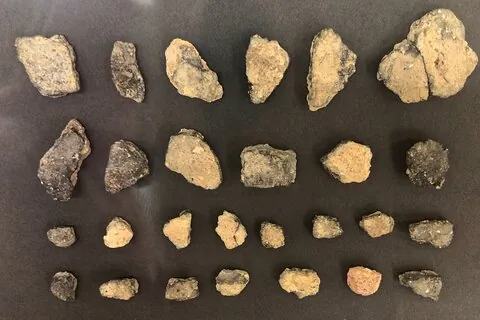
You will read that Jōmon pottery is the oldest in the world. It is not, quite. Sherds from the Ōdai Yamamoto I site — also in Aomori Prefecture, also part of the World Heritage listing — date to roughly 16,500 years ago, which makes them the oldest pottery in Japan and among the oldest on Earth. Pottery from Hunan, in China, is around a thousand years older. The Aomori sherds are also, charmingly, undecorated — no cord marks at all, despite jōmon meaning "cord-marked."
Sannai-Maruyama is about twenty minutes by bus from Aomori Station (¥310), or fifteen from Shin-Aomori Station on the Nebutan-go shuttle. Admission is ¥410 and the free English audio guide is genuinely good. Allow ninety minutes to two hours for the site and its museum wing. The Aomori Museum of Art — with the giant white Aomori-ken dog — is a ten-minute walk away, so one taxi fare covers both.
For a port day, the arithmetic works comfortably on four hours or more; on a short call the waterfront is the better use of your time.
Ōdai Yamamoto I in Aomori — the oldest in Japan, among the oldest anywhere
The beginning of 1,700 years of continuous occupation
Chestnut posts a metre thick, spaced exactly 4.2 m apart
After longer than the span from Rome to today
On the hillside above Aomori
Two months after the pillar foundations emerged in rescue excavation
"Jomon Prehistoric Sites in Northern Japan" — 17 sites across four prefectures
The site is a bus ride from the station and pairs naturally with the art museum next door. Guided Jōmon half-days exist for calls where you would rather not solve the logistics.
Japan's prehistoric era, running from roughly 14,500 to 300 BCE. Its defining feature — and the reason UNESCO listed seventeen Jomon sites in 2021 — is sedentism without agriculture: permanent settlements sustained for millennia by hunting, fishing and gathering.
Not quite, and the distinction matters. Pottery from the Ōdai Yamamoto I site in Aomori dates to about 16,500 years ago, making it the oldest in Japan and among the oldest anywhere — but pottery from Hunan in China is roughly a thousand years older.
With four or more hours ashore, yes. It is about twenty minutes by bus from Aomori Station, admission is ¥410, and ninety minutes covers the site and museum. The Aomori Museum of Art is a ten-minute walk away, so one taxi fare serves both. On a two-to-three-hour stop ashore, stay on the waterfront instead.
Nobody knows. The reconstruction stands about twenty metres, but only the post holes and scorched stumps survive — the height and the purpose are inference. What is certain is the precision: six chestnut pillars a metre thick, spaced exactly 4.2 metres apart, in holes two metres deep.

The six nights Aomori builds all year for
Read →
The three-string instrument that learned to shout
Read →
Three saplings, some unemployed samurai, and 60% of Japan's crop
Read →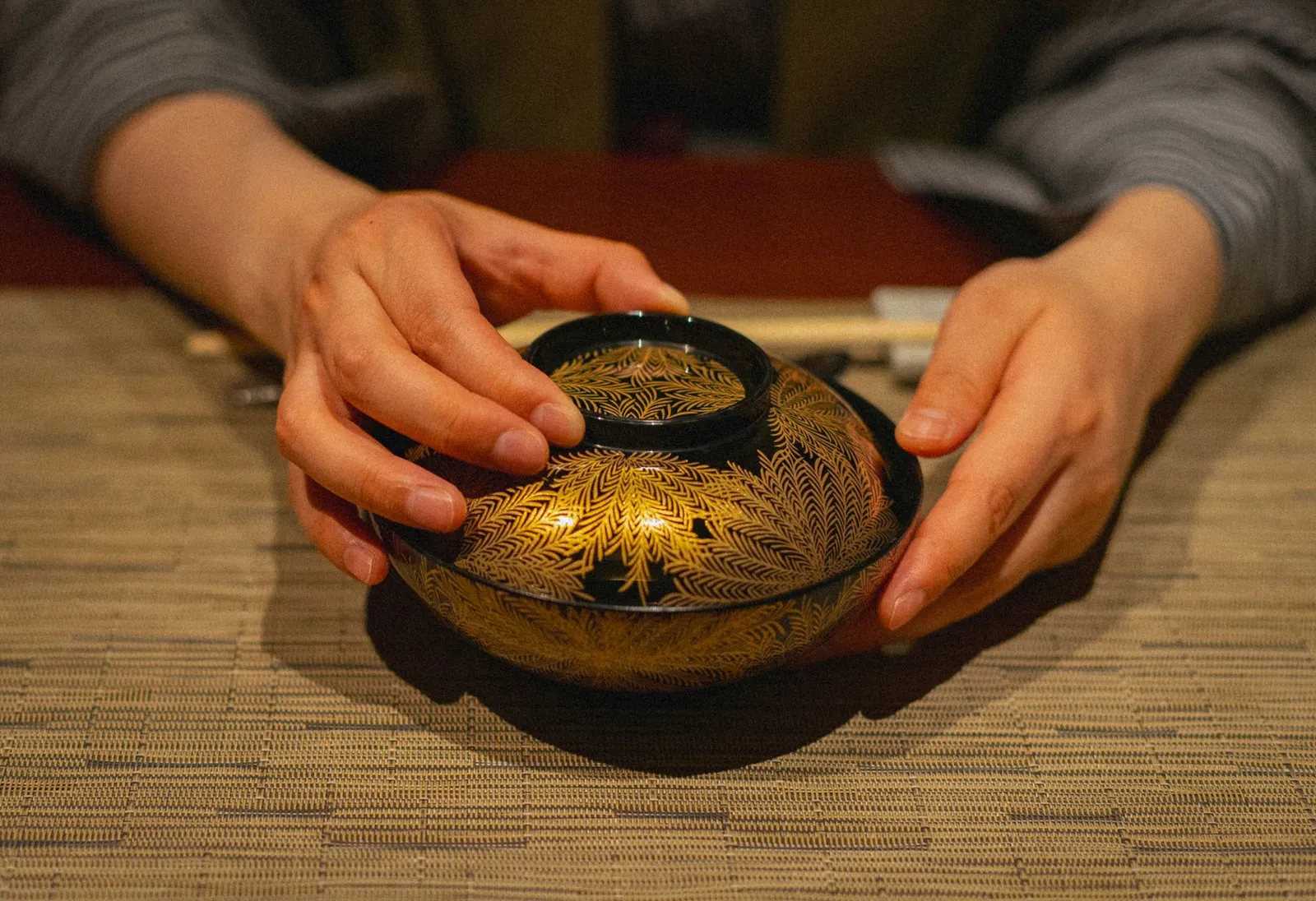
A lacquer they call idiotic, embroidery that dodged a law, and glass born from fishing floats
Read →No typing needed — jump straight in:
Just docked? — the gangway toolStart from your shipThe ride from every berthAsk the editorGlossary