
~3.5h with tower — the round trip from the gangway, with the 60-minute margin kept aside.
Tap a photo to see it large. 7 photographs, each credited.
A pentagram fortress built for cannon that history aimed elsewhere — climb the tower to see the star, walk the moat under 1,600 cherry trees. Guided history tour available.
A French-style star fort, a five-month republic, and the end of the samurai
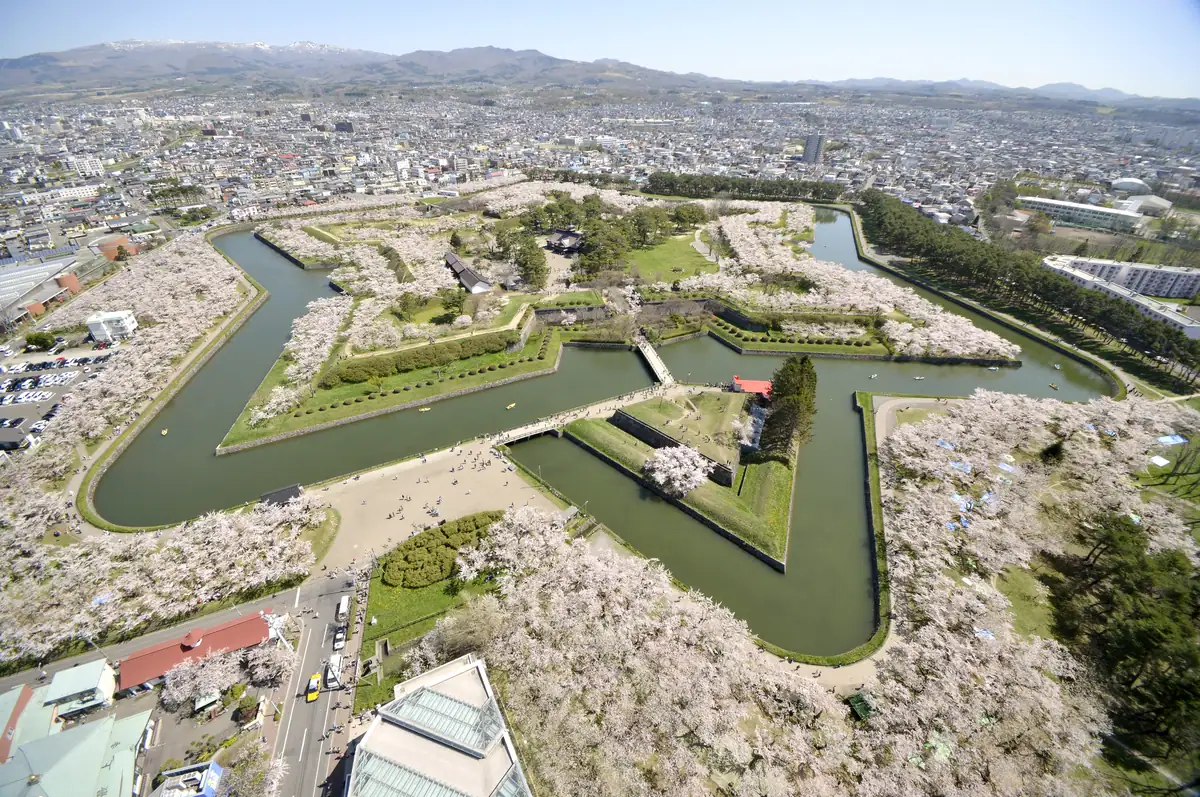
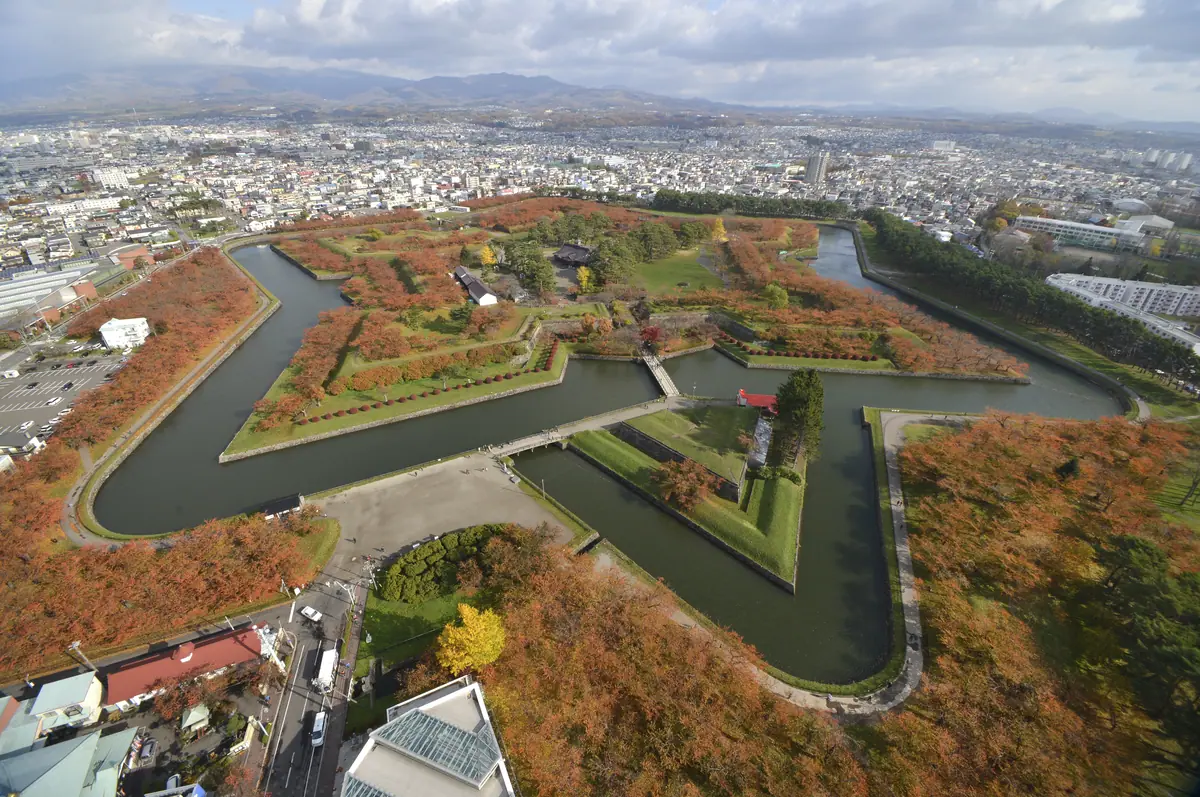
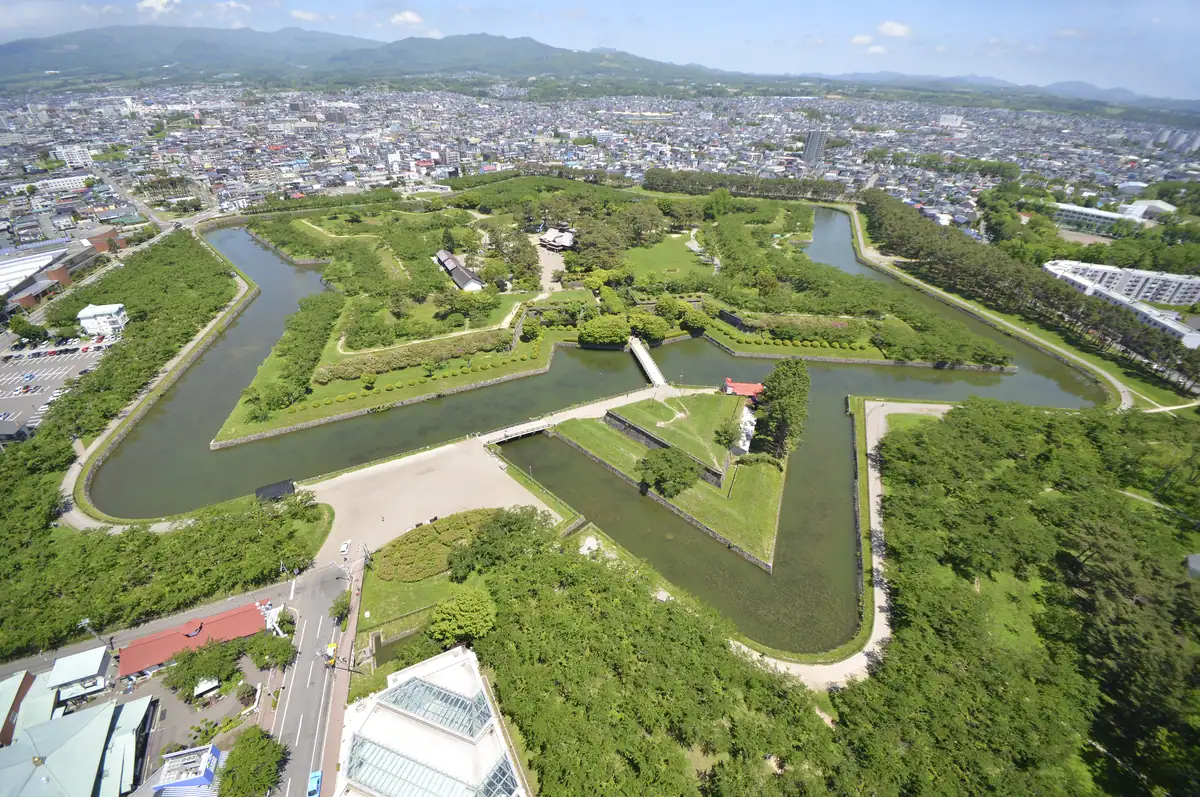
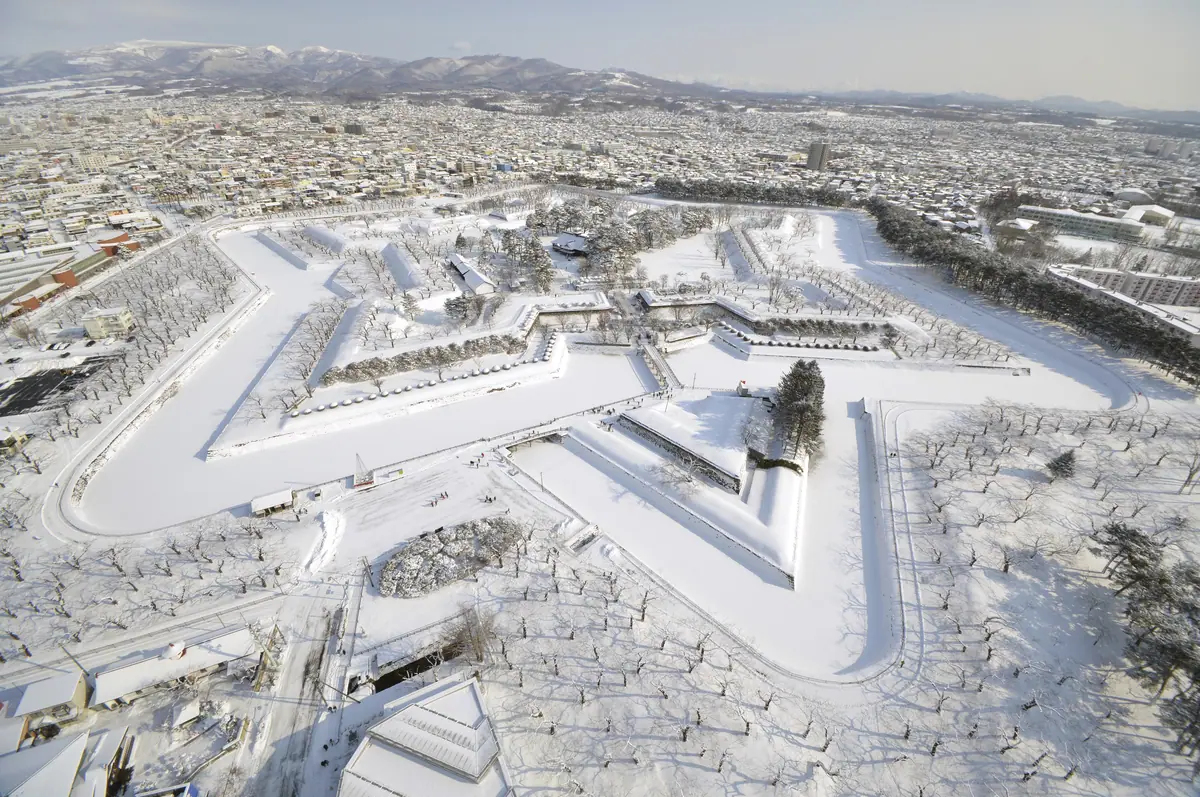
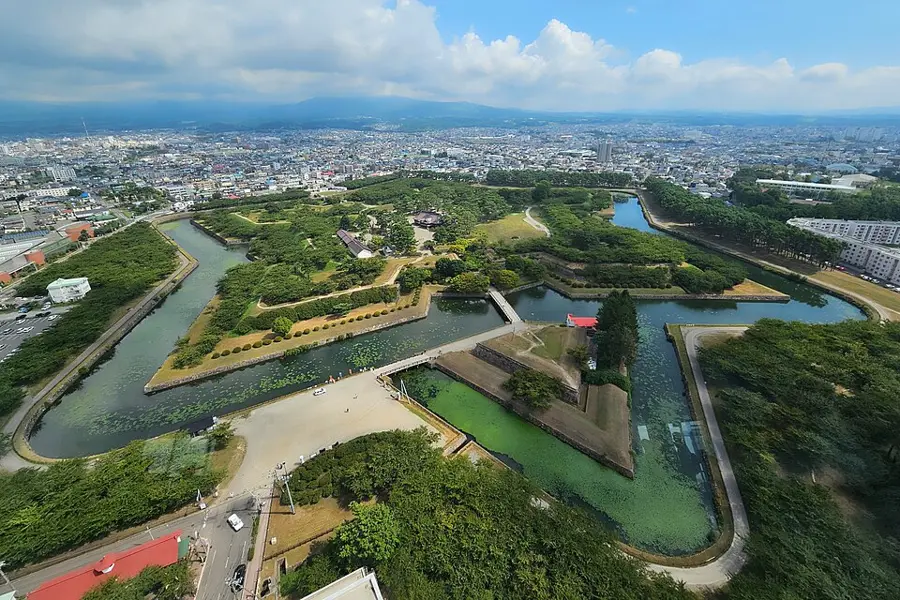
Japan's first Western-style fortress, finished in 1864 as a five-pointed star designed to deny attackers a blind spot. Five years later it was the last stronghold of the short-lived Republic of Ezo, and the site of the final battle of the Boshin War. The tower exists because the shape only reads from above.
In the winter of 1868 a defeated navy sailed north, occupied a European-style fortress, and held what may have been the first election in Japanese history. Then they lost, and with them went the samurai era.
Japan’s first Western-style fortress is a five-pointed star of moats and ramparts, built in 1866 to repel foreign navies — then used instead by the shogunate’s last loyalists, who declared a doomed republic here before the empire’s army ended the samurai age on these lawns in 1869. The pentagon only reveals itself from the tower next door: 107 meters up, the star snaps into geometry.
In late April the moats become one of Japan’s great hanami spectacles — 1,600 cherry trees tracing the star in pink. The rest of the year it is a calm park with a magnificent secret shape and a reconstructed magistrate’s office at its heart.
Takeda Ayasaburō adapts Vauban's star-fort geometry for the Tsugaru Strait
Functional, though outer works continue to about 1866
Four warships, four transports, and 180,000 gold ryō
(27 Jan 1869 Gregorian) — and 856 ballots are cast
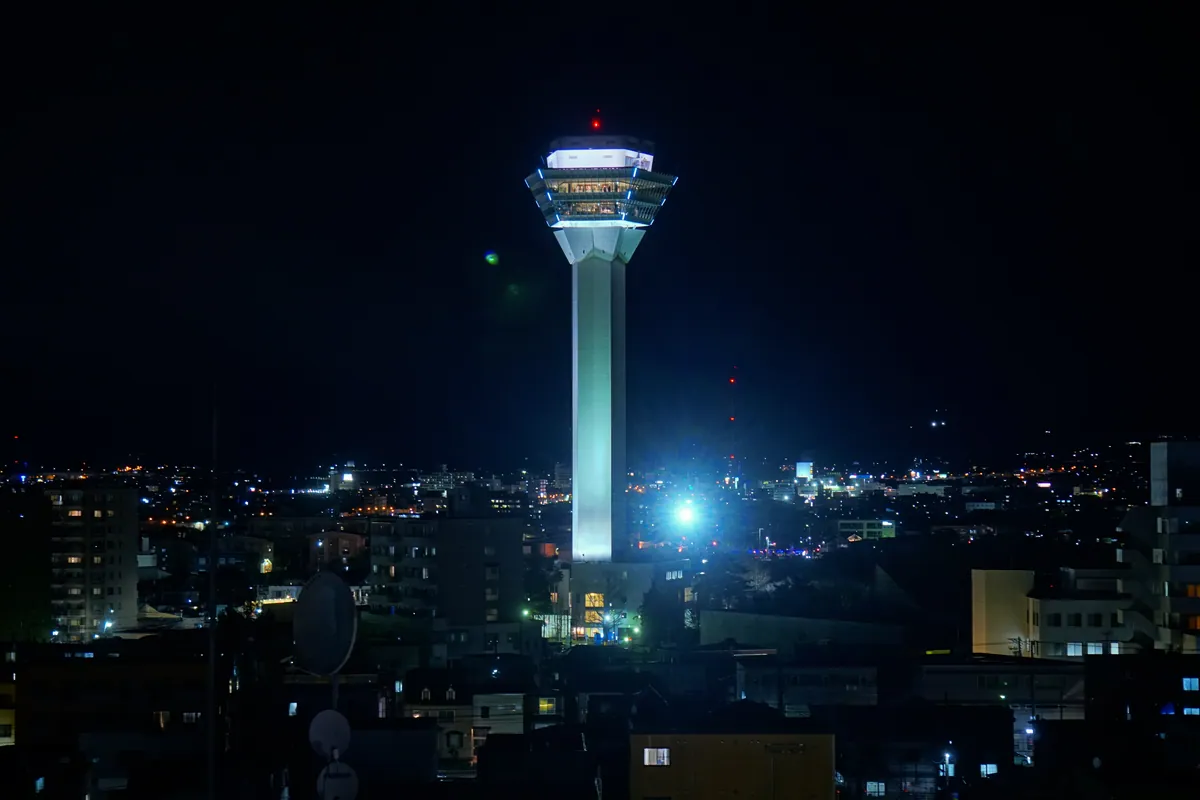
The tower is the whole point — the star is invisible from the ground. Guided history tours add the republic, which the site's plaques undersell.
Both pins on one map, so the distance is a fact rather than a feeling.
Each of these still lands you back aboard with the hour to spare on a 6-hour stop ashore.
Booked before you sail — there is no tour desk at the pier. Booking through this link supports the site.
Yes — the star shape is essentially invisible from ground level. The tower is the only place the fortress makes sense, and the exhibits on the 1869 battle are compact and good.
Barely: the tram alone is an hour round trip, so a 2–3 hour window buys the tower and a fast moat walk and nothing else. With four or more hours it fits comfortably alongside the harborfront.
Each one is a finished day we have walked and timed, with this stop in it. Read the route rather than assembling it yourself.
Each of these still lands you back aboard with the hour to spare.
 4 hr 30 min for both
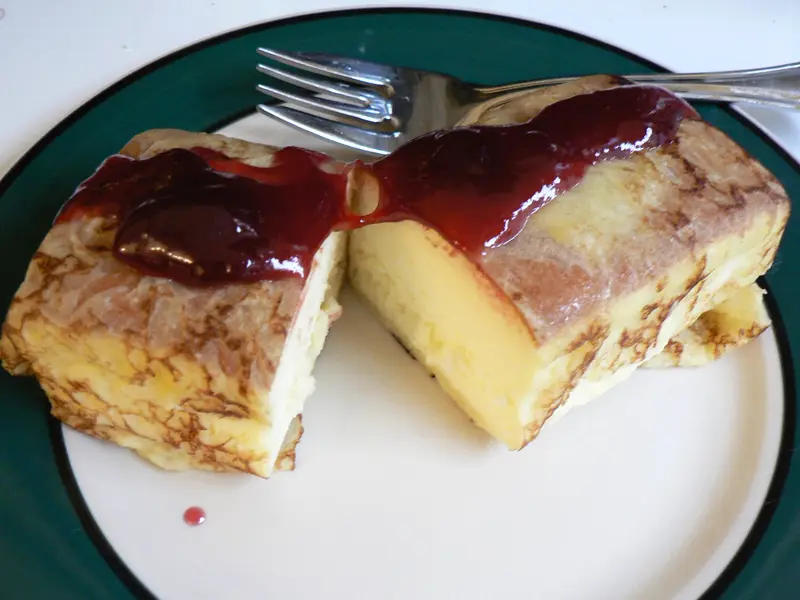
Cheese omelet cakes that dissolve on contact — Hakodate’s proudest confection, boxed for travel.
See the detail →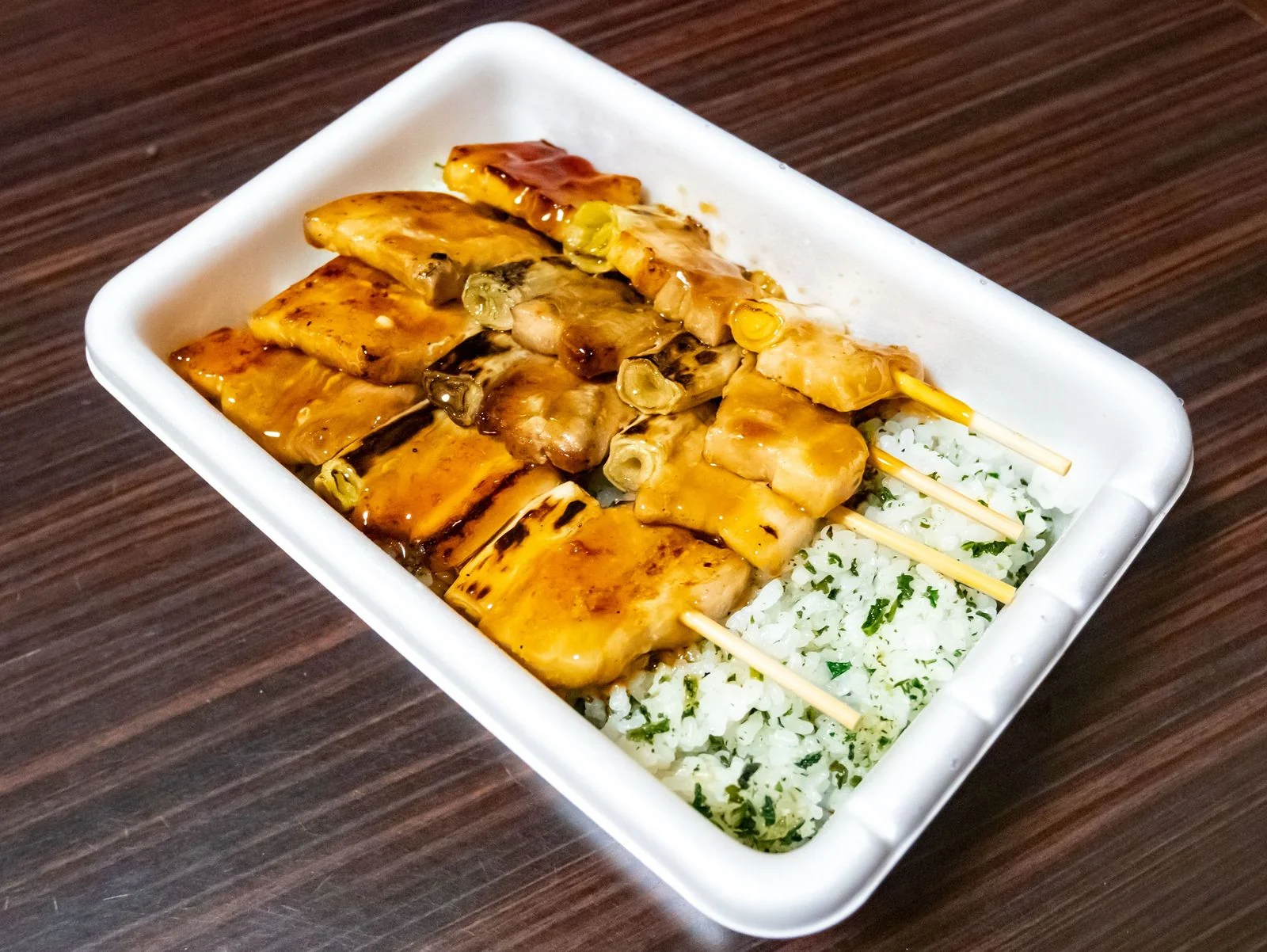 4 hr 30 min for both
A local chain’s pork-skewer bento with a cult following — order at the counter, eat on the harbor wall.
See the detail →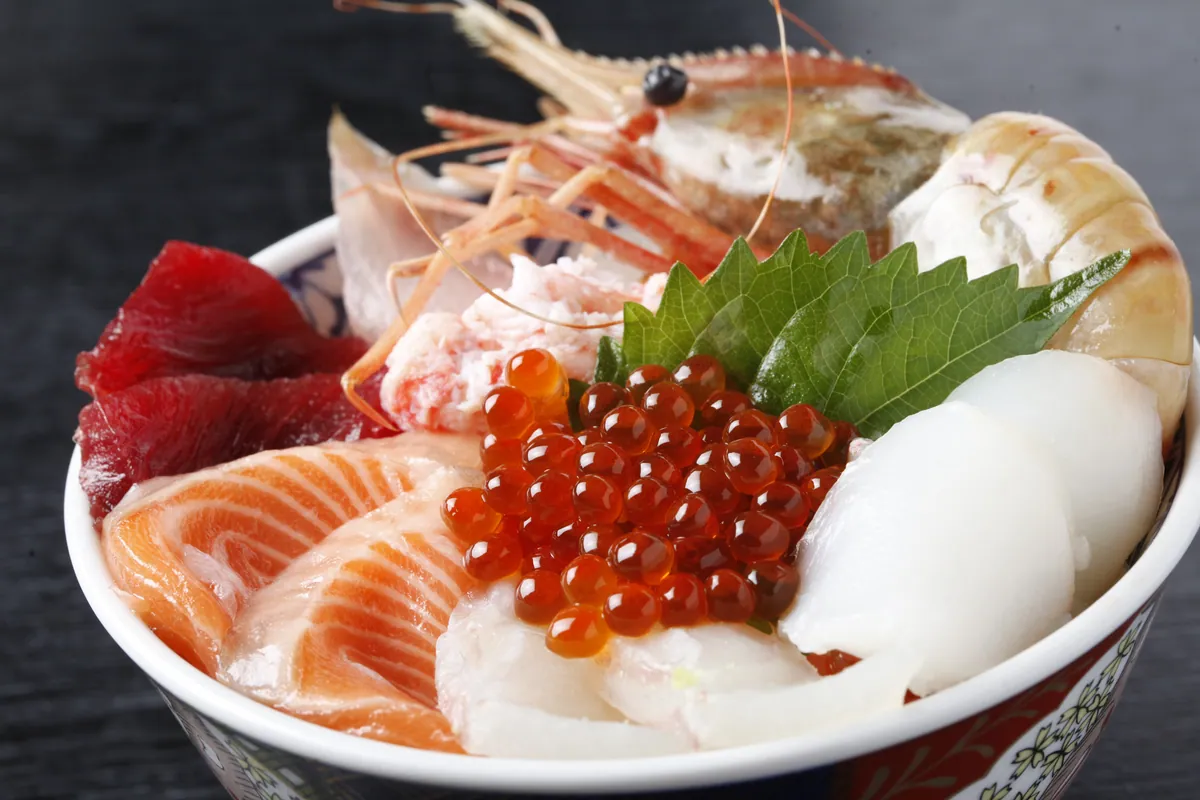 5 hr for both
Uni, ikura and crab over rice at 7 a.m., a hundred meters of squid tanks from the Wakamatsu berth (from Minatocho, ride the shuttle first).
See the detail →No typing needed — jump straight in:
Just docked? — the gangway toolStart from your shipThe ride from every berthAsk the editorGlossary