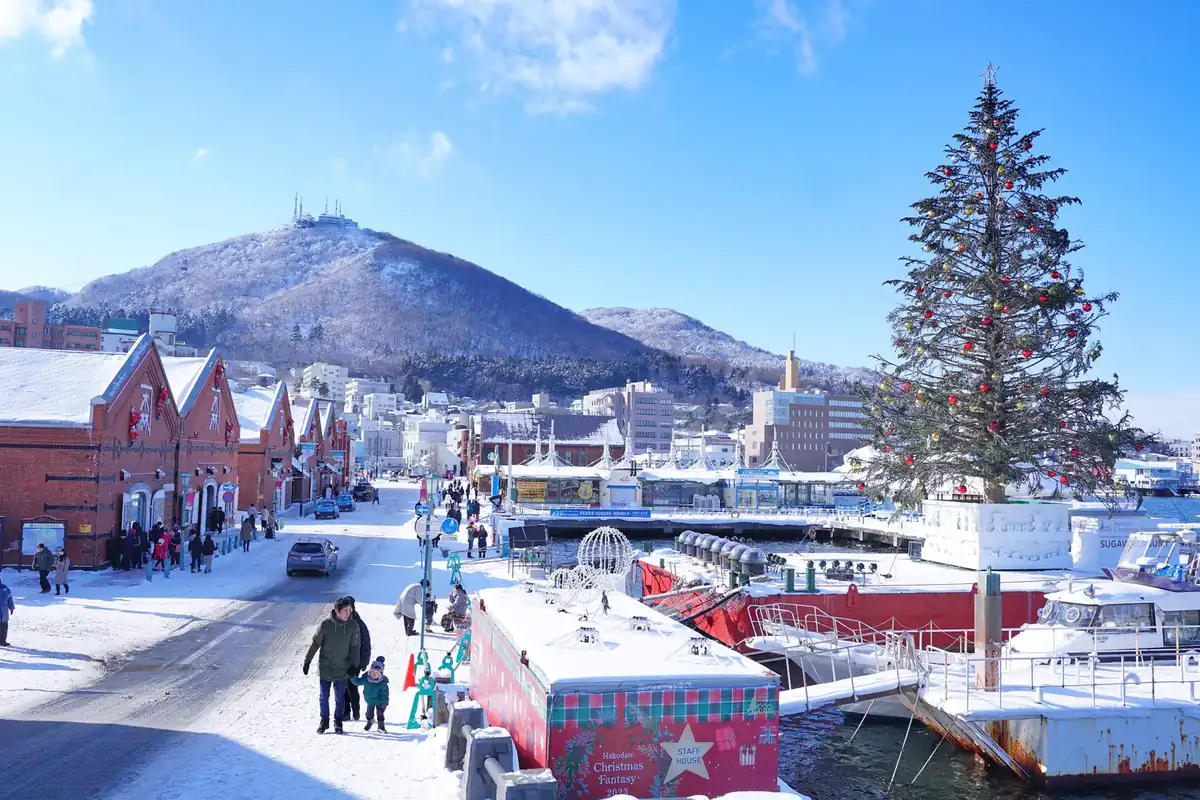
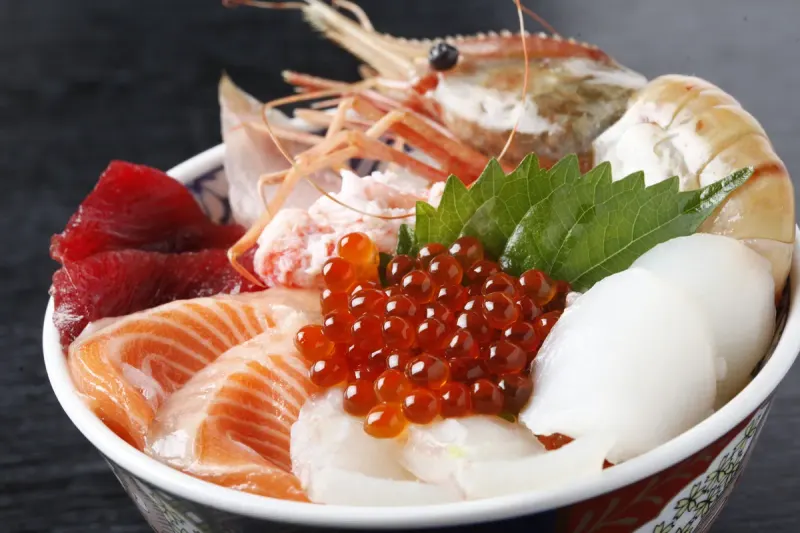
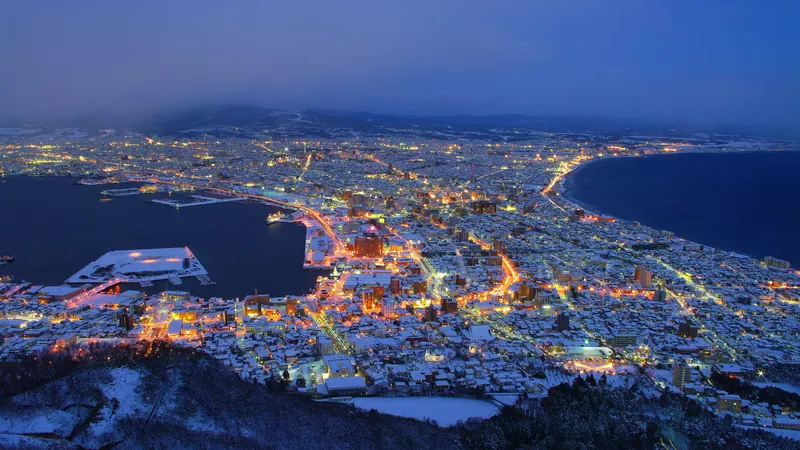
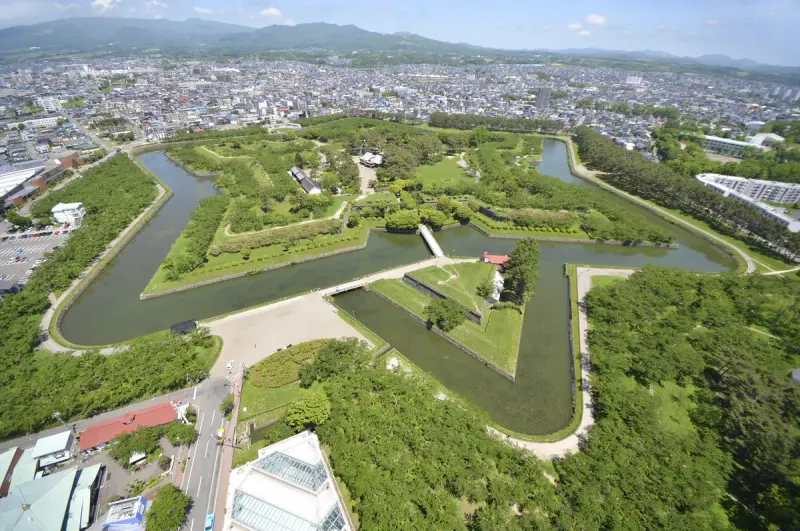
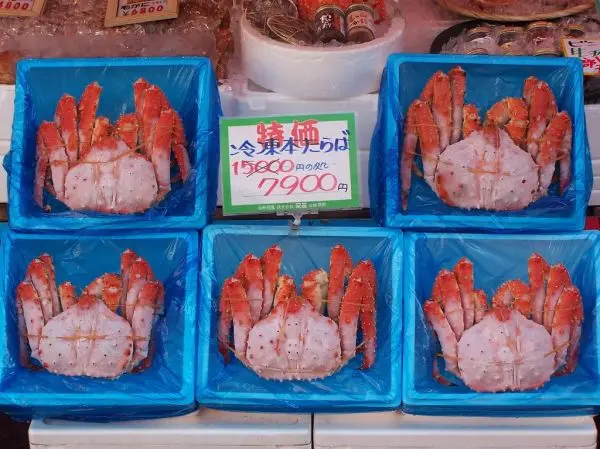
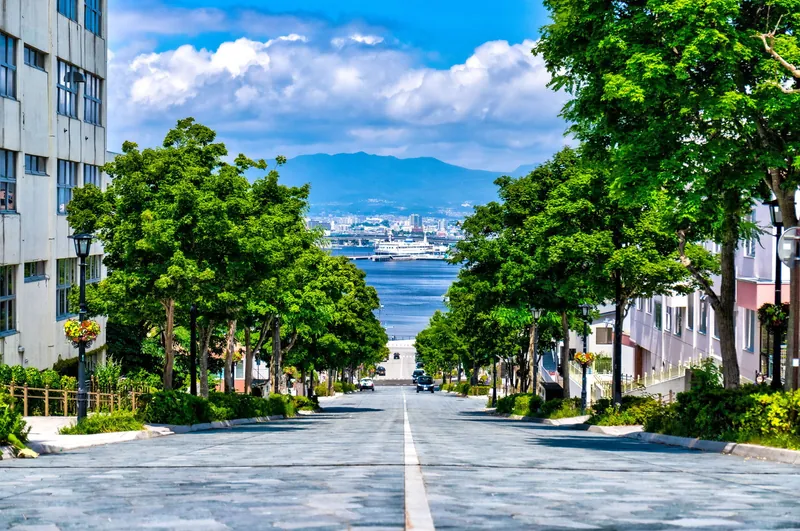
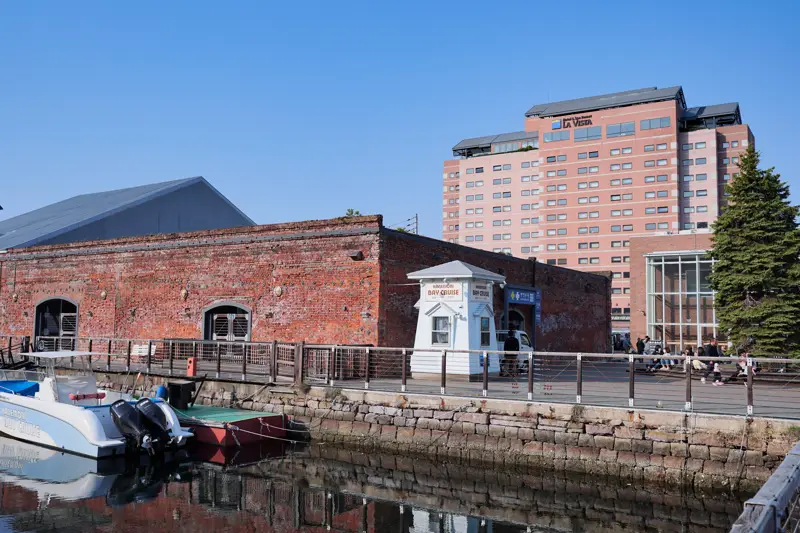
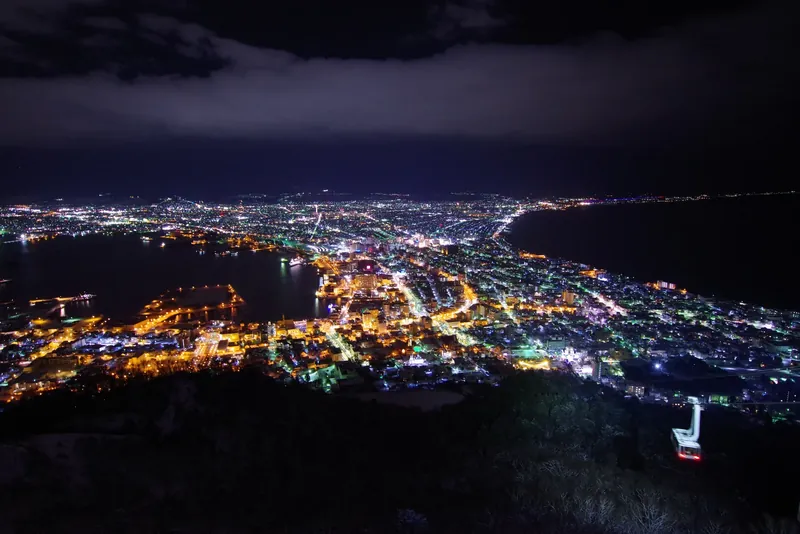
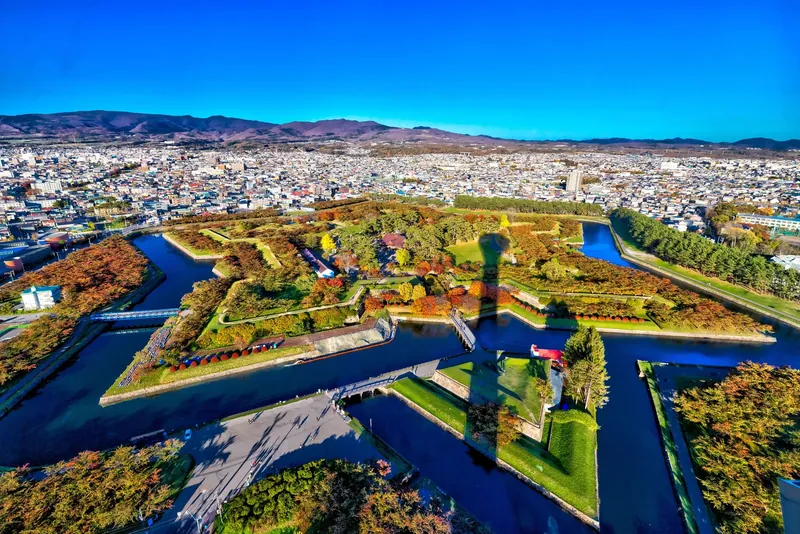
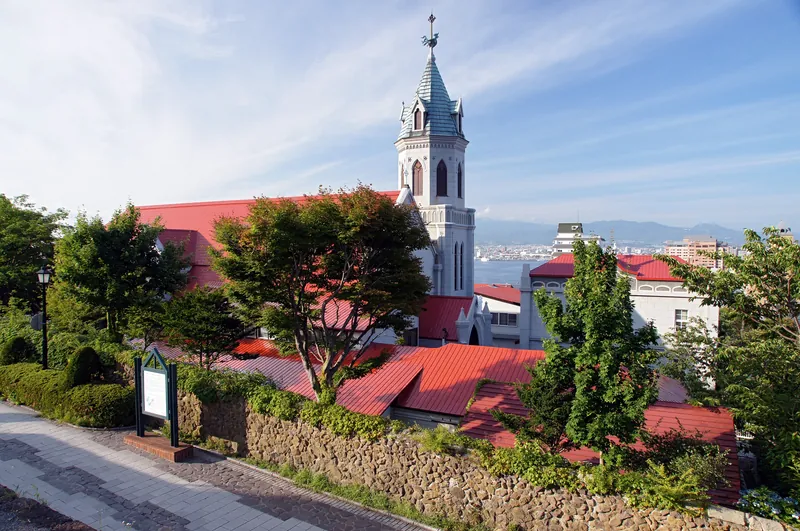
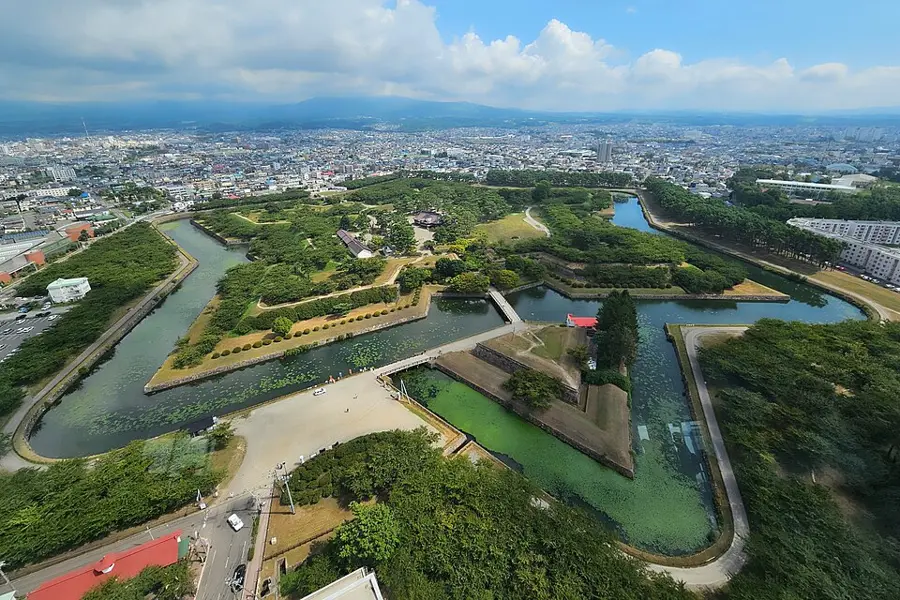
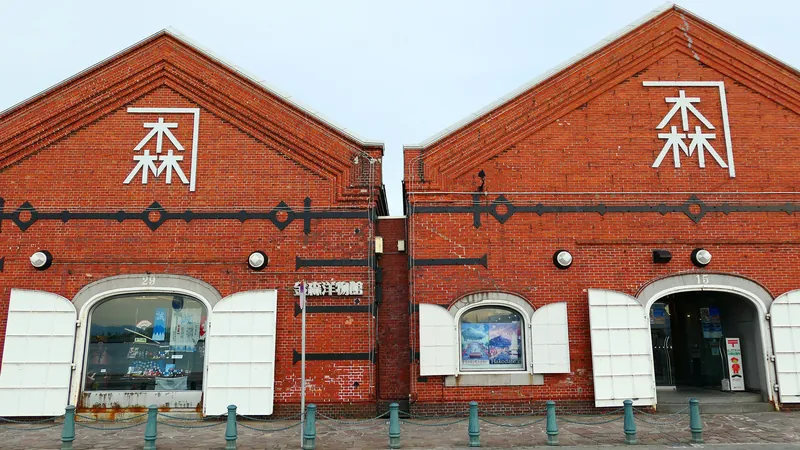
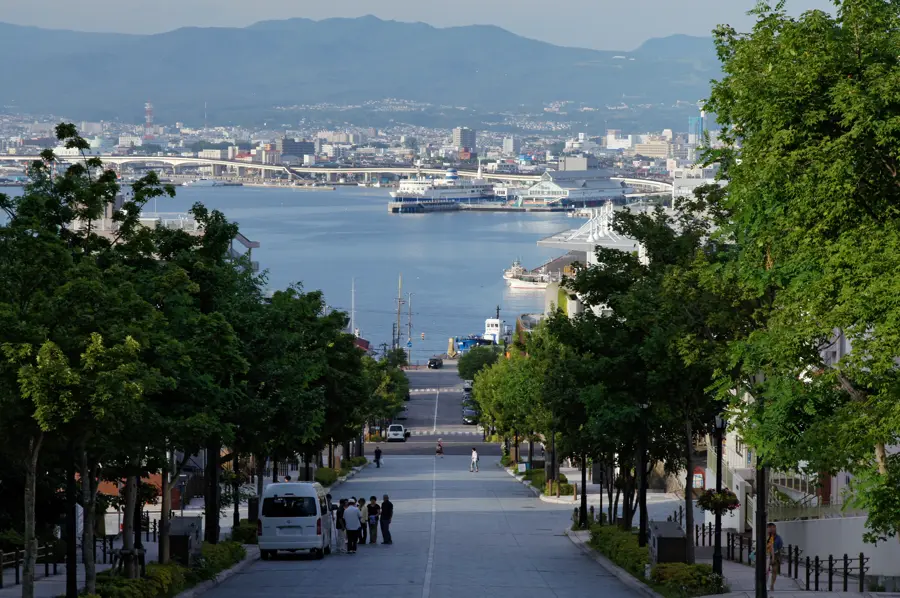
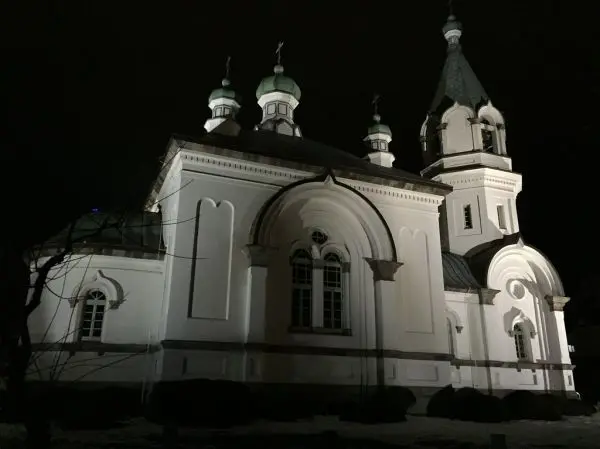
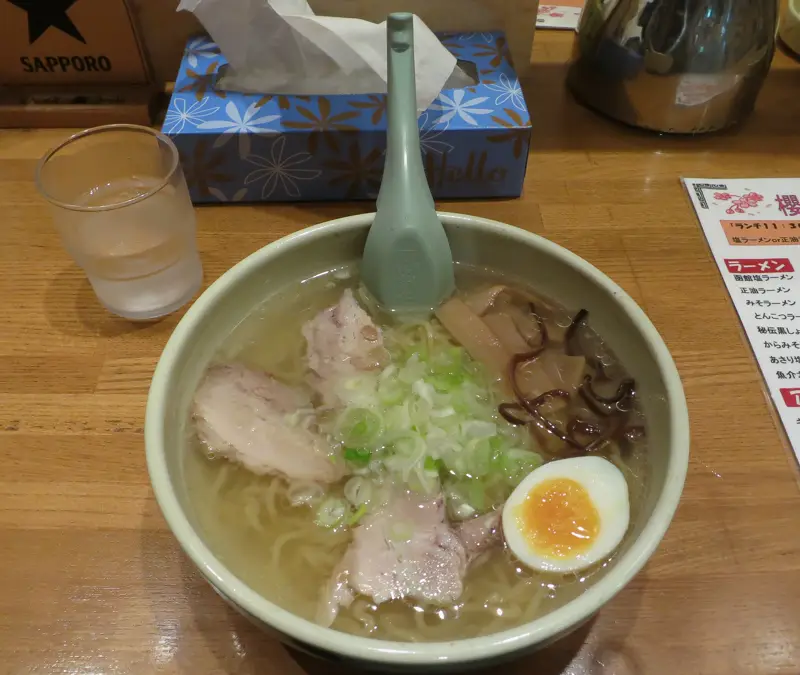
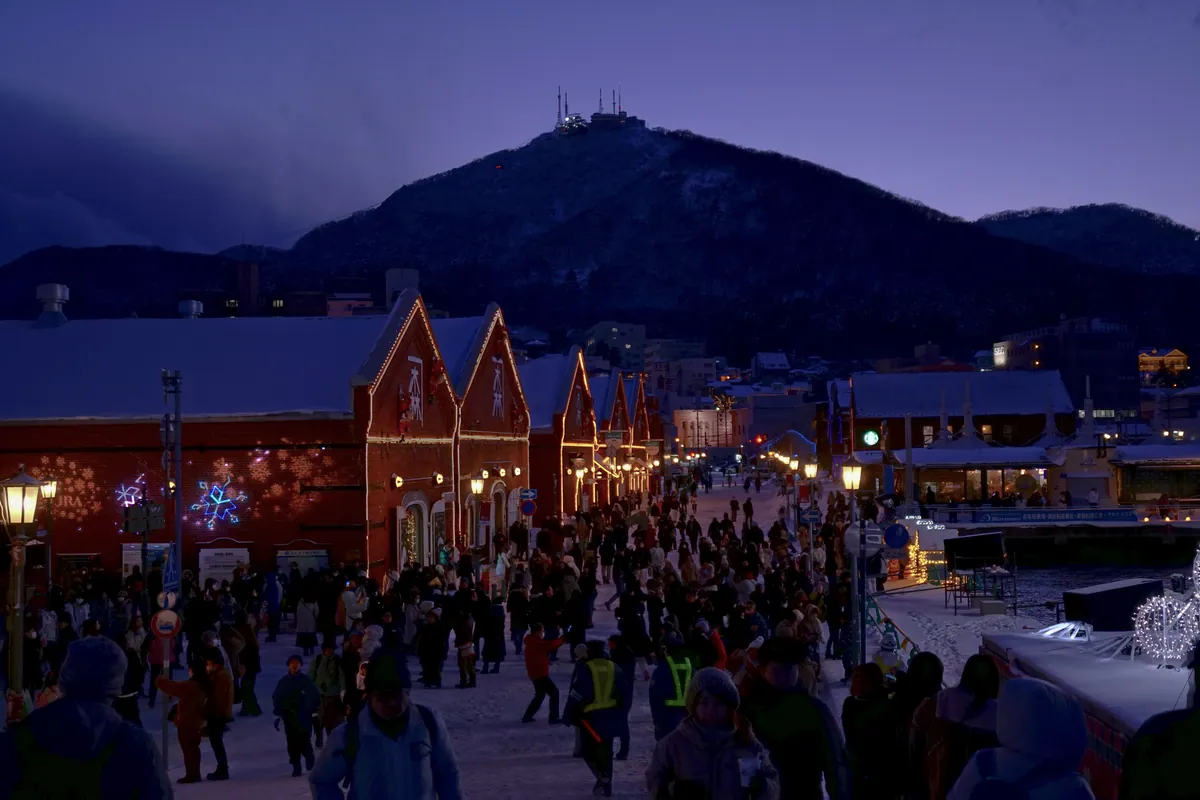
Hakodate is a compact port town in Hokkaido, filling a narrow isthmus between two bays, and one of the two ports Japan opened to the world in 1854. It is known for the Morning Market's crab, scallop and sea urchin breakfasts, for the night view from Mt Hakodate, and for Goryokaku, a star-shaped fort. On two calls in three your ship docks at Wakamatsu Wharf, three minutes' walk from the market, with the Motomachi slopes and red-brick warehouses beyond.
If this is your first Japanese port, everyone goes through face-to-face immigration at the terminal; allow 30 to 60 minutes after the ship clears. What happens at your first Japanese port
How the berths work, and the way into town, in full
First: which berth are you at?
Hakodate's two cruise berths in 2026–27 are on opposite sides of the harbour, and they change the whole day.
Item
Wakamatsu (most ships)
Minato-cho Quay A (big ships, second ship)
Where
Beside JR Hakodate Station, on the town side of the harbour
A cargo quay 6 km north, on the far side of the bay
Terminal
Hakodate Cruise Terminal (2022): toilets, Wi-Fi, immigration, a covered walkway. No shops, no vending machines, no currency exchange
No terminal and no rain shelter; toilets and Wi-Fi only
On foot
Morning Market 300 m, about 3 minutes; station about 5 minutes
Nothing — the nearest convenience store is about 850 m away
Into town
Walk
Ship's shuttle or taxi, about 20 minutes by car
Taxis waiting
About 10
More than 50
The city's rough rule is that ships under 120,000 GT use Wakamatsu and larger ones use Minato-cho, and the 2026–27 schedule follows it: every call by MSC Bellissima and Navigator of the Seas is at Minato-cho, while Diamond Princess and Costa Serena, both just under the line, get Wakamatsu. The schedule shows a second pattern the rule does not mention (our reading of the list, not an official rule): when two ships under the line are in on the same day, one of them goes to Minato-cho — on 31 October Norwegian Jade went to Minato-cho while Seabourn Encore had Wakamatsu.
Of the 22 calls from October 2026 to March 2027, 15 are at Wakamatsu and 7 at Minato-cho. A third wharf, Nishi, appears in older guides as walkable; it has no cruise calls in 2026–27 and is in fact 3 km from the market. Check your berth in the ship's daily programme the night before, and plan from there.
Getting from the Wakamatsu terminal into Hakodate
From Wakamatsu you walk to the market and the station, and the tram does the rest. Fares have been charged by distance since 1 December 2025 — ¥250 up to 2 km, ¥270 to 4 km, ¥290 to 7 km, ¥300 beyond — paid as you get off. Board at the middle door and take a numbered ticket if you pay cash.
To
How
Time
Cost
Morning Market
Walk
about 3 min (300 m)
Free
JR Hakodate Station / Hakodate-ekimae tram stop
Walk
about 5 min
Free
Kanemori Red Brick Warehouses
Walk along the bay
about 15 min (about 1 km)
Free
Motomachi (Hachiman-zaka, the churches)
Tram to Jujigai (6 min) + 10–15 min uphill, or bus route 3
20–25 min
¥250
Mt. Hakodate ropeway base
Tram to Jujigai + about 10 min up a steep street, or bus route 3
about 25 min
¥250
Mt. Hakodate summit by road
Climbing bus, route 1, from station platform 4 (not while the road is closed, 9 Nov 2026 – 12 Apr 2027)
about 30 min
¥700
Goryokaku Tower
Tram to Goryokaku-koen-mae (about 20 min) + about 10 min walk
30–35 min
¥270
Goryokaku Tower by bus
Route 5 from platform 4, hourly at :15, 9:15–14:15
1 min walk from the stop
¥300
Passes. The one-day tram pass costs ¥800 and is sold on board, at the station tourist centre and in convenience stores; three rides that include Goryokaku (¥810) just cover it. A tram + Hakodate Bus one-day pass (¥1,600) is sold online only and is not valid on the climbing bus. Bus route 3, the Motomachi and Bay Area loop, leaves platform 4 every 40 minutes from 9:00 to 17:40 for ¥250 and saves you the climb to the ropeway base.
The tourist information centre inside JR Hakodate Station opens 9:00–18:00; the government's berth sheet lists a tourist-information desk at the terminal (English and Japanese), with hours set for each call.
From Minato-cho Quay A
The government's berth sheet says a shuttle is needed and gives 20 minutes by car to the Morning Market (map routing without traffic says 8–9; plan on 20). The city lists shuttle buses among its services to ships but publishes no stop, fare or timetable — look in your ship's daily programme, or use the taxi pool.
To
How
Time
Cost
Morning Market / station
Ship's shuttle, or taxi
about 20 min
Taxi: agree an estimate first
Goryokaku Tower
Taxi
about 8 min without traffic (4.8 km)
Taxi
Kanemori or the ropeway base
Taxi
9–11 min without traffic (6.7–7 km); allow 25
Taxi
Anywhere, for a group
Chartered small taxi (4 seats), booked 3 days ahead
by the hour
from ¥7,760 per hour
We could not find Hakodate's metered taxi tariff on an official page, so this guide gives no per-trip taxi fares. The charter rate comes from Hakodate Taxi's own price list; its pickup list names the station and hotels, not the wharves.
From the ship to each place: how, how long, how much
Tram from Hakodate-Ekimae — Jujigai stop for the warehouses and Nijukken-zaka, Suehiro-cho for Hachiman-zaka
¥250–300 by distance (day pass ¥800) · every 8 min by day, first tram about 6:30, last about 22:00 (Yachigashira branch every 20 min)
Fares rose in December 2025 — older guides still print ¥210–260 and a ¥600 pass. The fare box gives no change and does not change ¥2,000+ notes; IC cards work.
Tram from Hakodate-Ekimae to Goryokaku-koen-mae, about 20 min, ¥270, then 10–15 min on foot to the tower
Or Hakodate Bus route 5 from station platform 4 to Goryokaku Tower: hourly at :15, 9:15–14:15, ¥300 (winter timetable from 1 October 2026: check the stop timetable)
Tram from Hakodate-Ekimae to Jujigai, 6 min, ¥250, then about 10 min uphill on foot to the ropeway base
Or the climbing bus (route 1) from station platform 4 to the summit, ¥700, while the mountain road is open; it is closed to vehicles from 9 Nov 2026 to 12 Apr 2027
Tram ¥250 · ropeway ¥1,800 return
From 9 November 2026 to 12 April 2027 the road is closed to vehicles and the ropeway is the only ride up. From October the last car up is 20:30.
Market, star fort and ropeway: a 9-hour call at Wakamatsu
Fits 08:00–17:00 or longer at Wakamatsu on a day the ropeway runs (all-aboard 16:30). On a 09:00 arrival, see the note.
Hakodate's three big things in one day, on the tram. Times assume an 08:00 weekday arrival and a 17:00 departure, so all-aboard around 16:30 and our target back at the gangway 15:30. Three tram rides cost ¥810, so a ¥800 one-day pass just pays for itself.
08:30Off the ship and walk 3 minutes to the Morning Market (300 m). The terminal has toilets and Wi-Fi but no shops or currency exchange; a Lawson and a 7-Eleven are both under 300 m away.
08:35Breakfast: Kikuyo Shokudo Honten opens at 6:00, or any counter in Donburi Yokocho. The squid pond at Ekini Market opens at 7:00, from ¥600 at market price.
09:44Tram from Hakodate-ekimae to Goryokaku-koen-mae, arriving 10:03 (¥270). Then about 10 minutes on foot to the tower.
10:15Goryokaku Tower (¥1,200): the star shape of the fort from the 90 m deck. Advance tickets from a convenience store let you skip the ticket queue.
10:55Walk the moat into the park and visit the Magistrate's Office (¥500). Shoes off; there is no luggage storage and large bags may be refused.
11:45Shio ramen at Menchubo Ajisai Honten (opens 11:00, closed on the 4th Wednesday), about 10 minutes back towards the tram stop.
12:54Tram from Goryokaku-koen-mae to Jujigai, arriving 13:17 (¥290), then about 10 minutes up a steep street to the ropeway base.
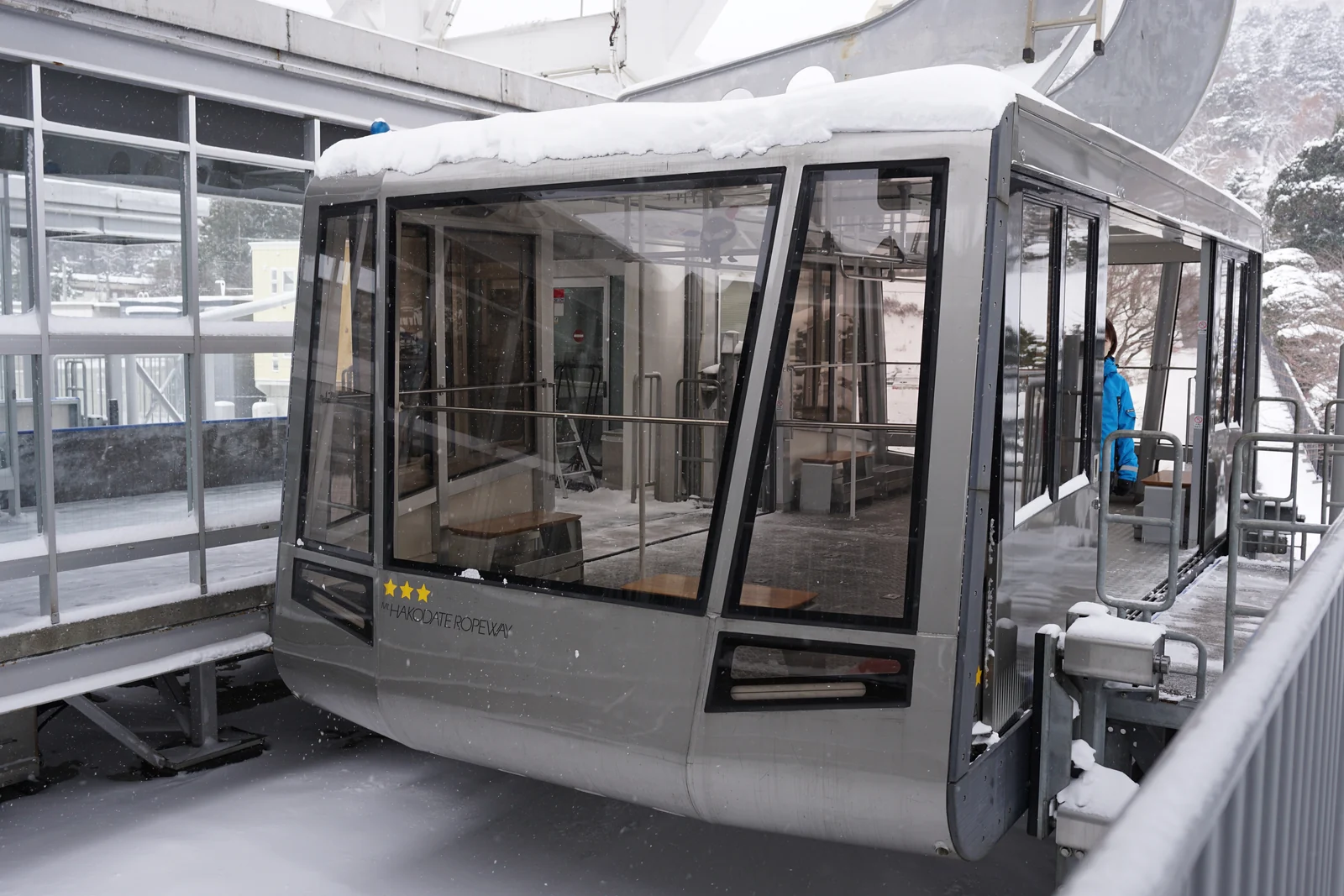
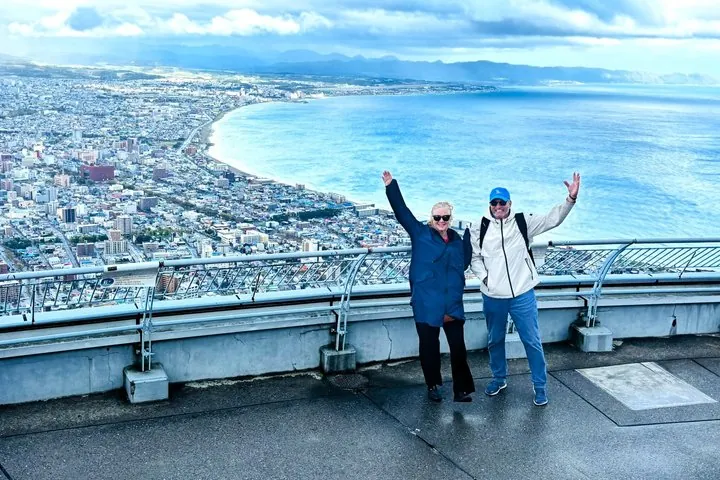
13:30Ropeway up (¥1,800 return; cars every 15 minutes, 3 minutes each way). The twin bays by daylight until about 14:15, then down.
14:42Tram from Jujigai to Hakodate-ekimae, arriving 14:48 (¥250). Walk about 5 minutes to the terminal.
15:00Back at the gangway, 30 minutes ahead of the target. Weekend times differ by a few minutes, but the same connections run every 8 minutes.
From your ship, the 3 stops in order, and back, by their map pins. A phone takes three stops between start and end, and none on a train or bus, so the day opens in parts.
Market, Motomachi and the warehouses on foot: 7–8 hours at Wakamatsu
Fits a 7–8-hour call at Wakamatsu, such as 07:30–15:30 or 07:00–15:00, and any Wakamatsu call when wind stops the ropeway.
No ropeway, no star fort: the old port quarter, its churches and consulates, and the red-brick warehouses on the water. Times assume a 07:30 arrival and 15:00 departure, so all-aboard 14:30 and our target back at the gangway 13:30. Transport for the day: one tram ride, ¥250.
08:00Off the ship and 3 minutes on foot to the Morning Market. On a Wednesday many shops are closed; Kikuyo and the Donburi Yokocho counters are the safest bets.
08:05Seafood bowl for breakfast. The squid pond opens at 7:00, except on the third Wednesday of January to June, October and November.
09:00Tram from Hakodate-ekimae to Jujigai, 6 minutes (¥250), every 6–8 minutes. Then about 10–15 minutes up Hachiman-zaka to the church block.
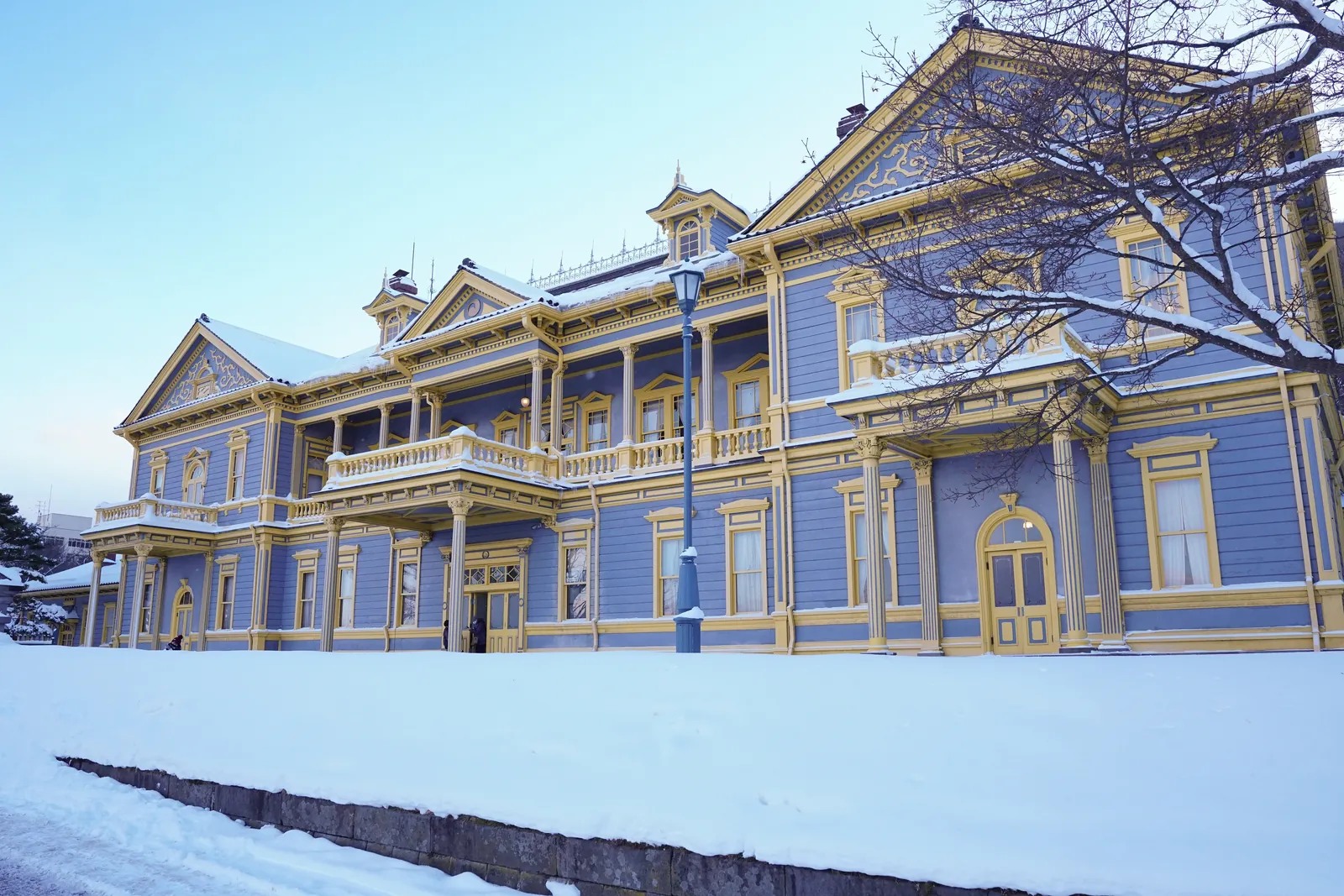
09:30Old Public Hall (opens 9:00, ¥300), built in 1910 and an Important Cultural Property, and the Old British Consulate (¥300). A two-venue ticket is ¥500.
10:30Hakodate Orthodox Church (weekdays from 10:00, ¥200 donation). On Sundays it opens for visits only at 13:00 — swap it with the warehouses.
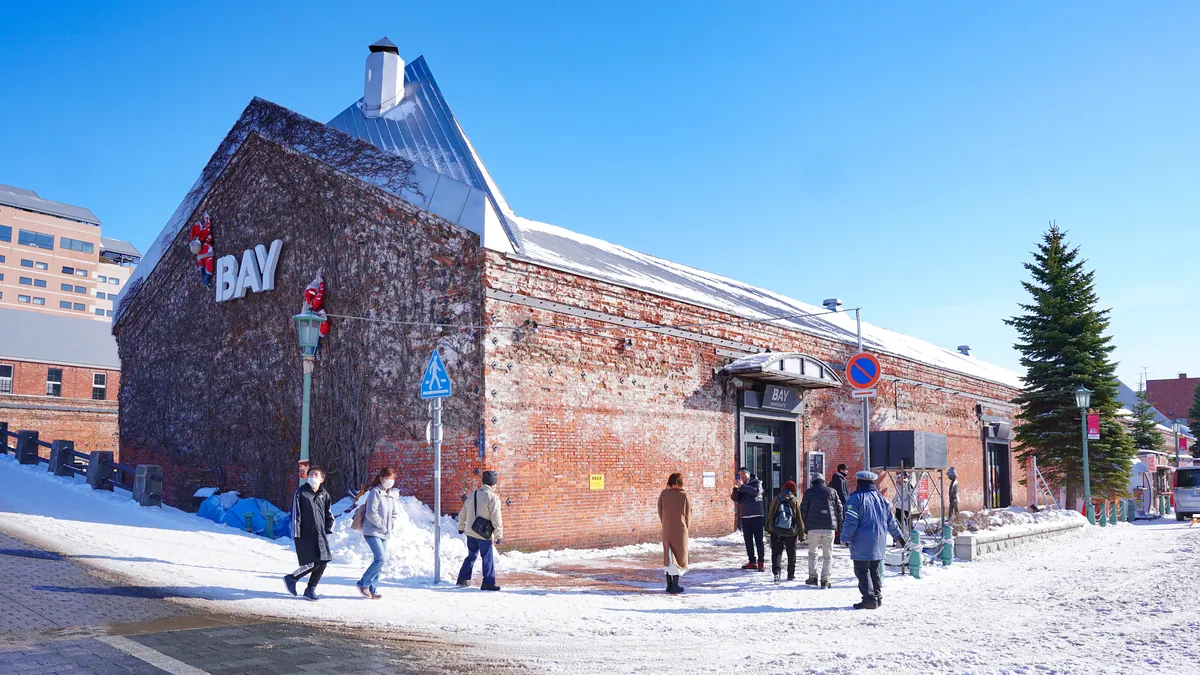
11:15Walk down to the bay and the Kanemori Red Brick Warehouses (shops 9:30–19:00): Snaffle's cheese omelets, glass, souvenirs.
12:00Lunch at Lucky Pierrot Bay Area (10:00–21:00) or Ajisai Kurenai for shio ramen (closed on the third Thursday).
12:50Walk back along the bay to the terminal, about 1 km and about 15 minutes (our estimate from map routing).
13:05Back at the gangway, 25 minutes ahead of the target, with time for the Hasegawa Store yakitori bento as a ship-side snack.
From your ship, the 5 stops in order, and back, by their map pins. A phone takes three stops between start and end, and none on a train or bus, so the day opens in parts.
Fits a 07:30–18:30 call (11 hours in port) and anything longer.
Minato-cho is a cargo quay 6 km north of the station with no terminal, no shops and nothing to walk to, so the day starts and ends with a ride. Times assume a 07:30–18:30 call and use the weekday timetable for the tram and the November–March hours for the Orthodox Church and the Old Public Hall: all-aboard 18:00, our target back at the gangway 17:00.
08:00Off the ship. Take the ship's shuttle if one is offered (the city lists shuttle buses among its welcome services, but not where they stop), or a taxi from the pool of 50-plus cars.
08:25At the Morning Market after about 20 minutes by car, the government's own figure for this trip.
08:30Breakfast at Kikuyo or Donburi Yokocho, and the squid pond if you want to catch your own.
09:28Tram from Hakodate-ekimae to Goryokaku-koen-mae, arriving 09:47 (¥270).
10:00Goryokaku Tower (¥1,200), the park and the Magistrate's Office (¥500).
11:30Lunch near Goryokaku: Ajisai Honten for shio ramen.
12:30Tram to Jujigai, arriving 12:53 (¥290); walk up to the ropeway base.
13:15Ropeway up (¥1,800 return), down by about 14:00.
14:10Walk down through Motomachi: on a November or March weekday the Orthodox Church is open 10:00–16:00 (in March, check that visits have resumed) and the Old Public Hall 9:00–17:00. Finish at the Kanemori warehouses.
15:45Taxi from Kanemori back to Minato-cho: 6.7 km, 9 minutes with no traffic, allow 25. Back at the gangway about 16:15, 45 minutes ahead of the target.
From your ship, the 5 stops in order, and back, by their map pins. A phone takes three stops between start and end, and none on a train or bus, so the day opens in parts.
Fog or rain — the market and warehouses carry it. About 3.5h ashore; ¥800 tram day pass + ¥1,200 tower. Weather refunds nothing — this plan never needed it to. Times count from when you step off the ship.
+0:00Morning market under the awnings — kaisendon first. Rain changes nothing here since 1945
+1:00Tram to Goryokaku Tower. The star fort reads perfectly through glass
+2:15Tram back to the Kanemori warehouses. Shops, beer hall and coffee, all indoors
+3:15Walk/tram back to the wharf. Tram ¥250–300 by distance since Dec 2025; IC cards and exact coins both work
+3.5hBack at the gangway, about 3.5h after you set off.
Tick the places in the order you want them. The map numbers them and draws the way from your ship and back; the buttons open the same route in Google Maps, in parts a phone can draw.
Start from a model day:
Market, star fort and ropeway
08:30
1. Morning MarketPhoto: 663highland / CC BY 2.5
09:44
2. Goryokaku TowerPhoto: Keihin nike / CC BY-SA 3.0
Most calls here run about 10 hours. Hakodate: Historic Port Walk & Mt. Hakodate Panoramic Views fits that day with the hour before all-aboard to spare; on your own, the days above do the same ground by public transport.
Cash, Wi-Fi, toilets, steps: the practical answers
Cash, cards, ATM
No exchange at the terminal; 7-Elevens 270 m and 380 m away and the Hakodate-ekimae post office (360 m) have foreign-card ATMs.
Wi-Fi and SIM
Wi-Fi in the Wakamatsu terminal; none at Minato-cho Quay. Not published whether a SIM counter exists; buy an eSIM before sailing.
Toilets
Toilets in the Wakamatsu terminal; the Morning Market has accessible toilets and the ropeway stations have lifts.
Luggage
JR Hakodate Station coin lockers, 2nd floor, 6:00–22:00 (sizes and prices not published); nothing is published at the terminal.
Steps and slopes
Only 300 m from Wakamatsu to the Morning Market; Motomachi's Hachiman-zaka climbs straight up from the bay, and the ropeway lends wheelchairs free.
English
An English-speaking tourist desk is set up in the terminal on call days; the Morning Market has an information counter and the TABIYAKU interpreting service.
Pharmacy, hospital
Dial 119 for an ambulance and 110 for police; the JNTO Japan Visitor Hotline, 050-3816-2787, answers in English 24 h.
With children
Not published; ask at the terminal desk.
Three things to eat in Hakodate, and where
Dish
Where, price, hours
Tomoe-don, a sea urchin, scallop and salmon-roe bowl
The pickKikuyo Shokudo Honten, Morning Market, 2 min from Hakodate Station west exit¥3,278 · 6:00–14:00 May–Nov (last order 13:40); 6:00–13:30 Dec–AprNo seat reservations at the main shop; raw seafood.Our page
Shio ramen, Hakodate's clear salt broth
The pickAjisai Honten, 29-22 Goryokaku-cho, by Goryokaku11:00–20:25 (last order), closed 4th WedKurenai branch in the Bay Area: 11:00–21:30, closed 3rd Thu.
Yakitori bento, a skewered rice box to carry
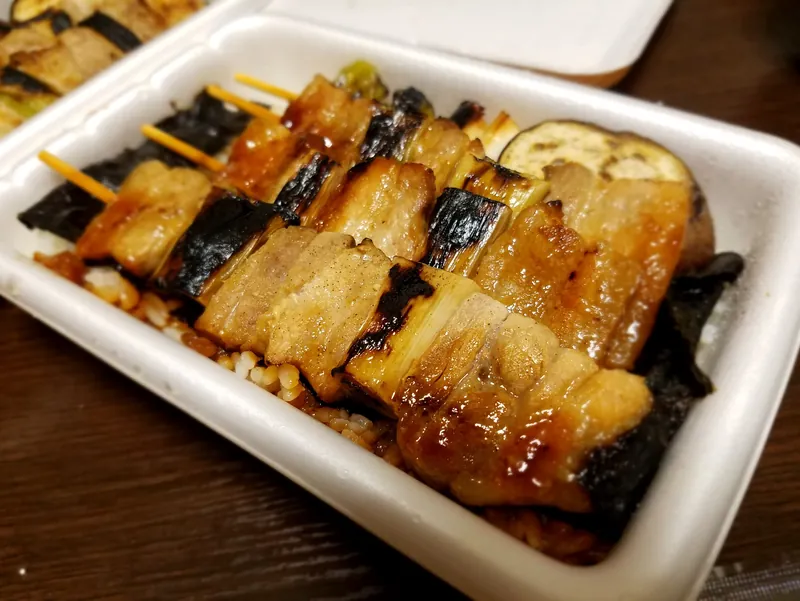
The pickHasegawa Store, Bay Area shop, about 15 min on foot from the terminal7:00–22:00 (Bay Area); 8:00–20:00 by the stationTakeaway only; eat it ashore, since most cruise lines take only sealed, non-perishable food back aboard.
Mistakes we see passengers make
Counting on the climbing bus or a taxi up the mountain in March.The mountain road is closed to all vehicles from 9 November 2026 to 12 April 2027, so on the March calls the ropeway is the only way to the summit. It runs through the winter from 10:00; its autumn inspection closure ended on 8 November 2026.
Heading for the ropeway first thing.The first car goes up at 10:00. On an 08:00 arrival, eat at the market and see Goryokaku first; the summit is a better afternoon stop anyway.
Expecting the night view on an 18:00 or 19:00 departure.The sky is dark about 30 minutes after sunset, and you want to be at the gangway 90 minutes before the ship sails. Only a departure at 21:00 or later gives you the night view, and no call on the published list to March 2027 sails that late.
The other 4 mistakes
Assuming every ship docks by the market.A third of the calls use Minato-cho, 6 km north, where there is no terminal, no shop and no walking route into town. Ships over about 120,000 GT go there, and so, on some two-ship days, does the other ship. Check the daily programme the night before.
Paying the tram with a big note.The fare box gives no change, and the changer on board refuses ¥2,000, ¥5,000 and ¥10,000 notes. Carry ¥1,000 notes and coins, tap a Suica-type IC card, or buy the ¥800 one-day pass.
Going to the market on a Wednesday without a plan.The market federation itself warns that many shops close on Wednesdays, and 31 March 2027 is a call day that falls on one. The squid pond also closes on the third Wednesday of January to June, October and November. Kikuyo is open.
Using old prices and old routes.Tram fares rose on 1 December 2025 to ¥250–300; Goryokaku Tower is ¥1,200, not ¥1,000. And do not take JR to Goryokaku Station for the fort — the city's own tourism site warns it is a long way from the park; the tram stops 10 minutes away.
Hakodate cruise port questions
Where do cruise ships dock in Hakodate?
Most dock at Wakamatsu Wharf, beside JR Hakodate Station, where the Hakodate Cruise Terminal opened in 2022: 15 of the 22 calls from October 2026 to March 2027. The other 7 use Minato-cho Quay A, 6 km north, with no terminal — every ship over about 120,000 GT (MSC Bellissima, Navigator of the Seas) and, on 31 October 2026, Norwegian Jade as the second ship in port. All three March 2027 calls are at Wakamatsu. A third wharf, Nishi, has no cruise calls in 2026–27. Hakodate is not a tender port: ships tie up alongside.
Which cruise ships call at Hakodate in 2026–27?
22 calls between October 2026 and March 2027, on the city's schedule of 5 November 2026 (two October calls were cancelled, and Spectrum of the Seas's 29 October call was cancelled for bad weather): 17 in October, two on 5 and 6 November and three in March 2027, with none in between. The March 2027 calls are all at Wakamatsu: Vasco da Gama (Sunday 7 March), Nautica (Tuesday 23 March) and Silver Moon (Wednesday 31 March 2027). MSC Bellissima calls four times, Norwegian Jade and Seabourn Encore three times; Westerdam, Silver Moon and Asuka II twice; Navigator of the Seas, Diamond Princess, Costa Serena, Mitsui Ocean Sakura, Vasco da Gama and Oceania Nautica once. Every date and berth is on our Hakodate cruise calendar.
What is at the Hakodate Cruise Terminal?
Toilets, Wi-Fi, immigration and a tourist-information desk in English and Japanese, staffed for each call, with a covered walkway from the ship. There are no shops, vending machines or currency exchange, but a Lawson is about 220 m away and the Morning Market 300 m. The terminal opened at Wakamatsu Wharf in 2022; the quay is closed to the public, so friends cannot meet you at the gangway. Departing ships are often seen off with the city's squid dance. Minato-cho has no terminal at all.
Can I walk from the Hakodate cruise terminal to the Morning Market?
From Wakamatsu, yes: the government's berth sheet gives 300 m and about 3 minutes on foot, and JR Hakodate Station about 5 minutes. From Minato-cho, no — it is about 20 minutes by car, so take the ship's shuttle if one runs, or a taxi.
How do I get from the cruise port to Mt. Hakodate?
From Wakamatsu, walk 5 minutes to Hakodate-ekimae, take the tram to Jujigai (6 minutes, ¥250) and walk about 10 minutes up a steep street to the ropeway base; bus route 3 (¥250, every 40 minutes) stops closer. The ropeway costs ¥1,800 return, runs from 10:00 to 21:00 from October, and takes 3 minutes. Its inspection closure, 20 October to 8 November 2026, has ended, and it has run again since 9 November.
Can cruise passengers see the Hakodate night view?
Only on a late sailing. The night view begins about 30 minutes after sunset, and you need about an hour to get down and back before your gangway time. No call on the published list to March 2027 sails late enough: the three March 2027 calls all leave by 18:30, so go up by day, when the whole isthmus is in view.
Is the Mt. Hakodate Ropeway open when my ship is in?
Yes, on the March 2027 calls, though strong wind can stop it. It runs from 10:00, every 15 minutes or more often when busy; its autumn inspection closure (20 October – 8 November 2026) is over. The mountain road is closed to all vehicles from 9 November 2026 to 12 April 2027, so in March the ropeway is the only way up.
How do I get from the cruise port to Goryokaku?
Tram from Hakodate-ekimae to Goryokaku-koen-mae takes about 20 minutes and costs ¥270, then about 10 minutes on foot to the tower. Bus route 5 from station platform 4 (¥300) stops a minute from the tower but runs only hourly, at a quarter past, from 9:15 to 14:15 (winter timetable from 1 October 2026: check the stop timetable). Allow 2–2½ hours for the tower (¥1,200), the park and the Magistrate's Office (¥500). From Minato-cho, a taxi takes about 8 minutes with no traffic.
How much is the Hakodate tram, and do I need cash?
¥250 up to 2 km, ¥270 to 4 km, ¥290 to 7 km and ¥300 beyond, paid when you get off. Suica, PASMO, Kitaca and other national IC cards work. The fare box gives no change and the changer takes only ¥1,000 notes. A one-day tram pass is ¥800, sold on board and at the station tourist centre.
Is there a shuttle bus or a taxi from the Hakodate cruise port?
At Wakamatsu you do not need one: the market is 3 minutes away on foot, and about 10 taxis wait. At Minato-cho a shuttle is needed; the city lists shuttle buses among its welcome services but publishes no stop, fare or frequency, so check your ship's daily programme. More than 50 taxis wait there: about 20 minutes to the station, 8 to Goryokaku without traffic. We could not find an official metered tariff, so ask for an estimate first; Hakodate Taxi charters a 4-seat car from ¥7,760 an hour, booked 3 days ahead.
Can I see Hakodate on my own, without a ship's excursion?
Yes, easily from Wakamatsu: the Morning Market is 300 m from the gangway, and the tram, every 8 minutes by day for ¥250–300, reaches Goryokaku in about 20 minutes and Jujigai, for Motomachi and the ropeway, in 6. The market, Goryokaku and the ropeway fit a 9-hour call for under ¥1,000 in fares. From Minato-cho, 6 km out, you need the ship's shuttle or a taxi first, which costs about an hour over the day. Either way, be back at the gangway an hour before all-aboard.
How do I get from the Hakodate cruise port to Motomachi and the Red Brick Warehouses?
The Kanemori Red Brick Warehouses are about 15 minutes on foot along the bay from the Wakamatsu terminal (the complex gives 15 minutes from JR Hakodate Station, which is a little further away). For Motomachi, take the tram from Hakodate-ekimae to Jujigai (6 minutes, ¥250), then walk 10–15 minutes up Hachiman-zaka; bus route 3 from station platform 4 (¥250, every 40 minutes) saves the climb. From Minato-cho a taxi takes 9–11 minutes without traffic; allow 25. The Orthodox Church opens on weekdays from 10:00 but on Sundays only from 13:00.
What time does the Hakodate Morning Market open?
From 5:00 between May and December and 6:00 between January and April, until a little after 14:00. Each of the roughly 250 shops sets its own hours, and many close on Wednesdays. The live-squid pond at Ekini Market opens 7:00–14:00 and closes on the third Wednesday of January to June, October and November.
Can I do the Morning Market, Goryokaku and Mt. Hakodate in one day?
Yes, from Wakamatsu on a call of about 9 hours while the ropeway runs: market 08:30, tram to Goryokaku at 09:44, tower and Magistrate's Office, lunch, tram to Jujigai at 12:54, ropeway at 13:30, back at the terminal about 15:00. From Minato-cho you need about 11 hours because of the transfers.
Do I need cash in Hakodate?
Some. The ropeway takes credit cards, e-money and QR codes, and trams and buses take IC cards, but the tram fare box gives no change and card acceptance at market stalls varies. The Orthodox Church asks a ¥200 donation. The terminal has no currency exchange; a 7-Eleven is about 270 m from it, and 7-Eleven and Japan Post machines generally take foreign cards.
What is the best tour from the Hakodate cruise port?
For a couple on a 9–10-hour call in March, the 3½-hour guided walk through Motomachi with the ropeway included (174545P373). For a group of up to seven, the private half day with a licensed guide (260970P10, US$318 per group). For the shortest calls, the Goryokaku history tour (174545P372, 2½ hours). None promises in writing to return you to the ship; keep an hour's margin before all-aboard.
What food is Hakodate famous for, and where can I try it near the cruise port?
Three things, all within reach of Wakamatsu. A seafood bowl (kaisendon) of crab, scallop, sea urchin and squid at the Morning Market, 3 minutes' walk: Kikuyo Shokudo opens at 6:00. Shio ramen, Hakodate's clear salt-broth style, at Ajisai (by Goryokaku, or Kurenai in the Bay Area) or Jiyoken (lunch 11:30–14:00, closed Wednesday to Friday). And the local fast food: Lucky Pierrot burgers and the Hasegawa Store yakitori bento, both in the Bay Area, about 15 minutes' walk from the terminal.
Is there a hot spring near the Hakodate cruise port?
Yes: Yunokawa Onsen, at the eastern end of the tram line, about 30 minutes from Hakodate-ekimae for ¥290. A minute from the Yunokawa-onsen stop is a free public footbath under a roof, open 9:00–21:00 daily except on maintenance days; bring a small towel. Allow about 1½–2 hours there and back from the Wakamatsu gangway (our estimate), so it suits a long call. The tram passes Goryokaku-koen-mae on the way, so it pairs with the star fort.
Can I visit Lake Onuma from the Hakodate cruise port?
Only on a long call. Onuma Quasi-National Park is about 25 km north; the city's tourism site gives 30 minutes by JR limited express from Hakodate Station, 5 minutes' walk from the Wakamatsu gangway, to Onuma-koen Station, then 5 minutes on foot. We have not verified the fare or timetable, so check both directions on JR Hokkaido's site before you go, and keep an hour's margin. From Minato-cho add the transfer into town. No tour in our catalogue includes Onuma.
Should I tip in Hakodate?
No. Japan's national tourism organisation says tipping is not common in restaurants, cafés, bars, taxis or hotels, and is not expected anywhere. A private guide used to overseas visitors may accept one as thanks; if you want to, hand it over discreetly in an envelope. The one voluntary payment you are likely to meet on a Hakodate port day is the ¥200 donation asked at the Orthodox Church in Motomachi.
Is Hakodate manageable with limited mobility or a wheelchair?
Largely, if you avoid the slopes. From Wakamatsu the Morning Market is 300 m away and the Kanemori warehouses 1 km along the bay. The Mt. Hakodate Ropeway has lifts at both stations, takes wheelchairs in the gondola and lends wheelchairs free. The tram runs low-floor cars to a published timetable, and wheelchair users may phone ahead. The hard part is Motomachi and the street up to the ropeway base: use bus route 3 or a taxi. The costume experience (51978P428) is the only tour here marked wheelchair accessible.
What is the weather like in Hakodate for a cruise call?
October averages 17 °C by day and 8 °C at dawn, with about 106 mm of rain over the month: bring a warm layer for an early market walk. Early November is about 10 °C, with maple colour normally at its best around 2 November. March is still winter: a 5.8 °C high, −2.2 °C low and snow on about 21 days, with the mountain road closed, so only the ropeway reaches the summit. Strong wind can stop the ropeway; the market, Goryokaku Tower and the Motomachi halls are indoors.
Will there be a festival on my port day?
Festival
When
Hakodate Port FestivalFireworks launch from Green Island in the harbour; parades on 2 Aug (Jujigai) and 3 Aug (Goryokaku).
1–5 August 2026 (fireworks on 1 August)
Hakodate Goryokaku FestivalGoryokaku Park, about 20 min by tram to Goryokaku-koen-mae; a costumed parade with floats.
16–17 May 2026
Read on
Hakodate in depth: the places, the history, the myths
2,849 words · 11 chapters
Why Hakodate is worth getting off the ship for
Hakodate was one of the first Japanese ports opened to foreign ships, under the 1854 Treaty of Kanagawa, and the town still wears that history openly: an Orthodox church on the slopes of Motomachi, a British consulate, a 1910 Western-style public hall, red-brick warehouses on the bay. Around it sits the seafood Hokkaido is known for — crab, scallops, sea urchin and live squid at the market by the station.
It is also one of the most convenient cruise ports in the country. From Wakamatsu the Morning Market is 300 metres away and has been open since 5:00, and the tram, every 8 minutes by day, reaches the star-shaped Goryokaku fort in about 20 minutes and Jujigai, at the foot of Mt. Hakodate, in 6. Three big experiences — breakfast at the market, the fort from its tower, the twin bays from the summit — fit a 9-hour call on public transport, for well under ¥1,000 in fares.
What Hakodate is not: a night-view port for most cruise passengers. The panorama that made the town famous is an after-dark sight, and no call on the published list to March 2027 sails late enough for it. In winter there is a second catch: the mountain road is closed to vehicles from 9 November 2026 to 12 April 2027, so the ropeway is the only way up, and strong wind can stop it. This guide is built from the city's call schedule, the tram and bus timetables, the ropeway's notices and the sights' published hours, checked on 30 September 2026; where a time is our own estimate, we say so.
Hakodate port to Mt. Hakodate: what is actually possible
The summit is the one part of a Hakodate day that the calendar and the clock can take away from you. The real picture:
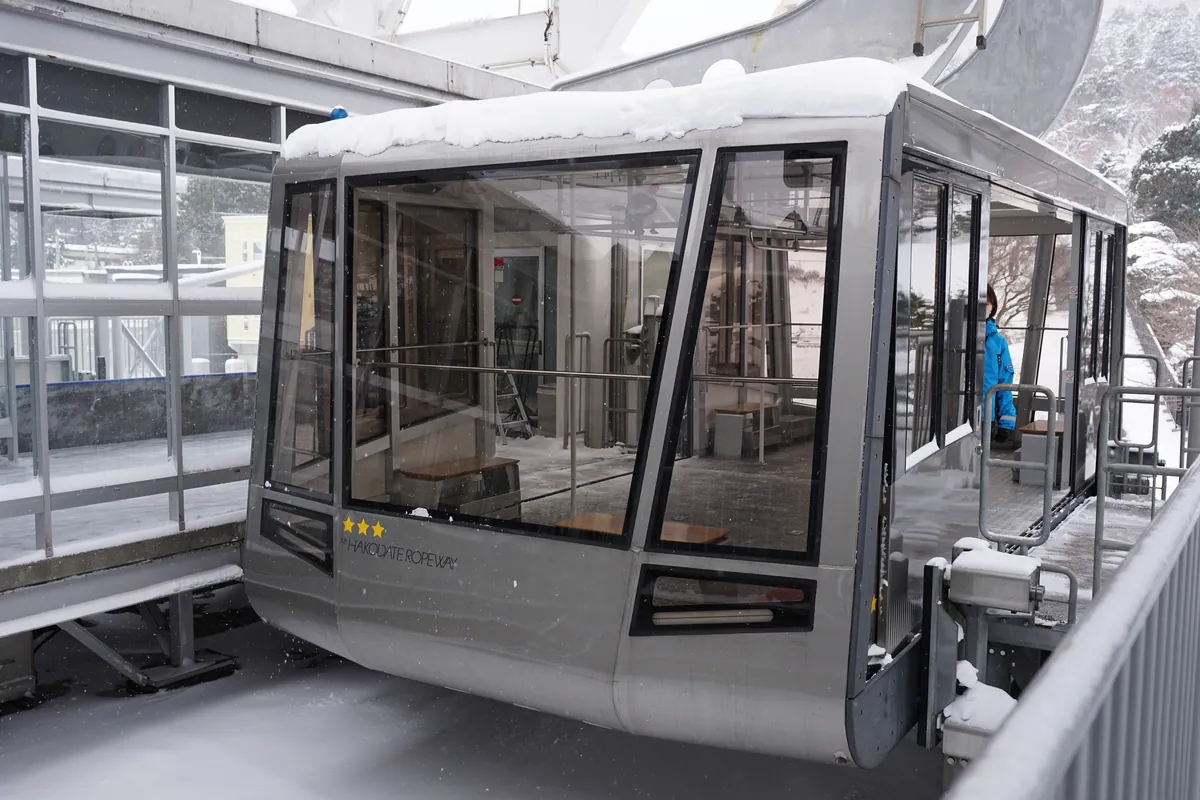
The ropeway leaves from the foot of the mountain, about 10 minutes' walk up a steep street from Jujigai tram stop. From 1 October to 19 April it runs 10:00–21:00 (last car up 20:30), every 15 minutes and every 5–10 when busy, and the ride takes 3 minutes. Adults pay ¥1,800 return or ¥1,200 one way; there is no senior discount. Cards, e-money and QR codes are accepted. The base and summit stations have lifts, the gondolas take wheelchairs, and loan wheelchairs are free.
The autumn inspection closed the ropeway from 20 October to 8 November 2026; it has run again since 9 November.
The climbing bus (route 1) runs from station platform 4 to the summit in about 30 minutes for ¥700 while the mountain road is open. Bus–tram day passes are not valid on it; pay ¥700 or tap an IC card.
Winter. From 9 November 2026 to 12 April 2027 the road is closed to vehicles, the climbing bus and taxis included (from 11:00 on 9 November; reopening planned for 11:00 on 12 April 2027). The March 2027 calls reach the summit only by ropeway, which runs through the winter.
How long it takes. By day, about 1¼ hours base to base — 2½ hours from the Wakamatsu gangway with the tram. After dark allow 1½–2 hours at the mountain: the ropeway warns of heavy crowds for an hour or two from nightfall and posts live waiting times on its home page.
The night view: which calls get it
The night view begins about 30 minutes after sunset, by the ropeway company's own rule of thumb. On 31 October 2026 sunset fell at about 16:34 (our calculation). You then need about an hour to come down and get back, and you want to be at the gangway 90 minutes before the ship sails, so only a sailing at 21:00 or later works. No call on the published list to March 2027 sails that late; the last 2026 call that did is shown here as a worked example:
Date
Ship
Sails
Berth
How to go up
Sat 31 Oct
Seabourn Encore
21:00
Wakamatsu
Ropeway closed: bus 16:40 up (summit about 17:10, first lights about 17:02), 17:50 down, terminal about 18:25, with a taxi both ways as the fallback if the bus queue was long
Every call on the published list to March 2027 sails between 15:00 and 18:30 — take the summit by daylight, when you see the whole shape of the isthmus. Our night-view timing piece walks through the clock in more detail.
The Morning Market: how to do it well
The Hakodate Morning Market (Hakodate Asaichi) is about 250 shops in a few blocks between the station and the harbour, open from 5:00 between May and December and 6:00 from January to April, until a little after 14:00. The market federation counts about 3,000 visitors a day. It is the first thing to do from any berth, and from Wakamatsu it is closer than the station.
Breakfast. Kikuyo Shokudo Honten opens at 6:00 all year, to 14:00 from May to November and 13:30 from December to April; the signature tomoe-don is ¥3,278. Donburi Yokocho, a covered lane of about twenty counters, is the alternative when Kikuyo has a queue.
The squid pond. At Ekini Market you can catch a live squid from a tank and have it cut and served at once, from about ¥600 at market price. It opens 7:00–14:00 "until the squid run out", and closes on the third Wednesday of January to June, October and November, from 31 December to 4 January, and on days when bad weather stops the squid boats.
Wednesdays. The federation warns that many shops close on Wednesdays; the call on 31 March 2027 falls on one.
How long. Allow 45–90 minutes. If you buy seafood to take back on board, ask your ship first what it will allow.
Goryokaku is a five-pointed star fort, now a public park. From the ground it looks like a moat and a park; its shape only makes sense from above, which is why the tower next door exists.
Goryokaku Tower: open 9:00–18:00 every day (tickets until 17:50). Adults ¥1,200, ages 13–18 ¥900, no senior discount. The observation deck is at 90 m. Convenience-store advance tickets let you go straight to the lift queue. Lockers cost ¥300–500.
Goryokaku Park: free; the grounds inside the moat open 5:00–19:00 until October and 5:00–18:00 from November.
Hakodate Magistrate's Office, rebuilt in 2010 inside the fort: 9:00–18:00 until October (last entry 17:45), 9:00–17:00 from November. Adults ¥500. Shoes come off, there is no luggage storage and large bags may be refused.
How long: 2–2½ hours for the tower, the park and the office, plus 30–35 minutes each way from the station.
Take the tram, not the train: the city's tourism site warns that JR Goryokaku Station is a long way from the park, while Goryokaku-koen-mae tram stop is about 10 minutes' walk from the tower. Menchubo Ajisai Honten, the best-known shio ramen house, is on the way back to the stop.
Motomachi is the hillside quarter below Mt. Hakodate that holds the old port's church, consulate and public hall. It is the town's one climb: from Jujigai tram stop, Hachiman-zaka and the neighbouring slopes run straight up from the bay. Allow 2–3 hours for the streets and one or two interiors.
Place
Hours (October)
Hours (November–March)
Entry
Hakodate Orthodox Church
Mon–Fri 10:00–17:00, Sat 10:00–16:00, Sun 13:00–16:00
Closes 16:00 in Nov and Mar; no visits 25 Dec to at least end Feb
¥200 donation
Old Public Hall of Hakodate Ward (1910)
Tue–Fri 9:00–18:00, Sat–Mon 9:00–19:00
9:00–17:00
¥300
Old British Consulate
9:00–19:00
9:00–17:00
¥300
Museum of Northern Peoples, by Suehiro-cho tram stop
9:00–19:00
9:00–17:00
¥300
Kanemori Red Brick Warehouses
Shops 9:30–19:00 daily
Same
Free
Last entry at the halls is 30 minutes before closing. Combined tickets for two, three or four city-run venues cost ¥500, ¥720 or ¥840; the over-65 half price is for Hakodate residents only. The church can stop visits without notice for its own events. For the March 2027 calls, the church's own page says visits resume after February, while the city tourism site says 24 March — check before you go.
Inside the Old Public Hall, the Haikara costume hall hires out period Western dress for 30 minutes (¥2,500, plus the hall's admission; kimono ¥4,000). At the bottom of the slope the Kanemori warehouses hold shops, the Hakodate Beer Hall (from 11:30 on weekdays, 11:00 at weekends) and Snaffle's, known for its cheese omelet cakes. From Kanemori it is about a 15-minute walk along the water back to the Wakamatsu terminal.
Further afield: Yunokawa Onsen and Lake Onuma
Two trips go beyond the tram-and-ropeway triangle, and both need a long call.
Yunokawa Onsen, which the city tourism site calls one of Hokkaido's three major hot-spring resorts, is at the eastern end of the tram line: about 30 minutes from Hakodate-ekimae for ¥290, and it passes Goryokaku-koen-mae on the way. A minute from the Yunokawa-onsen stop is a free, roofed public footbath open 9:00–21:00 daily except maintenance days. Bring a small towel. Allow 1½–2 hours there and back from Wakamatsu (our estimate).
Onuma Quasi-National Park, a lake park about 25 km north, is 30 minutes by JR limited express from Hakodate Station to Onuma-koen Station, then 5 minutes on foot (city tourism site). We have not verified the JR fare or the timetable; check both directions before you commit, and keep an hour's margin before all-aboard. No tour in our catalogue includes it.
The best things to do in Hakodate on a port day
The full list, with times from the berth, is on the Hakodate top 10. In brief:
Work backwards from the ship. Your all-aboard time is usually 30 minutes before departure (check the daily programme), you want to be back at the gangway an hour before that, and the first half hour after arrival goes on getting off. So the time you can actually use is the call length minus about two hours. At Minato-cho, take off another hour for the ride in and out.
Call
Usable
From Wakamatsu
From Minato-cho
4 hours
about 2
The market breakfast and Kanemori, on foot
The market only, by shuttle or taxi
6 hours
about 4
The market and Motomachi on foot, or the market and Goryokaku by tram
The market and Goryokaku: taxi to the tower, tram to the station
7.5–8 hours
about 5½–6
Market, Goryokaku and the ropeway by day (from 10:00), or Motomachi and Kanemori at an easy pace
Market, Goryokaku and a short Motomachi, then a taxi back
9–10 hours
about 7–8
All of it: market, Goryokaku, the ropeway, and Motomachi if you move briskly
Market, Goryokaku and the ropeway or Motomachi
Sailing 21:00+
evening free
The night view (no such call on the list to March 2027)
The night view, plus 30 minutes for the taxi
The median call in 2026–27 is 10 hours; the commonest at Wakamatsu are 9–10 hours and at Minato-cho 11 hours (MSC Bellissima's 07:30–18:30 pattern). The shortest was Norwegian Jade at Minato-cho on 31 October (11:00–18:30, 7.5 hours). The 2026–27 list has no overnight calls. Every call and its berth is on our Hakodate cruise calendar.
About the return to the ship. None of the Hakodate tours we list mentions cruise passengers, a wharf pickup or getting you back on board. All but one meet at the station or a spot in town, and the private car tour lists hotels only for pickup. The three hands-on classes (sushi, piroshki, costume) are all sales final, with no refund if your ship misses the port. Choose a tour that meets at Hakodate Station, five minutes from the Wakamatsu gangway, tell the guide your all-aboard time, and agree to be back an hour before it — plus the taxi time from Minato-cho.
Money, cards and the practical stuff
Hakodate is half card, half cash. Where you will need what:
Place
Pay with
Trams
IC card (tap on and off), or cash — no change given; changer takes ¥1,000 notes only
Hakodate Bus, including the climbing bus
IC card or cash
Mt. Hakodate Ropeway
Credit card, e-money or QR code
Goryokaku Tower lockers
¥100 coins, card, IC or QR
Orthodox Church
¥200 donation; have coins ready
Morning Market stalls
Varies by stall; carry cash
Cruise terminal
No currency exchange (a vendor sometimes sets up for a call)
Cash machines. The Wakamatsu terminal is surrounded by convenience stores: a Lawson about 220 m away, two 7-Elevens at about 270 m and 380 m, a Seicomart at 330 m, a 24-hour FamilyMart at 450 m, and the Hakodate-ekimae post office at about 360 m (counter open weekdays 9:00–17:00). 7-Eleven and Japan Post machines generally take foreign cards; local bank machines may not. At Minato-cho there is nothing at the quay — the nearest are a 24-hour Lawson about 850 m away and a 7-Eleven at about 940 m — so draw cash in town.
Jiyoken, the shio ramen house open since 1947, is listed as closed Wednesday to Friday but publishes no closing days of its own: check before you go. Ajisai Honten by Goryokaku (closed only on the 4th Wednesday, no call dates affected) is the dependable alternative.
Ajisai Kurenai in the Bay Area closes on the third Thursday, which is not a call date.
The Magistrate's Office closes on 24 November and the Old Public Hall on 17 November and 26 January 2027 — none is a call date.
Tipping. Japan's national tourism organisation says tipping is not common in restaurants, cafés, taxis or hotels and is not expected; a private guide used to overseas visitors may accept one, discreetly, in an envelope.
Hasegawa Store opens 8:00–20:00 by the station and 7:00–22:00 in the Bay Area: the yakitori bento is the easy takeaway lunch to eat ashore.
Hakodate's cruise season is short and front-loaded: 17 calls in October 2026, two in November and three in March 2027, with none between 7 November and 6 March.
October averages 17 °C by day and 8 °C at dawn — coat weather for a 6 a.m. market walk. It is also when the ropeway's inspection closure began (20 October–8 November 2026).
Early November brings highs of about 10 °C and the autumn colour: Hakodate's normal maple-colouring date is 2 November (6 November in 2025), so MSC Bellissima's 5 November 2026 call, the season's last, came close to the peak. Goryokaku Park is the easiest place to see it.
March is still winter: highs average 5.8 °C, lows −2.2 °C, and snow falls on about 21 days of the month. The mountain road is closed, so the summit means the ropeway, and the Orthodox Church may still be closed for visits.
Cherry blossom normally opens around 28 April and peaks around 2 May. No 2026–27 calls fall in that window; our cherry-blossom calendar has the other ports.
Weather risks. Sea fog, which can hide the night view, is a May–July phenomenon. Typhoons reach Hokkaido about twice a year, mostly in August and September. The ropeway stops in strong wind.
Rain plan. The market is covered, and Kanemori, the Old Public Hall, the British Consulate, the Magistrate's Office and Goryokaku Tower are all indoors. Our wet-weather plans for every port cover the rest.
What other guides get wrong about Hakodate
You may read
What the official source says
Source
The cruise pier is 1.5–4 km out of town, so take the free shuttle to JR Hakodate Station.
Most calls dock at Wakamatsu Wharf, which is in town: downtown and the Morning Market are 300 m (3 minutes) on foot and JR Hakodate Station is a 5-minute walk. The official berth sheet says no shuttle is needed there.
From Minato-cho, the big-ship berth, you can walk into town in about 30 minutes.
Minato-cho is 6 km from downtown and the Morning Market, 20 minutes by car. It has no terminal building and no rain shelter, and the official berth sheet says a shuttle is needed. Use the ship's shuttle or a taxi.
Since 1 December 2025 tram fares go by distance: ¥250 up to 2 km, ¥270 to 4 km, ¥290 to 7 km and ¥300 beyond. Station to Jujigai is ¥250, station to Goryokaku-koen-mae ¥270. Suica, PASMO, Kitaca and other nationwide IC cards work.
Buy the tram one-day pass from the driver for ¥600.
The tram one-day pass is ¥800 for adults (sold on board, at the station tourist centre and at convenience stores). The 24-hour pass is ¥1,130 and is sold only online.
Visited in person; times from official timetables, operators and the port authority. Every time and fare in this guide was checked against the sources listed above on 11 November 2026; where we had to estimate (a walk, a taxi in traffic), the text says so. Timetables change — if you find one that has, tell us and we will fix it.