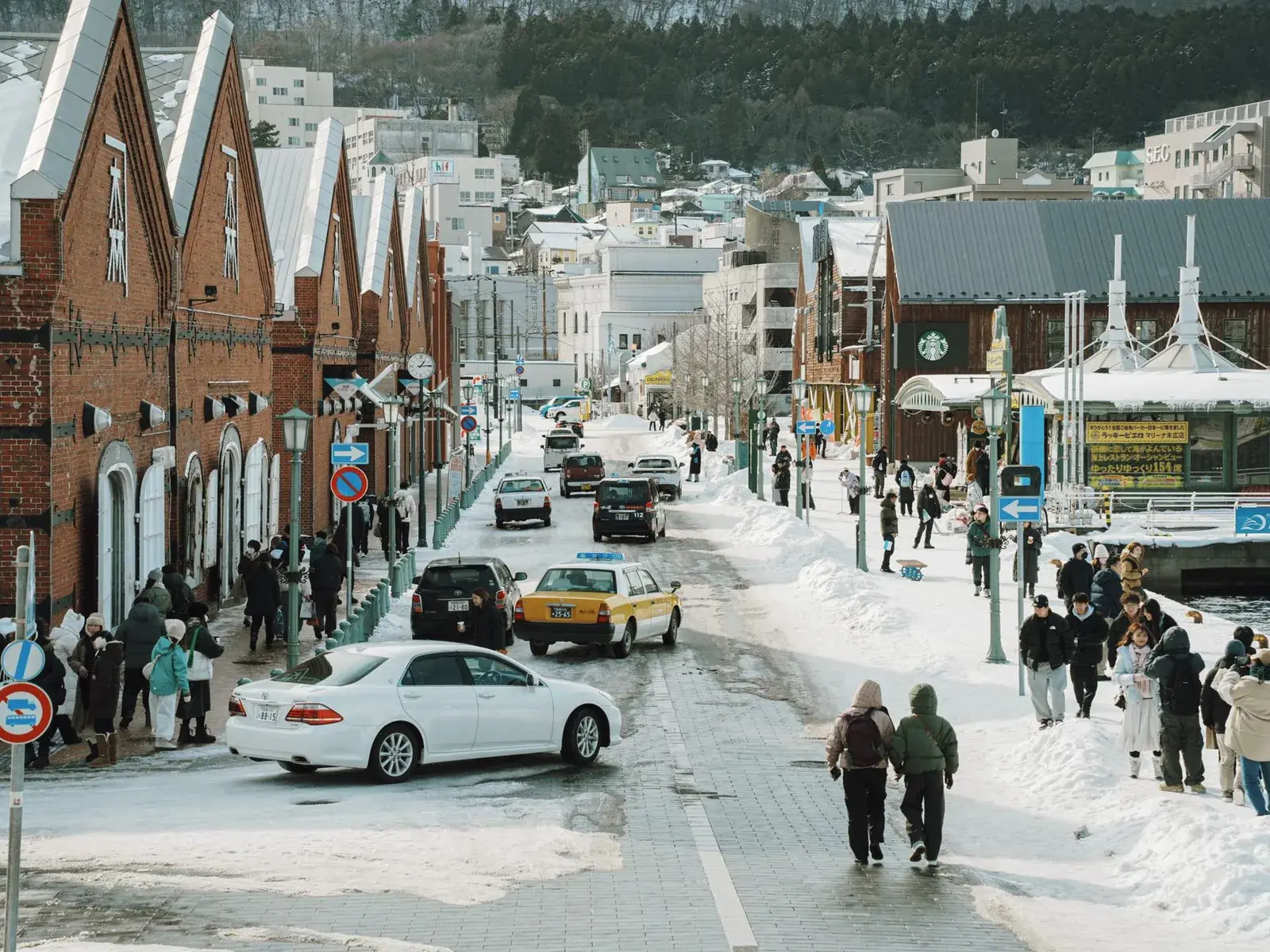
Why this city looks like nowhere else in the country
Japan opened two ports to the world in 1854, and this was one of them — not for trade, but as a filling station for American whalers. Everything the city looks like today follows from that, and from three catastrophic fires.
Commodore Perry came back in February 1854 with more ships, and on 31 March 1854 Japan signed the Treaty of Kanagawa. It opened exactly two ports: Shimoda, and Hakodate.
The reason is less romantic than the phrase "the opening of Japan" suggests. The American Pacific whaling fleet needed somewhere northern to take on water, coal and firewood, and to have shipwrecked sailors rescued rather than imprisoned. Hakodate was chosen as a provisioning stop. It became one of the two doors into a closed country almost by logistics.
The American was first: Elisha E. Rice, appointed in 1856 and in place by 1857, though formally titled a commercial agent for his first eight years. The Russian followed in late 1858 — Iosif Goshkevich, the first Russian diplomatic representative in Japan. The British opened in June 1859.
Full trade came with the Harris Treaty of 1858, and one of its clauses shaped this skyline directly: freedom of religious practice, and the right to build. Which is how a Russian church came to stand on a Japanese hillside.
Goshkevich secured land in 1859, and a wooden chapel was consecrated in October 1860 as an annex to the Russian consulate — the first purpose-built Orthodox church in Japan. A young priest arrived the following year and used it as the base from which Orthodoxy was first preached in this country. He is now known as St. Nikolai of Japan, and this small building on a Hakodate slope is where the Japanese Orthodox Church begins.
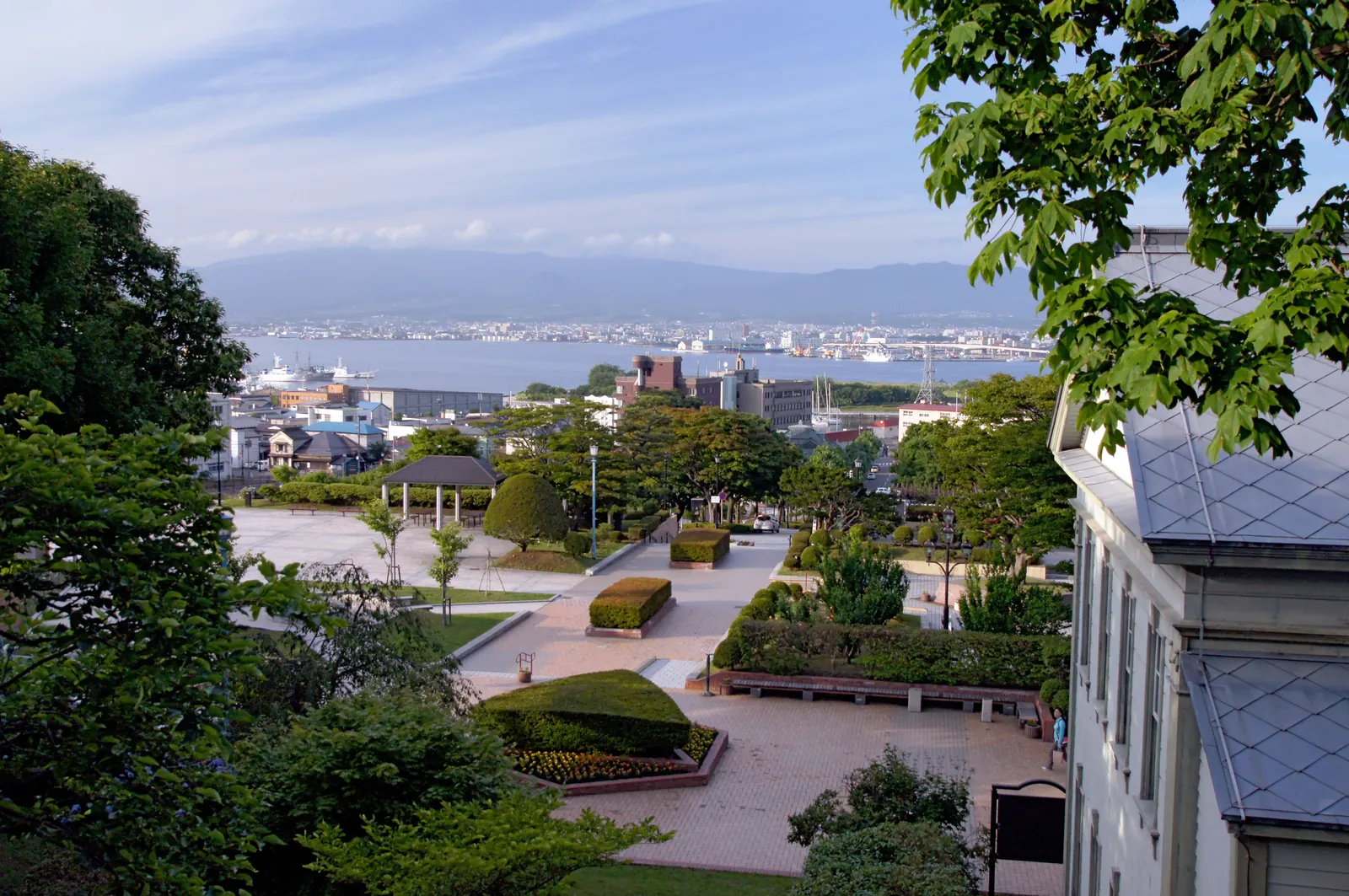
It burned in the great fire of 1907. The present brick, Russo-Byzantine building — white walls, green roof — was completed in 1916 to a design by an Orthodox deacon, and became a National Important Cultural Property in 1983. Locals call it gangan-dera, the "ding-dong temple," for its bells, which are on Japan's official list of a hundred soundscapes worth preserving.
Here is the argument I have never seen made in English, and I think it is the true one.
Hakodate burned. Not once — 1879, 1907, and catastrophically on 21 March 1934, when roughly two-thirds of the city's buildings were destroyed. Almost everything "old" in Motomachi is therefore a rebuild, and each time the city rebuilt, it rebuilt in brick, stone and Western technique, because Western technique meant fire-resistant.
Hakodate is not Western because foreigners built it. It is Western because it kept burning down, and the West had the better fireproofing.
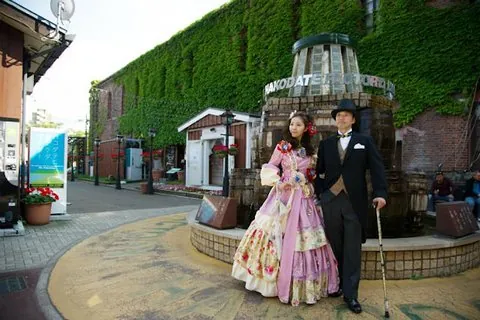
The Old Public Hall of 1910 — colonial yellow with blue-grey trim, a wide balcony over the bay — went up after the 1907 fire took the previous assembly hall. The Kanemori Red Brick Warehouses were rebuilt fireproof in 1909 after the same fire destroyed the wooden originals. The British Consulate you can visit dates to 1913, its predecessors having burned in 1863, 1879 and 1907.
The city was founded in 1454, when a Japanese lord built a box-shaped manor house in an Ainu fishing village called Usukeshi. Hako (box) plus tate (fort) gave the new name. Three years later, in 1457, the first great Ainu uprising began in this area.
So the most Western city in Japan is also a place whose Ainu name was written over in 1454, and it is worth carrying both facts up the hill together. The Ainu story continues there.
In the Ainu village of Usukeshi. The name Hakodate follows
Japan opens two ports: Shimoda and Hakodate
American, then Russian, then British
Consecrated in October; St. Nikolai arrives the next year
Church, consulate and warehouses all lost; the rebuild is brick
British Consulate 1913, Orthodox church 1916 — fireproof, and Western
21 March: roughly two-thirds of the city destroyed
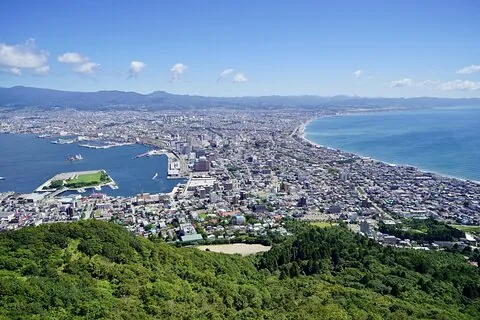
Motomachi's slopes hold the whole story within a fifteen-minute walk. Guided port walks add the fires and the consuls, which the plaques mostly leave out.
The Treaty of Kanagawa of 31 March 1854 opened Shimoda and Hakodate — and Hakodate was chosen largely as a northern provisioning stop for the American Pacific whaling fleet: water, coal, firewood, and the rescue rather than imprisonment of shipwrecked sailors. Trade came later, with the 1858 Harris Treaty.
Partly the consulates, churches and foreign residents that arrived after 1854 — and substantially because the city burned down repeatedly, in 1879, 1907 and catastrophically in 1934. Each rebuild used brick, stone and Western technique because that is what resisted fire. The exotic cityscape is, in large part, fire insurance.
Japan's first purpose-built Orthodox church, first consecrated in 1860 beside the Russian consulate and the base from which Orthodoxy was first preached in Japan. The present Russo-Byzantine building dates to 1916 and is a National Important Cultural Property. Note that it closes to visitors from late December to mid-March.
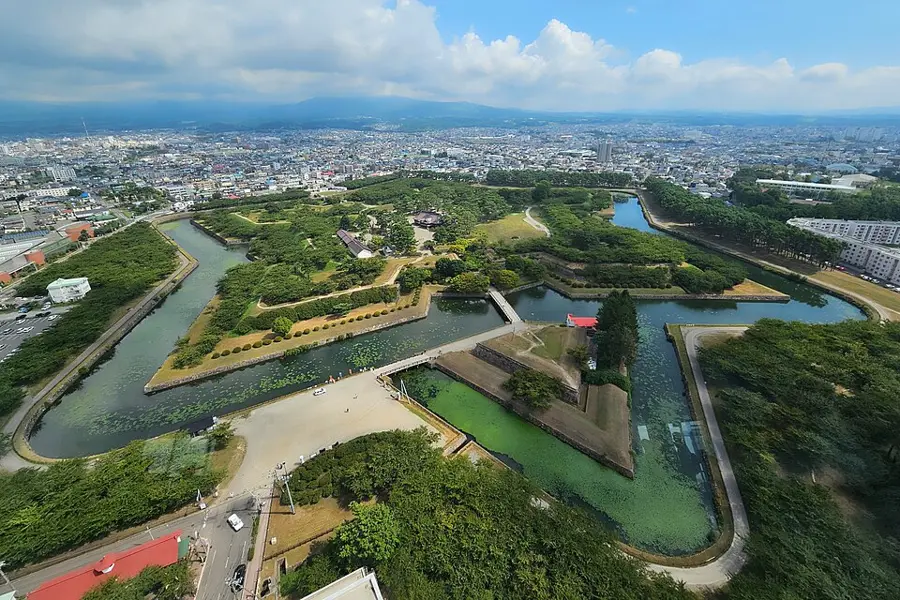
A French-style star fort, a five-month republic, and the end of the samurai
Read →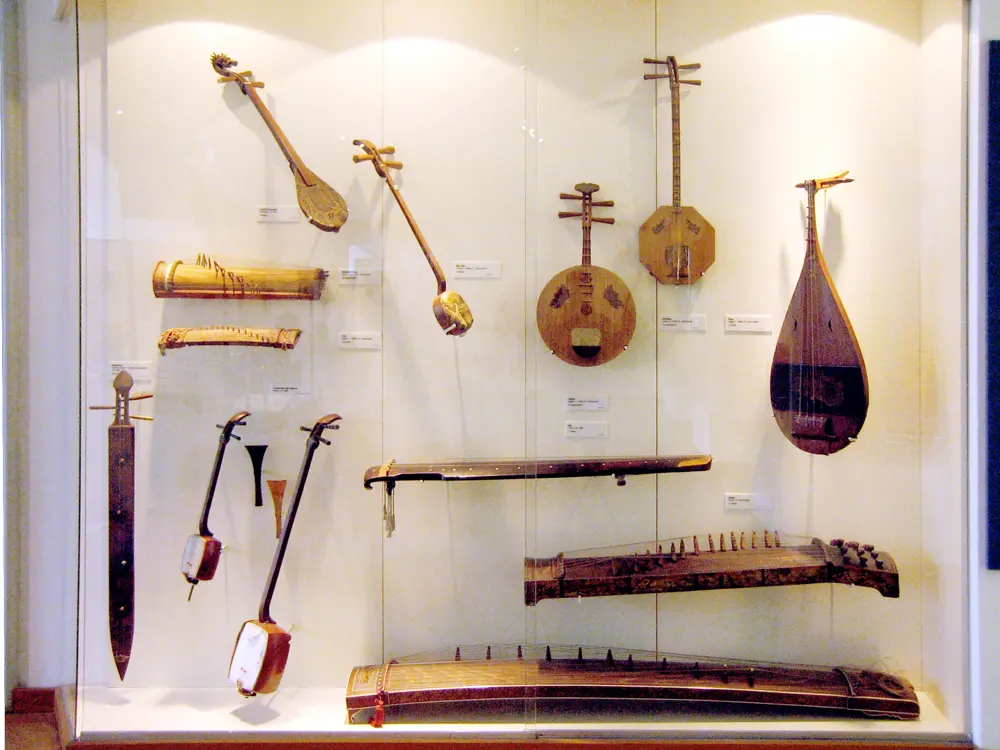
Whose island this was, and what a visitor should understand
Read →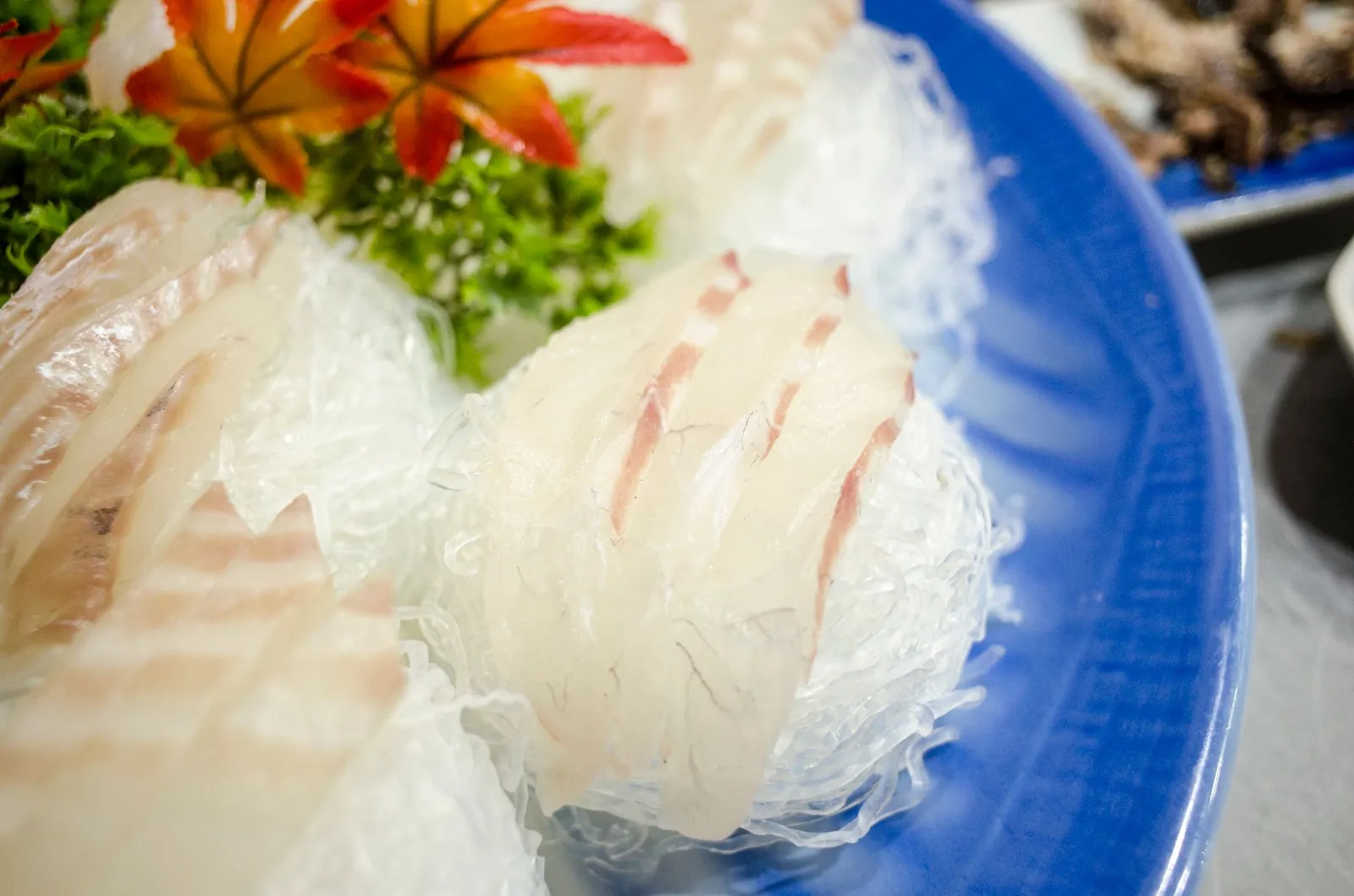
Cold water, kelp, and the town that supplies Japan's flavour
Read →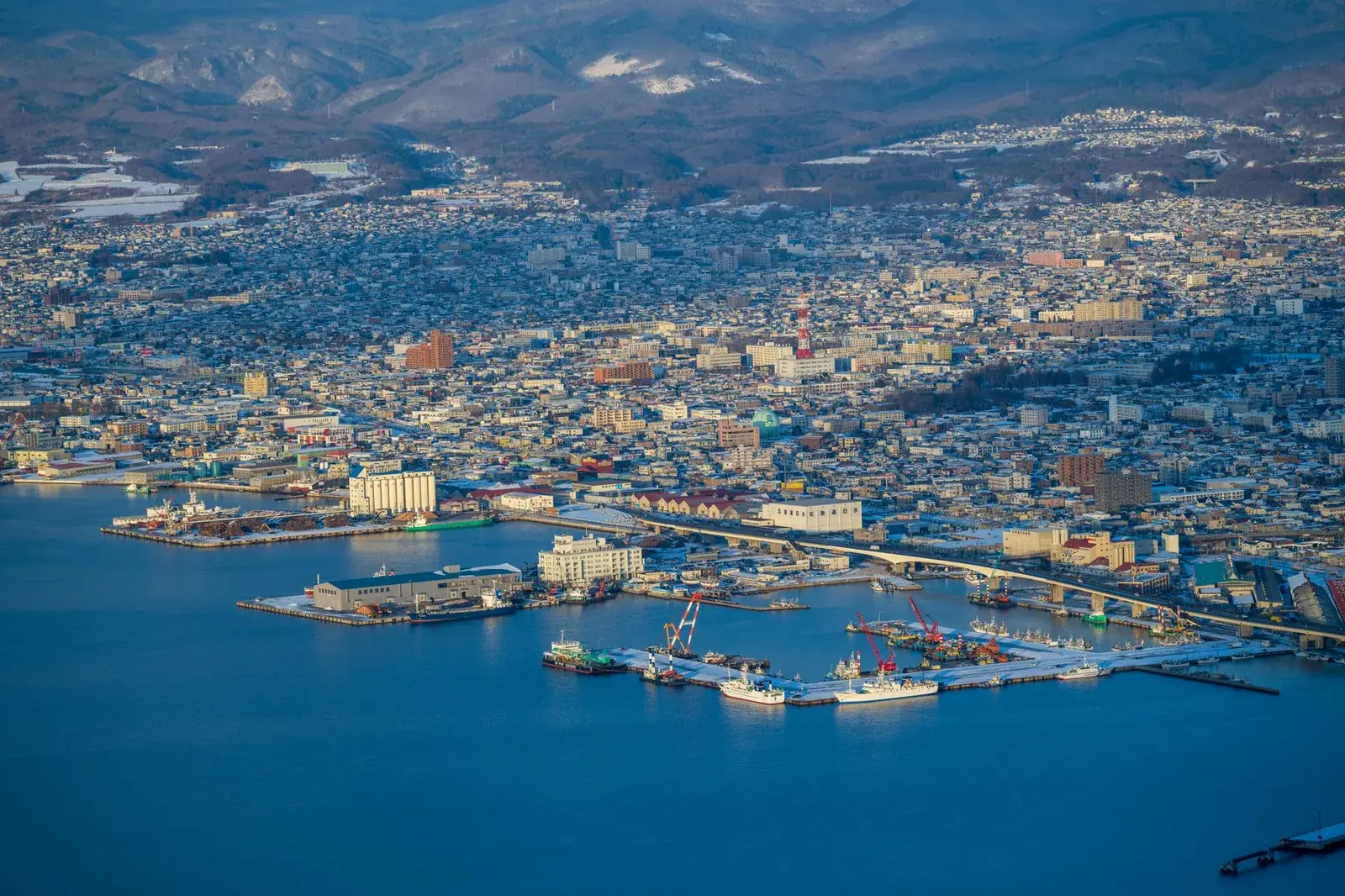
Russian curry, a Bohemian sausage maker, and a burger chain that refuses to leave town
Read →No typing needed — jump straight in:
Just docked? — the gangway toolStart from your shipThe ride from every berthAsk the editorGlossary