Russian curry, a Bohemian sausage maker, and a burger chain that refuses to leave town
The oldest Western restaurant in town opened in 1879 serving Russian food. A German-speaking butcher from Bohemia was saved by the German navy's appetite. And the best burger in Japan is sold by a chain that exists in exactly one city.
Hakodate makes a claim that other cities dispute: that it is the most Western city in Japan. The evidence is decent — one of the first two treaty ports in 1854, the first purpose-built Orthodox church in 1860, three consulates by 1859, Japan's first Western-style star fort. But the interesting version of the claim is not architectural. It is edible.
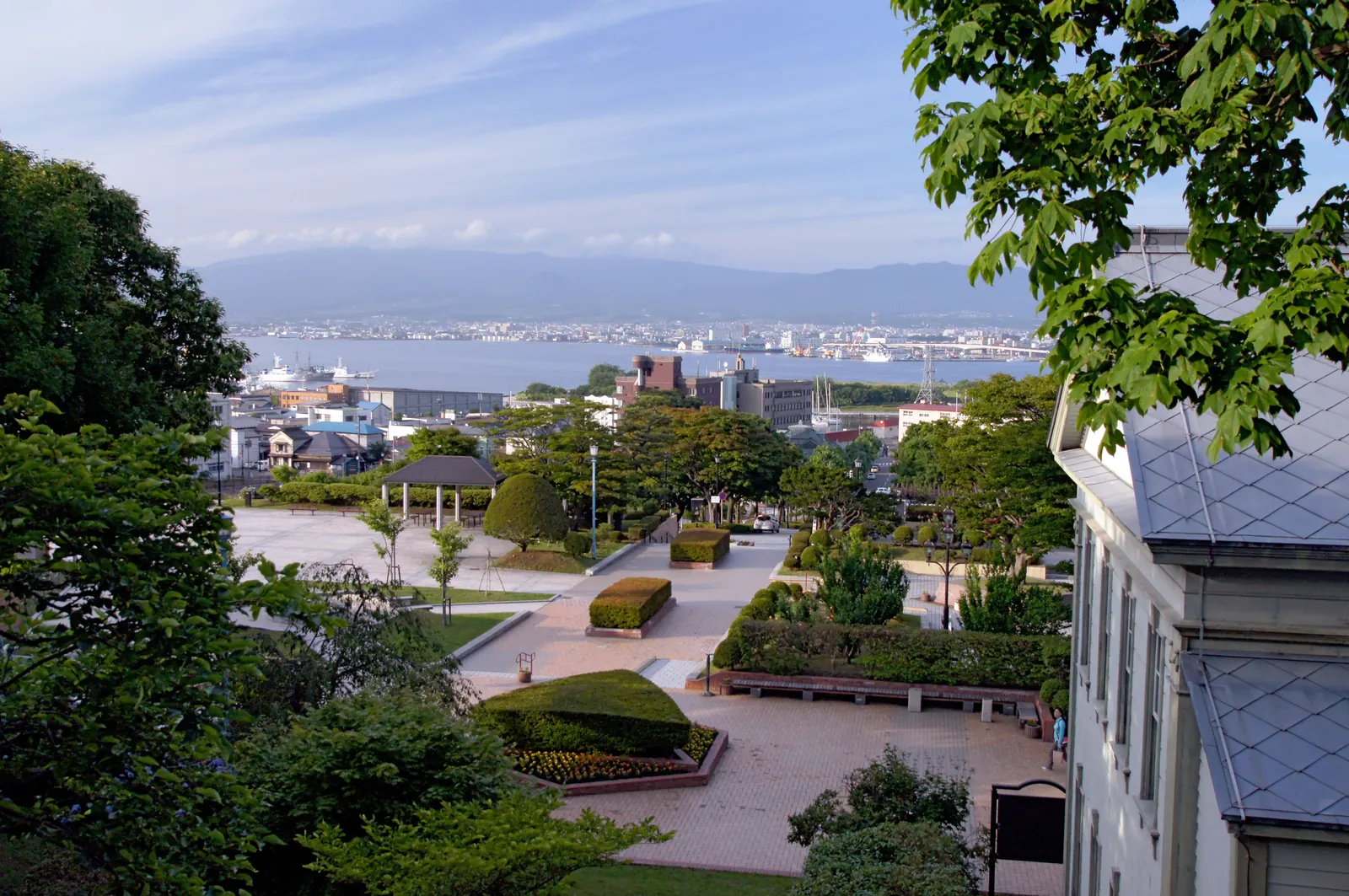
Gotoken was founded in 1879, making it one of the oldest continuously operating Western restaurants in Japan. And it opened serving Russian cuisine — not French, not English — because Hakodate had a Russian consulate and a Russian community, and that was the West that had actually arrived here.
The second generation trained at the Imperial Hotel and broadened the menu, and the house signature became an English-style curry. In 1989 the Emperor and Empress ate it, which made it famous nationally. The restaurant inside the main building operates in a designated Tangible Cultural Property.
Carl Raymon — a German-speaking butcher from Bohemia, then part of the Austro-Hungarian Empire — passed through Hakodate in 1919 on his way from America back to Europe, and met his wife here. He came back and in 1924–25 opened a ham and sausage business, one of the first authentic ones in Japan.
It failed almost immediately. Japanese customers had no habit of eating processed meat, and there was no market to build on.
What saved it was the German warships calling at Hakodate, whose crews ordered in bulk and gave the business both cash flow and reputation. A German sausage-maker in northern Japan was kept alive by the German navy's appetite.
He went on to build a three-thousand-square-metre factory and to promote livestock farming across Hokkaido — his influence on the island's dairy and meat industry probably outweighs his sausages. The Raymon House in Motomachi stands on the site of his old factory, sells the sausages, and keeps a free exhibition of his history upstairs.
Lucky Pierrot opened in 1987 and has seventeen branches, all of them in the Hakodate area. That is deliberate policy, not a lack of ambition — the company has declined to become a national chain.
The bestseller is the Chinese Chicken Burger: three pieces of fried chicken in a sweet-savoury sauce, named Japan's best local hamburger by the Nikkei. It is Chinese-influenced because the founder had previously run a Chinese restaurant near Tokyo — which is how a Hokkaido burger chain ended up with a Cantonese signature item.
Every branch is decorated differently and all of them are gloriously, aggressively over-decorated. The whole operation is a deliberate refusal of the McDonald's model: local ingredients, no two rooms alike, no expansion.
Japan's three great ramen broths are miso, soy and salt — and shio, the clear salt broth, is Hakodate's. It is the lightest and the least forgiving, because there is nothing in the bowl to hide behind. Ajisai has been refining it here since 1930.
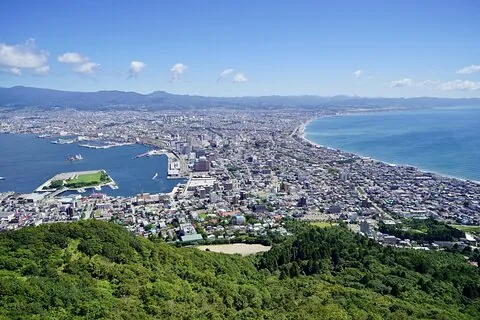
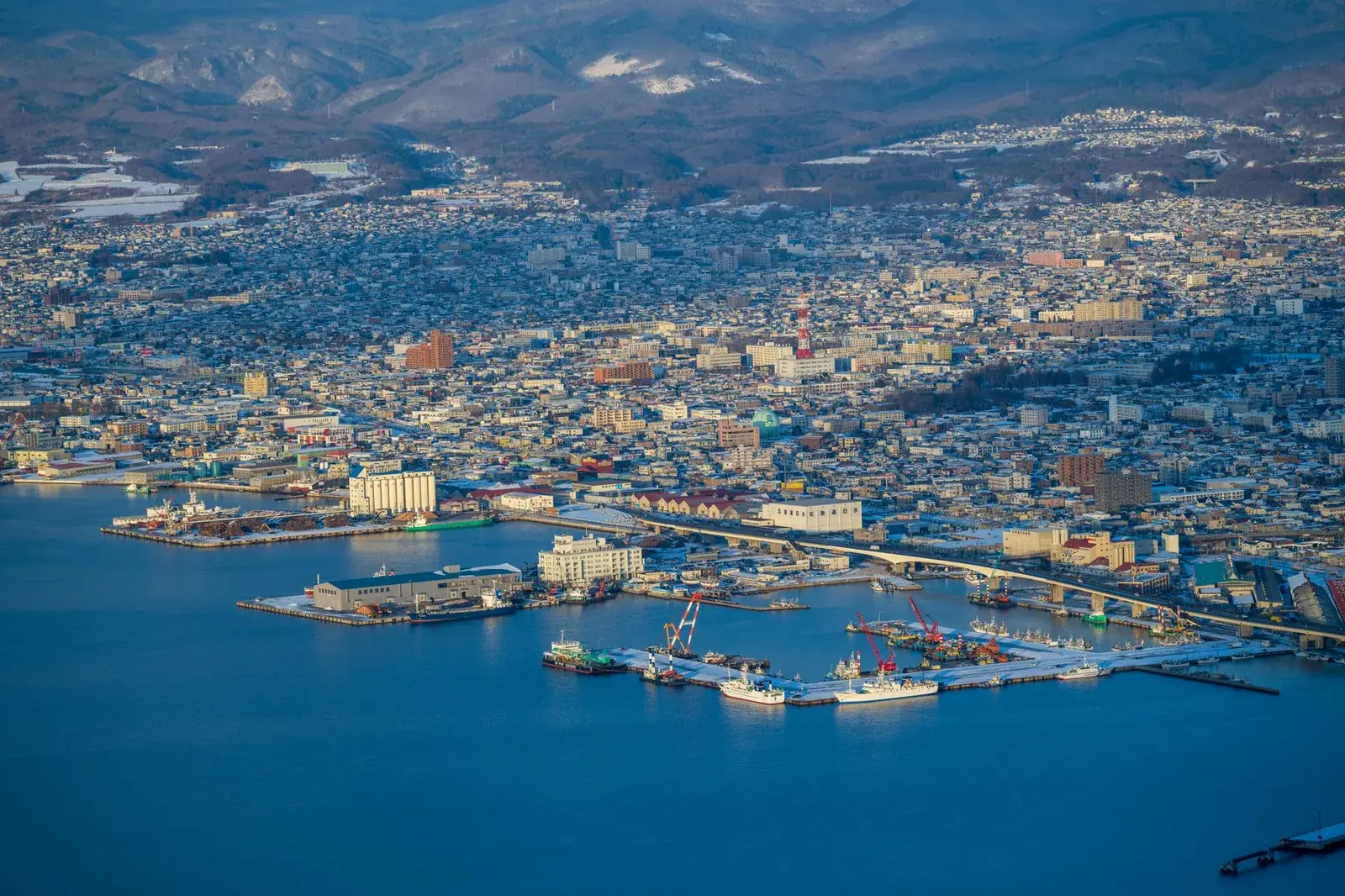
Mount Hakodate is 334 metres, the ropeway takes three minutes, and the view from the top is one of Japan's three great night panoramas — the city pinched between two seas, lit like spilled jewellery. Best viewing is about thirty minutes after sunset.
The warning matters more than the description. From May to July this coast is frequently blanketed in sea fog, and travellers routinely pay, queue, ride up and see a grey blur. The ropeway ticket counter runs a live stream of the observation deck — check it before you buy, and if your ship sails before dark, take the daytime panorama instead and lose nothing you cannot live without.
The West arrives, and mostly it arrives Russian
Serving Russian cuisine, because that was the West that was here
And meets his wife; he returns to stay
It fails, then is saved by orders from German warships
Seventeen branches later, still only in Hakodate — by choice
Gotoken's house dish becomes nationally famous
All of it is walkable from the bay: Raymon House and Lucky Pierrot in Motomachi, Gotoken nearby, ramen everywhere. The mountain needs dusk and clear air.
Seafood first — squid, uni, crab and the morning market bowls — and then a genuinely unusual Western tradition: Gotoken, founded 1879 and originally a Russian restaurant, famous now for curry; Carl Raymon's German sausages, made here since the 1920s; Lucky Pierrot's Chinese Chicken Burger; and shio ramen, the clear salt broth that is Hakodate's contribution to the ramen canon.
A burger chain founded in Hakodate in 1987 with seventeen branches, all in the Hakodate area — it deliberately refuses to expand nationally. Its Chinese Chicken Burger has been named Japan's best local hamburger, and every branch is decorated differently as a matter of policy.
It can, and often does between May and July, when sea fog blankets this coast. The ropeway ticket counter runs a live stream of the observation deck — check it before buying. If your ship sails before dark, the daytime panorama of the two-sided isthmus is nearly as rewarding and far more reliable.
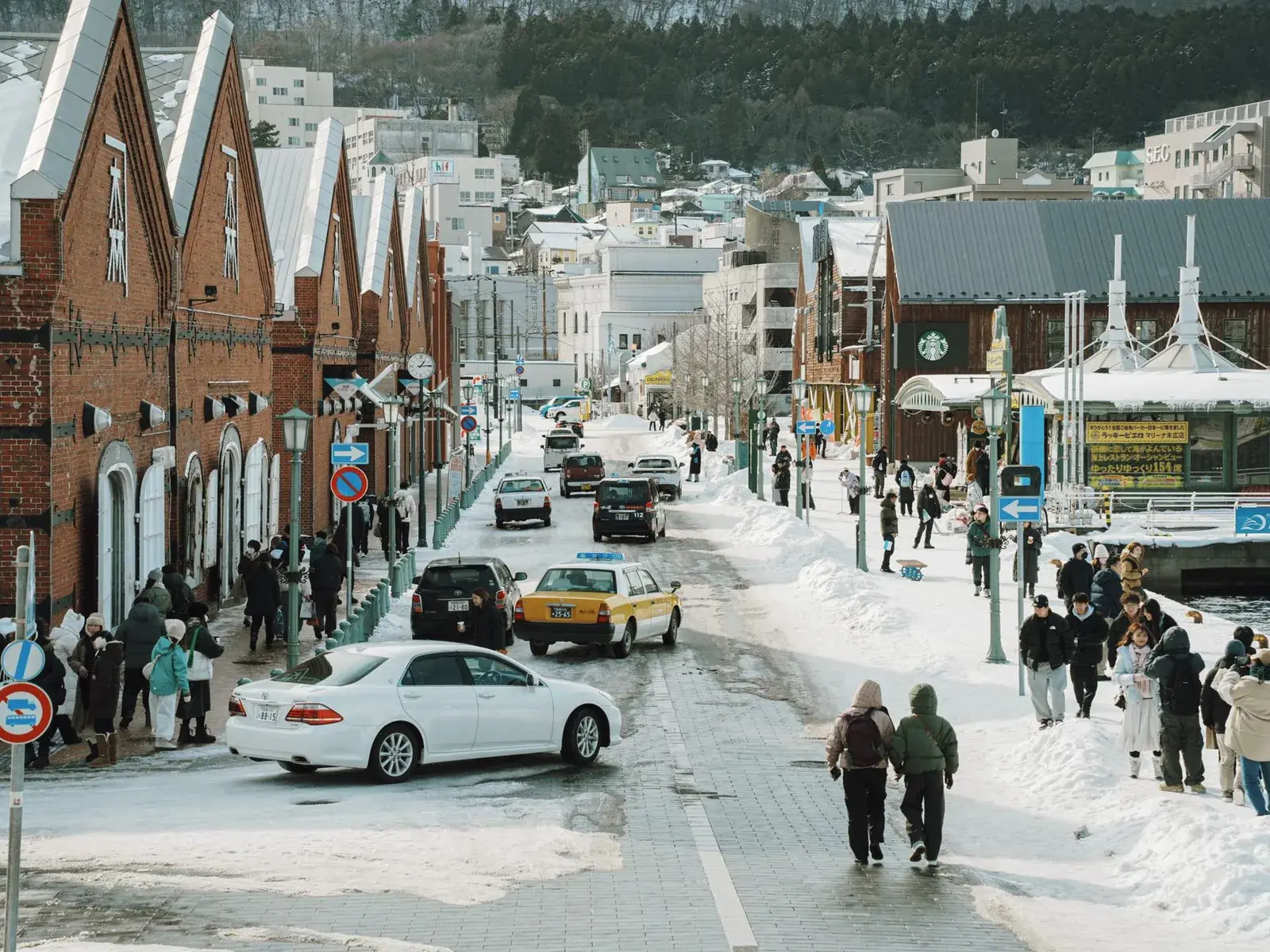
Why this city looks like nowhere else in the country
Read →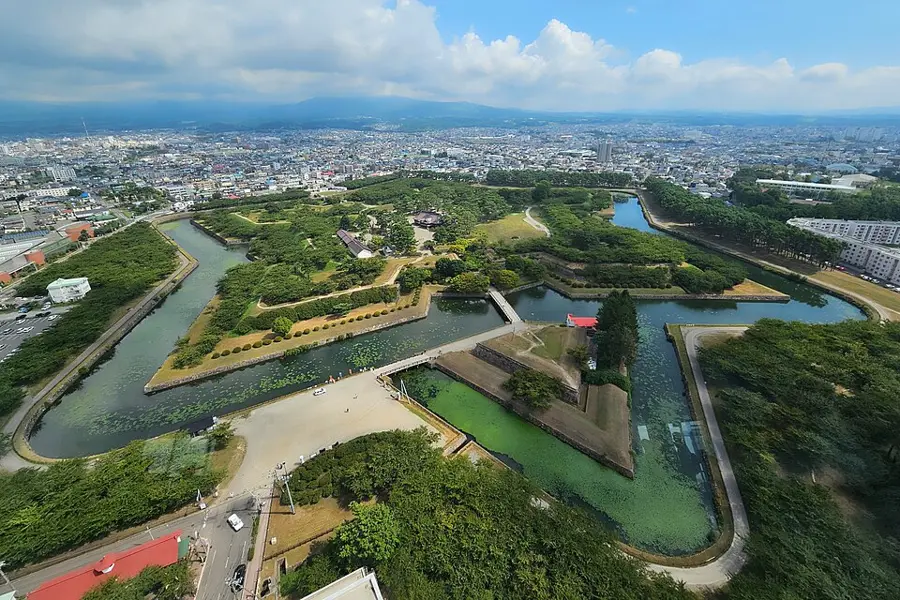
A French-style star fort, a five-month republic, and the end of the samurai
Read →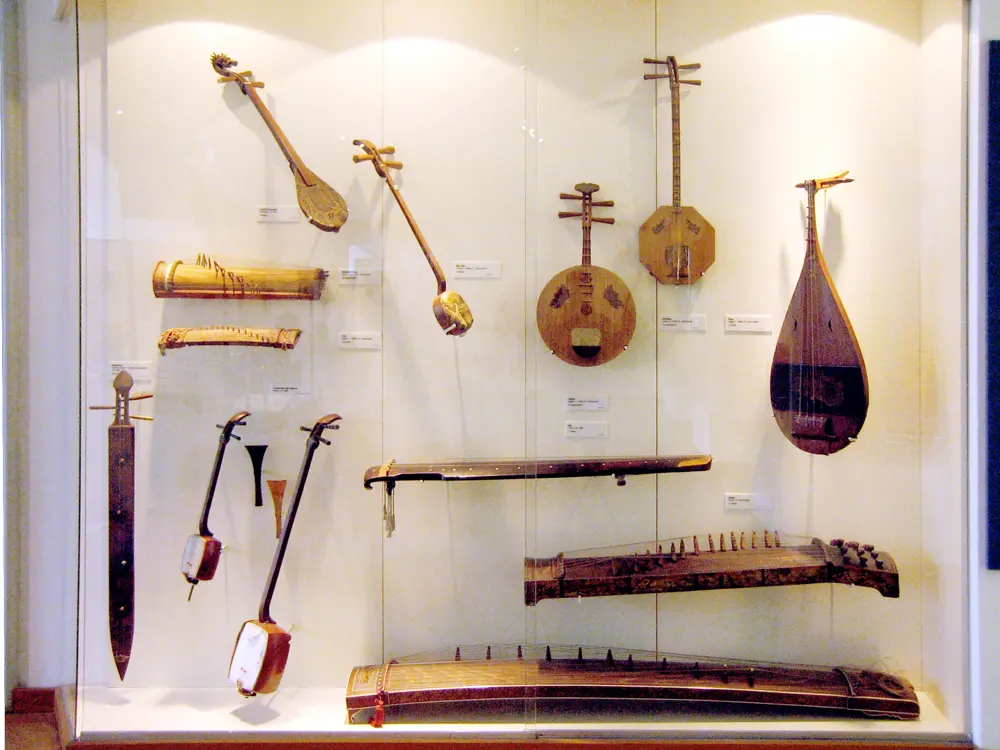
Whose island this was, and what a visitor should understand
Read →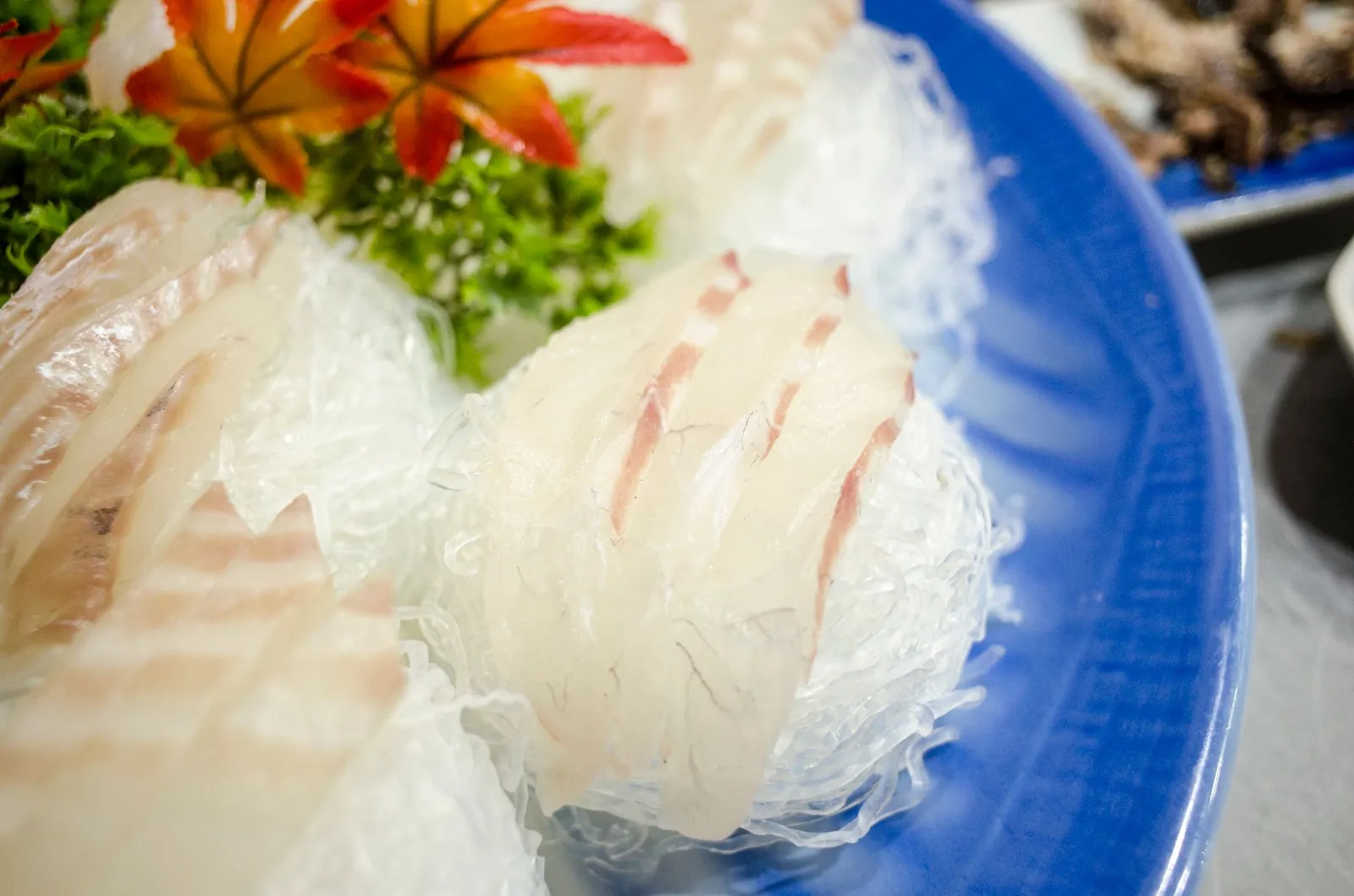
Cold water, kelp, and the town that supplies Japan's flavour
Read →No typing needed — jump straight in:
Just docked? — the gangway toolStart from your shipThe ride from every berthAsk the editorGlossary