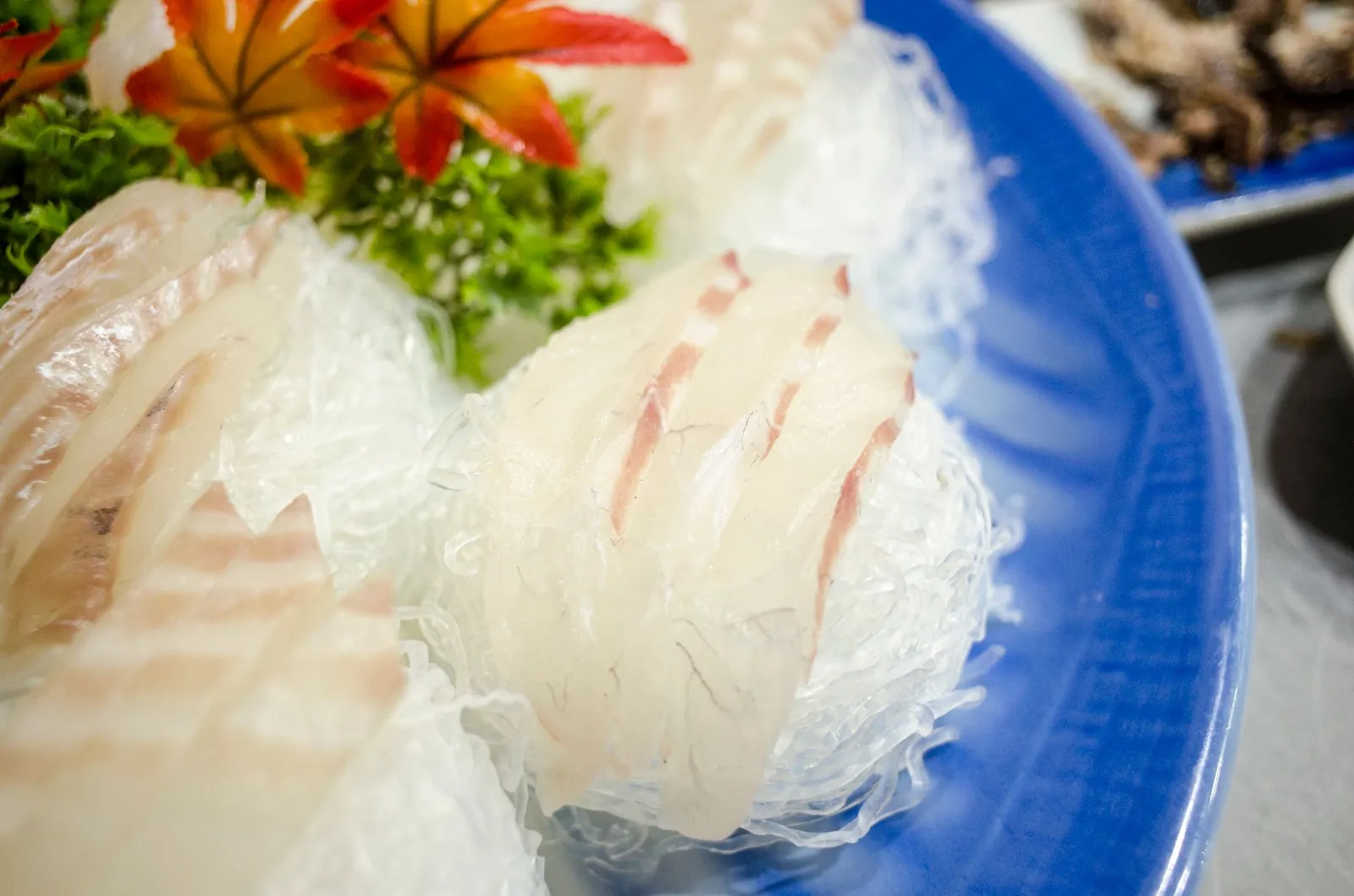
Cold water, kelp, and the town that supplies Japan's flavour
Ask why Hokkaido uni tastes better and most guides say "the cold water." That is half an answer. The real one is that sea urchins eat kelp — and Hakodate is the single largest kombu producer in Japan.
The mechanism, first, because it explains everything else on the plate.
The cold, nutrient-rich Oyashio current runs south along Hokkaido and collides with the warm Kuroshio. That collision drives an enormous plankton bloom, which feeds the entire chain. Cold water also means slow growth, which means denser muscle and thicker fat — in crab, in scallop, in fish.
And sea urchins eat kelp. So the places that grow the best kombu are automatically the places with the best uni. When you eat uni here, you are tasting the kelp.
Hokkaido produces over ninety percent of Japan's kombu — by some measures over ninety-five. And within that, Hakodate ranks first in Japan for kombu in both volume and value, accounting for around thirty percent of all Hokkaido production.
Do the arithmetic: roughly one in four pieces of kombu in Japan comes from here. Kombu is the foundation of dashi, and dashi is the foundation of Japanese cooking. The single most important flavour in the national cuisine has a hometown, and you are standing in it.
The local variety is ma-kombu, the premium grade for clear, refined dashi, harvested between the Tsugaru Strait and Funka Bay. There is also gagome kombu, a Hakodate near-endemic with a lattice-patterned surface and an extraordinarily viscous texture, used in pickles and sold for its health properties. Traditionally kombu was sold by the beach it came from — "White Mouth Beach," "Black Mouth Beach" — and only unified under a single brand in 2017.
A sober footnote: Hokkaido kombu production fell about thirty percent in one recent year and dropped below ten thousand tonnes for the first time. Warming seas.
Hakodate's symbol is squid. The city mascot is an alien squid. The lights you can see from the mountain at night — the isaribi — are boats luring squid with banks of lamps.
Two species run the year: surume-ika, the Pacific flying squid, from June to December — this is the Hakodate squid, thick-fleshed, used for sashimi and shiokara — and yari-ika, spear squid, from January to May. There is squid here year-round; only the species changes.
Honesty requires the other half: the catch is in serious decline, with recent seasons setting record lows. The squid city's identity is genuinely under pressure from warming water.
You will see videos of a squid apparently writhing on a rice bowl when soy sauce is poured, usually captioned "eaten alive." Here is what is actually happening, since English coverage gets it wrong so consistently.
The squid is dead. Its head is removed before serving, which causes immediate brain death. The muscle cells, however, still hold ATP. Pouring soy sauce raises the sodium ion concentration around the neurons adjacent to the tentacle muscles, which fires them, which contracts the muscle. It is the same principle as salt on frog legs in a school biology lab.
The dish — katsu ika odori-don — was created at a restaurant in Hakodate's morning market, and the honest question about it is aesthetic rather than ethical: whether you are comfortable eating something that looks alive. That is a fair thing to decline. "Cruel" is not the accurate objection.
The Hakodate Morning Market began in 1945, when farmers sold vegetables from street stalls in front of the station during the post-war food shortages. Seafood vendors joined as the fishing industry recovered; it settled into its present location in 1956 and now runs to around 250 shops beside the station.
A straight recommendation: the ready-made seafood bowls and grilled skewers are priced for visitors and cost more than the same thing elsewhere in the city. The dry-goods stalls are where the market is genuinely good — kombu, ikura, dried fish, marinated seafood, sauces — and they are what locals actually come for. Prices soften near closing.
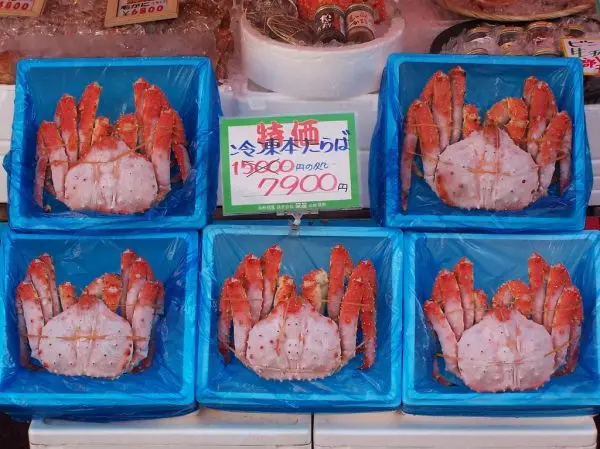
Uni runs roughly June to August, and Hakodate restaurants serve Rishiri and Rebun red uni through that window. Kegani, horsehair crab, runs April to August and again November to December. Scallops are harvested June to October but eat best in the depth of winter. And squid, as above, is always here in one form or another.
Farmers selling vegetables from street stalls outside the station
Organised into a cooperative; seafood becomes the centre of gravity
After generations of being sold by the individual beach it came from
Around 30% of Hokkaido's output — roughly one piece in four, nationwide
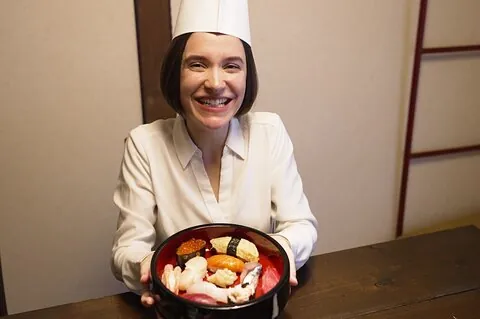
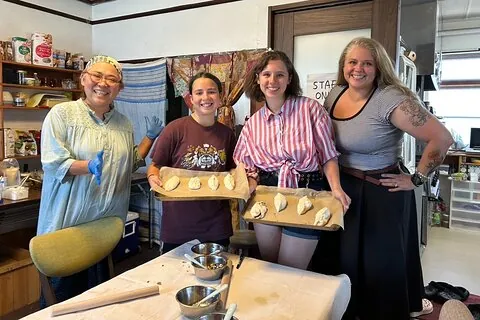
The market is minutes from the berth and peaks before nine. Sushi-making classes turn the same fish into an hour you will remember longer than a meal.
The cold Oyashio current meets the warm Kuroshio here, driving a plankton bloom that feeds everything; cold water also slows growth, producing denser muscle and thicker fat. And because sea urchins eat kelp, the region that grows Japan's best kombu automatically produces its best uni.
No. The squid is dead — its head is removed before serving, causing immediate brain death. The movement happens because the muscle cells still contain ATP, and the sodium in poured soy sauce fires the neurons beside the tentacle muscles. The reasonable objection is aesthetic, not ethical: it looks alive, and some diners would rather not.
The dry goods. Kombu, ikura, dried fish, marinated seafood and sauces are genuinely good and are what locals come for. The ready-made seafood bowls and grilled skewers are priced for visitors and cost more than the same thing elsewhere in town — though the live-squid fishing pond is worth it for the experience alone.
Roughly June through August, when restaurants serve Rishiri and Rebun red uni. Horsehair crab runs April to August and again November to December; scallops are harvested June to October but eat best in winter; squid is available year-round with the species changing between surume-ika (June–December) and yari-ika (January–May).
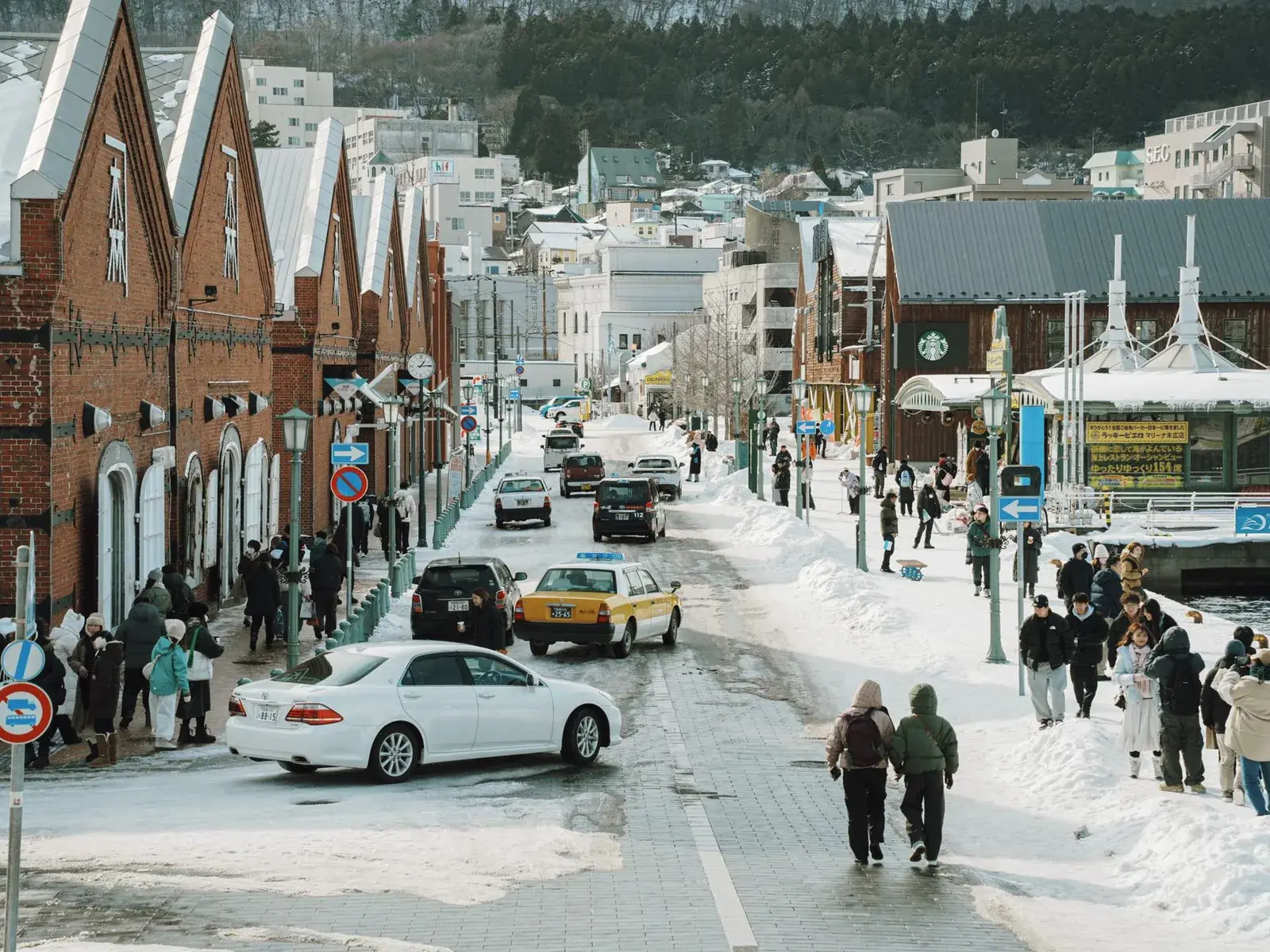
Why this city looks like nowhere else in the country
Read →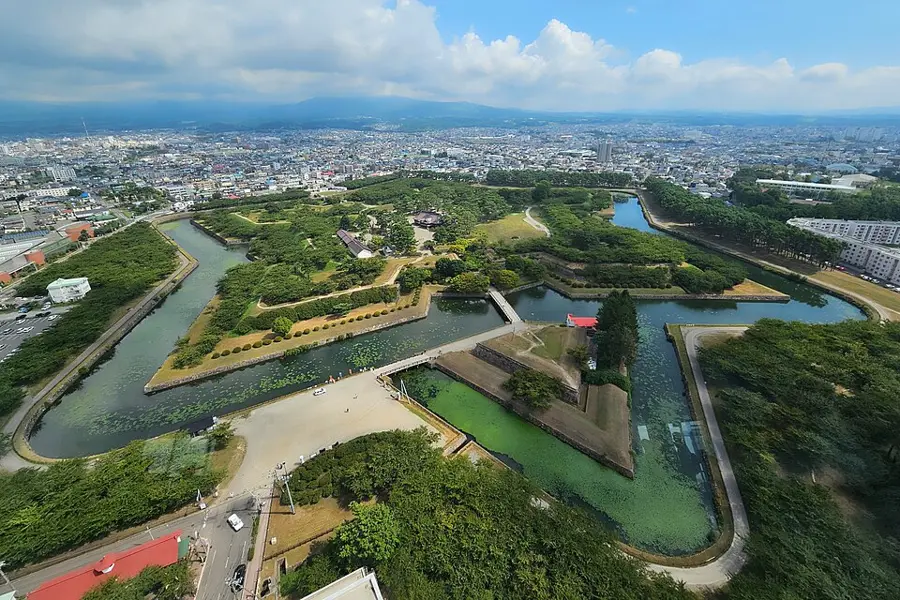
A French-style star fort, a five-month republic, and the end of the samurai
Read →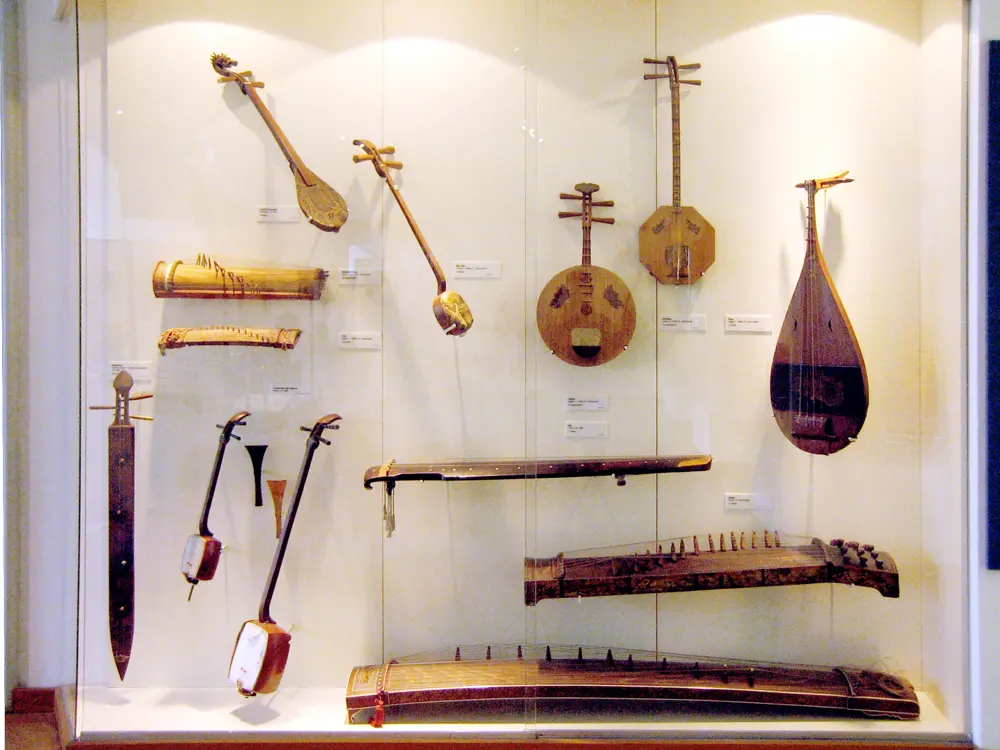
Whose island this was, and what a visitor should understand
Read →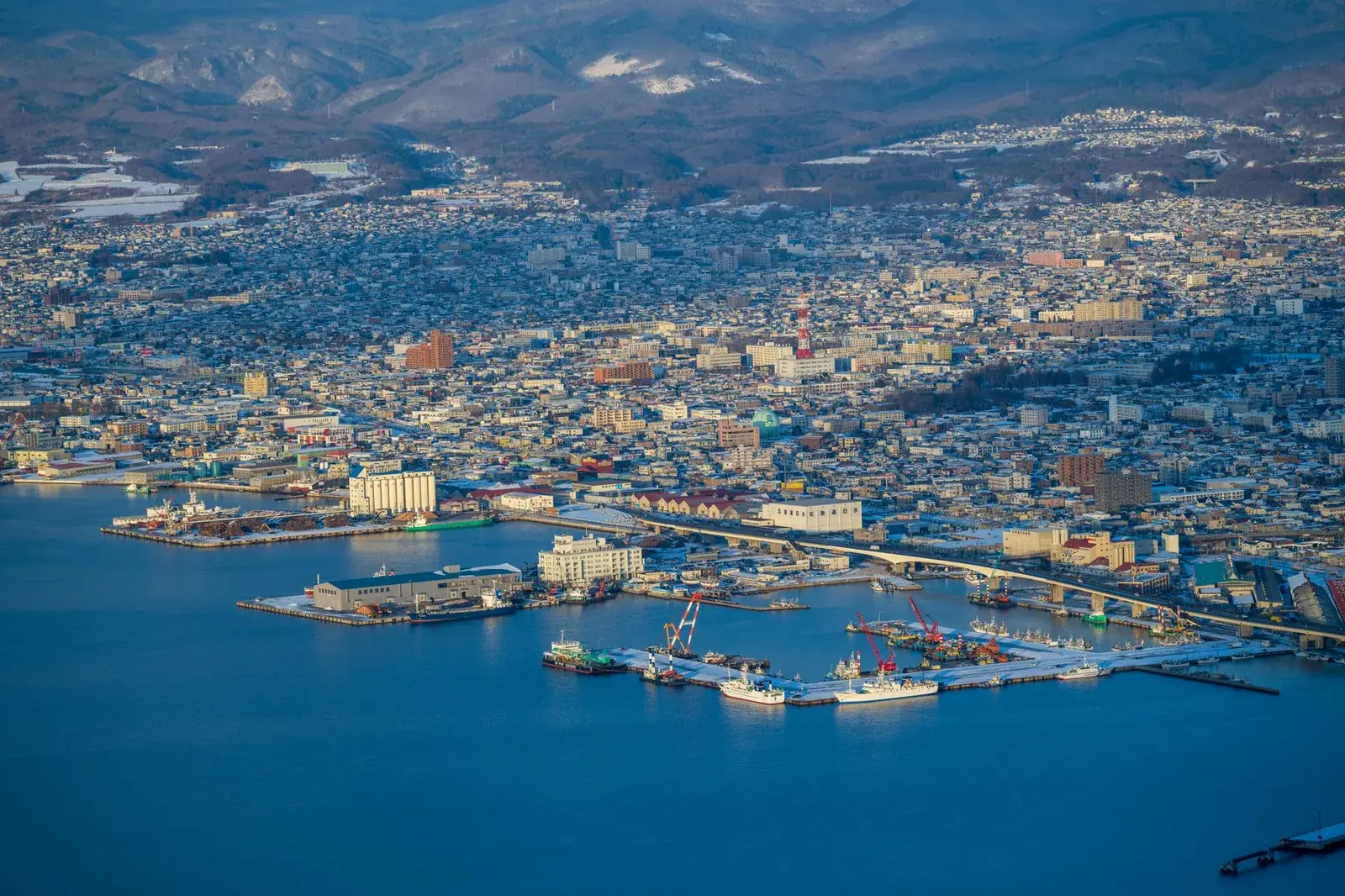
Russian curry, a Bohemian sausage maker, and a burger chain that refuses to leave town
Read →No typing needed — jump straight in:
Just docked? — the gangway toolStart from your shipThe ride from every berthAsk the editorGlossary