~1.5h — the round trip from the gangway, with the 60-minute margin kept aside.
Tap a photo to see it large. 6 photographs, each credited.
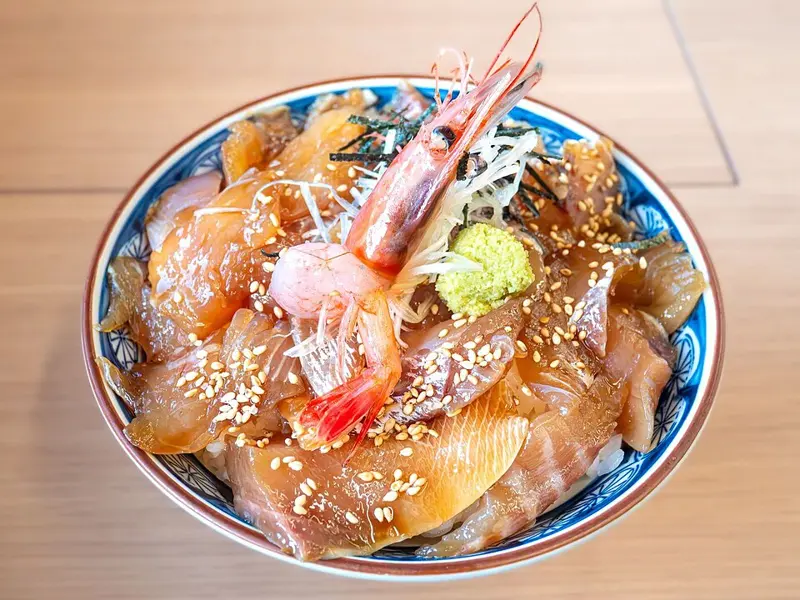
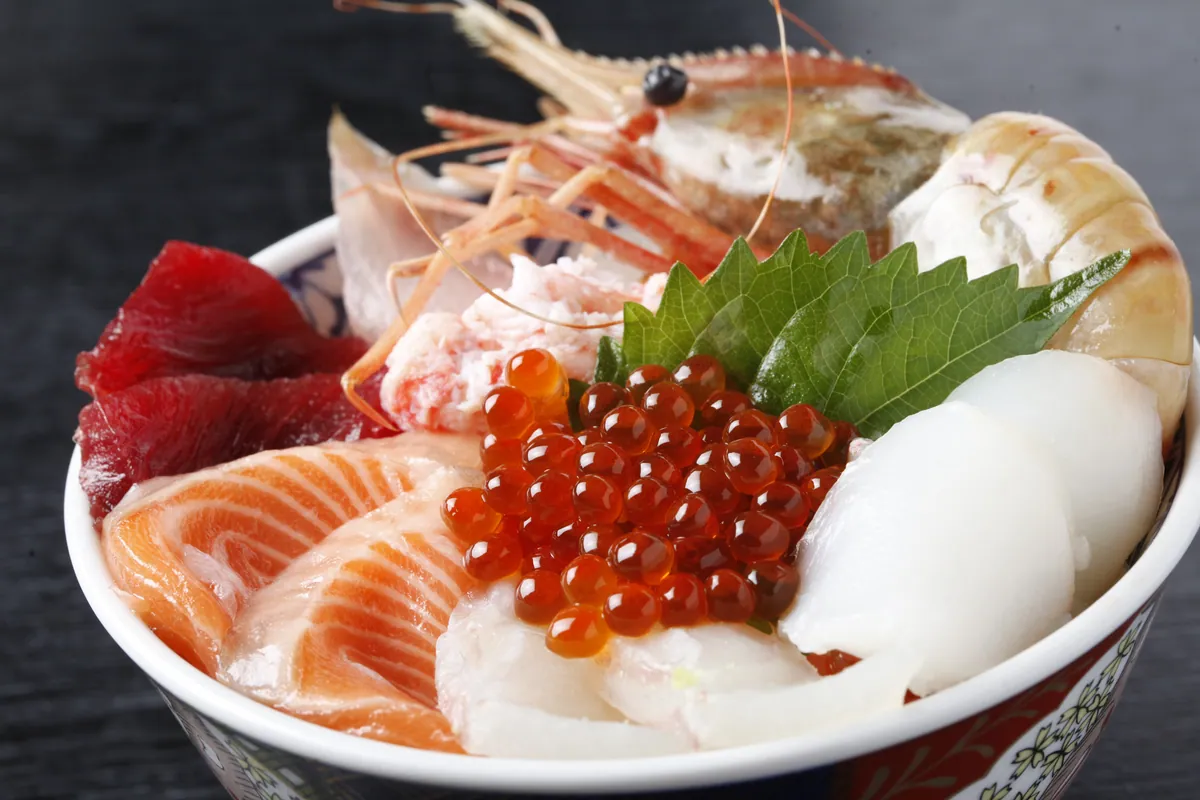
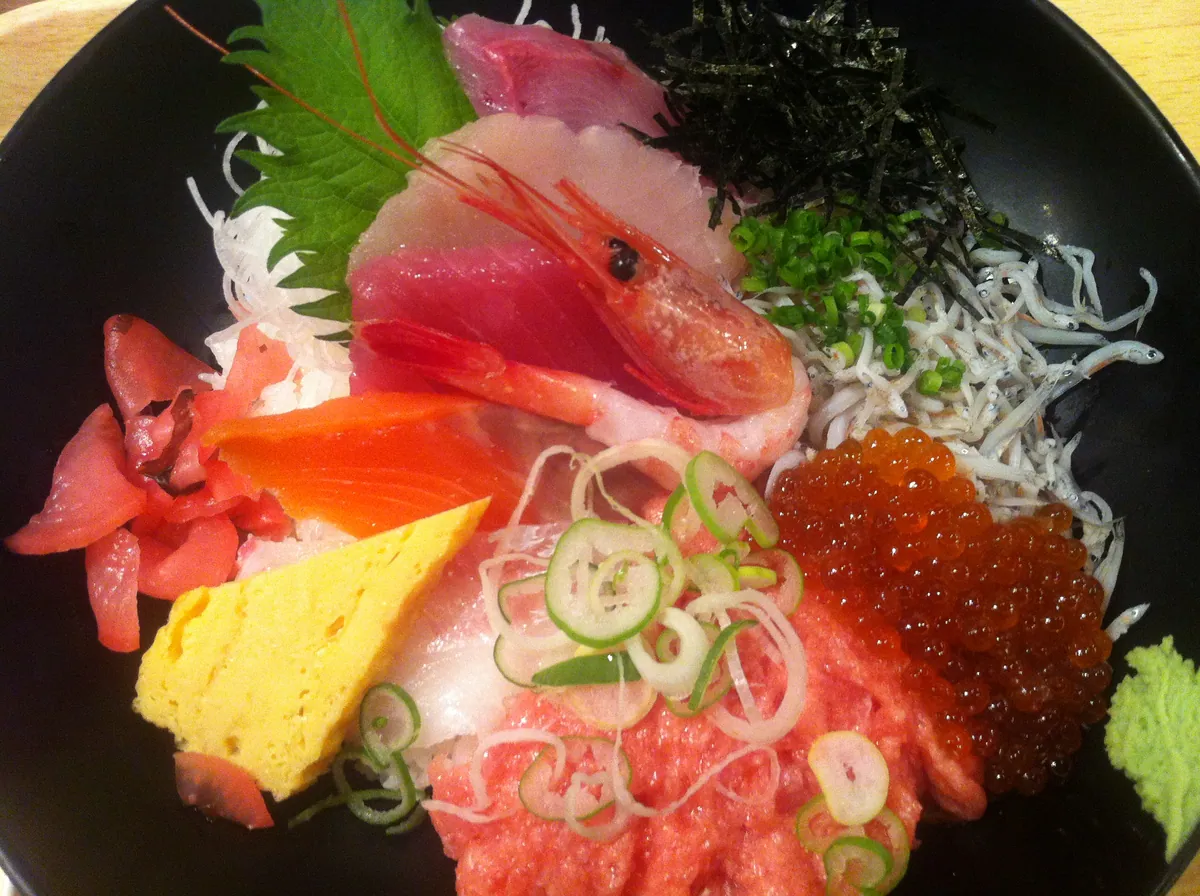
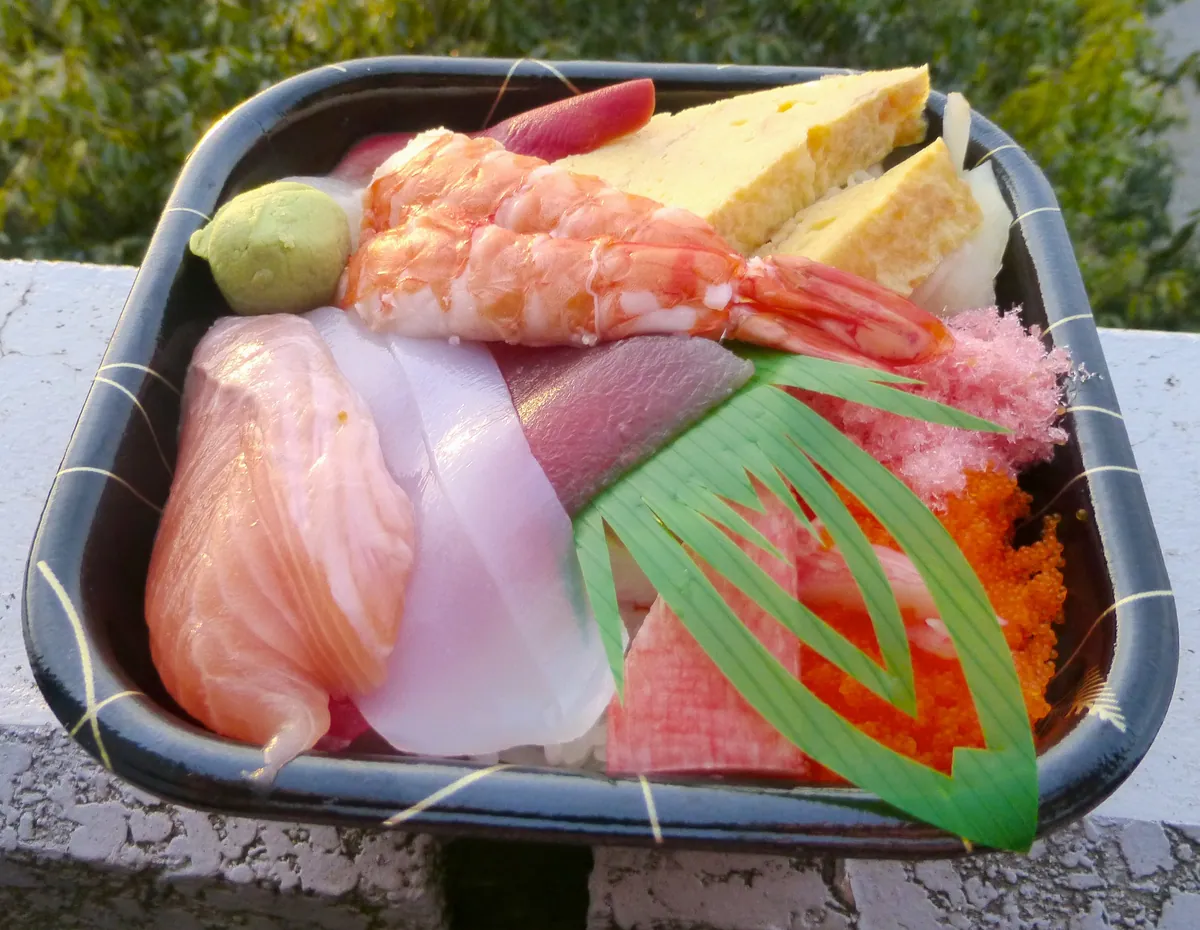
Uni, ikura and crab over rice at 7 a.m., a hundred meters of squid tanks from the Wakamatsu berth (from Minatocho, ride the shuttle first). Kikuyo Shokudo has fed this market since 1956 — order the three-color don.
Cold water, kelp, and the town that supplies Japan's flavour
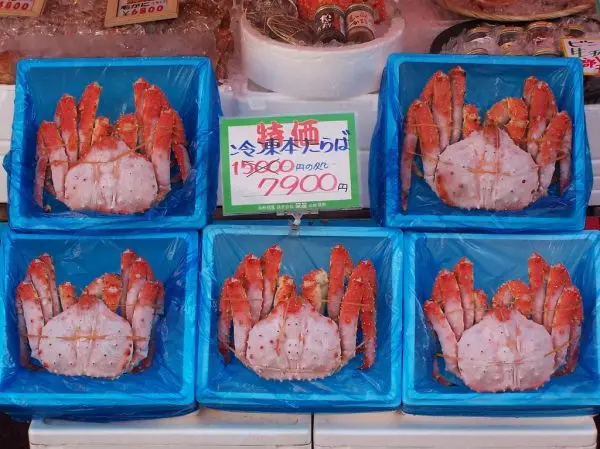
Hakodate's morning market runs on the squid, sea urchin, crab and salmon roe of the Tsugaru Strait, and the bowl is assembled to order because the combination is the choice. Kikuyo has been feeding market workers since 1956, which is why it opens at five and is busiest before eight. Uni here is a season, not a garnish.
Ask why Hokkaido uni tastes better and most guides say "the cold water." That is half an answer. The real one is that sea urchins eat kelp — and Hakodate is the single largest kombu producer in Japan.
Born from postwar open-air stalls, the Morning Market is four blocks of crab tanks, uni counters, melon pyramids and grandmothers who have outsold three generations of competitors. It peaks at exactly the hour cruise ships dock — which makes Hakodate the rare port where your first hour ashore is the best hour of the day.
The classics earn their fame: the three-color kaisendon at Kikuyo Shokudo (since 1956), and the live-squid fishing pond where your catch becomes sashimi in ninety seconds — dancing, chewy, unforgettable. Come hungry, come early, and let the whole day cascade from here.
Farmers selling vegetables from street stalls outside the station
Organised into a cooperative; seafood becomes the centre of gravity
After generations of being sold by the individual beach it came from
Around 30% of Hokkaido's output — roughly one piece in four, nationwide
The market is minutes from the berth and peaks before nine. Sushi-making classes turn the same fish into an hour you will remember longer than a meal.
The one the queue agrees on, the one people who live here use instead, and the one nearest your ship. Opening days change; check before you build a day around one.
In the market since 1956. The three-colour don — uni, ikura, scallop — is what the queue is for.
Open in Google MapsWhere locals goDonburi Yokocho Ichibaどんぶり横丁市場A lane of about twenty small counters inside the market. Cheaper, faster, and you pick by what is in the case.
Open in Google MapsClosest to the berthHakodate Asaichi Ekini Ichiba函館朝市 駅二市場The hall nearest the station entrance, with the squid tanks. Useful when the clock is tight.
Open in Google MapsBoth pins on one map, so the distance is a fact rather than a feeling.
Counted from the moment you step off the gangway. The hour before all-aboard is not in this bar; it is already set aside.
13 minutes each way is the honest figure for by the station, not the optimistic one. If your ship is late, cut the 1 hr 4 min in the middle. Never cut the hour at the end.
Each of these still lands you back aboard with the hour to spare on a 6-hour stop ashore.
From about 6am (earlier in summer) until early afternoon — meaning it is in full swing when ships dock. Go before 9 for the complete experience; by 13:00 it winds down.
From the common wharves it is a short walk or a few tram minutes; the big-ship berth runs a shuttle that drops nearby. Either way it is the easiest first move in the port.
Each one is a finished day we have walked and timed, with this stop in it. Read the route rather than assembling it yourself.
Each of these still lands you back aboard with the hour to spare.
 2 hr 30 min for both
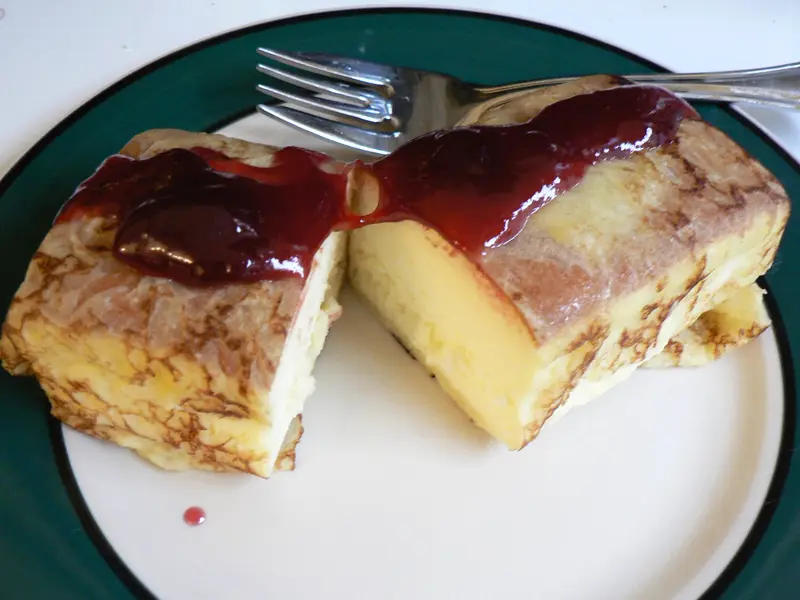
Cheese omelet cakes that dissolve on contact — Hakodate’s proudest confection, boxed for travel.
See the detail →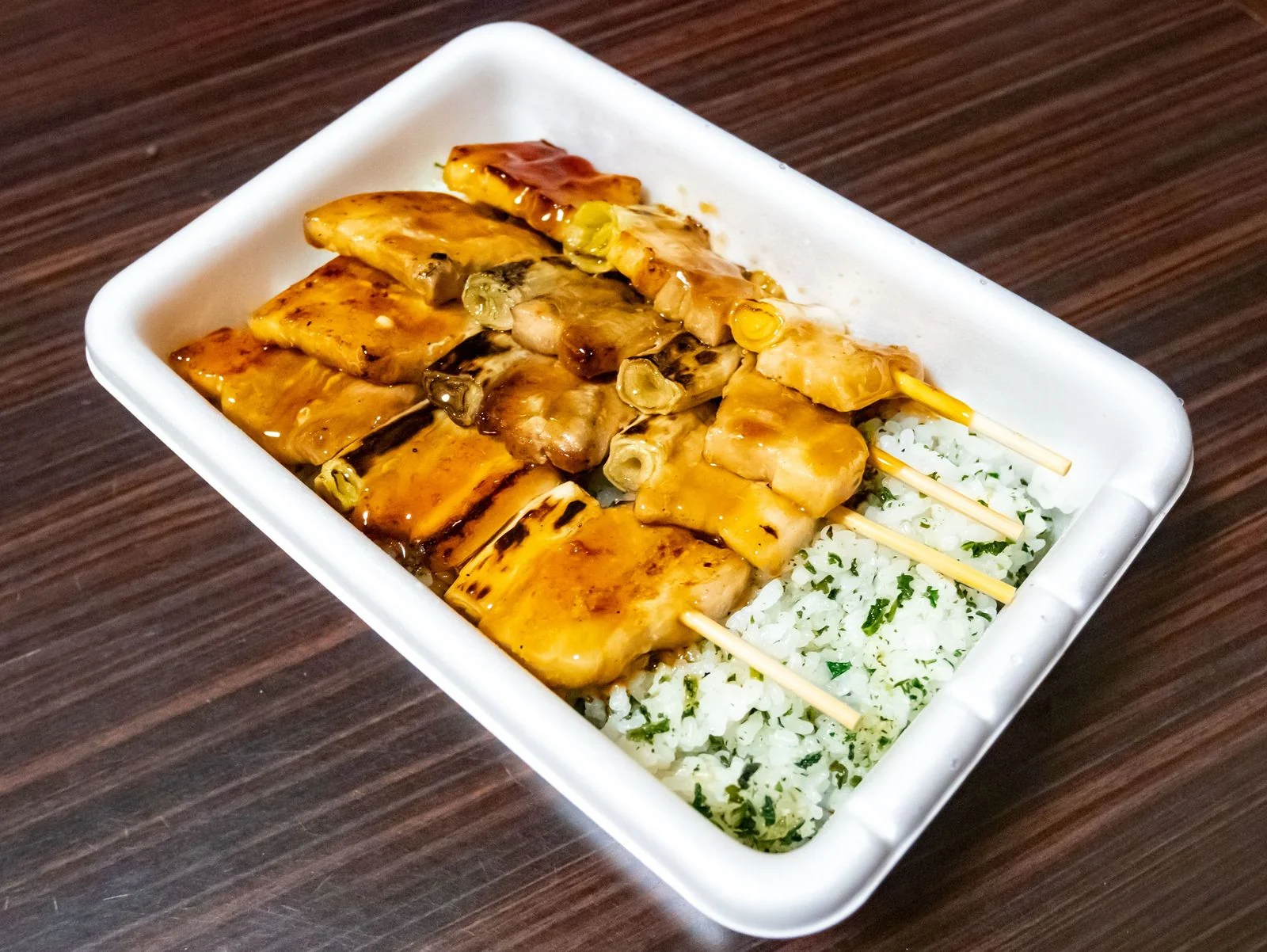 2 hr 30 min for both
A local chain’s pork-skewer bento with a cult following — order at the counter, eat on the harbor wall.
See the detail →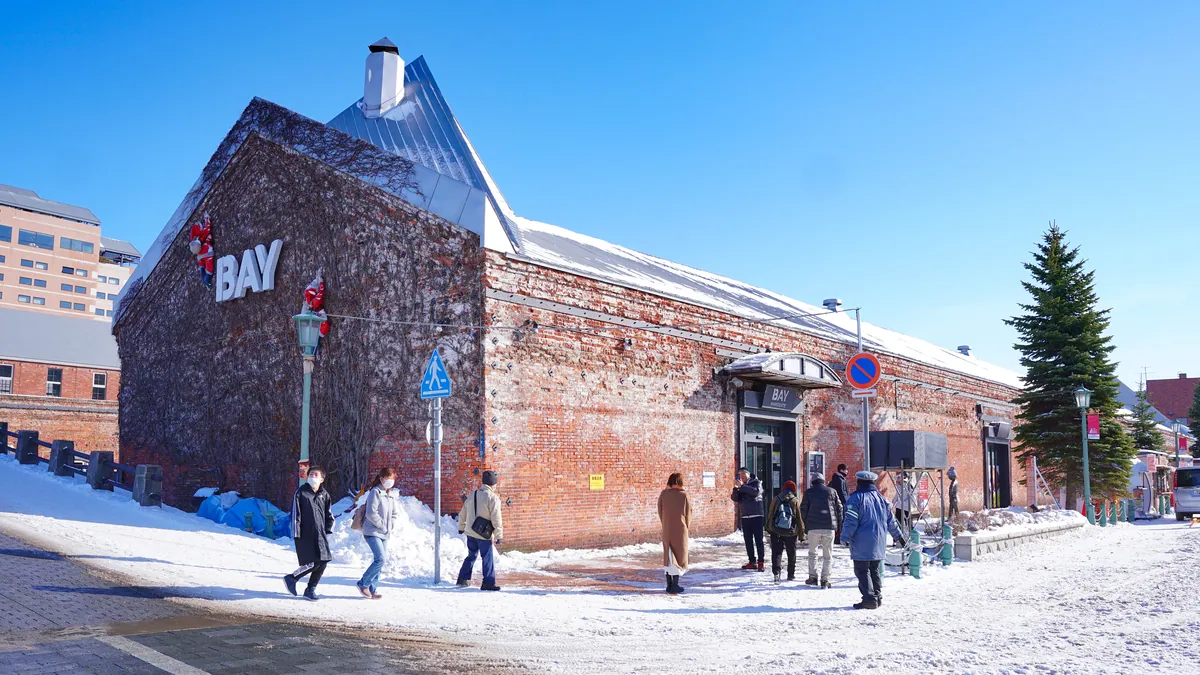 3 hr for both
1880s bonded warehouses turned shops and beer hall, strung along the harbor between berth and Motomachi.
See the detail →No typing needed — jump straight in:
Just docked? — the gangway toolStart from your shipThe ride from every berthAsk the editorGlossary